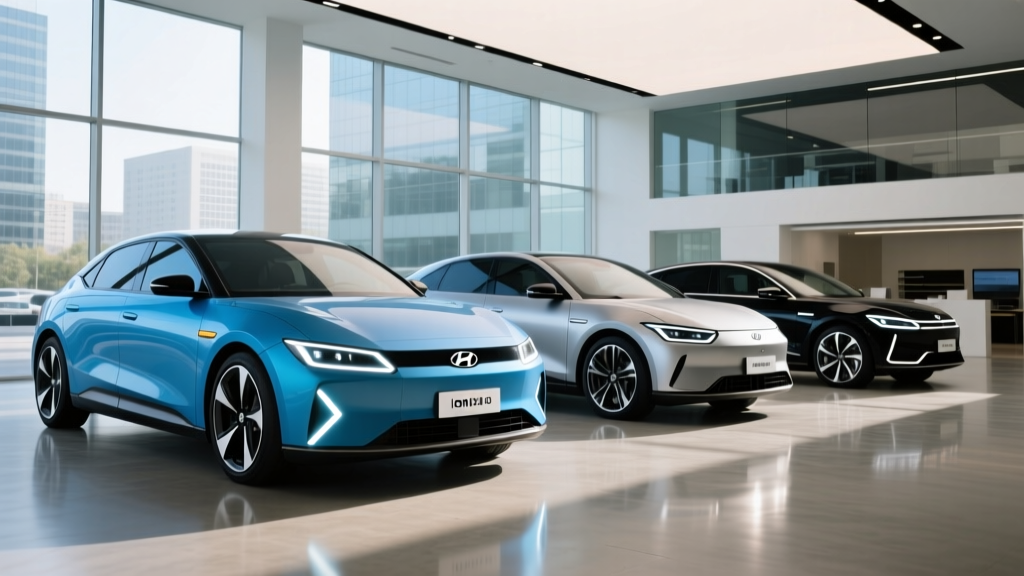
Quick Answer: Hyundai's EV concept cars — the 45 (2019), Prophecy (2020), Seven (2021), and Ioniq 5 N Vision (2024) — have directly shaped the production Ioniq lineup available today. The 2026 Ioniq 5 starts at $42,600 with up to 361 miles EPA range and 238 kW peak DC fast charging (10–80% in ~18 minutes). The Ioniq 6 sedan reaches 361 miles EPA from $39,950, while the three-row Ioniq 9 (new for 2025, updated for 2026) starts at $53,900 with up to 335 miles EPA. All use Hyundai's E-GMP platform with 800V architecture, and most trims qualify for the $7,500 federal §30D tax credit — available as a point-of-sale rebate — subject to income and sourcing requirements.
Hyundai's EV Concept Lineage: The Ideas Behind the Metal
If you've searched for a "Hyundai EV concept" in recent years, you've likely encountered one of four striking show cars that previewed the vehicles now sitting in dealer lots. Hyundai's strategy has been unusually faithful to its concept designs — a rarity in an industry known for diluting bold show-car aesthetics before production.
The 45 Concept (debuted at the 2019 Frankfurt Motor Show) featured sharp, origami-like surfaces and a monocoque-inspired silhouette. Its production translation, the Ioniq 5, retained the pixel-style LED lighting, flat floor, and aggressive crease lines almost intact. The Prophecy Concept (2020) previewed the streamlined Ioniq 6, which carries a remarkably low 0.21 drag coefficient — among the slipperiest production sedans on the market. The Seven Concept (2021, LA Auto Show) previewed the three-row Ioniq 9, which arrived for the 2025 model year with its lounge-style interior and upright SUV proportions.
The practical takeaway: Hyundai's concept-to-production pipeline averages about 3–4 years, and the production vehicles inherit the core platform technology (E-GMP, 800V charging, battery options) even when styling gets slightly softened.
2026 Ioniq Lineup: Range, Charging & Specs at a Glance
Here's what each production model delivers right now, with EPA figures and real-world expectations based on testing data and owner reports.
| Spec | 2026 Ioniq 5 (Long Range RWD) | 2026 Ioniq 6 (Long Range SE) | 2026 Ioniq 9 (Long Range RWD) |
|---|---|---|---|
| EPA Range | 361 mi | 361 mi | 335 mi |
| Real-World Range (highway/cold) | ~270–310 mi | ~280–320 mi | ~250–290 mi |
| Battery (usable) | 84.0 kWh, NMC | 77.4 kWh, NMC | 110.3 kWh, NMC |
| Peak DC Charge Rate | 238 kW | 233 kW | 200 kW (est.) |
| 10–80% DC Fast Charge | ~18 min | ~18 min | ~24 min |
| Level 2 Charge Rate | 10.9 kW | 10.9 kW | 10.9 kW |
| Connector (2026) | NACS (native Tesla SC access) | NACS (native Tesla SC access) | NACS (native Tesla SC access) |
| 0–60 mph | 7.0 sec (RWD) / 4.5 sec (AWD) | 6.1 sec (RWD) | ~7.5 sec (RWD) |
| Horsepower | 225 (RWD) / 325 (AWD) | 225 (RWD) / 325 (AWD) | 215 (RWD) / 379 (AWD) |
| MPGe (combined) | 114 MPGe | 140 MPGe | ~98 MPGe |
| Starting MSRP | $42,600 | $39,950 | $53,900 |
| Battery Warranty | 10 yr / 100,000 mi | 10 yr / 100,000 mi | 10 yr / 100,000 mi |
Real-World Range Reality Check: EPA estimates assume a mix of city and highway driving at moderate temperatures. On sustained 75 mph highway runs, expect a 10–15% reduction from EPA numbers. In freezing temperatures (below 32°F), battery chemistry and cabin heating can reduce range by 20–30%. The Ioniq 6's superior aerodynamics give it an edge in highway efficiency, while the Ioniq 9's larger, heavier body costs it some real-world miles despite the biggest battery.
EV vs Gas vs Hybrid: What the Numbers Actually Say
For buyers cross-shopping the Ioniq lineup against Hyundai's own gas and hybrid models — say, a Tucson Hybrid or a Sonata — the economics shift based on how you drive and where you charge.
| Metric | Ioniq 5 (Long Range AWD) | Tucson Hybrid (AWD) | Tucson Gas (AWD) |
|---|---|---|---|
| Starting MSRP | $46,100 | $34,575 | $31,725 |
| Fed. Tax Credit (§30D) | Up to $7,500 (POS) | None | None |
| Effective Price After Credit | ~$38,600 | $34,575 | $31,725 |
| Energy/Fuel Cost per Mile | ~$0.045 (home L2, $0.14/kWh) | ~$0.10 (38 MPG, $3.80/gal) | ~$0.14 (26 MPG, $3.80/gal) |
| Annual "Fuel" (15,000 mi) | ~$675 | ~$1,500 | ~$2,100 |
| 5-Year Fuel Savings vs Gas | ~$7,125 | ~$3,000 | Baseline |
| Estimated Maintenance (5 yr) | ~$1,800 | ~$3,200 | ~$4,000 |
| 5-Year Total Energy + Maint. | ~$5,175 | ~$10,700 | ~$14,500 |
The Ioniq 5 AWD's effective price after the point-of-sale credit lands close to a Tucson Hybrid — and the 5-year operating savings are substantial. However, this math assumes reliable home Level 2 charging at residential electricity rates. If you're entirely dependent on DC fast charging at $0.35–$0.50/kWh (common on Electrify America or EVgo), your per-mile cost climbs to $0.11–$0.16, erasing much of the fuel-cost advantage.
The hybrid middle ground: If you lack home charging access, frequently tow, or drive in extreme cold regularly, a PHEV like the Tucson Plug-In Hybrid (33 mi electric-only range, 35 MPG combined after battery depletion) may offer a better bridge. You get some electric commuting without range dependency.
Real Costs of Ioniq Ownership: The Full 5-Year Picture
| Cost Category | Ioniq 5 Long Range AWD ($46,100) | Notes |
|---|---|---|
| Purchase (after §30D credit) | ~$38,600 | Credit eligibility requires income ≤$150K single / $300K joint; MSRP ≤$55K for SUVs; battery sourcing compliance per IRS §30D rules. |
| Home Level 2 Charger Install | $800–$2,200 | 40A–48A hardwired unit; may require panel upgrade ($1,500–$3,000 extra) on older homes. |
| Electricity (5 yr, home charging) | ~$3,375 | Based on 15K mi/yr, 3.0 mi/kWh, $0.14/kWh national avg. |
| Insurance (5 yr) | ~$9,500–$11,000 | EV premiums run 15–25% higher than comparable gas vehicles due to repair costs and battery replacement exposure. |
| Maintenance (5 yr) | ~$1,800 | Tire rotation, cabin filter, brake fluid check. No oil changes. Expect higher tire wear due to instant torque and vehicle weight. |
| Depreciation (est. 5 yr) | ~$18,000–$22,000 | EV depreciation has been steep in 2024–2025; stabilizing as market matures. Ioniq 5 retains better than average due to strong demand. |
| 5-Year Total Cost of Ownership | ~$52,075–$56,975 | Inclusive of purchase, energy, insurance, maintenance, and depreciation. |
Home charging access is the single biggest variable. Without it, you're paying DC fast-charging premiums and dealing with availability — a real constraint in rural areas and apartment complexes. Hyundai includes 2 years of complimentary Electrify America charging (30-min sessions) on new Ioniq purchases, which helps early ownership but doesn't solve long-term access.
Tax Credit Eligibility: What Actually Qualifies in 2026
Not every Ioniq buyer gets $7,500. The §30D credit has specific requirements that have tightened since the Inflation Reduction Act:
- Income caps: Modified AGI ≤ $150,000 (single), $225,000 (head of household), $300,000 (joint).
- MSRP caps: ≤ $55,000 for sedans (Ioniq 6); ≤ $80,000 for SUVs/trucks (Ioniq 5, Ioniq 9).
- Battery sourcing: Increasing percentages of critical minerals and battery components must be sourced from the US or FTA-partner countries. Hyundai has shifted significant battery manufacturing to the Georgia EV plant (Metaplant America), improving eligibility for US-built Ioniq 5 models.
- Point-of-sale transfer: As of 2024, you can apply the credit as an instant dealer discount rather than waiting for tax filing. The dealer must be IRS-registered.
- One credit per VIN, one EV credit per taxpayer per year.
Because sourcing requirements evolve annually, confirm eligibility with your dealer at the time of purchase and cross-check with the IRS. The fueleconomy.gov tax credit tracker maintains a running list of eligible vehicles and credit amounts.
Common Misconceptions About Hyundai's EVs
| Myth | Fact |
|---|---|
| "Concept cars never make it to production looking the same." | Hyundai's Ioniq 5 retained ~90% of the 45 Concept's exterior design language, including pixel LEDs and the flat, angular surfacing. The Ioniq 6 closely mirrors the Prophecy's teardrop silhouette. |
| "EV batteries need replacing every few years at huge cost." | Hyundai warranties its EV batteries for 10 years/100,000 miles with a capacity retention threshold (typically 70% of original). Real-world degradation data from early Ioniq 5 owners shows ~5–8% loss over 3 years and 50,000 miles — well within warranty coverage. Full replacement (if ever needed) runs $12,000–$18,000 out of warranty. |
| "You can't road-trip an EV." | The Ioniq 5's 18-minute 10–80% DC fast charge and NACS connector (granting native access to 25,000+ Tesla Superchargers as of 2025) make road trips viable. Plan stops using Hyundai's built-in route planner or A Better Route Planner (ABRP). Expect 20–25 minute breaks every 200–250 highway miles. |
| "EVs are worse in winter." | Range drops 20–30% in sub-freezing temps — that's real. But the Ioniq lineup includes a heat pump (standard on most trims) and battery preconditioning, which mitigates losses and maintains charge speed. A garage-kept Ioniq 5 in Minneapolis still delivers ~250 usable winter miles on the Long Range model. |
| "Hyundai's EVs can't use Tesla Superchargers." | Starting with the 2025 model year, Hyundai transitioned to the NACS charge port on Ioniq models, granting native access to Tesla's Supercharger network without an adapter. CCS adapters are available for older (2022–2024) Ioniq 5/6 models with the original CCS port. |
Decision Framework: Which Hyundai EV (If Any) Is Right for You?
Choose the Ioniq 5 if: You want a versatile crossover with strong fast-charging, good cargo space (27.2 cu ft rear, 56.2 cu ft folded), and optional AWD for snow/rain climates. It's the best all-rounder in the lineup. The SE Standard Range ($42,600, 240 mi EPA, RWD only) is the value pick; the SEL AWD ($47,500) hits the sweet spot for most buyers.
Choose the Ioniq 6 if: You prioritize maximum efficiency (140 MPGe combined — best-in-class among midsize EV sedans) and highway range. Its aerodynamic design shines on long commutes. Trade-offs include less rear headroom and a smaller trunk (11.2 cu ft) compared to the Ioniq 5. Best for sedan buyers who don't need cargo flexibility.
Choose the Ioniq 9 if: You need three rows and family-hauler space. It competes with the Kia EV9 and Rivian R1S at a lower entry price. The 110.3 kWh battery provides genuine road-trip range, and the boxy design maximizes interior volume. Expect lower efficiency (~98 MPGe) and longer charge times due to the bigger pack.
Choose a Hyundai Hybrid/PHEV instead if: You lack home charging, regularly drive in remote areas with sparse charging infrastructure, frequently tow (the Tucson Hybrid tows 2,000 lbs without range penalty), or your daily commute is very short and a PHEV covers it on electric-only miles.
Wait if: You've seen Hyundai's Ioniq 5 N Vision concept (the performance variant preview) and want the upcoming N-performance EV. The Ioniq 5 N is already in production (640 hp, N Gr Shift simulating gear changes), but Hyundai has hinted at further N variants based on recent concepts.
What First-Time EV Buyers Should Know Before Choosing Hyundai
Hyundai's E-GMP platform is one of the most mature dedicated EV architectures on the market, rivaling Tesla's in charging speed and surpassing most legacy competitors in 800V capability. But ownership satisfaction depends on setup:
1. Install Level 2 home charging before delivery. A 48A hardwired ChargePoint Home Flex or Emporia Level 2 charger adds ~30 miles of range per hour of charging — enough to replenish a full day's driving overnight. Budget $800–$2,200 for equipment and electrician labor. If your home has a 100A electrical panel, you may need a $1,500–$3,000 panel upgrade to 200A; get a quote from a licensed electrician early.
2. Understand the charge curve. Hyundai advertises "18 minutes 10–80%" — but that's the peak experience. The Ioniq 5 sustains ~200+ kW from roughly 10% to ~55% SoC, then tapers to ~150 kW through 70%, and drops sharply above 80%. Charging from 80–100% on DC fast charging can take as long as 10–80%. For daily driving, charge to 80% to preserve battery health and minimize charge-station time.
3. Precondition before fast charging. Use the Ioniq's navigation to route to a DC fast charger — the car will automatically warm the battery for optimal charge speed. In cold weather, this can be the difference between a 20-minute and a 40-minute charge session.
4. Budget for insurance. Get quotes before purchasing. EV insurance premiums are higher across the board. The Ioniq 5 typically runs $150–$220/month depending on your profile — 15–25% above a comparable gas Tucson.
5. Check your local incentives. Beyond the federal §30D credit, many states offer additional rebates (California's CVRP, Colorado's state credit, utility company rebates for home charger installation). These vary significantly by jurisdiction — check your state's energy office and local utility for current programs.
Frequently Asked Questions
Will Hyundai release more EVs based on recent concepts?
Hyundai has committed to launching 13+ EV models globally by 2030 under its Ioniq sub-brand. Recent concepts like the Ioniq 5 N Vision and the Initium hydrogen fuel-cell concept signal future directions, but Hyundai's pattern shows a 3–4 year concept-to-production timeline. The next likely production EV after the Ioniq 9 could be a smaller, more affordable crossover — potentially previewed by future concept reveals at major auto shows.
Does the Ioniq 5 qualify for the full $7,500 federal tax credit?
US-built Ioniq 5 models (from Hyundai's Georgia Metaplant) qualify for the full $7,500 credit when the buyer meets income requirements and the vehicle's battery sourcing complies with §30D rules. Because sourcing requirements tighten annually, verify eligibility at the point of purchase. The dealer can process this as a point-of-sale discount if they're IRS-registered. Always cross-check with the IRS clean vehicle credit page.
How long do Hyundai EV batteries actually last?
Hyundai's 10-year/100,000-mile battery warranty covers capacity below ~70% of original. Real-world data from early Ioniq 5 owners (2022–2023 models now at 50,000+ miles) shows degradation in the 5–8% range — tracking well for long-term durability. NMC chemistry in the Ioniq lineup favors energy density; for maximum cycle life, avoid routinely charging to 100% or letting the battery sit below 10% for extended periods. Most EV batteries outlast the vehicle's useful life.
Can I charge a Hyundai Ioniq at Tesla Superchargers?
Yes. Starting with 2025 model-year Ioniq vehicles, Hyundai adopted the NACS (North American Charging Standard) connector natively, providing direct access to Tesla's Supercharger network — over 25,000 stalls in North America. For 2022–2024 Ioniq 5 and 6 models with the CCS1 port, Hyundai offers an official NACS adapter that enables Supercharger access. Always verify your specific model year's port configuration before purchasing an adapter.
Is the Ioniq 5 or Ioniq 6 better for road trips?
Both reach 361 miles EPA, but the Ioniq 6 achieves that with a smaller (77.4 kWh) battery thanks to its 0.21 Cd aerodynamic advantage — meaning it uses less energy per mile on the highway and recovers range more efficiently between stops. The Ioniq 5 offers more cargo room and easier rear-seat access. For pure road-trip efficiency, the Ioniq 6 edges ahead. For family comfort and versatility, the Ioniq 5 wins. Both charge at ~18 minutes 10–80% on a 250+ kW DC fast charger.
What happens if I can't install home charging?
Public-only EV ownership is viable but costs more and requires planning. Expect to pay $0.30–$0.50/kWh at DC fast chargers (roughly double home rates) and budget time for 20–30 minute charging sessions 2–3 times per week depending on your mileage. Workplace Level 2 charging is a strong alternative if available. If neither home nor workplace charging is accessible, seriously consider a Hyundai PHEV (Tucson Plug-In Hybrid or Santa Fe Plug-In Hybrid) instead — you'll get electric commuting range without full EV dependency.
Sources: fueleconomy.gov (EPA range and MPGe data), Hyundai USA (manufacturer specifications and pricing), IRS.gov (§30D clean vehicle credit rules). All pricing and specs reflect 2026 model year at time of publication; verify with your dealer for current availability and incentive eligibility.