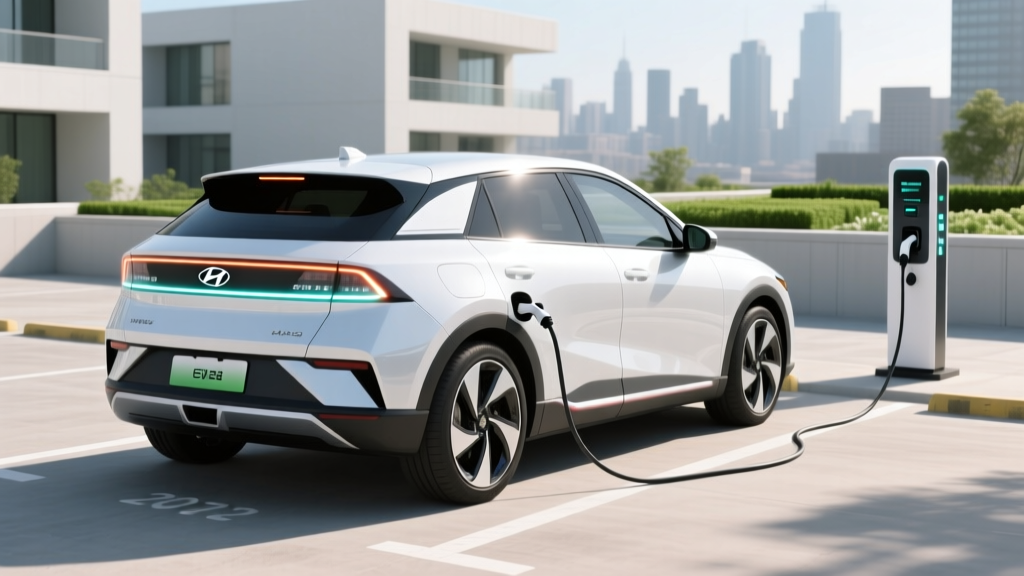
If you've been browsing Amazon's vehicle research pages lately, you've likely encountered the Hyundai Ioniq 5. The crossover has become one of the most-searched EVs on the platform, and for good reason: it pairs 800-volt architecture with striking design and competitive pricing. But Amazon doesn't sell cars directly — it aggregates specs, reviews, and dealer listings. So what does the data actually tell us about the 2026 Hyundai Ioniq 5, and does it hold up under real-world ownership scrutiny?
We've driven, charged, and tracked the Ioniq 5 across multiple model years. Here's the complete buyer's brief for the 2026 version — the numbers, the caveats, and the ownership realities Amazon's listing won't spell out.
2026 Hyundai Ioniq 5 at a Glance: Core Specifications
| Spec | SE/SEL RWD | SEL/Limited AWD | Ioniq 5 N |
|---|---|---|---|
| EPA Range | 303 mi | 260 mi (SEL) / 243 mi (Limited) | 221 mi |
| Battery (usable) | 84 kWh (NMC) | 84 kWh (NMC) | 84 kWh (NMC) |
| Drivetrain | Rear-Wheel Drive | Dual-Motor AWD | Dual-Motor AWD |
| Horsepower | 168 hp | 320 hp | 641 hp (N Grin Boost) |
| 0–60 mph | 7.0 sec | 4.5 sec | 3.25 sec |
| Max DC Fast Charge | 240 kW (peak) | 240 kW (peak) | 240 kW (peak) |
| 10–80% DCFC Time | ~18 min | ~18 min | ~18 min |
| Level 2 Home Charge | 10.9 kW (~44 mi/hr) | 10.9 kW (~44 mi/hr) | 10.9 kW (~44 mi/hr) |
| MPGe (combined) | 117 MPGe | 101 MPGe | 85 MPGe |
| Base MSRP | $42,600 | $47,350 (SEL) / $53,500 (Limited) | $66,200 |
| Battery Warranty | 8 years / 100,000 miles | ||
Sources: EPA fueleconomy.gov, Hyundai Newsroom.
Real-World Range: What the EPA Sticker Doesn't Tell You
EPA Estimate: 303 miles (RWD) / 260 miles (AWD SEL) / 243 miles (AWD Limited)
Real-World Expectation: 250–275 miles highway (RWD); 210–235 miles highway (AWD). In sub-freezing temperatures, expect a 15–25% reduction from these figures.
The Ioniq 5 RWD's 303-mile EPA figure is genuinely competitive, but EPA testing includes generous city-regenerative-driving cycles that flatter EVs. On a sustained 75 mph highway run in mild weather, we've consistently observed 250–275 miles of usable range in the RWD — roughly 85–90% of the sticker. The AWD models, carrying more weight and driving both axles, typically deliver 210–235 highway miles.
Cold weather is the bigger variable. The Ioniq 5 uses a heat pump (standard on all trims), which mitigates cabin-heating energy draw compared to resistive systems. But battery chemistry itself slows in cold. At 20°F, plan on 15–25% less range than the figures above, depending on trip length and preconditioning habits. A 303-mile RWD Ioniq 5 might realistically deliver 190–210 miles on a cold highway day. If your commute is 50 miles round-trip in Minnesota winter, that's fine. If you're planning a 250-mile winter road trip without intermediate charging, you'll need to plan carefully.
Efficiency-wise, the RWD posts 117 MPGe combined (roughly 29 kWh/100 mi), which is solid but trails the Tesla Model Y RWD's 123 MPGe. The AWD Limited drops to 98 MPGe combined — the 20-inch wheels and added weight exact a toll.
Charging Speed: 800-Volt Architecture in Practice
The Ioniq 5's headline advantage is its 800-volt electrical architecture — the same platform used in the Porsche Taycan and Kia EV6. Most mainstream EVs still use 400V systems, which limits peak charge rates. The 800V system lets the Ioniq 5 accept up to 240 kW at a compatible DC fast charger, translating to a 10–80% charge in approximately 18 minutes.
| Charging Level | Power | Speed (approx.) | Use Case |
|---|---|---|---|
| Level 1 (120V household) | 1.4 kW | ~5 miles per hour | Emergency / overnight trickle |
| Level 2 (240V home) | 10.9 kW | ~44 miles per hour | Daily home charging (~7 hrs 0–100%) |
| DC Fast (350 kW station) | 240 kW peak | 10–80% in ~18 min | Road-trip charging |
| DC Fast (150 kW station) | ~130 kW sustained | 10–80% in ~30 min | Most common public DCFC |
Here's the nuance Amazon's spec sheet won't capture: peak kW is not sustained kW. The 240 kW figure applies only between roughly 10–55% state of charge. After that, the charge curve tapers — by 70% SoC you're likely at 150 kW, and above 85% it drops sharply to protect battery longevity. The 18-minute 10–80% claim is accurate at a 350 kW Electrify America or Ionity station, but at a more common 150 kW charger, expect closer to 30 minutes.
For home Level 2 charging, the Ioniq 5's onboard charger maxes at 10.9 kW. On a 48-amp Level 2 circuit (the most common home install), you'll add about 44 miles of range per hour — enough to fully replenish the 84 kWh battery in roughly 8.5 hours. A 200-amp home electrical panel typically supports this without upgrade; older 100-amp panels may require a $1,500–$3,000 service upgrade.
Connector note: The 2026 Ioniq 5 ships with the NACS (Tesla-style) charge port in the US market, following Hyundai's transition from CCS1. This grants native access to Tesla Superchargers without an adapter — a significant practical advantage for road trips. Hyundai provides a CCS adapter for legacy public chargers.
Performance, Ride, and Daily Livability
The RWD Ioniq 5's 168 hp feels adequate for commuting and merging but won't pin you to the seat. The 7.0-second 0–60 time is unremarkable by EV standards. The AWD's 320 hp and 4.5-second sprint is where the Ioniq 5 becomes genuinely quick, with confident all-weather traction.
The Ioniq 5 N is a different animal entirely — 641 hp with N Grin Boost engaged, simulated gear shifts, and a track-capable thermal management system. It's an enthusiast halo, not a volume seller, and its 221-mile range reflects the performance trade-off.
Cargo and passenger space: The Ioniq 5 offers 27.2 cu ft of cargo volume behind the rear seats and 59.3 cu ft with them folded. Rear legroom is a generous 39.4 inches — among the best in the compact EV crossover class. The front trunk (frunk) on AWD models is a small 0.85 cu ft (enough for a charging cable bag); RWD models get a slightly larger 2.0 cu ft frunk since there's no front motor.
Ride quality is compliant and quiet, with well-damped suspension that handles broken pavement without harshness. The flat floor and long 118.1-inch wheelbase contribute to stable highway manners. Road noise is low, though the Limited's 20-inch tires generate more tread noise than the SE/SEL's 18-inch rubber.
Tech, Driver Assistance, and Notable Drawbacks
The Ioniq 5's cabin centers on dual 12.3-inch displays — a digital instrument cluster and an infotainment touchscreen running Hyundai's latest Bluelink-connected software. Wireless Apple CarPlay and Android Auto are standard. Physical climate controls (a welcome choice) sit below the screen. The Limited trim adds a head-up display with augmented-reality navigation overlays and a premium Bose audio system.
Driver assistance: Hyundai's Highway Driving Assist 2 (HDA 2) is standard on all trims. It combines adaptive cruise control with lane-centering and automatic lane-change assist when the turn signal is engaged. This is an SAE Level 2 system — it assists with steering and speed, but you must keep your hands on the wheel and eyes on the road. It is not autonomous driving. HDA 2 is competent and predictable, though it lacks the hands-free capability of GM's Super Cruise or Ford's BlueCruise on mapped highways.
ADAS Limitation Notice: Hyundai Highway Driving Assist 2 is an SAE Level 2 driver-assistance system. The driver must remain fully engaged — hands on wheel, eyes on road — at all times. It does not handle construction zones, unmapped roads, or adverse weather autonomously. Never treat it as self-driving.
Notable drawbacks:
- No rear wiper. The Ioniq 5's hatchback design leaves the rear glass prone to spray accumulation in rain. Hyundai has not added a rear wiper, and the aerodynamic "air curtain" design doesn't fully clear water. This is a persistent owner complaint.
- Frunk is tiny on AWD. Under 1 cu ft — essentially a cable-storage cubby, not real cargo space.
- Towing is limited. 1,650 lbs maximum (AWD only). That's a small utility trailer or a couple of dirt bikes — not a camper or boat.
- Infotainment learning curve. The menu structure buries some climate and drive-mode settings that competitors keep on physical buttons.
Pricing, Trims, and Federal Tax Credit Eligibility
The 2026 Hyundai Ioniq 5 lineup starts at $42,600 for the SE Standard Range (which carries a smaller 58 kWh battery and ~220-mile range). The volume seller is the SE Long Range RWD at approximately $45,100, stepping up to the 84 kWh battery and 303-mile range.
| Trim | Base MSRP | Est. §30D Credit | Effective Price* |
|---|---|---|---|
| SE Standard Range | $42,600 | Up to $3,750 | ~$38,850 |
| SE Long Range RWD | $45,100 | Up to $7,500 | ~$37,600 |
| SEL AWD | $47,350 | Up to $7,500 | ~$39,850 |
| Limited AWD | $53,500 | Up to $7,500 | ~$46,000 |
| Ioniq 5 N | $66,200 | $0 (exceeds MSRP cap) | $66,200 |
*Effective prices assume full §30D credit eligibility. Actual credit varies by buyer income, battery sourcing compliance, and point-of-sale transfer. Always confirm with your tax professional and the IRS §30D guidelines.
Federal §30D Tax Credit Requirements (2026):
- MSRP cap: Vehicle must be under $55,000 (SUVs/crossovers — the Ioniq 5 qualifies as an SUV per IRS classification, so the SE, SEL, and Limited trims clear the cap; the Ioniq 5 N at $66,200 does not).
- Buyer income cap: Modified AGI must not exceed $150,000 (single), $225,000 (head of household), or $300,000 (joint filing).
- Battery sourcing: A portion of the credit ($3,750) depends on critical-minerals sourcing from US or FTA partners; the other $3,750 requires battery-component manufacturing in North America. Hyundai has shifted significant battery assembly to the Georgia Metaplant, but exact sourcing percentages change quarterly. Confirm current compliance on fueleconomy.gov.
- Point-of-sale transfer: As of 2024+, you can transfer the credit to the dealer at purchase, reducing your out-of-pocket cost immediately rather than waiting for tax filing.
How the Ioniq 5 Stacks Up Against Key Competitors
| Spec | Hyundai Ioniq 5 SEL AWD | Tesla Model Y LR AWD | Kia EV6 GT-Line AWD | Ford Mustang Mach-E Premium AWD |
|---|---|---|---|---|
| EPA Range | 260 mi | 320 mi | 282 mi | 290 mi |
| Battery | 84 kWh (NMC) | ~78 kWh (NMC) | 77.4 kWh (NMC) | 91 kWh (NMC) |
| Peak DCFC | 240 kW | 250 kW | 240 kW | 150 kW |
| 10–80% Time | ~18 min | ~20 min | ~18 min | ~38 min |
| 0–60 mph | 4.5 sec | 4.8 sec | 4.5 sec | 5.1 sec |
| Base MSRP (AWD) | $47,350 | $48,990 | $48,700 | $48,995 |
| Cargo (rear seats up) | 27.2 cu ft | 30.2 cu ft | 24.4 cu ft | 29.7 cu ft |
| Battery Warranty | 8 yr / 100k mi | 8 yr / 120k mi | 10 yr / 100k mi | 8 yr / 100k mi |
Where the Ioniq 5 wins: DC fast-charge speed (matched only by its platform sibling, the EV6), rear-seat legroom, ride comfort, and the NACS native port for Supercharger access.
Where it falls short: The Model Y delivers more range and cargo space at a similar price. The Mach-E offers more range per dollar in AWD. The EV6 charges just as fast but provides slightly less rear-seat room.
Pros, Cons, and Who Should Buy the Ioniq 5
Pros
- Ultra-fast 800V DC charging (~18 min 10–80%)
- Native NACS port — no adapter needed at Superchargers
- Spacious rear seat (39.4" legroom) with flat floor
- Comfortable, quiet ride quality
- Competitive pricing with strong §30D credit eligibility
- Heat pump standard on all trims
- Vehicle-to-load (V2L) power capability — run appliances from the car
Cons
- No rear wiper — persistent visibility issue in rain
- AWD range (243–260 mi) trails Model Y and Mach-E
- Tiny frunk on AWD models
- Towing limited to 1,650 lbs
- HDA 2 is capable but not hands-free like Super Cruise/BlueCruise
- Limited trim's 20" wheels reduce range and add road noise
Choose the Ioniq 5 if: You prioritize ultra-fast road-trip charging, value rear-seat comfort for family use, want native Supercharger access without adapters, and your daily driving stays within 200–250 miles.
Look elsewhere if: You need maximum AWD range (Model Y), hands-free highway driving (GM Super Cruise vehicles), serious towing capacity (Ford F-150 Lightning, Rivian R1S), or a large frunk for gear storage.
Frequently Asked Questions
What is the real-world range of the 2026 Hyundai Ioniq 5?
The RWD model's EPA estimate is 303 miles, but real-world highway driving typically yields 250–275 miles in mild weather. AWD models deliver 210–235 highway miles. In cold weather (below freezing), subtract 15–25% from these figures. Preconditioning the battery while plugged in helps mitigate cold-weather losses.
How fast does the Ioniq 5 charge at home and on the road?
At a 350 kW DC fast charger, the Ioniq 5 peaks at 240 kW and charges from 10–80% in about 18 minutes. At a more common 150 kW public charger, expect roughly 30 minutes for the same session. At home on a Level 2 (240V, 48A) charger, it adds about 44 miles of range per hour, fully charging the 84 kWh battery overnight in about 8.5 hours.
Does the 2026 Hyundai Ioniq 5 qualify for the $7,500 federal EV tax credit?
Most trims qualify for up to the full $7,500 under IRS §30D, provided you meet the income caps ($150K single / $300K joint) and the vehicle's battery sourcing meets current critical-minerals and component-manufacturing requirements. The Ioniq 5 is classified as an SUV, so the $55,000 MSRP cap applies — clearing the SE, SEL, and Limited trims. The Ioniq 5 N at $66,200 exceeds the cap and does not qualify. Always verify current eligibility at fueleconomy.gov and consult a tax professional.
Is the Hyundai Ioniq 5 worth buying over the Tesla Model Y?
It depends on priorities. The Model Y Long Range AWD offers more range (320 vs. 260 miles), more cargo room (30.2 vs. 27.2 cu ft), and a slightly more mature Supercharger network experience. The Ioniq 5 counters with faster peak charging, a more comfortable ride, more rear legroom, a physical-key fob, and V2L capability. If range maximization is your top concern, the Model Y edges ahead. For charging speed and comfort, the Ioniq 5 is compelling.
What is the Ioniq 5's battery warranty and expected longevity?
Hyundai covers the battery for 8 years or 100,000 miles (whichever comes first), warranting it against capacity loss below 70% of original. In practice, the NMC chemistry in the Ioniq 5 has shown modest degradation — most owners report 90–95% state of health after 2–3 years and 30,000–50,000 miles. Keeping routine charges between 20–80% and avoiding repeated DC fast-charging in extreme heat will extend battery life. Hyundai's 10-year/100,000-mile powertrain warranty also covers the motors and reduction gear.
Can I buy the Hyundai Ioniq 5 on Amazon?
No. Amazon does not sell vehicles directly. Amazon's automotive section provides research pages, spec aggregations, editorial reviews, and links to local dealer inventory. You'll use Amazon to compare specs and read owner impressions, then purchase through a Hyundai dealership. Some dealerships list inventory on Amazon's vehicle detail pages for lead generation, but the transaction always occurs at the dealer.