Quick Answer: The Amazon electric van is the Rivian EDV (Electric Delivery Van), built exclusively for Amazon under a contract for 100,000 vehicles. It is not available for consumer purchase. The EDV comes in three wheelbase lengths, uses a ~115 kWh NMC battery pack, achieves an estimated 150–161 miles of range, and supports DC fast charging up to approximately 125 kW (10–80% in roughly 40 minutes). Amazon reports the EDV reduces per-route emissions by about 50% versus a comparable gas van and cuts fuel and maintenance costs significantly. For consumer EV buyers, the EDV's real lesson is how depot-based Level 2 charging and route-matched battery sizing solve the range-versus-cost equation.
What Is the Amazon Electric Van?
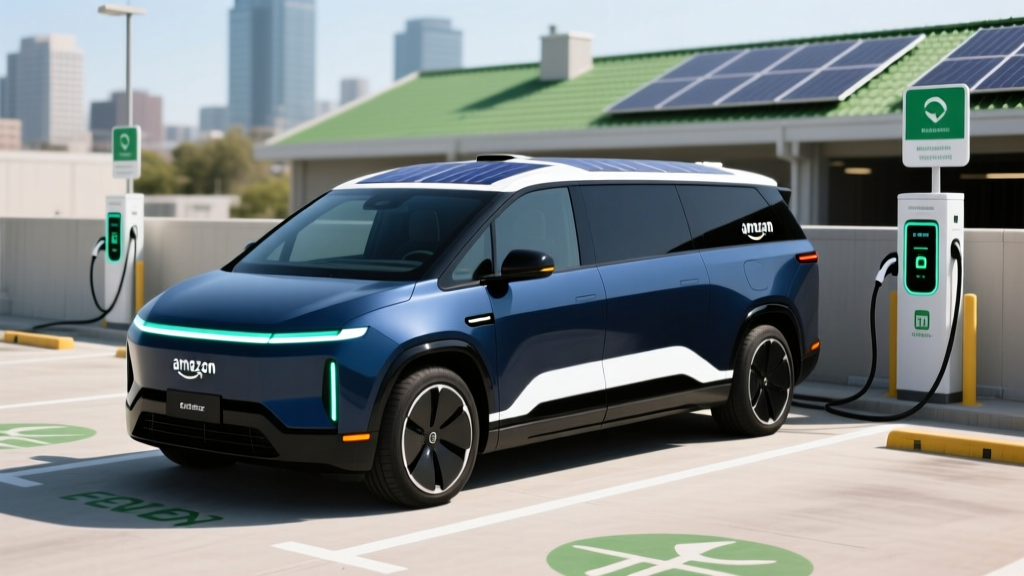
The Amazon electric van is officially the Rivian EDV, a purpose-built battery-electric delivery vehicle designed jointly by Amazon and Rivian. Amazon placed an order for 100,000 units in 2019 — the largest commercial EV order in history at the time — and the first production vans hit delivery routes in mid-2022. By early 2025, thousands were active across U.S. and European metro areas, and Amazon has deployed them in over 100 U.S. cities.
The EDV is not a rebadged consumer vehicle. It was engineered from the ground up for last-mile package delivery: frequent stops, low average speeds, curb-side loading, and a return-to-depot daily cycle. That specific duty profile dictates everything from battery size to charging strategy — and it holds lessons for anyone evaluating an EV for predictable daily routes.
Rivian EDV Specifications: Battery, Range, and Charging
| Spec | EDV-500 (Short) | EDV-700 (Medium) | EDV-900 (Long) |
|---|---|---|---|
| Cargo Volume | ~500 cu ft | ~700 cu ft | ~900 cu ft |
| Battery Capacity (usable) | ~115 kWh (NMC chemistry) | ||
| Estimated Range | ~161 mi | ~150 mi | ~150 mi |
| Peak DC Fast Charge | ~125 kW | ||
| 10–80% DC Charge Time | ~40 minutes | ||
| Level 2 AC Charging | ~11.5 kW (depot chargers) | ||
| Drive | Single-motor FWD | ||
| Availability | Amazon exclusive; not sold to consumers | ||
Real-World Range Reality: The EDV's ~150–161 mile estimate is not an official EPA figure (commercial vehicles are not EPA-rated like consumer cars). In practice, delivery routes average 60–120 miles per day with heavy stop-and-go driving. Regenerative braking recovers meaningful energy in this pattern. In cold climates (below 30°F), expect a 15–25% range reduction, which Amazon mitigates with route planning and depot preconditioning. The van's thermal management system warms the battery before charging to maintain charge speed.
The EDV uses NMC (nickel manganese cobalt) battery chemistry, chosen for energy density — important when maximizing cargo volume within a given vehicle footprint. The ~115 kWh pack is substantial; for reference, the Rivian R1S consumer SUV uses a similar 128.9 kWh Max pack. At a peak charge rate of ~125 kW, the EDV is not a class-leading fast charger, but Amazon's depot model means vans charge overnight on Level 2 and only need DC fast charging for mid-day top-ups on longer routes.
Fleet Economics: How the EDV Compares to a Gas Delivery Van
Amazon's switch to electric vans is fundamentally a total-cost-of-ownership calculation. Here's how a commercial EV delivery van stacks up against a conventional gas alternative like the Mercedes-Benz Sprinter or Ford Transit on a per-mile basis:
| Cost Factor | Rivian EDV (Electric) | Gas Delivery Van (e.g., Ford Transit) |
|---|---|---|
| Fuel/Energy Cost per Mile | $0.08–$0.14 (electricity at $0.12–$0.18/kWh) | $0.22–$0.32 (gas at $3.50/gal, 14 MPG) |
| Maintenance per Mile | ~$0.04–$0.06 (no oil, fewer brake replacements due to regen) | ~$0.10–$0.15 (oil changes, transmission, exhaust) |
| Upfront Vehicle Cost | Higher (~$80,000–$100,000+ est. per unit, fleet pricing) | ~$40,000–$55,000 |
| Charging Infrastructure | Depot Level 2 install: $3,000–$8,000 per stall + possible panel upgrades | N/A (existing gas stations) |
| Federal Tax Credit (§30D/45W) | Commercial clean vehicle credit up to $7,500 (under IRC §45W) | None |
| Estimated 5-Year Fuel Savings | $8,000–$15,000 per vehicle (assuming 20,000 mi/yr) | |
Amazon has stated that the EDV's per-route operating cost is meaningfully lower than a gas van, with the breakeven point arriving within a few years when factoring in fuel and maintenance savings against the higher upfront cost and depot charger installation.
What the Amazon Electric Van Teaches Consumer EV Buyers
You can't buy an EDV, but the engineering decisions behind it directly apply to your EV purchase. Here's the translation:
1. Match the Battery to Your Actual Route
Amazon didn't spec a 300-mile battery for a 100-mile route. Oversizing a battery adds cost, weight, and charging time. For consumers: if your daily driving is 40–60 miles, a Standard Range model with ~250 miles of EPA range (with a real-world highway buffer of ~200 miles) is often sufficient and saves $5,000–$10,000 versus an extended-range trim.
2. Depot Charging = Home Charging
Amazon's depot Level 2 strategy — plugging in overnight and waking to a full battery — is exactly what home EV charging looks like. A 240V Level 2 home charger at 11.5 kW adds roughly 35–45 miles of range per hour of charging. For a 75 kWh battery, a full 0–100% charge takes about 7–8 hours overnight. The practical lesson: if you have reliable home Level 2 access, daily range anxiety largely disappears.
3. Regenerative Braking Pays Off in Stop-and-Go
Delivery vans brake hundreds of times per route. The EDV's regen system recovers kinetic energy that a gas van wastes as heat. This same principle applies to consumer EVs in city and suburban driving — your real-world efficiency in traffic often exceeds the EPA combined estimate because regen is working hardest exactly where a gas car is least efficient.
4. Thermal Management Is Non-Negotiable
The EDV includes active liquid thermal management for its battery pack, preconditioning it for both optimal range and charge speed. When shopping for a consumer EV, always confirm active thermal management (liquid cooling/heating). Vehicles without it — or with passive air cooling — suffer faster degradation and slower DC charging, especially in extreme temperatures.
Common Misconceptions About the Amazon Electric Van
| Myth | Fact |
|---|---|
| "The Amazon van can be bought by consumers." | The EDV is exclusive to Amazon under a contractual agreement. Rivian has hinted at exploring broader commercial sales after fulfilling Amazon's order, but no consumer or third-party commercial variant is currently available. |
| "150 miles of range isn't enough for a delivery van." | Amazon's average delivery route is 60–120 miles. The battery is right-sized for the duty cycle, with a buffer for detours, climate load, and cold weather. |
| "Electric vans can't handle cold weather routes." | Cold reduces range by 15–25%, which Amazon manages through route optimization and battery preconditioning. The EDV operates in Chicago, Boston, and other cold-climate cities year-round. |
| "Amazon is losing money on every van." | While upfront costs are higher, Amazon has publicly stated the EDV reduces operating costs per route. The commercial clean vehicle credit (§45W) provides up to $7,500 per qualifying vehicle. |
| "The EDV uses Tesla Superchargers." | The EDV charges primarily at Amazon depot Level 2 stations and uses CCS-compatible DC fast chargers, not the NACS/Tesla Supercharger network (though Rivian consumer vehicles like the R1T now have NACS access via adapter). |
Real-World Ownership Considerations for Commercial and Consumer EVs
Whether you're running a fleet or buying your first EV, these factors determine satisfaction more than any spec sheet:
Charging Access Is the Real Bottleneck
Amazon solved this by building depot charging infrastructure — a controlled environment where every van has a dedicated Level 2 plug overnight. Consumer EV buyers face a harder question: Do you have reliable home or workplace charging? If you can install a 240V/48A Level 2 charger at home (typically $500–$2,000 for the unit, plus $800–$3,000 for electrician installation and potential panel upgrades), EV ownership is straightforward. If you rely entirely on public charging, costs rise to $0.25–$0.48/kWh at DC fast chargers and convenience drops significantly.
Climate and Route Planning
The EDV's range holds up because Amazon controls the route. Consumer EV owners need to plan for worst-case scenarios: a 250-mile EPA range becomes roughly 185–200 miles in freezing temperatures at highway speeds. Use tools like fueleconomy.gov to check official ratings, then subtract 15–25% for cold weather and 10–15% for sustained 75+ mph highway driving.
Insurance and Depreciation
Commercial fleet operators negotiate insurance at scale. Individual EV buyers should expect insurance premiums 15–25% higher than a comparable gas vehicle, driven by higher repair costs and parts pricing. Depreciation on EVs has been volatile — check current resale data before assuming the 5-year trade-in value.
Decision Framework: Should You Care About the EDV as a Consumer?
Study the Amazon electric van if:
- You're evaluating an EV for a predictable daily commute under 120 miles — the EDV proves right-sized batteries work.
- You're a small business owner considering a commercial EV (Ford E-Transit, BrightDrop Zevo) and want to understand fleet charging economics.
- You're curious about Rivian's financial health and manufacturing capability (the EDV contract provides a stable revenue base alongside consumer R1T/R1S sales).
Focus on consumer EVs directly if:
- You need a vehicle you can buy today — the EDV is not available and has no announced consumer variant.
- You want a passenger vehicle with 300+ miles of range, DC fast charging over 200 kW, and access to the Supercharger network — look at the Rivian R1S, Tesla Model Y, Hyundai Ioniq 5, or Chevrolet Equinox EV.
What's Next for Rivian and Commercial Electric Vans
Rivian's Normal, Illinois factory produces both the EDV and consumer R1 vehicles on shared platforms. As Amazon's initial 100,000-vehicle order progresses, Rivian has signaled interest in offering commercial vans to other fleet operators. Meanwhile, competitors are filling the space:
- Ford E-Transit: Available now, ~126 miles EPA range, ~68 kWh battery, starting around $45,000 — lower range but broadly available and eligible for the §45W commercial credit.
- BrightDrop Zevo 600: GM-backed, ~250 miles of range, aimed at larger delivery and logistics fleets.
- Mercedes-Benz eSprinter: ~200 miles of range (WLTP; expect ~150–170 U.S. EPA equivalent), available in the U.S. market.
For consumers watching Rivian's trajectory: the company's ability to scale EDV production while growing R1T/R1S output and developing its more affordable R2 platform (expected 2026) is the central story. The Amazon van contract provides manufacturing volume and revenue stability that most EV startups lack.
Can I buy the Amazon electric van for personal use?
No. The Rivian EDV is built exclusively for Amazon under a contractual agreement. There is no consumer version available or announced. Rivian has indicated it may eventually offer commercial vans to other fleet operators, but not individual retail buyers.
How far can the Amazon electric van drive on a charge?
The EDV achieves approximately 150–161 miles depending on the wheelbase variant. This is right-sized for Amazon's average delivery route of 60–120 miles, with buffer for cold weather, detours, and climate control use.
How long does it take to charge the Rivian EDV?
On a DC fast charger at peak ~125 kW, the EDV charges from 10–80% in approximately 40 minutes. Most charging happens overnight at Amazon depot Level 2 stations (~11.5 kW), which fully replenishes the ~115 kWh battery in roughly 10 hours.
Does the Amazon electric van use Tesla Superchargers?
No. The EDV uses CCS1 connectors for DC fast charging and J1772 for Level 2. It does not use the NACS connector or Tesla Supercharger network. Rivian's consumer vehicles (R1T, R1S) gained Supercharger access via NACS adapter starting in 2024.
What battery chemistry does the Amazon electric van use?
The EDV uses NMC (nickel manganese cobalt) lithium-ion cells, chosen for high energy density to maximize cargo space. This differs from the LFP (lithium iron phosphate) chemistry some automakers use in standard-range consumer vehicles for lower cost and longer cycle life at the trade-off of reduced energy density.
How much does the Amazon electric van cost?
Amazon has not publicly disclosed per-unit pricing. Industry estimates place the EDV at roughly $80,000–$100,000+ per vehicle at fleet scale — significantly more than a gas Ford Transit (~$40,000–$55,000) but offset by lower fuel costs (~$0.10/mi vs ~$0.25/mi), reduced maintenance, and the up-to-$7,500 commercial clean vehicle credit under IRC §45W.