What Is an Alt Electric Loader — and Should You Buy One?
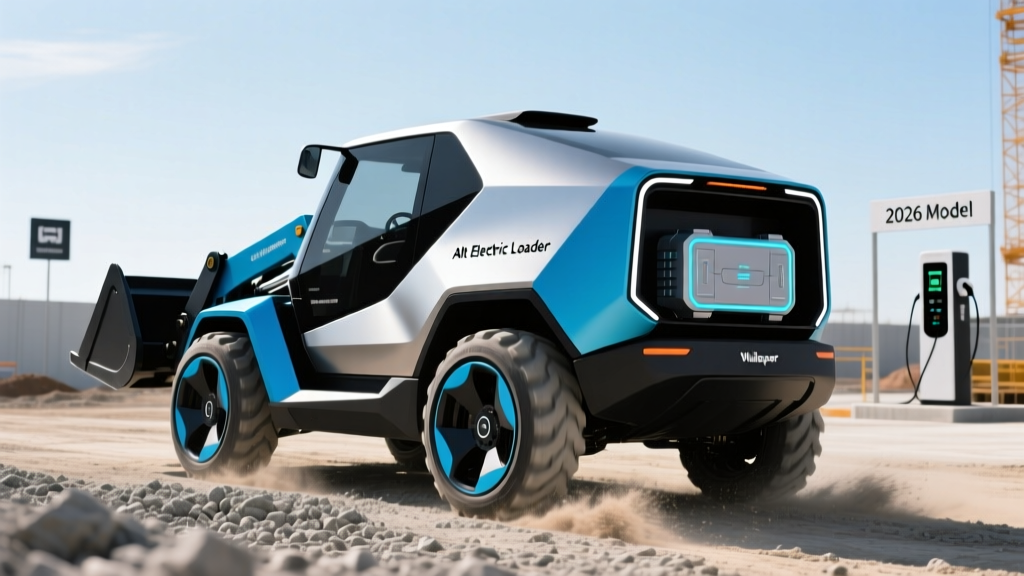
Quick answer: An "alt electric loader" typically refers to a battery-electric compact wheel loader used in construction, landscaping, agriculture, and municipal fleets. In 2026, models like the Volvo L25 Electric and Caterpillar (formerly Lehnhoff/Kramer) compact electric loaders offer between 60–100 kWh battery packs, delivering roughly 4–8 hours of mixed duty-cycle operation per charge. Base pricing ranges from $120,000–$185,000 depending on specs. Compared to a diesel equivalent, electric loaders eliminate exhaust emissions (critical for indoor and urban sites), cut fuel costs by 60–75%, and reduce maintenance spend by an estimated 30–40% — but require access to Level 2 or DC fast charging infrastructure on-site.
If you've searched for an alt electric loader, you're likely weighing whether battery-electric compact equipment can handle your daily workload — and whether the math works versus a familiar diesel machine. This guide breaks down the real numbers: battery capacity, charge times, operating costs, and the ownership realities that spec sheets don't always surface.
Key Specs: Battery, Range, and Charge Times
Unlike highway EVs measured in miles of EPA range, electric loaders are evaluated by duty-cycle hours — how long the battery sustains typical dig-lift-dump-travel cycles before needing a recharge. Here's what the current market looks like:
| Spec | Volvo L25 Electric | Typical Diesel Equivalent |
|---|---|---|
| Battery Capacity | ~60 kWh (NMC lithium-ion) | N/A — ~18 gal diesel tank |
| Operating Time (mixed cycle) | ~6–8 hours | ~8–10 hours |
| Charge Time (Level 2, 22 kW) | ~3 hours (0–100%) | Refuel: ~5 minutes |
| Charge Time (DC Fast, 40+ kW) | ~1 hour (0–80%) | N/A |
| Breakout Force | ~11,000 lbf | ~11,500 lbf |
| Horsepower | ~74 HP (electric motor) | ~74 HP (diesel engine) |
| Base MSRP (approx.) | $140,000–$160,000 | $85,000–$105,000 |
| Warranty (battery) | 5 years / 5,000 hours typical | 2–3 years powertrain |
A critical distinction: kWh (kilowatt-hours) measures the battery's total energy capacity — think of it as the "fuel tank size." kW (kilowatts) measures the rate of charge or power output. A 60 kWh battery charged at 22 kW takes roughly 2.7 hours from empty; at 40 kW DC, you reach 80% in about an hour, though charge speed tapers above 80% State of Charge to protect battery health.
Real-world operating time depends heavily on your duty cycle. Continuous heavy digging and hydraulic use will drain the battery faster than light material handling. In cold weather (below 32°F), expect a 10–20% reduction in available operating hours due to battery chemistry limitations and cabin/heater draw if equipped.
Electric Loader vs. Diesel: Total Cost of Ownership
The upfront premium for an alt electric loader is substantial — often $40,000–$70,000 more than a comparable diesel machine. But total cost of ownership (TCO) tells a different story over 5–7 years, especially for machines that run daily.
| Cost Category (5-Year / 10,000 hrs) | Electric Loader | Diesel Loader |
|---|---|---|
| Purchase Price | $150,000 | $95,000 |
| Fuel / Energy | ~$7,500 (at $0.12/kWh avg) | ~$30,000 (at $4.00/gal, ~5 gal/hr) |
| Maintenance (fluids, filters, engine) | ~$4,000 | ~$12,000 |
| DEF / Emissions Equipment | $0 | ~$2,500 |
| Charging Infrastructure Install | ~$8,000–$15,000 | $0 |
| Estimated Resale Value (Year 5) | ~$60,000 | ~$40,000 |
| Net 5-Year Cost | ~$109,500–$116,500 | ~$99,500 |
The TCO gap narrows significantly — and can flip in the electric loader's favor — when you factor in:
- Incentives: Federal and state clean-equipment incentives, including potential eligibility under IRA provisions for commercial clean vehicles and equipment. Check current rules at IRS.gov for §45W commercial clean vehicle credit details.
- Indoor use premium: If you operate indoors (warehouses, demolition, tunneling), diesel exhaust ventilation costs are eliminated entirely.
- Noise-restricted sites: Electric loaders run at roughly 65–75 dB vs. 85–95 dB for diesel — enabling work in noise-sensitive urban and residential areas without special permits.
- Higher utilization: If your machine runs 6+ hours daily, fuel savings compound rapidly.
Real-World Ownership: What First-Time Buyers Must Know
Transitioning from diesel to an alt electric loader introduces operational considerations that don't exist with conventional equipment:
Charging Infrastructure Is Non-Negotiable
You'll need at least a Level 2 (22 kW, 480V three-phase) charger at your yard or job site. Installation costs vary widely:
- Basic Level 2 install: $5,000–$10,000 if your panel has capacity
- Service upgrade (400A+ panel): $10,000–$25,000 additional
- DC fast charger (40–80 kW): $25,000–$60,000 installed — worthwhile for multi-machine fleets
Always get a site assessment from a licensed electrician before ordering equipment. Some job sites lack the grid capacity for fast charging, which means relying on overnight Level 2 sessions.
Duty-Cycle Planning Matters
Unlike a diesel loader you can refuel in five minutes, a depleted electric battery requires planning. Most fleet operators adopt an opportunity-charging strategy — plugging in during lunch breaks and idle periods to top off the battery throughout the day. A 30-minute midday charge at 40 kW can recover roughly 15–20 kWh, adding 2–3 hours of light operation.
Cold-Weather Performance
Lithium-ion batteries (NMC chemistry in most current loaders) lose efficiency in freezing temperatures. Expect 10–20% fewer operating hours in sustained sub-32°F conditions. Battery preconditioning — warming the pack before use while still plugged in — mitigates this loss. If your operation is in northern climates, spec your machine with one extra hour of battery margin.
Common Misconceptions About Electric Loaders
| Myth | Fact |
|---|---|
| "Electric loaders don't have enough power for real digging." | Electric motors deliver instant torque at 0 RPM — breakout force on the Volvo L25 Electric matches or exceeds its diesel counterpart at ~11,000 lbf. |
| "The battery won't last a full shift." | With a 60 kWh pack, mixed-duty cycles yield 6–8 hours. Heavy continuous digging reduces this to ~4–5 hours — plan charging accordingly. |
| "Battery replacement will bankrupt me." | Current NMC battery replacement costs run $15,000–$25,000. With proper thermal management and avoiding repeated 100% charges, most packs retain 80%+ capacity at 5,000 hours. |
| "I can just use a standard outlet." | A 120V Level 1 outlet delivers ~1.4 kW — it would take 40+ hours to charge a 60 kWh pack. Level 2 minimum is required for practical use. |
| "Electric loaders are zero-emission everywhere." | On-site, yes — zero tailpipe emissions. Upstream, emissions depend on your local grid mix. In coal-heavy regions, well-to-wheel emissions are reduced but not eliminated. |
Decision Framework: Is an Alt Electric Loader Right for You?
Choose an electric loader if:
- You work indoors, in tunnels, or in noise-restricted urban zones
- Your daily operation fits within 4–8 hours of mixed duty cycle
- You have (or can install) Level 2 or DC fast charging at your base
- You plan to keep the machine 5+ years to recoup the upfront premium through fuel/maintenance savings
- You want to bid on projects with sustainability or zero-emission requirements
- Your local utility offers commercial EV charging incentives or time-of-use rates
Stick with diesel (or wait) if:
- Your operation demands 10+ continuous hours of heavy digging with no charging access
- You work across remote job sites without grid power
- Your budget cannot absorb the $40K–$70K upfront premium, even with incentives
- You need a large (3+ cubic yard bucket) production-class loader — electric options above compact size remain limited in 2026
Federal Incentives and Fleet Considerations
Commercial buyers should investigate the §45W Commercial Clean Vehicle Credit (up to $40,000 for qualifying heavy equipment) and state-level clean construction equipment incentives. Eligibility rules — including domestic content and battery sourcing requirements — change frequently. Consult the current guidance at IRS.gov §45W and work with a tax professional to confirm your specific qualification.
For fleet operators running 3+ loaders, the business case strengthens considerably. Shared DC fast-charging infrastructure amortizes across multiple machines, and cumulative diesel displacement at commercial electricity rates ($0.08–$0.15/kWh in many regions) delivers payback periods of 3–5 years depending on utilization.
Frequently Asked Questions
How long does an electric loader battery last before replacement?
Most manufacturers warranty the battery for 5 years or 5,000 operating hours, whichever comes first, with a guaranteed capacity retention of 70–80%. Real-world data from early adopters suggests NMC packs in construction equipment retain usable capacity for 7,000–10,000 hours with proper thermal management and avoidance of repeated full-charge cycles.
Can I charge an electric loader from a generator on a remote job site?
Technically yes, but it's inefficient and partially defeats the purpose. A diesel generator producing 20–40 kW to charge a battery introduces conversion losses of 15–25%. For truly remote sites without grid power, diesel loaders remain more practical in 2026.
Are electric loaders eligible for the §30D consumer tax credit?
No — the §30D credit applies to personal-use passenger vehicles. Commercial and off-road equipment falls under §45W (Commercial Clean Vehicle Credit) or other industrial equipment incentive programs. Check IRS.gov for current-year qualification details.
What maintenance does an electric loader require?
Significantly less than diesel. There's no engine oil, fuel filters, DEF fluid, DPF regeneration, or exhaust system maintenance. You'll still service hydraulic fluid, grease fittings, tires/tracks, and cabin air filters. Estimated annual maintenance savings: $1,500–$3,000 per machine versus diesel.
How does regenerative braking work on a loader?
Electric loaders recover energy during deceleration and downhill travel, converting kinetic energy back into battery charge. In stop-and-go material handling cycles, regen can extend operating time by 5–15% compared to a theoretical cycle without regeneration — similar to how one-pedal driving extends range in highway EVs.