The Bottom Line on the Alpha Motor Wolf
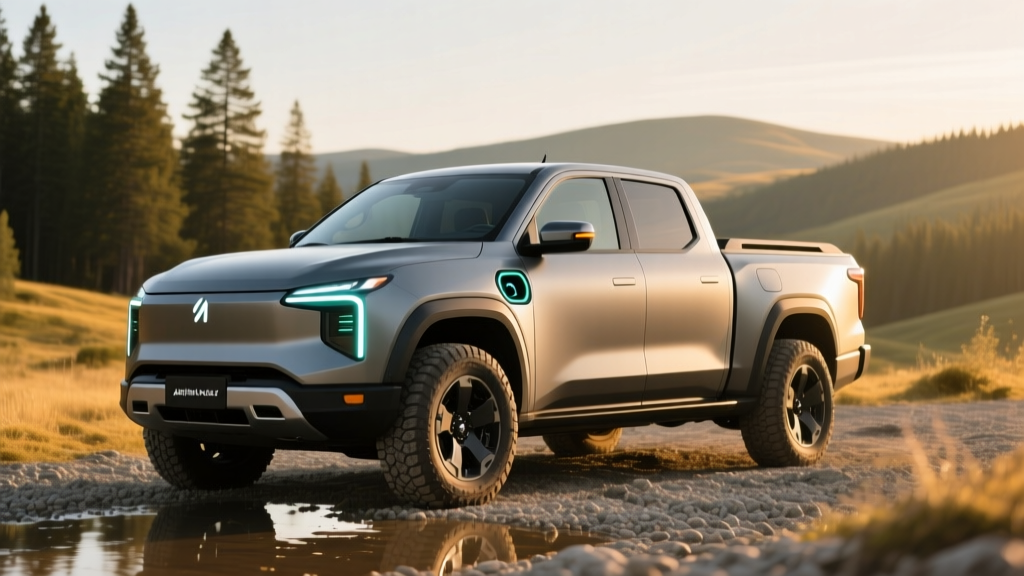
The Alpha Motor Wolf (and its SUV sibling, the Wolf Wagon) is a compact electric pickup from California-based startup Alpha Motor Corporation. As of early 2026, the Wolf remains in pre-production/prototype status — Alpha has showcased functional prototypes and accepted refundable reservations, but no customer deliveries have occurred and the company has not confirmed a firm production date. The announced target is a base price around $46,000 with an EPA-estimated range of 275+ miles and a ~75 kWh battery pack. If it reaches production, it would undercut rivals like the Ford Maverick hybrid and Rivian R1T on price, but buyers should treat all specs as preliminary and weigh the significant risk inherent in purchasing from an unproven startup.
What Is Alpha Motor, and What Is the Wolf EV?
Alpha Motor Corporation (not to be confused with Hyundai's Alpha engine family or any other "electric alpha" automotive term) is a U.S.-based EV startup founded in 2020 and headquartered in Irvine, California. The company has focused on retro-styled, utility-oriented electric vehicles — most notably the Wolf compact pickup, the Wolf Wagon SUV variant, the Ace compact cargo van, and the Jax crossover. Alpha's design language leans heavily into 1980s utilitarian aesthetics: boxy panels, exposed rivets, and a truck-first ethos.
The Wolf slots into a space that's surprisingly uncrowded: a small, affordable, body-on-frame-style electric pickup. Its closest conceptual rival is the Ford Maverick (hybrid, not fully electric) and, at a higher price point, the Rivian R1T. Alpha has also teased the Superwolf, a larger variant aimed at fleet and commercial use.
Key announced specifications for the Alpha Wolf (preliminary):
| Spec | Value |
|---|---|
| Battery capacity | ~75 kWh (usable, chemistry TBD) |
| EPA-est. range (target) | 275+ miles |
| Drivetrain | RWD standard, AWD optional |
| 0-60 mph | ~6.2 seconds (claimed, RWD) |
| Towing capacity | ~3,000 lbs (claimed) |
| Payload | ~1,620 lbs (claimed) |
| Bed length | ~5 ft |
| Base MSRP (target) | ~$46,000 |
| DC fast charge (target) | Up to ~150 kW peak |
| Production status | Pre-production / prototype |
Source: Alpha Motor Corporation press materials. All figures are manufacturer-claimed targets and have not been independently verified or EPA-certified.
How the Alpha Wolf Compares to Gas and Hybrid Trucks
The Wolf's value proposition only makes sense in context. Here's how it stacks up against the two trucks most buyers in this segment actually cross-shop:
| Attribute | Alpha Wolf (announced) | Ford Maverick Hybrid (2026) | Rivian R1T Dual-Motor (2026) |
|---|---|---|---|
| Powertrain | BEV | HEV (2.5L hybrid) | BEV |
| Base MSRP | ~$46,000 | ~$28,500 | ~$71,700 |
| EPA range / MPG | 275 mi (claimed) | 42 MPG combined | ~352 mi (EPA) |
| Fuel/energy cost per mile | ~$0.04–$0.06 | ~$0.09–$0.11 | ~$0.04–$0.06 |
| Towing | ~3,000 lbs | 2,000 lbs (hybrid) | 11,000 lbs |
| Availability | Not yet in production | On sale now | On sale now |
| Federal tax credit (§30D) | Unknown eligibility | Not eligible (HEV) | Up to $7,500 (verify sourcing) |
The Maverick Hybrid wins on upfront cost by a wide margin — roughly $17,500 less than the Wolf's target price. But over five years of ownership, the Wolf's lower per-mile energy cost and reduced maintenance (no oil changes, no transmission fluid, regenerative brake wear reduction) could recover a meaningful chunk of that gap. The Rivian R1T is a far more capable truck — 11,000-lb towing, 352 real EPA-certified miles, proven Supercharger/NACS network access — but at nearly double the Wolf's target price, it occupies a different market tier entirely.
Real-World Ownership Costs: What the Numbers Actually Look Like
Let's build a realistic five-year cost comparison. This assumes 12,000 miles/year, a national-average electricity rate of $0.16/kWh (home charging), and gasoline at $3.40/gallon. For the Wolf, we use the announced 75 kWh battery and an assumed efficiency of 3.2 mi/kWh (a reasonable estimate for a compact electric truck).
| 5-Year Cost Category | Alpha Wolf (est.) | Ford Maverick Hybrid |
|---|---|---|
| Purchase price (base) | $46,000 | $28,500 |
| Federal tax credit | $0–$7,500 (TBD) | $0 |
| Effective purchase | $38,500–$46,000 | $28,500 |
| Fuel/energy (60,000 mi) | $2,800–$4,200 | $5,700–$6,800 |
| Maintenance (5 yr) | ~$1,200 | ~$3,000 |
| Insurance (5 yr avg.) | ~$9,500 | ~$7,200 |
| Estimated depreciation | High (startup risk) | Moderate (proven brand) |
| Total (excl. depreciation) | $52,000–$60,900 | $44,400–$45,500 |
Even in the Wolf's best-case scenario — full $7,500 credit eligibility, cheap home charging, minimal maintenance — it still costs roughly $6,000–$8,000 more over five years than the Maverick Hybrid before factoring in depreciation. And depreciation is the wild card: a startup with no production history could see 50%+ value loss in three years, while the Maverick holds value well thanks to Ford's established dealer network and parts availability.
The Wolf makes the most financial sense for buyers who:
- Have reliable home Level 2 charging (a 240V/40A circuit adds ~$20–$25 of range per hour of charging)
- Drive mostly in urban/suburban settings where regenerative braking maximizes efficiency
- Can absorb the startup risk — meaning this isn't their only vehicle
- Value zero tailpipe emissions and are willing to pay a modest premium for it
What First-Time EV Buyers Need to Know Before Reserving
If you're considering the Alpha Wolf as your first electric vehicle, several practical realities deserve honest attention:
Home Charging Is Nearly Essential
Public DC fast charging for a 75 kWh battery at ~150 kW peak would take roughly 30–35 minutes for a 10–80% charge. That's acceptable for road trips, but daily driving on public chargers is expensive ($0.35–$0.55/kWh on networks like Electrify America) and time-consuming. A home Level 2 installation typically costs $800–$2,500 including the charger and electrician labor (panel upgrades can add $1,500–$3,000 if your home has a 100A service). Without home charging, EV ownership friction increases substantially.
Real-World Range Will Be Less Than the Sticker
Alpha's claimed 275-mile target has not been EPA-certified. Based on comparable compact EVs and trucks, expect real-world highway range of roughly 220–245 miles in moderate temperatures, dropping to 175–200 miles in sub-freezing conditions. Cold weather reduces battery efficiency by 20–30% due to increased internal resistance and cabin heating demands. A heat pump (whether Alpha includes one is unconfirmed) can mitigate this loss somewhat.
The §30D Tax Credit Is Not Guaranteed
Under current IRS §30D rules, a new clean vehicle must meet battery component sourcing and critical mineral requirements, the buyer must fall under income caps ($150K single / $300K joint), and the vehicle MSRP must not exceed $80,000 for trucks. Alpha Motor has not confirmed whether its battery supply chain meets the sourcing thresholds. Do not assume the full $7,500 credit — budget as if you won't receive it.
Startup Risk Is Real
The EV startup graveyard is crowded: Lordstown Motors, Bollinger Motors (pivoted away from consumer trucks), Fisker Inc. (filed bankruptcy in 2024), and Canoo all failed to reach meaningful production. Alpha Motor has moved more deliberately than some — showing functional prototypes and securing some partnerships — but without a confirmed production facility, binding supply contracts, or delivery track record, a reservation carries material risk. Refundable deposits mitigate financial exposure, but time and opportunity cost remain.
Common Misconceptions About the Alpha Wolf (and EVs Like It)
| Myth | Fact |
|---|---|
| "275 miles of range means I can drive 275 miles before charging." | EPA range is a laboratory estimate. Sustained highway driving at 75 mph, cold weather, and hill climbing all reduce range. Budget for 220–245 real-world miles. |
| "EVs cost more to insure because batteries are expensive." | Partly true. EV insurance premiums run 10–20% higher on average, but this varies by model, driver profile, and insurer. Get quotes before committing. |
| "I'll save $7,500 on taxes automatically." | The §30D credit depends on battery sourcing, your income, and MSRP caps. Many EVs in 2026 qualify for partial or no credit. Check fueleconomy.gov for the current eligible vehicle list. |
| "EV batteries need replacing every few years." | Modern lithium-ion EV batteries typically retain 85–90% capacity after 100,000 miles. Most manufacturers warrant 8 years/100,000 miles at 70%+ retention. Alpha's specific warranty terms are unannounced. |
| "A compact EV truck can tow like a full-size." | The Wolf's ~3,000-lb tow rating is adequate for a small trailer or jet ski but not a boat or camper. The Rivian R1T tows 11,000 lbs; the F-150 Lightning tows up to 10,000 lbs. |
Decision Framework: Should You Reserve the Alpha Wolf?
Reserve the Wolf (with a refundable deposit) if:
- You want a compact electric pickup and can wait 1–3+ years for potential delivery
- You already have a reliable daily driver — the Wolf is a second/future vehicle
- You have home Level 2 charging or can install it
- You're comfortable with startup risk and understand the deposit may sit for years or the company may not reach production
- The retro-utility design and sub-$50K target price align with your priorities
Skip the Wolf and buy now if:
- You need a truck in the next 6 months — the Maverick Hybrid ($28.5K, 42 MPG) or the F-150 Lightning ($55K+, proven production) are available today
- This will be your only vehicle — production delays or company failure would leave you without transportation
- You lack home charging and rely exclusively on public infrastructure
- You need verified towing above 3,000 lbs or proven off-road capability
- Resale value and dealer support matter to you — established brands win here
Frequently Asked Questions
Is the Alpha Motor Wolf available to buy right now?
No. As of early 2026, Alpha Motor has not begun customer deliveries. The company has shown functional prototypes and accepted refundable reservations, but production timing remains unconfirmed. All specifications are preliminary.
How much does it cost to reserve the Alpha Wolf?
Alpha has typically offered refundable reservations in the $100–$500 range. Because the deposit is refundable, financial risk is limited to the opportunity cost of your money. Always confirm current terms directly with the company.
Will the Alpha Wolf qualify for the $7,500 federal EV tax credit?
Unknown. Eligibility under IRS §30D depends on battery component and critical mineral sourcing requirements, buyer income limits, and MSRP caps. Alpha has not disclosed its battery supply chain details. Do not factor the credit into your budget until the vehicle appears on the IRS/fueleconomy.gov eligible list.
What is the real-world range of the Alpha Wolf?
Alpha claims 275+ miles, but this is not EPA-certified. Based on comparable EVs, expect roughly 220–245 miles in mixed real-world driving and 175–200 miles in cold weather (below 32°F). Highway driving at 70+ mph is the least efficient scenario for any EV.
How does the Wolf compare to the Ford Maverick Hybrid?
The Maverick Hybrid starts ~$17,500 lower, gets 42 MPG combined, and is available now with full Ford dealer support. The Wolf offers zero tailpipe emissions, lower per-mile energy costs, and a distinctive design — but carries startup risk, a higher price, and no confirmed delivery date. For most buyers needing a truck today, the Maverick is the pragmatic choice.
Does Alpha Motor have a service and parts network?
Not yet. Unlike Tesla, Rivian, or Ford, Alpha has no established service centers, mobile service fleet, or certified parts supply chain. This is a significant consideration for long-term ownership — even minor collision damage could result in extended downtime if parts aren't readily available.