Quick Answer: Is the Alpha Electric Truck Ready to Buy?
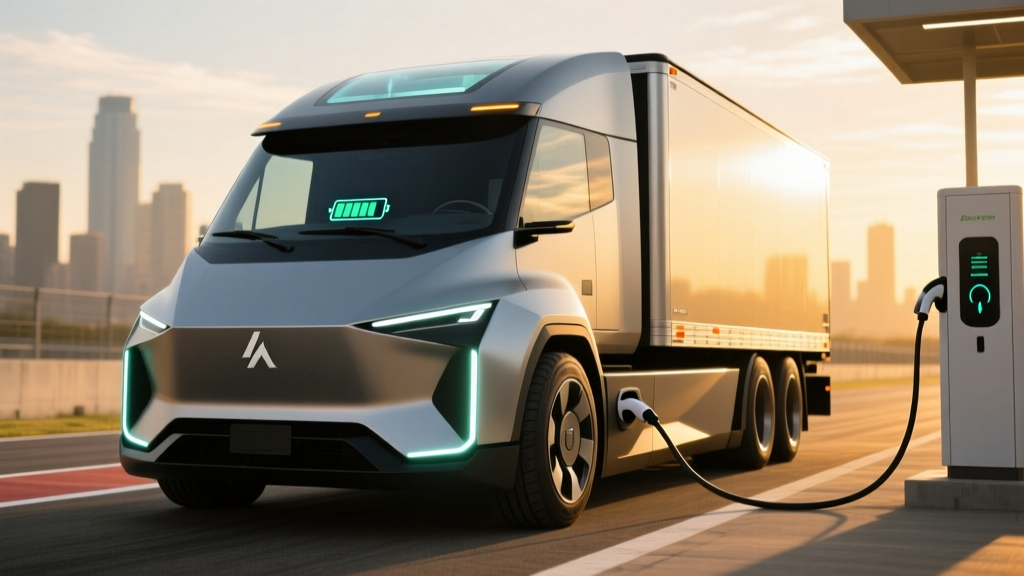
As of early 2026, Alpha Motor Corporation's electric trucks — the Ace (compact pickup) and Wolf (mid-size pickup) — remain in pre-production / reservation-only status. Alpha has not yet begun customer deliveries, and final EPA range, pricing, and charging specs are preliminary. If you're researching an Alpha electric truck for purchase, know that you cannot currently take delivery. For buyers who need an electric truck today, alternatives like the Ford F-150 Lightning, Rivian R1T, or Chevrolet Silverado EV are in production and available. This guide covers everything announced about the Alpha lineup, projected ownership costs, and a framework to decide whether to wait or buy now.
What Alpha Has Announced: Ace and Wolf Specs at a Glance
Alpha Motor Corporation, an Irvine, California-based EV startup, has unveiled several vehicle concepts and prototypes since 2021, including the Ace compact truck, the Wolf mid-size truck, and the Wolf Plus extended-cab variant. The company has demonstrated rolling prototypes and conducted limited durability testing, but has not announced a firm production start date or a contracted manufacturing partner as of this writing.
Here's what Alpha has published about the Ace and Wolf platforms, keeping in mind these are preliminary, manufacturer-estimated figures — not EPA-certified:
| Spec | Alpha Ace (Compact) | Alpha Wolf (Mid-Size) | Alpha Wolf Plus |
|---|---|---|---|
| Body Style | 2-door compact pickup | 2-door mid-size pickup | 4-door extended cab pickup |
| Est. Battery Capacity | ~75 kWh (NMC) | ~85 kWh (NMC) | ~100 kWh (NMC) |
| Est. Range (Manufacturer) | ~250 miles | ~275 miles | ~300+ miles |
| Drivetrain | RWD / AWD options | RWD / AWD options | AWD standard (est.) |
| Est. Motor Output | ~200-250 hp | ~250-300 hp | ~300+ hp |
| Payload Capacity (Target) | ~1,500 lbs | ~1,800 lbs | ~2,000 lbs |
| Towing Capacity (Target) | ~3,000 lbs | ~5,000 lbs | ~6,000+ lbs |
| DC Fast Charge (Target) | ~150 kW peak | ~175 kW peak | ~175-200 kW peak |
| Level 2 Charge Rate | ~11 kW (est.) | ~11 kW (est.) | ~11 kW (est.) |
| Est. Base MSRP | ~$36,000–$42,000 | ~$42,000–$52,000 | ~$50,000–$60,000 |
| Production Status | Pre-production | Pre-production | Pre-production |
Important caveat: None of these figures are EPA-certified. Real-world range typically runs 10–20% below manufacturer estimates for highway driving at 70+ mph, and cold-weather operation (below 32°F) can reduce range by an additional 20–30% depending on whether the vehicle uses a heat pump for cabin and battery thermal management. Until Alpha publishes official EPA test results on fueleconomy.gov, treat every number here as directional.
Alpha Electric Truck vs. Available EV Trucks: A Reality Check
The most useful way to evaluate the Alpha Ace and Wolf is against electric trucks you can actually order, take delivery of, and service today. Here's how the projected Alpha specs compare to three established competitors:
| Spec | Alpha Ace (Est.) | Ford F-150 Lightning (2025) | Rivian R1T Dual-Motor | Chevy Silverado EV 4WT |
|---|---|---|---|---|
| EPA Range | ~250 mi (unverified) | 230–320 mi | 270–420 mi | 280–492 mi |
| Usable Battery | ~75 kWh | 98–131 kWh | 106–149 kWh | 200 kWh |
| Peak DC Charge | ~150 kW | 150–210 kW | 200+ kW | 350 kW |
| 10–80% Charge Time | ~35 min (est.) | ~38–44 min | ~30 min | ~25 min |
| Towing Capacity | ~3,000 lbs | 7,700–10,000 lbs | 11,000 lbs | 8,000–10,000 lbs |
| Starting MSRP | ~$36,000 | ~$54,995 | ~$69,900 | ~$39,900 (4WT fleet) |
| Availability | Not in production | In production | In production | In production (fleet focus) |
| §30D Tax Credit Eligibility | TBD | Partial (check sourcing) | Partial (check sourcing) | Partial (check sourcing) |
The Alpha's projected appeal is its lower starting price and smaller, more urban-friendly footprint — the Ace is closer in size to a Hyundai Santa Cruz or Ford Maverick than an F-150. But the trade-off is clear: lower payload, lower towing, unproven range, and zero production certainty.
Projected Ownership Costs: What an Alpha Electric Truck Would Actually Cost
Let's model what owning an Alpha Ace might cost if it launches near the projected $38,000 base MSRP, compared against a comparably priced gas compact truck (e.g., a Ford Maverick Hybrid at ~$28,000) and a used Ford F-150 Lightning. All figures are estimates for a 5-year / 75,000-mile ownership period.
| Cost Category | Alpha Ace (Projected) | Ford Maverick Hybrid | Ford F-150 Lightning (Used, ~$45K) |
|---|---|---|---|
| Purchase Price | $38,000 | $28,000 | $45,000 |
| Federal Tax Credit (§30D) | TBD – up to $7,500 | $0 (hybrid, not PHEV/BEV) | Up to $4,000 (used EV credit) |
| Effective Purchase Price | $30,500–$38,000 | $28,000 | $41,000–$45,000 |
| Home Charger Install (Level 2) | $800–$2,000 | $0 | $800–$2,000 |
| Fuel/Energy (5 yr / 75K mi) | $2,800–$4,500 | $5,200–$6,800 | $3,200–$5,000 |
| Maintenance (5 yr) | $600–$1,000 | $2,000–$3,000 | $600–$1,200 |
| Insurance (5 yr avg.) | $7,500–$10,000 | $5,500–$7,500 | $8,000–$11,000 |
| Est. Depreciation (5 yr) | TBD (no track record) | ~$8,000–$12,000 | ~$12,000–$18,000 |
| Est. Total 5-Year Cost | $50,200–$65,500+ | $48,700–$57,300 | $65,600–$82,200 |
Key takeaways from this model:
- Energy savings are real. At a national average electricity rate of ~$0.16/kWh and an estimated efficiency of 3.0–3.5 miles/kWh, the Ace would cost roughly $0.05–$0.06 per mile to fuel. The Maverick Hybrid at ~37 MPG combined and $3.30/gal gas costs ~$0.09/mile. Over 75,000 miles, that's a $2,200–$3,000 fuel savings for the EV.
- Maintenance savings are real. No oil changes, no spark plugs, no transmission fluid. EV brake pads last significantly longer due to regenerative braking. Expect 60–70% lower scheduled maintenance costs.
- Insurance is the wildcard. EV insurance premiums run 15–25% higher on average than comparable gas vehicles due to higher repair costs and battery replacement exposure. Until Alpha establishes a service network and parts supply chain, insurers may price the Ace at a premium — or decline to underwrite it at all.
- Depreciation is the biggest unknown. EV startups without established production (Fisker, Lordstown, Bollinger) have seen early buyers face severe depreciation or total loss when companies folded. This is the single largest financial risk of buying an Alpha.
Federal Tax Credit: Will the Alpha Electric Truck Qualify?
The §30D Clean Vehicle Credit, governed by the IRS, offers up to $7,500 for new qualifying EVs — but eligibility depends on multiple requirements that Alpha has not yet confirmed it meets:
- MSRP cap: Pickup trucks must have an MSRP at or below $80,000. Alpha's projected pricing clears this easily.
- Buyer income limits: AGI must not exceed $150,000 (single), $225,000 (head of household), or $300,000 (joint filers).
- Battery sourcing: A percentage of critical minerals and battery components must be sourced from the US or free-trade-agreement countries. Alpha has not disclosed its supply chain.
- Final assembly: Must occur in North America. Alpha has not announced a production facility.
- Foreign Entity of Concern (FEOC): Battery components and critical minerals cannot be sourced from FEOC entities (primarily Chinese companies). This is the requirement that has disqualified the most EVs in 2024–2026.
- Point-of-sale transfer: Eligible buyers can transfer the credit to the dealer for an immediate price reduction at purchase.
Bottom line: Until Alpha confirms its battery supplier, critical mineral sourcing, and North American assembly location, the §30D credit is entirely speculative. Do not factor it into your purchase budget. Consult a tax professional and check the IRS's updated qualified vehicle list before committing.
Real-World Ownership Considerations for an Alpha Truck Buyer
Beyond the spec sheet, here are the practical ownership questions that will determine whether the Alpha Ace or Wolf is viable for your situation:
Home Charging Access
Any EV ownership experience hinges on reliable home charging. A Level 2 home charger (240V, ~11 kW) would fully replenish a 75 kWh Ace battery in roughly 7–8 hours — adequate for overnight charging. Installation typically costs $800–$2,000 for homes with a 200-amp electrical panel and a garage or driveway outlet within 25 feet of the panel. Homes with older 100-amp panels may need a $2,000–$4,000 panel upgrade. If you cannot install home charging (apartment, street parking, HOA restrictions), relying on public DC fast charging at $0.30–$0.50/kWh eliminates most of the fuel-cost advantage and adds significant time inconvenience.
Climate and Range Reality
If you live in a cold-weather climate (Upper Midwest, Northeast, Mountain West), expect 20–30% range reduction in sustained sub-freezing temperatures. A 250-mile estimated range becomes 175–200 miles in January in Minnesota. Battery preconditioning and a heat pump (neither confirmed for Alpha's platform) can mitigate but not eliminate this loss. Hot-climate buyers (Arizona, Texas) should monitor battery degradation data — sustained high-temperature operation accelerates NMC chemistry degradation unless active liquid cooling is robust.
Service Network and Parts Availability
This is the most underappreciated risk of buying from a startup. Alpha has no confirmed dealer network, no certified collision repair centers, and no established parts supply chain. If you dent a fender or need a windshield replacement, you could face weeks or months of downtime. Established EV makers (Ford, Rivian, GM) have thousands of service points. Alpha has zero as of today.
Towing and Payload Reality
The Ace's projected 3,000-lb tow rating is adequate for a small utility trailer or a pair of dirt bikes, but not a boat, camper, or horse trailer. If you need real towing capability, the F-150 Lightning (7,700–10,000 lbs) or Rivian R1T (11,000 lbs) are the only production electric trucks in the game. Also remember: towing at highway speeds can cut EV range by 40–50%.
Common Misconceptions About the Alpha Electric Truck
| Myth | Fact |
|---|---|
| "The Alpha Ace is a $36,000 electric truck you can buy now." | Alpha is taking reservations but has not started production. No firm delivery date exists. The final MSRP may differ significantly from early projections. |
| "It'll definitely qualify for the $7,500 tax credit." | §30D eligibility requires confirmed North American assembly, battery sourcing compliance, and FEOC-free supply chains — none of which Alpha has publicly verified. |
| "250 miles of range is plenty for a truck." | 250 miles is the manufacturer estimate. Real-world highway driving at 70 mph may yield 200–220 miles. Add towing, cold weather, or elevation changes, and you could see 150–175 miles. |
| "It's basically the same as a Ford Maverick but electric." | The Ace targets a similar size class, but the Maverick Hybrid is in production, has a nationwide dealer network, gets 42 MPG city, starts at ~$26,000, and has proven reliability. The Ace offers none of these certainties. |
| "EV trucks have no maintenance costs." | EVs eliminate oil changes and many drivetrain maintenance items, but tires wear 15–20% faster due to instant torque and heavier curb weight. Cabin air filters, brake fluid, wiper blades, and 12V battery replacement are still required. |
Decision Framework: Should You Wait for Alpha or Buy Now?
Wait for the Alpha Ace or Wolf if:
- You don't need a truck within the next 12–18 months and can afford to absorb the risk of a startup that may never deliver.
- Your use case is light-duty urban/suburban: commuting, hardware store runs, occasional small-trailer towing under 2,500 lbs.
- You have home charging access and live in a moderate climate where range loss is less of a concern.
- You're comfortable being an early adopter with limited service infrastructure and uncertain resale value.
- The compact truck footprint (similar to a Maverick or Santa Cruz) is more important to you than full-size capability.
Buy a production EV truck now if:
- You need a truck for work, towing, or family use within the next 6 months.
- You require proven towing capacity (5,000+ lbs) or verified EPA range over 300 miles.
- You want §30D tax credit certainty — production trucks have known sourcing and assembly data you can verify.
- You need a local service center and access to OEM replacement parts within days, not months.
- Resale value matters — established brands have depreciation track records; startups do not.
Consider a hybrid truck instead if:
- You can't install a home charger and don't want to rely on public DC fast-charging infrastructure.
- You regularly tow heavy loads over long distances where EV range collapse makes trip planning impractical.
- The Ford Maverick Hybrid (42 MPG city, ~$26,000, in production now) meets your payload and utility needs without the EV charging complexity.
What First-Time EV Truck Buyers Should Know
If the Alpha Ace or Wolf is your introduction to electric vehicles, here are the foundational realities that apply to any EV truck purchase:
- kW vs. kWh: Kilowatts (kW) measure power — how fast you can charge or how hard the motor can push. Kilowatt-hours (kWh) measure energy — the size of your "fuel tank." A 75 kWh battery charged at 11 kW takes roughly 7 hours from empty to full. A 150 kW DC fast charger can refill that same battery to 80% in about 30–35 minutes (charging slows above 80% to protect battery health — this is called the charge curve taper).
- MPGe explained: Miles Per Gallon equivalent lets you compare EV efficiency to gas vehicles. 1 gallon of gasoline ≈ 33.7 kWh of electricity. An EV truck getting 2.5–3.0 miles/kWh translates to roughly 84–101 MPGe.
- Level 1 vs. Level 2 vs. DC Fast Charging: Level 1 (120V household outlet) adds ~3–5 miles per hour — too slow for daily truck use. Level 2 (240V, like a dryer outlet) adds ~25–35 miles per hour and is the daily standard. DC fast charging (50–350 kW) adds 100–300+ miles in 20–30 minutes and is for road trips.
- Battery warranty matters: Federal law mandates a minimum 8-year/100,000-mile battery warranty for EVs. Most manufacturers guarantee the battery will retain at least 70% of original capacity during that period. Alpha has not published its warranty terms.
- Preconditioning: This feature warms or cools the battery before you arrive at a DC fast charger, enabling faster charging speeds. Without preconditioning, a cold battery may charge at a fraction of peak kW. Confirm whether any Alpha prototype includes this feature.
Frequently Asked Questions
Can I order an Alpha electric truck right now?
You can place a refundable reservation on Alpha Motor's website, but the company has not begun production or announced a firm delivery timeline. A reservation is not a purchase order, and there is no guaranteed delivery date.
What is the Alpha Ace's estimated range?
Alpha has targeted approximately 250 miles for the Ace compact truck, but this is a manufacturer estimate — not an EPA-certified figure. Real-world highway range will likely be 200–220 miles, and cold-weather range could drop to 175–190 miles. Until the EPA tests the production vehicle, all range figures are speculative.
How does the Alpha Ace compare to the Ford Maverick Hybrid?
The Maverick Hybrid is in production, starts at ~$26,000, gets 42 MPG city / 33 MPG highway, has a nationwide dealer and service network, and offers a 1,500-lb payload with a 2,000-lb tow rating. The Ace would offer zero tailpipe emissions and lower per-mile fuel costs, but at a higher projected price, with zero production certainty, and no service infrastructure. For most buyers needing a compact truck today, the Maverick Hybrid is the pragmatic choice.
Will the Alpha Wolf qualify for the $7,500 federal EV tax credit?
It's unknown. §30D eligibility requires North American final assembly, compliant battery component sourcing, and critical minerals from approved supply chains. Alpha has not disclosed these details. Check the IRS qualified vehicle list before making any purchase decision based on the credit.
What battery chemistry does Alpha use?
Alpha has referenced NMC (nickel manganese cobalt) chemistry in its early technical disclosures. NMC offers higher energy density than LFP (lithium iron phosphate), which is advantageous for trucks where range-per-kWh matters. However, NMC is more expensive and typically degrades slightly faster than LFP over thousands of charge cycles. Final chemistry specs for production vehicles have not been confirmed.
Is Alpha Motor Corporation the same as Alpha Motors from South Korea?
No. Alpha Motor Corporation (Irvine, CA) is a separate entity from any similarly named company. Be careful with search results — multiple "Alpha" branded auto companies exist, and confusion is common.
What should I do if I want an electric truck but can't wait for Alpha?
Your best current options are the Ford F-150 Lightning (full-size, 230–320 mi range, ~$55K+), the Rivian R1T (premium mid-size, 270–420 mi range, ~$70K+), or the Chevrolet Silverado EV (full-size, fleet-oriented 4WT starting ~$40K, consumer trims higher). For a compact/affordable electric truck, no production model currently exists — the Alpha Ace, if it reaches production, would be the first in that niche.