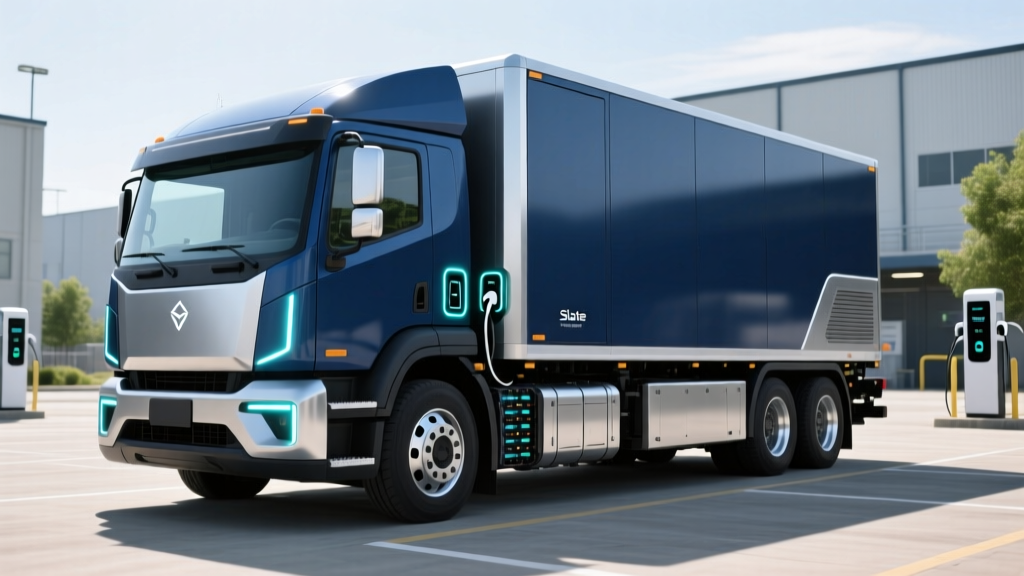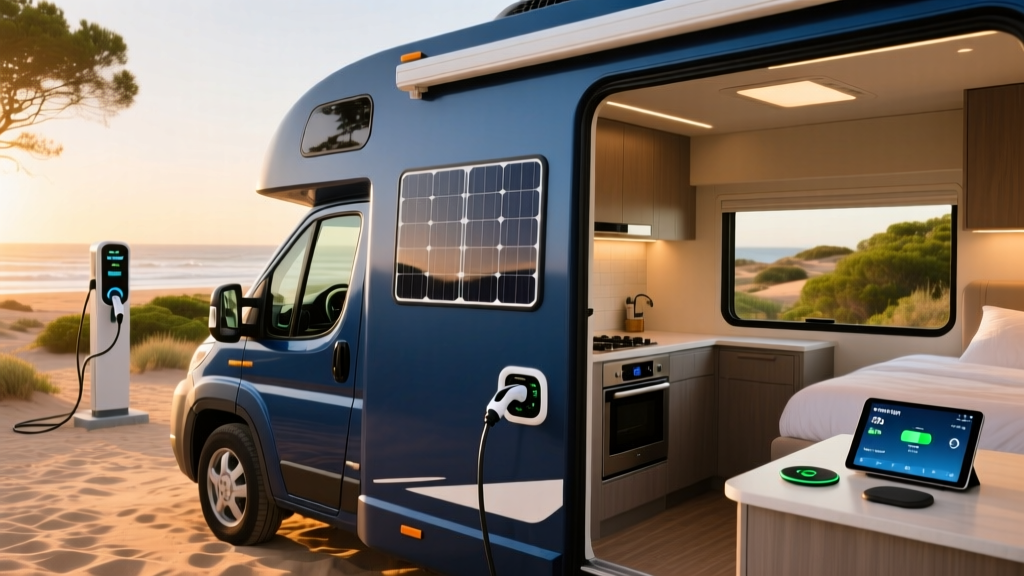
If you're searching for an all electric RV you can buy and drive off a dealer lot today, the honest answer is short: fully electric Class A, B, or C motorhomes are not yet available for mainstream retail purchase in the United States as of early 2026. What does exist are a handful of announced prototypes, limited-production electric chassis from companies like Thor Industries (via their partnership with Harbinger), and electric travel-trailer concepts with battery-assisted axles from Lightship and Airstream (e-Stream). For most RV buyers right now, the practical electrified path is either a plug-in hybrid tow vehicle paired with a conventional trailer, or waiting for the 2027–2028 production timelines that manufacturers have targeted for battery-electric motorhomes.
That doesn't mean the electric RV space is vaporware — it means the physics of moving 10,000–26,000 lbs of vehicle and living space down a highway at 65 mph requires battery packs in the 150–300+ kWh range, which remain prohibitively expensive and heavy for mass production at current cell costs. Below, we break down exactly where the technology stands, what the numbers look like, and what you should actually plan for if you want an electrified RV setup.
Quick Answer: Can You Buy an All Electric RV Today?
No mainstream, fully electric motorhome (Class A/B/C) is available for retail purchase in the US as of 2026. The closest options are:
- Lightship L1 — an electric travel trailer with a ~100-mile battery-assisted range (announced, limited early deliveries to reservation holders)
- Thor/Harbinger electric chassis — a purpose-built EV platform for Class A/C motorhomes, targeting 2027–2028 production
- Airstream e-Stream — a battery-equipped concept trailer shown at trade shows, no confirmed retail date
- Winnebago e-RV (prototype) — a single-unit electric Class C built on a Ford E-Transit chassis, not in production
Why Electric RVs Are So Hard to Build
The core challenge is energy density. A gasoline motorhome with an 80-gallon fuel tank carries roughly 2,680 kWh of chemical energy (gasoline contains about 33.5 kWh per gallon). Even accounting for the ~25% thermal efficiency of an internal combustion engine, that yields approximately 670 kWh of usable motive energy — enough to push a 20,000-lb Class A motorhome roughly 300–400 miles at highway speeds.
To replicate that range with batteries at current energy densities (~250 Wh/kg at the pack level for NMC cells), you'd need a 200–250 kWh battery pack weighing 1,800–2,200 lbs and costing $25,000–$40,000 at the cell level alone. Add in the structural integration, thermal management system, and the living-space payload requirements of an RV, and you quickly see why no manufacturer has cracked a sub-$150,000 electric Class A with 250+ miles of range.
Electric pickup trucks like the Ford F-150 Lightning (extended-range 131 kWh battery, EPA 320 miles) and Chevrolet Silverado EV (200+ kWh pack, EPA 440 miles) have demonstrated that large-format EV batteries work — but these are unladen trucks, not trucks towing 8,000-lb travel trailers. Towing range drops 40–60% in real-world highway conditions, which is the same physics problem an integrated electric motorhome faces.
What's Actually in the Pipeline: Announced Electric RV Platforms
| Platform / Model | Type | Battery (Est.) | Target Range | Status (2026) | Est. Price |
|---|---|---|---|---|---|
| Lightship L1 | Electric travel trailer | ~80 kWh (LFP) | ~100 mi (battery-assisted) | Limited early deliveries | $125,000+ |
| Thor / Harbinger chassis | Class A/C motorhome platform | ~150–200 kWh (NMC est.) | ~200–250 mi (preliminary) | Announced, targeting 2027–2028 | TBD (est. $200,000+) |
| Airstream e-Stream | Electric travel trailer concept | ~90 kWh (est.) | ~140 mi (battery-assisted) | Concept stage, no production date | TBD |
| Winnebago e-RV | Class C motorhome (1-off) | 68 kWh (Ford E-Transit) | ~108 mi (EPA chassis basis) | Prototype only, not for sale | N/A |
Note: All ranges above are preliminary manufacturer estimates or projections based on chassis specifications. Final EPA range figures are not available for unreleased models. Per our editorial policy, we label announced vehicles clearly and do not present them as currently purchasable.
Electric RV vs Gas RV: The Cost and Efficiency Comparison
Since a direct all-electric-to-gas motorhome comparison isn't yet possible with production vehicles, we'll model the closest real-world proxy: towing a 7,500-lb travel trailer with an electric pickup (Ford F-150 Lightning, extended range) versus a comparable gas truck (Ford F-150, 3.5L EcoBoost).
| Metric | F-150 Lightning (EV tow) | F-150 EcoBoost (Gas tow) |
|---|---|---|
| Vehicle MSRP (2026 base tow config.) | $69,995 (Lariat Ext. Range) | $58,500 (Lariat 3.5L EB) |
| Range while towing 7,500 lbs (real-world highway) | ~130–160 mi | ~250–300 mi |
| Energy/fuel cost per mile (towing, US avg.) | $0.18–$0.30/mi (DC fast charging) | $0.32–$0.42/mi (gasoline @ $3.50/gal, 8–10 mpg towing) |
| Charging/refueling stops per 500-mi trip | 3–4 stops (30–45 min each) | 1–2 stops (10–15 min each) |
| 500-mile trip energy cost | $90–$150 | $160–$210 |
| Home charging feasibility | Yes — Level 2 (11.5 kW onboard, ~48A/240V) | N/A (gasoline) |
Key takeaway: The electric truck saves money per mile on energy — but towing range is the critical bottleneck. A 500-mile road trip that takes one gas stop in the F-150 EcoBoost requires three to four DC fast-charging stops in the Lightning, each lasting 30–45 minutes because the charge curve tapers significantly above 80% State of Charge (SoC). For RV owners who prioritize travel time and route flexibility, this remains a meaningful trade-off until DC charging infrastructure along interstate corridors expands substantially.
Source: Range and efficiency estimates cross-referenced with fueleconomy.gov EPA data for the F-150 Lightning and F-150 gas models, adjusted for real-world towing conditions documented by independent EV testing outlets.
Charging Logistics: The Real Bottleneck for Electric RVs
Even when all-electric motorhomes reach production, charging will define the ownership experience far more than range alone. Here's why:
Charging Levels and What They Mean for RVs
| Level | Power (kW) | Typical Use Case | Miles Added Per Hour (est. for 15,000-lb EV RV) |
|---|---|---|---|
| Level 1 (120V household) | 1.2–1.9 kW | Overnight trickle; not practical for RVs | ~2–4 mi/hr |
| Level 2 (240V, 48A) | ~11.5 kW | Home/campground overnight charging | ~18–25 mi/hr |
| DC Fast Charge (150–350 kW) | 150–350 kW peak | Road-trip highway stops | ~200–450 mi/hr (peak, tapering above 80%) |
Clarification on kW vs kWh: kW (kilowatts) measures the rate of energy delivery — how fast you're charging. kWh (kilowatt-hours) measures the total energy stored in the battery. A 200 kWh battery charged at 150 kW would theoretically fill in ~80 minutes, but real-world charge curves taper the rate as the battery fills, so actual 10–80% charging takes roughly 45–60 minutes at a 150 kW station for a pack that size.
Campground Charging Reality
Most RV parks and campgrounds in the US currently offer 30-amp or 50-amp shore power (120V/240V) designed for running appliances and HVAC — not for charging a 200 kWh traction battery. A 50-amp/240V hookup delivers up to 12 kW, which would add roughly 20–25 miles of range per hour to a large electric motorhome. An overnight stay (10 hours) yields ~200–250 miles — workable for next-day driving, but only if you're staying put.
The RV industry group RV Industry Association (RVIA) has acknowledged the need for destination-charging standards at campgrounds, but infrastructure rollout lags vehicle development by several years. Buyers of early-production electric RVs should expect to rely primarily on highway DC fast-charging networks (Tesla Supercharger, Electrify America, EVgo) and plan routes accordingly.
What First-Time EV RV Buyers Should Know
If you're committed to electrifying your RV lifestyle — whether now with a tow setup or in the future with a dedicated electric motorhome — these ownership realities will shape your experience:
Home Charging Access Is Non-Negotiable
For any electric RV or EV tow vehicle, a home Level 2 charger (240V, 40–48 amp circuit, ~$500–$1,200 for equipment plus $800–$3,000 for electrician installation) is essential. Public DC fast charging alone is expensive ($0.30–$0.50/kWh at many networks) and impractical as a daily strategy. If you live in an apartment, condo, or street-parking situation without charging access, an electric RV setup will be significantly harder to own.
Cold Weather Cuts Range 20–40%
Battery chemistry slows in cold temperatures, and cabin/heating demands draw additional power. An electric motorhome with a 250-mile EPA-equivalent range in 70°F weather may deliver only 150–190 miles in 20°F conditions. This affects ski-trip RVers, northern-climate owners, and anyone traveling in winter months. Preconditioning the battery (warming it before driving/charging) mitigates some loss but requires shore power or energy from the pack itself.
Insurance and Depreciation Are Higher
EVs generally carry 15–25% higher insurance premiums than comparable gas vehicles due to higher repair costs (specialized high-voltage components, battery replacement risk). For a $150,000+ electric motorhome, expect annual premiums in the $3,500–$6,000 range depending on coverage, driving record, and state. Depreciation data for electric RVs doesn't exist yet, but EVs broadly have seen steeper first-year depreciation than gas counterparts as battery technology advances rapidly — early adopters absorb that risk.
Federal Tax Credits: Limited Applicability
The IRS §30D Clean Vehicle Credit provides up to $7,500 for qualifying new EVs, but the rules are strict:
- MSRP caps: $80,000 for SUVs/pickups/vans; $55,000 for sedans — most electric RVs and motorhomes will exceed these caps
- Buyer income limits: $150,000 single / $300,000 joint modified AGI
- Battery sourcing requirements: Critical minerals and battery components must meet escalating domestic/free-trade-agreement thresholds
- Vehicle classification: Whether an RV motorhome qualifies as an SUV/truck under IRS definitions is unsettled
For a $200,000+ electric Class A motorhome, the $7,500 credit is marginal at best. Consult a tax professional for your specific situation — eligibility changes yearly and depends on the manufacturer's battery supply chain.
Decision Framework: Should You Go Electric for RVing?
Choose an Electrified RV Setup If:
- You primarily take trips under 200 miles from home and can charge at your destination
- You have reliable home Level 2 charging (garage or driveway with 240V access)
- You're willing to plan routes around DC fast-charging stops on longer trips
- You want to reduce per-mile energy costs and don't mind the trip-time trade-off
- You're considering an electric pickup as a tow vehicle for a lighter travel trailer (under 6,000 lbs)
Stick With Gas/Diesel (or Wait) If:
- You regularly travel 400+ miles in a day and don't want 2–3 hours of added charging time
- You boondock (dry camp) frequently where no charging infrastructure exists
- You tow heavy fifth-wheel trailers (10,000+ lbs) where EV towing range collapses below 100 miles
- You lack home charging access and would rely entirely on public infrastructure
- You want a fully integrated Class A or Class C motorhome — production models are still 1–3 years away
Common Misconceptions About Electric RVs
| Myth | Fact |
|---|---|
| "You can buy a fully electric Class A motorhome today." | No production electric Class A is available for retail purchase in the US as of 2026. Prototypes and concepts exist; production is targeted for 2027–2028 at the earliest. |
| "Electric RVs will be cheaper to own overall." | Per-mile energy costs are lower, but higher purchase price, insurance premiums, potential battery replacement costs ($20,000–$50,000+ for large packs), and uncertain resale values make total cost of ownership (TCO) comparable or higher for early adopters. |
| "You can charge an electric RV at any campground." | Standard 30A/50A campground shore power delivers 3.6–12 kW — enough for appliances but extremely slow for traction battery charging. Dedicated EV destination chargers at campgrounds remain rare. |
| "An electric truck can tow just as far as a gas truck." | Towing reduces EV range by 40–60% due to aerodynamic drag and weight. An F-150 Lightning with 320 mi EPA range drops to ~130–160 mi when towing 7,500 lbs on the highway. |
| "Solar panels on the RV roof can recharge the battery." | Typical RV roof solar (400–800W) generates 1.5–4 kWh per day in good sun — enough for house batteries and appliances, but negligible for a 150–200 kWh traction battery. It would take 40–100+ days of full sun to fully charge. |
The Practical Path Forward for Electric RV Buyers
If you want an electrified RV experience in 2026, the most realistic approach is:
- Buy an electric pickup (Ford F-150 Lightning, Chevrolet Silverado EV, or Rivian R1T) as your tow vehicle
- Pair it with a lightweight travel trailer (under 5,000 lbs dry weight) to minimize range loss
- Install a home Level 2 charger (240V/48A, ~$1,500–$3,500 installed) for overnight charging
- Plan trips within 150 miles of home or along well-mapped DC fast-charging corridors
- Wait for dedicated electric motorhomes if you need a Class A/C — monitor Thor/Harbinger and Lightship production timelines for 2027–2028 availability
The all-electric RV future is real, but it's arriving in stages. Battery costs need to fall below $80/kWh at the pack level (from roughly $130–$150/kWh today) before a 250-mile electric Class A motorhome can be priced below $150,000. Until then, the electrified RV lifestyle is achievable — it just looks more like an electric truck with a trailer than a futuristic motorhome.
Is there a fully electric motorhome I can buy right now?
No. As of 2026, no fully electric Class A, B, or C motorhome is available for mainstream retail purchase in the United States. The Winnebago e-RV was a single prototype, and Thor/Harbinger's electric chassis targets 2027–2028 production. The Lightship L1 electric travel trailer is in limited early deliveries to reservation holders.
How far can an electric truck tow a travel trailer?
Real-world highway towing range for current electric pickups is approximately 100–180 miles depending on trailer weight, speed, terrain, and temperature. The Ford F-150 Lightning (extended range, 131 kWh) achieves roughly 130–160 miles towing a 7,500-lb trailer at 65 mph. Lighter trailers (4,000–5,000 lbs) improve this to 160–200 miles.
Will electric RVs qualify for the $7,500 federal tax credit?
Most likely not. The IRS §30D credit has MSRP caps of $80,000 for SUVs/pickups and $55,000 for sedans. Fully electric motorhomes are projected to cost $150,000–$250,000+, exceeding these limits. Additionally, battery sourcing requirements and buyer income caps further restrict eligibility. Always consult a tax professional and check current IRS guidelines for the latest rules.
Can I charge an electric RV at a regular campground?
You can plug into standard campground shore power (30A or 50A, 120V/240V), but charging a large traction battery this way is extremely slow — roughly 20–25 miles of range per hour on a 50A/240V connection. For practical road-trip charging, you'll need DC fast-charging stations along your route, which are not yet common at or near most campgrounds.
What's the biggest barrier to all-electric RVs?
Battery cost and weight. Moving a 15,000–26,000 lb motorhome 250 miles requires a 150–250+ kWh battery pack costing $20,000–$40,000 at the cell level and adding 1,800–2,500 lbs of weight. Until pack-level battery costs drop significantly (target: below $80/kWh) and energy density improves, electric motorhomes will remain expensive and range-limited compared to diesel and gas equivalents.