Quick Answer: What Is Honda's All-Electric Lineup in 2026?
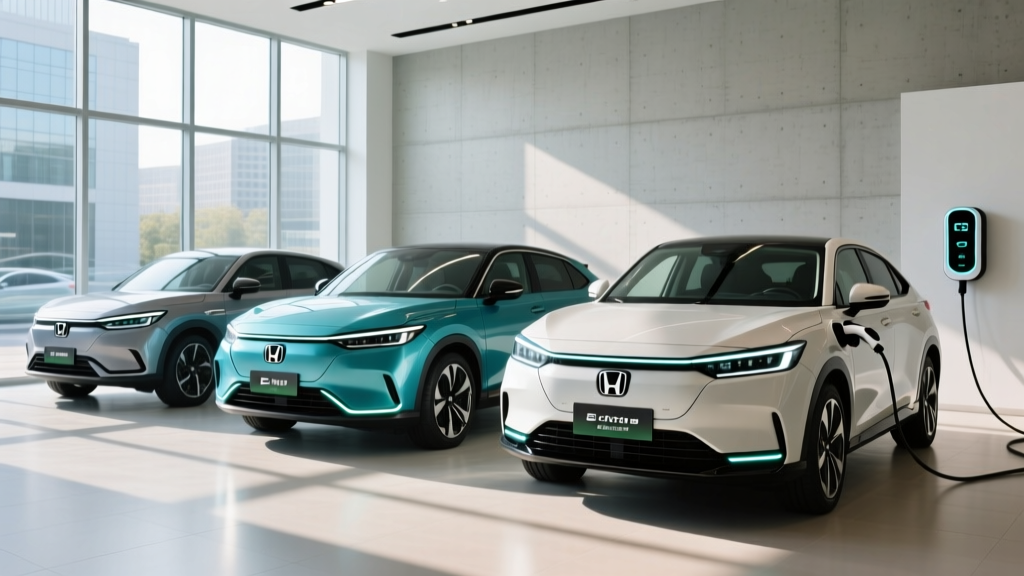
Honda currently sells one all-electric vehicle in the U.S.: the Honda Prologue, a midsize SUV built on General Motors' Ultium platform. The 2026 Prologue starts at approximately $47,400 (EX trim) and offers an EPA-estimated 296 miles of range (FWD), with a 85 kWh usable NMC battery and up to 150 kW DC fast charging. Honda has announced a next-generation EV lineup using its own e:Architecture starting in 2026–2027, but as of now, the Prologue remains the sole all-electric Honda you can buy. AWD trims sacrifice roughly 17 miles of range for improved traction, landing at 281 miles EPA.
2026 Honda Prologue: The Core Specs That Matter
The Prologue is Honda's gateway into the battery-electric market, and understanding its exact numbers is essential before you decide whether it fits your driving life. Built alongside the Chevrolet Blazer EV at GM's Ramos Arizpe plant in Mexico, the Prologue shares its Ultium skateboard but wears distinct Honda-tuned suspension, interior materials, and infotainment.
| Specification | Prologue EX (FWD) | Prologue Touring (AWD) | Prologue Elite (AWD) |
|---|---|---|---|
| Base MSRP | $47,400 | $51,400 | $57,900 |
| EPA Range | 296 mi | 281 mi | 281 mi |
| Battery (usable) | 85 kWh NMC | 85 kWh NMC | 85 kWh NMC |
| Horsepower | 213 hp | 288 hp | 288 hp |
| 0–60 mph | ~7.8 sec | ~6.2 sec | ~6.2 sec |
| Peak DC Fast Charge | 150 kW | 150 kW | 150 kW |
| 10–80% DC Charge | ~32 min | ~32 min | ~32 min |
| Level 2 (240V) Rate | 11.5 kW | 11.5 kW | 11.5 kW |
| Combined MPGe | 95 MPGe | 89 MPGe | 89 MPGe |
| Battery Warranty | 8 yr / 100,000 mi | 8 yr / 100,000 mi | 8 yr / 100,000 mi |
Real-World Range Reality Check
The EPA's 296-mile sticker on the FWD Prologue assumes a mix of city and highway driving at moderate temperatures. In real-world highway testing at 70–75 mph, expect approximately 250–270 miles before needing a charge. In cold weather (below 30°F), range can drop an additional 15–25%, putting realistic winter highway range closer to 210–230 miles. The Prologue uses a liquid-cooled thermal management system with a heat pump on Touring and Elite trims, which mitigates some cold-weather losses compared to resistive heating.
Prologue vs. Gas CR-V vs. CR-V Hybrid: The Cost Showdown
Most Prologue shoppers are cross-shopping against Honda's own CR-V lineup. Here's how the numbers stack up over a 5-year, 75,000-mile ownership period.
| Cost Factor | 2026 Prologue EX (EV) | 2026 CR-V EX (Gas) | 2026 CR-V Sport Hybrid |
|---|---|---|---|
| Starting MSRP | $47,400 | $34,250 | $37,450 |
| Est. Federal Tax Credit (§30D) | $0–$7,500* | $0 | $0 |
| Fuel / Energy (5 yr) | ~$3,900** | ~$8,400 | ~$6,200 |
| Maintenance (5 yr) | ~$1,800 | ~$3,600 | ~$3,400 |
| Est. Insurance (5 yr) | ~$9,500 | ~$7,200 | ~$7,500 |
| 5-Year Total (pre-incentive) | ~$62,600 | ~$53,450 | ~$54,550 |
| 5-Year Total (w/ max credit) | ~$55,100 | ~$53,450 | ~$54,550 |
* Federal §30D credit eligibility for the Prologue depends on battery critical-mineral sourcing, buyer income caps ($150K single / $300K joint), and MSRP caps ($80K for SUVs). The Prologue's Mexico assembly and GM-sourced battery have made full $7,500 eligibility inconsistent across model years — always verify current status at IRS.gov before purchasing.
** Energy cost assumes 70% home Level 2 charging at $0.14/kWh national average and 30% public DC fast charging at $0.40/kWh. Actual costs vary significantly by utility rate and charging behavior.
The Prologue's upfront premium is roughly $13,000 over a gas CR-V. Fuel and maintenance savings recover approximately $6,300 over five years. The math only tips in the Prologue's favor if you qualify for the full federal credit — and even then, the gap is narrow. The real financial case for the Prologue strengthens if your state offers additional rebates (California's CVRP, Colorado's innovative motor vehicle credit, etc.) or if your utility offers off-peak EV rates below $0.10/kWh.
Charging the Prologue: What You Actually Need to Know
The Prologue uses a CCS1 connector for DC fast charging and a J1772 inlet for Level 1 and Level 2 AC charging. Honda does not currently include NACS (Tesla-style) compatibility, though adapters exist for accessing Tesla Superchargers. Here's what each charging level delivers:
| Level | Power | Miles of Range Added per Hour | Typical Use Case |
|---|---|---|---|
| Level 1 (120V) | ~1.4 kW | ~4–5 mi/hr | Overnight top-up, low daily mileage |
| Level 2 (240V, 48A) | 11.5 kW | ~34–38 mi/hr | Home wallbox, full overnight charge (~9 hrs) |
| DC Fast Charge | Peak 150 kW | ~180 mi in 10 min (at peak) | Road trips, 10–80% in ~32 min |
The Charging Curve Reality
Honda's 150 kW peak rate is not sustained across the entire session. Like most NMC batteries, the Prologue's charge rate tapers significantly above 80% state of charge. Expect to hold near 150 kW between roughly 10–50% SoC, then a gradual decline to approximately 60–70 kW by 80%, and a trickle above 90%. This is why the 10–80% time (~32 minutes) is the meaningful metric — not the peak kW number.
Home Charging Installation Costs
If you're installing a 240V Level 2 home charger (such as a ChargePoint Home Flex or Emporia V2), here's what to budget:
| Component | Typical Cost Range |
|---|---|
| Level 2 Charger Hardware | $350–$700 |
| Electrician Labor (standard install) | $500–$1,500 |
| Permit / Inspection Fees | $50–$250 |
| Electrical Panel Upgrade (if needed) | $1,500–$3,500 |
| Total (no panel upgrade) | $900–$2,450 |
| Total (with panel upgrade) | $2,400–$5,950 |
The Prologue requires a 48-amp circuit to achieve its full 11.5 kW Level 2 rate, which means a dedicated 60-amp breaker. Many older homes with 100-amp or 150-amp service panels will need an upgrade to accommodate this alongside existing household loads. Always have a licensed electrician assess your panel capacity before purchasing equipment.
Federal Tax Credit Eligibility: Can You Claim §30D on the Prologue?
The federal clean vehicle credit under IRS §30D offers up to $7,500 for qualifying new EVs, but the Prologue's eligibility has been complicated by battery-sourcing requirements tied to critical minerals and battery component manufacturing. Because the Prologue is assembled in Mexico using a GM Ultium battery with globally sourced materials, it has not consistently qualified for the full credit across all model years.
§30D Eligibility Checklist for the Prologue
- MSRP Cap: Prologue qualifies (under $80,000 SUV cap) ✓
- Buyer Income Cap: AGI must not exceed $150K (single), $225K (head of household), or $300K (joint filing) — verify against your tax situation
- Battery Component Manufacturing: Must meet North American manufacturing percentage thresholds — varies by model year
- Critical Minerals Sourcing: Must meet percentage thresholds for minerals sourced from U.S. or FTA partners — varies by model year
- Point-of-Sale Transfer: If eligible, you can transfer the credit to the dealer at purchase for an immediate price reduction rather than waiting to claim it on your tax return
- Final Assembly: Must occur in North America — Prologue qualifies (Mexico assembly) ✓
Always check the current status on fueleconomy.gov and consult a tax professional before relying on credit eligibility in your purchase decision. Rules shift as battery supply chains evolve.
Who Should Buy the Prologue — and Who Shouldn't
Not every EV is right for every driver. Here's a practical decision framework based on real ownership patterns:
Decision Framework: Is the All-Electric Honda Right for You?
Choose the Prologue if:
- You have reliable home Level 2 charging access (garage or driveway with 240V)
- Your daily commute is under 60 miles round-trip (well within the battery buffer)
- You want a Honda-badged SUV with familiar ergonomics and dealership support
- You qualify for federal and/or state incentives that close the price gap with the CR-V Hybrid
- You take road trips fewer than 4–5 times per year (the 150 kW charge speed and CCS network are adequate but not class-leading)
Look elsewhere (CR-V Hybrid, or a different EV) if:
- You live in an apartment or lack home charging access — relying solely on public DC fast charging will cost more and add friction
- You regularly drive 300+ miles in a single day in cold climates — the real-world winter range of ~210–230 miles highway will require multiple stops
- You want NACS (Tesla Supercharger) native access without adapters — consider a Tesla Model Y, Ford Mustang Mach-E, or Rivian
- Performance and rapid charging are priorities — the Hyundai Ioniq 5 charges at up to 240 kW (10–80% in ~18 min) for a similar price
- Third-row seating is needed — the Prologue is strictly a two-row, five-passenger SUV
Common Misconceptions About Honda's Electric SUV
| Myth | Fact |
|---|---|
| "The Prologue is a rebadged Chevy and not a real Honda." | While it shares the Ultium platform with the Blazer EV, Honda engineers tuned the suspension, steering, and interior independently. The driving experience and cabin are distinct — but yes, the core architecture is GM-sourced. |
| "EV batteries need replacing every few years." | The Prologue's NMC battery carries an 8-year/100,000-mile warranty against capacity loss below 70%. Industry data shows most liquid-cooled NMC packs retain 85–90% capacity at 100,000 miles under normal use. |
| "I can charge on any standard outlet quickly." | Level 1 (120V) charging adds only ~4–5 miles of range per hour. A full charge from empty would take roughly 60+ hours. A Level 2 (240V) home installation is practically mandatory for daily EV ownership. |
| "The Prologue qualifies for the full $7,500 tax credit." | Eligibility depends on current-year battery sourcing rules under §30D. The Prologue has had inconsistent eligibility — verify at purchase time on fueleconomy.gov. |
| "Electricity is always cheaper than gas." | Home charging at off-peak utility rates (~$0.10–$0.14/kWh) is significantly cheaper per mile. But public DC fast charging at $0.35–$0.50/kWh can approach or exceed the per-mile cost of a 30 MPG gas car. Your savings depend heavily on your charging mix. |
Honda's Electric Future: What's Coming Beyond the Prologue
Honda has committed to launching a new generation of EVs built on its proprietary e:Architecture platform, with models expected for the 2026–2027 model years. These next-generation vehicles are anticipated to feature:
- Honda-designed battery packs with potential LFP chemistry options for lower-cost trims
- Improved DC fast-charge rates (potentially 200+ kW based on industry trajectory)
- NACS connector adoption (Honda has joined the NACS coalition alongside other legacy automakers)
- A broader range of body styles including sedans and smaller SUVs
However, these models remain in announced/preliminary status. Final specs, pricing, and availability have not been confirmed. If you need an all-electric Honda today, the Prologue is your only option — and it's a competent, if not class-leading, midsize electric SUV.
First-Time EV Buyer: What Honda Prologue Owners Wish They'd Known
Based on ownership patterns and common surprises among new EV adopters:
- Preconditioning matters. The Prologue allows you to precondition the battery via the HondaLink app before a DC fast-charging session. This warms the battery to optimal temperature and can significantly improve charge speed — especially in cold weather. Always precondition before arriving at a fast charger.
- Regenerative braking takes adjustment. The Prologue offers adjustable regen via steering-wheel paddles. Set to maximum, it enables near one-pedal driving in city traffic. New EV drivers often find the initial deceleration feel unusual but adapt within a week.
- Tire costs are higher. EVs are heavier (the Prologue weighs approximately 5,000 lbs) and deliver instant torque, which accelerates tire wear. Budget for tire replacement every 25,000–35,000 miles rather than the 40,000–50,000 miles typical on a gas CR-V.
- Insurance premiums run 15–30% higher than comparable gas vehicles due to higher repair costs and battery replacement values. Get a quote before purchasing to avoid surprises.
- The CCS public charging network is improving but uneven. Electrify America, EVgo, and ChargePoint operate the bulk of CCS chargers. Reliability varies by region. Apps like PlugShare and A Better Routeplanner are essential for trip planning.
Frequently Asked Questions
Does Honda make any other all-electric vehicles besides the Prologue?
As of 2026, the Prologue is Honda's only all-electric vehicle sold in the United States. The Honda e (a small city car) was sold in Europe and Japan but was never offered in the U.S. and has been discontinued. Honda has announced future e:Architecture EVs, but none are currently available for purchase.
How does the Prologue's range compare to other electric SUVs in its price range?
The Prologue's 296-mile EPA rating (FWD) is competitive but not class-leading. The Hyundai Ioniq 5 (Long Range RWD) achieves 303 miles EPA, the Tesla Model Y (Long Range) reaches 320 miles, and the Ford Mustang Mach-E (Extended Range RWD) hits 320 miles. The Prologue's 150 kW peak charge rate trails the Ioniq 5's 240 kW and Tesla's 250 kW, making road-trip charging stops longer.
Can I charge the Honda Prologue at a Tesla Supercharger?
Not natively. The Prologue uses a CCS1 connector, while Tesla Superchargers use the NACS connector. However, Tesla has begun offering a Magic Dock CCS adapter at select Supercharger stations, and third-party adapters (such as those from Lectron or A2Z) are available for purchase. Honda has committed to adopting NACS in future models.
What is the Prologue's towing capacity?
The Prologue is rated to tow up to 1,500 pounds (all trims). This is adequate for a small utility trailer or a pair of dirt bikes but not suitable for boat or camper towing. Towing will reduce range by approximately 20–30%.
Is the Honda Prologue eligible for any state incentives?
State incentives vary widely and change frequently. Some states (California, Colorado, Massachusetts, New York, among others) offer additional rebates or tax credits for EV purchases, often with income-based tiers. Check your state's energy or environmental agency website for current programs. These incentives stack with any applicable federal credit.
How does cold weather affect the Prologue's range and charging?
In temperatures below 30°F, expect 15–25% range reduction due to increased battery internal resistance and cabin heating demands. DC fast-charging speeds also decrease in cold weather because the battery must be warmed before accepting peak power. The Prologue's heat pump (standard on Touring and Elite) reduces cabin-heating energy draw compared to resistive heaters, partially offsetting winter losses. Always use battery preconditioning before fast-charging sessions in cold weather.