The Short Answer on All Electric Flying Cars
As of early 2026, no all electric flying car is available for individual consumer purchase. The closest technologies are eVTOL (electric Vertical Take-Off and Landing) air taxis from companies like Joby Aviation and Archer Aviation, which are pursuing FAA certification for commercial passenger service — not personal ownership. These aircraft seat 4–6 passengers, target ranges of 75–150 miles per charge, and are expected to operate as ride-hailing services (think Uber for the sky) in select cities starting late 2026 or 2027. If you're shopping for an electrified vehicle today, a ground-based EV or PHEV is your only purchasable option.
What 'All Electric Flying Car' Actually Means Today
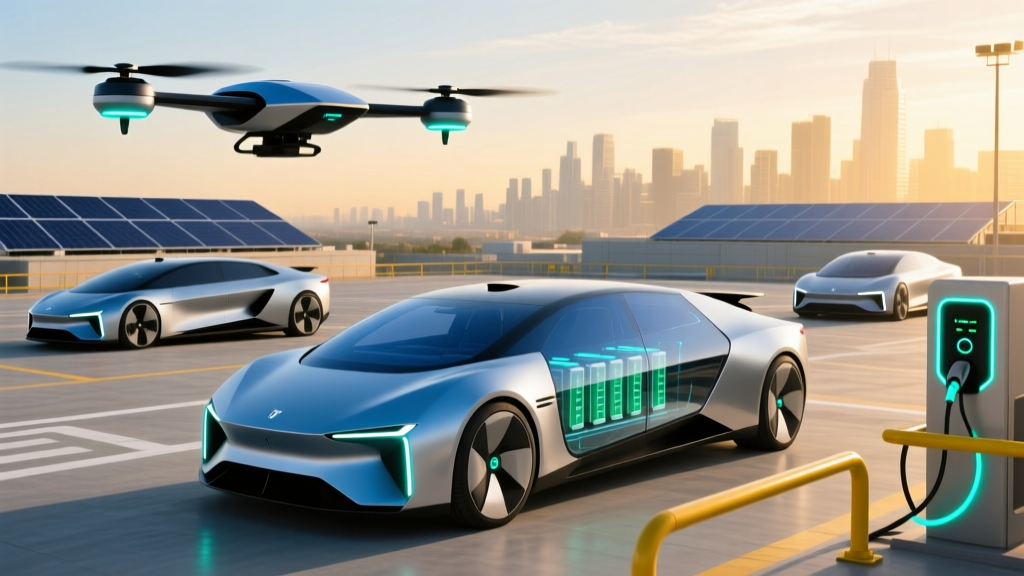
The phrase "all electric flying car" conjures images of a personal vehicle you park in your garage and fly to work. The reality is more nuanced. The industry has largely abandoned the "flying car" concept — a vehicle that both drives on roads and flies — in favor of eVTOL aircraft: electric-powered, vertical-takeoff vehicles designed for short regional air trips.
The two leading US-based companies are:
- Joby Aviation — backed by Toyota, with a 6-seat tilt-rotor eVTOL. Joby completed key FAA type-certification milestones in 2025 and is targeting commercial launch in 2026–2027.
- Archer Aviation — backed by Stellantis and United Airlines, with its "Midnight" aircraft seating up to 5 (including pilot). Archer is pursuing FAA certification with a similar timeline.
Neither company sells aircraft to individuals. Both are building fleet-operated air taxi services, partnering with airlines and ride-hailing platforms.
Specs That Matter: eVTOL Aircraft vs. Ground EVs
To ground the conversation in data, here's how announced eVTOL aircraft compare to a popular ground-based EV on key electrified-vehicle metrics:
| Spec | Joby S4 (Announced) | Archer Midnight (Announced) | Tesla Model Y (2026, Ground EV) |
|---|---|---|---|
| Battery Chemistry | NMC (high energy density) | NMC | LFP (Standard Range) / NMC (Long Range) |
| Battery Capacity (Est.) | ~150 kWh (usable, est.) | ~150 kWh (usable, est.) | 60 kWh (SR) / 78 kWh (LR) |
| Range | ~100 mi (target, per charge) | ~100 mi (target, per charge) | 320 mi EPA (LR AWD) |
| Top Speed | ~200 mph | ~150 mph | 130 mph (electronically limited) |
| Passenger Capacity | 5 + pilot | 4 + pilot | 5 passengers |
| Recharge/Turnaround | ~7–10 min (rapid turnaround target) | ~10–12 min (rapid turnaround target) | 10–80% in ~25 min at 250 kW DC |
| Price to Consumer | Not for sale (ride service) | Not for sale (ride service) | ~$44,990–$52,490 MSRP |
| Availability | FAA certification in progress | FAA certification in progress | Available now |
Note: eVTOL battery and range figures are preliminary manufacturer estimates and have not been independently verified. Final certified specs may differ. Source: Joby Aviation, Archer Aviation, fueleconomy.gov.
The Real Cost: Air Taxi Fare vs. Ground EV Ownership
Since you can't buy an eVTOL, the relevant comparison is cost per trip — what will an air taxi ride cost versus driving your own EV or taking a gas-powered ride-hail?
| Cost Factor | eVTOL Air Taxi (Projected) | Personal EV (Tesla Model Y LR) | Gas Ride-Hail (UberX, ~30 mi) |
|---|---|---|---|
| Per-Trip Cost (~30 mi) | $50–$100 (projected) | ~$1.50 electricity (home charging at $0.15/kWh) | $35–$55 |
| Per-Mile Cost | $1.67–$3.33/mi | ~$0.05/mi (home charging) | $1.17–$1.83/mi |
| Travel Time (30 mi, city) | ~10–15 min (point-to-point) | ~45–70 min (traffic dependent) | ~45–70 min |
| Upfront Vehicle Cost | $0 (service model) | $44,990–$52,490 | $0 (service model) |
| Annual Insurance | N/A (operator carries) | $1,800–$2,800/yr (EV avg.) | N/A |
Even at the optimistic end, eVTOL air taxi rides will cost significantly more per mile than owning and charging a personal EV. The value proposition is time savings, not cost savings — bypassing ground traffic on congested corridors (airport to downtown, suburb to business district).
Why You Can't Buy One: Certification, Infrastructure, and Physics
Three major barriers prevent personal ownership of an all electric flying car in 2026:
1. FAA Type Certification Is Still In Progress
Unlike ground vehicles regulated primarily by NHTSA, any aircraft sold or operated in the US must receive FAA type certification — a multi-year process covering airworthiness, flight testing, battery safety, and pilot training requirements. As of early 2026, neither Joby nor Archer has completed full type certification. The FAA has published new regulatory frameworks for eVTOL operations, but certification of individual aircraft models remains ongoing.
2. Vertiport Infrastructure Doesn't Exist at Scale
eVTOLs need "vertiports" — specialized takeoff and landing pads with high-power charging infrastructure (estimated 350+ kW per pad). A handful of pilot vertiports are being planned in cities like New York, Los Angeles, and Miami, but there is no public vertiport network comparable to the Tesla Supercharger or Electrify America DC fast-charging networks for ground EVs.
3. Battery Energy Density Limits Range Severely
This is the core physics problem. Current lithium-ion NMC batteries deliver roughly 250–300 Wh/kg at the cell level. For an aircraft that must generate lift (not just roll on wheels), this means:
- A ~150 kWh battery pack weighs approximately 600–750 kg (1,300–1,650 lbs) alone
- Total aircraft weight (battery + structure + passengers) severely constrains range to ~75–150 miles
- Unlike a ground EV, which can safely deplete its battery to near zero, an aircraft must carry substantial reserve energy for contingencies (diversion, holding patterns), further reducing usable range
Solid-state batteries, which promise 400+ Wh/kg, could eventually double eVTOL range — but they remain in pre-commercial stages as of 2026.
eVTOL vs. Ground EV: A Practical Decision Framework
Since eVTOLs aren't purchasable, here's how to think about your electrified transportation decision today:
Choose a ground EV (BEV) if:
- You need a vehicle you can buy, insure, and drive today
- Your daily driving is under 250 miles (covers 95%+ of US drivers)
- You have access to home Level 2 charging or reliable public charging
- You want $0.03–$0.06/mile "fuel" costs with home charging
- You want to potentially qualify for the §30D federal tax credit (up to $7,500, subject to MSRP caps, buyer income limits, and battery-sourcing requirements — consult a tax professional)
Choose a PHEV if:
- You want 25–45 miles of electric-only range for daily commuting but gas flexibility for road trips
- You lack reliable access to DC fast charging for longer trips
- You live in an area with extreme cold that significantly reduces EV range
Wait for eVTOL air taxi service if:
- You frequently travel congested airport-to-downtown corridors in major metros
- You're willing to pay $50–$100+ per trip for time savings
- You're in a launch city (likely NYC, LA, Miami, or Dallas-Fort Worth initially)
Common Misconceptions About Electric Flying Cars
| Myth | Fact |
|---|---|
| "I can pre-order a personal flying car for 2026 delivery." | No FAA-certified eVTOL is available for individual consumer purchase. Companies like Joby and Archer are building fleet-operated air taxi services, not selling to individuals. |
| "eVTOLs are just drones — they can't carry people safely." | eVTOLs are engineered to full FAA airworthiness standards with redundant motors, batteries, and flight-control systems. Certification is rigorous, but ongoing. |
| "Electric flying cars will replace ground EVs." | eVTOLs serve a different use case (short point-to-point air trips) and will cost 20–60x more per mile than a personal EV. They complement, not replace, ground transportation. |
| "Battery tech is ready for long-range electric flight." | Current NMC cell energy density (~250–300 Wh/kg) limits eVTOL range to ~75–150 miles. Solid-state batteries could improve this but aren't commercially available yet. |
| "It'll be autonomous — no pilot needed." | Initial eVTOL operations will require a licensed pilot on board. Fully autonomous passenger eVTOLs (analogous to SAE Level 4/5 for ground vehicles) are years away from regulatory approval. |
What First-Time EV Buyers Should Focus On Instead
If the all electric flying car concept brought you here, but you're actually in the market for an electrified vehicle today, here's what matters right now:
- Real-world range vs. EPA sticker: Expect 10–20% less range than the EPA estimate in highway driving at 70+ mph, and 20–40% less in freezing temperatures. A 320-mile EPA rating typically delivers 250–280 miles in mixed real-world use.
- Home charging is critical: Level 2 home charging (240V, 7–11.5 kW) adds 25–45 miles of range per hour and costs roughly $500–$2,000 installed (depending on whether your electrical panel needs an upgrade). Without home charging, EV ownership is significantly less convenient.
- Charging speed matters more than peak kW: A vehicle that peaks at 250 kW but tapers quickly above 60% SoC may charge slower overall than one sustaining 180 kW to 80%. Always look at 10–80% charge time, not just peak rate.
- Battery warranty protection: Federal law requires EV battery warranties of at least 8 years/100,000 miles. Most manufacturers guarantee the battery will retain 70%+ of original capacity during that period.
- Tax credit complexity: The §30D credit of up to $7,500 has strict rules — vehicle MSRP caps ($55,000 for sedans, $80,000 for SUVs/trucks), buyer income limits ($150K single / $300K joint), and critical-mineral/battery-component sourcing requirements that change annually. Check the IRS clean vehicle credit page and consult a tax professional before assuming eligibility.
Frequently Asked Questions
Can I buy an all electric flying car in 2026?
No. No eVTOL or electric flying car is available for individual consumer purchase in 2026. The leading companies (Joby Aviation, Archer Aviation) are pursuing FAA type certification for commercial air taxi services, not personal aircraft sales.
When will electric flying cars be available to the public?
As ride-hailing air taxi services, limited commercial operations could begin in 2026–2027 in select US cities (likely New York, Los Angeles, Miami, Dallas). Personal ownership of eVTOL aircraft, if it ever becomes viable, is likely a decade or more away due to certification, infrastructure, and cost barriers.
How much will an eVTOL air taxi ride cost?
Industry projections suggest $50–$100+ for a 20–30 mile trip, making the per-mile cost roughly $1.67–$3.33. This is comparable to or slightly above premium ride-hail pricing, with the advantage of dramatically shorter travel times on congested routes.
What's the range of current eVTOL aircraft?
Announced eVTOL designs from Joby and Archer target approximately 75–150 miles per charge, depending on payload and flight conditions. This is far less than ground EVs (250–400+ miles EPA) because aircraft must generate lift and carry mandatory fuel reserves.
Are electric flying cars safe?
eVTOL aircraft are being designed to FAA airworthiness standards with multiple redundant systems (motors, batteries, flight computers). However, no eVTOL has yet completed full FAA type certification, and long-term operational safety data does not yet exist. For comparison, commercial aviation has an exceptionally strong safety record built over decades of regulated operation.
Should I wait for a flying car instead of buying an EV now?
No. eVTOL air taxis will serve a niche use case (short urban air trips at premium prices) and will not replace personal ground transportation. If you need a vehicle today, current EVs and PHEVs offer proven technology, 250–400+ mile range, and significant fuel savings — with broad availability and established charging infrastructure.