Quick Answer: Is There an Alfa Romeo Giulia EV?
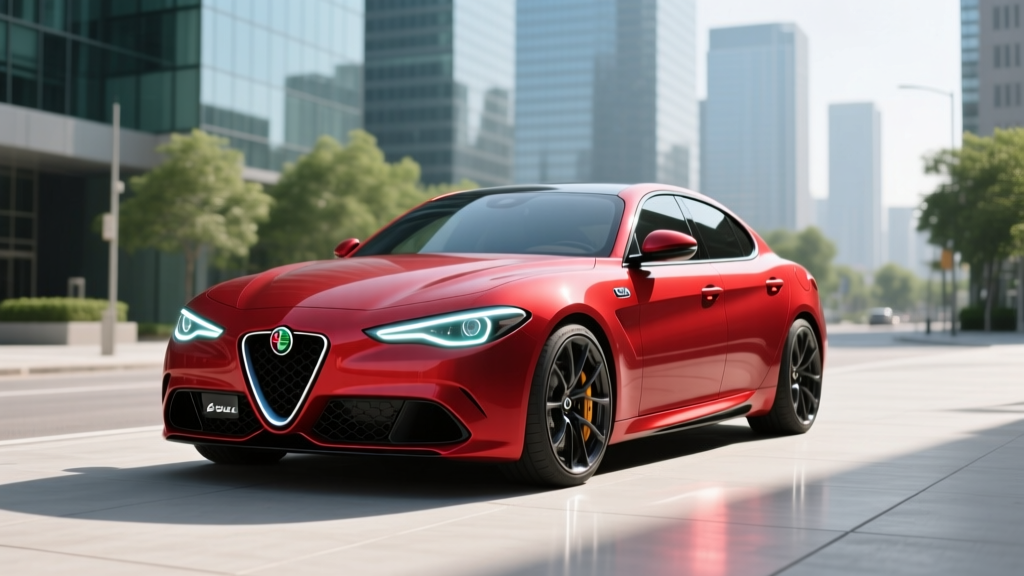
As of early 2026, the Alfa Romeo Giulia EV has not yet gone on sale. Alfa Romeo has confirmed that the next-generation Giulia will ride on Stellantis' STLA Large platform, which supports both battery-electric and internal-combustion powertrains. The EV variant is expected to arrive as a 2027 model-year vehicle, with preliminary specs suggesting a dual-motor AWD layout producing up to ~800 hp in the high-performance Quadrifoglio trim and an estimated EPA range of 300–400 miles on a ~100 kWh battery pack. Base pricing is anticipated to start in the $55,000–$65,000 range, positioning it against the BMW i4, Tesla Model 3 Performance, and upcoming Mercedes-Benz C-Class EQ. No official EPA certification, final pricing, or dealer availability has been published yet — treat all figures below as preliminary estimates based on platform disclosures and industry analysis.
The STLA Large Platform: What Underpins the Giulia EV
The next Giulia abandons the current Giorgio platform for Stellantis' STLA Large architecture, a flexible skateboard-style chassis engineered for 800-volt electrical systems. This is the same platform underpinning the Dodge Charger Daytona EV and the upcoming Jeep Wagoneer S, meaning Alfa benefits from shared R&D on battery modules, power electronics, and thermal management.
Key platform attributes that will define the Giulia EV:
- Battery options: 85 kWh and ~118 kWh (gross) packs, using NMC (nickel-manganese-cobalt) chemistry for energy density
- Voltage architecture: 800V nominal, enabling peak DC fast-charge rates above 300 kW
- Motor configurations: Single-motor RWD and dual-motor AWD; Quadrifoglio variant with a dedicated rear-axle motor for torque vectoring
- Estimated 10–80% DC fast charge time: ~18–22 minutes at a 350 kW charger (preliminary)
- Onboard AC charging: Expected 11–22 kW Level 2 capability
The 800V system is the critical differentiator here. Most current competitors in the sport-sedan segment — the BMW i4, Polestar 2, and Tesla Model 3 — still use 400V architectures (Tesla excepted with its proprietary system). An 800V pack can accept higher charge power without overheating, which translates to shorter stops on road trips. Hyundai's Ioniq 6, which also uses 800V, achieves 10–80% in about 18 minutes; the Giulia EV should land in a similar window if Stellantis' claims hold.
Estimated Range, Efficiency, and Real-World Expectations
Stellantis has not released EPA-certified range figures. However, based on the STLA Large platform's energy density and comparable vehicles, here is what buyers can reasonably anticipate:
| Attribute | Base / RWD (Est.) | AWD (Est.) | Quadrifoglio (Est.) |
|---|---|---|---|
| Battery (usable kWh) | ~85 kWh | ~110 kWh | ~118 kWh |
| EPA Range (est.) | ~350 mi | ~380 mi | ~310 mi |
| Real-World Highway Range | ~280–300 mi | ~300–330 mi | ~240–270 mi |
| Cold-Weather Range (20°F) | ~250 mi | ~270 mi | ~210 mi |
| Peak DC Charge Rate | ~250 kW | ~320 kW | ~350 kW |
| 10–80% DC Charge Time | ~22 min | ~20 min | ~18 min |
| 0–60 mph | ~6.0 sec | ~4.5 sec | ~2.8 sec |
| Horsepower | ~350 hp | ~500 hp | ~800 hp |
| Estimated Base MSRP | $55,000–$60,000 | $65,000–$72,000 | $90,000+ |
Real-World Range Reality Check: EPA estimates assume mixed city/highway driving at moderate temperatures. On a 75 mph highway run in summer heat, expect to lose 15–20% from the sticker number. In sub-freezing winter conditions, lithium-ion batteries lose efficiency and cabin heating draws significant energy — plan for 25–35% range reduction. If your daily commute is under 60 miles round-trip, even the base model provides a comfortable buffer. For road trips exceeding 250 miles, you will need at least one DC fast-charge stop regardless of trim.
Giulia EV vs. Gas Giulia vs. Key EV Rivals
The current gas-powered Alfa Romeo Giulia (still on sale through 2025–2026 as the outgoing generation) offers 280 hp from its 2.0L turbo and 510 hp from the Quadrifoglio's 2.9L V6. The EV successor is expected to match or exceed those outputs while delivering dramatically different ownership economics. Here is how the Giulia EV stacks up against its most relevant competitors:
| Metric | Alfa Giulia EV (Est.) | BMW i4 eDrive40 | Tesla Model 3 LR AWD | Hyundai Ioniq 6 LR | Gas Giulia Veloce |
|---|---|---|---|---|---|
| EPA Range | ~350 mi | 307 mi | 341 mi | 361 mi | N/A (24 MPG comb.) |
| Battery (kWh) | ~85–118 | 81.5 | 75 (usable) | 77.4 | 15.2 gal tank |
| Peak DC Charge (kW) | ~250–350 | 205 | 250 | 350 | N/A |
| 10–80% Charge | ~18–22 min | 31 min | ~25 min | 18 min | ~5 min (gas) |
| 0–60 mph | ~2.8–6.0 sec | 5.5 sec | 4.2 sec | 5.1 sec | 5.1 sec |
| Base MSRP | ~$55,000 | $57,900 | $47,740 | $42,450 | $47,285 |
| Fuel/Energy Cost per Mile | ~$0.04–$0.06 | ~$0.04–$0.06 | ~$0.04–$0.05 | ~$0.04 | ~$0.14 |
The Giulia EV's positioning is clear: it aims to be the driver's car in the EV sport-sedan segment, leveraging Alfa Romeo's chassis-tuning heritage and the instant torque of electric motors. The Quadrifoglio variant, at ~800 hp, would compete directly with the Tesla Model S Plaid and the Porsche Taycan Turbo in performance, albeit at a likely lower price point. The base RWD model faces tougher competition — the Ioniq 6 and Model 3 offer similar or better range at substantially lower prices.
Total Ownership Cost: What the Giulia EV Will Actually Cost You
Before committing to a preorder, model the five-year cost realistically. The Giulia EV's premium positioning means higher insurance, likely no federal tax credit (due to MSRP caps and potential battery-sourcing issues), and European-brand maintenance costs.
| Cost Category | Giulia EV AWD (~$68K) | Gas Giulia Veloce (~$47K) | Tesla Model 3 LR (~$48K) |
|---|---|---|---|
| Purchase Price (MSRP) | $68,000 | $47,285 | $47,740 |
| Federal Tax Credit (§30D) | $0–$7,500* | $0 | $0–$7,500* |
| Energy/Fuel (5 yr) | $3,000 | $10,500 | $2,800 |
| Maintenance (5 yr) | $2,500 | $5,500 | $1,800 |
| Insurance (5 yr avg.) | $12,000 | $9,500 | $9,000 |
| Estimated Depreciation | ~$28,000 | ~$22,000 | ~$20,000 |
| 5-Year Total (est.) | ~$57,500–$65,000 | ~$50,785 | ~$31,540–$39,040 |
*Federal §30D tax credit eligibility depends on the buyer's modified adjusted gross income (AGI caps: $150K single / $300K joint), vehicle MSRP limits ($55,000 for sedans), battery critical-mineral and component sourcing requirements, and whether the credit is transferred at point of sale. A $68,000 Giulia EV AWD would exceed the sedan MSRP cap and therefore be ineligible for the federal credit. Only a base model priced at or below $55,000 could potentially qualify — and only if Stellantis meets battery-sourcing requirements. Verify current rules at IRS.gov §30D.
Charging the Giulia EV: Home Setup and Public Networks
The Giulia EV's 800V architecture is a significant advantage, but it only matters if you have access to compatible high-power chargers. Here is what ownership looks like in practice:
Home Charging (Level 2)
With an expected 11 kW onboard charger, a 48-amp Level 2 home station (such as a ChargePoint Home Flex or Wallbox Pulsar Plus) would replenish the ~110 kWh AWD battery from 10% to 100% in roughly 10–11 hours — ideal for overnight charging. Installation costs for a dedicated 240V/60A circuit typically range from $800 to $2,500 depending on panel proximity and local permit fees. If your home has a 100-amp electrical panel, you may need a $1,500–$3,000 panel upgrade to support simultaneous EV charging and household loads. Always consult a licensed electrician for final specifications.
Public DC Fast Charging
At a 350 kW Electrify America or Tesla Supercharger (via NACS adapter, if Alfa adopts the North American Charging Standard), the Giulia EV should add approximately 150–200 miles of range in a 15-minute stop. However, real-world charging curves taper significantly above 80% State of Charge — that last 20% can take as long as the first 70%. Plan road-trip stops to charge from 10% to 80% and move on.
Stellantis has not confirmed which connector the Giulia EV will use in North America. The industry is rapidly consolidating around NACS (Tesla's connector), and most legacy CCS vehicles are adopting NACS adapters. Alfa Romeo's decision here will affect long-term charging convenience.
Common Misconceptions About the Giulia EV
| Myth | Fact |
|---|---|
| "It's available to order now." | The Giulia EV is announced but not yet on sale. Expect dealer orders to open in late 2026 for 2027 model-year delivery. |
| "It will definitely get the $7,500 federal tax credit." | If the MSRP exceeds $55,000 (sedan cap), it is ineligible. Battery-sourcing rules may also disqualify it. Check IRS.gov at time of purchase. |
| "800V means it charges at 800 kW." | Voltage (V) and power (kW) are different. 800V enables higher kW acceptance, but peak charge rate depends on battery chemistry, thermal management, and charger capability. Expect ~320–350 kW peak, not 800. |
| "EVs have no maintenance costs." | EVs eliminate oil changes and have fewer moving parts, but tires wear faster due to instant torque and vehicle weight, cabin air filters need replacement, brake fluid requires periodic service, and the 12V auxiliary battery still needs eventual replacement. |
| "Range will be the same year-round." | Cold weather reduces range by 25–35% due to battery chemistry limitations and cabin heating demand. Preconditioning the battery while plugged in mitigates some of this loss. |
Decision Framework: Should You Wait for the Giulia EV?
Wait for the Giulia EV if:
- You want a sport sedan with Italian design and are willing to wait until late 2026 or 2027 for delivery.
- Performance matters to you — the Quadrifoglio's ~800 hp would make it one of the fastest sedans on sale.
- You have home Level 2 charging access and your daily driving is under 80 miles round-trip.
- You value 800V fast-charging capability for road trips and are willing to pay a premium over a Tesla Model 3 or Hyundai Ioniq 6.
- You are not dependent on the $7,500 federal tax credit to make the purchase affordable.
Buy something else now if:
- You need a vehicle within the next 3–6 months — the Giulia EV is not available yet.
- Your budget is under $50,000 — the Tesla Model 3 Long Range ($47,740) or Hyundai Ioniq 6 ($42,450) offer excellent range and charging at lower prices.
- You lack reliable home charging and live in an area with sparse DC fast-charger infrastructure.
- You want proven long-term reliability data — Alfa Romeo's EV track record is unestablished, and Stellantis' STLA Large platform is brand-new.
- Federal tax credit eligibility is critical to your purchase math — the Giulia EV's likely MSRP puts it above the §30D sedan cap.
Battery Warranty, Degradation, and Long-Term Outlook
Stellantis has not published specific battery warranty terms for the Giulia EV, but the industry standard — and the federal minimum — is 8 years / 100,000 miles with a capacity-retention threshold of 70%. Some manufacturers (Hyundai, Tesla) offer more generous terms. Expect Alfa to meet or slightly exceed the minimum.
NMC battery chemistry, which the STLA Large platform is expected to use, typically degrades 10–15% over the first 100,000 miles, then slows significantly. Real-world data from comparable NMC packs suggests 85–90% state of health (SoH) at 150,000 miles. LFP (lithium iron phosphate) chemistry degrades more slowly and tolerates daily 100% charging, but offers lower energy density — unlikely for a performance sedan where range-per-kilogram matters.
Battery replacement cost, should it ever be needed out of warranty, is estimated at $15,000–$25,000 for a pack of this size based on current industry pricing of approximately $130–$150/kWh at the pack level.
Frequently Asked Questions
When can I buy the Alfa Romeo Giulia EV?
Alfa Romeo has confirmed the next-generation Giulia will offer an EV variant, but production timing points to late 2026 or early 2027 for first deliveries. No official on-sale date has been announced. Monitor Alfa Romeo's press site for updates.
Will the Giulia EV have a gas option too?
Yes. The STLA Large platform supports both BEV and internal-combustion powertrains. Alfa Romeo has indicated the next Giulia will offer electrified options, likely including a plug-in hybrid alongside the full EV. This is a "powertrain choice" strategy similar to what BMW offers with the 3 Series and i4.
What connector will the Giulia EV use — CCS or NACS?
Stellantis has not confirmed the North American connector for the Giulia EV. The industry is rapidly shifting to NACS (Tesla's standard), and most automakers have committed to adopting it by 2025–2026. If Alfa ships with CCS, a NACS adapter will likely be available. This is a detail worth confirming before placing an order.
Will the Giulia EV qualify for the $7,500 federal tax credit?
Probably not on higher trims. The IRS §30D credit caps eligible sedans at an MSRP of $55,000. If the Giulia EV AWD starts at ~$65,000–$68,000, it exceeds that cap. Only a base RWD model priced at or below $55,000 could qualify — and only if Stellantis meets critical-mineral and battery-component sourcing requirements, which are increasingly stringent. Always verify eligibility at the point of sale using the IRS VIN-check tool.
Is the Giulia EV self-driving?
No. Expect the Giulia EV to offer Level 2 driver-assistance features (adaptive cruise control, lane-centering, automated parking) similar to Alfa Romeo's current ADAS suite. Level 2 requires the driver to remain fully engaged at all times. This is not autonomous driving — it is an advanced cruise-and-steering assist. No production Alfa Romeo offers Level 3 or higher automation.
How does the Giulia EV compare to the Tesla Model 3?
The Tesla Model 3 Long Range AWD delivers 341 miles of EPA range, a mature Supercharger network, and a starting price of ~$47,740 — all available today. The Giulia EV will likely offer more distinctive design, potentially superior ride-and-handling dynamics (Alfa's traditional strength), and higher peak performance in Quadrifoglio form. However, it will cost more, arrive later, and lack Tesla's established charging ecosystem and over-the-air update maturity. Choose the Giulia if driving feel and design matter more than value and software.
What will insurance cost for the Giulia EV?
Premium EV sport sedans typically carry insurance premiums 20–40% higher than their gas counterparts due to higher repair costs, battery replacement risk, and performance classification. Expect annual premiums of $2,200–$3,000 depending on your driving record, location, and coverage level. Get quotes before ordering — insurance can be the most overlooked ownership cost.
Sources: Stellantis STLA Large platform disclosures; fueleconomy.gov for competitor EPA data; IRS.gov §30D Clean Vehicle Credit for tax credit rules. All Giulia EV specifications are preliminary estimates based on platform data and industry analysis — confirm final figures with Alfa Romeo before purchasing.