Can You Tow an Airstream with an EV?
Yes — but expect your electric truck or SUV's range to drop by 40–60% when towing an Airstream travel trailer. A Ford F-150 Lightning rated for 320 miles EPA may deliver only 130–180 miles while towing a 4,500-lb Airstream at highway speeds. The Airstream e-Trailer (announced concept with a self-propulsion assist system) is not yet in production as of early 2026. For now, EV towing of conventional Airstream models is viable for trips under 200 miles between charging stops, provided you route-plan around DC fast chargers capable of 150+ kW and can handle 30–50 minute charging sessions every 2–3 hours on the road.
The Airstream EV Landscape in 2026
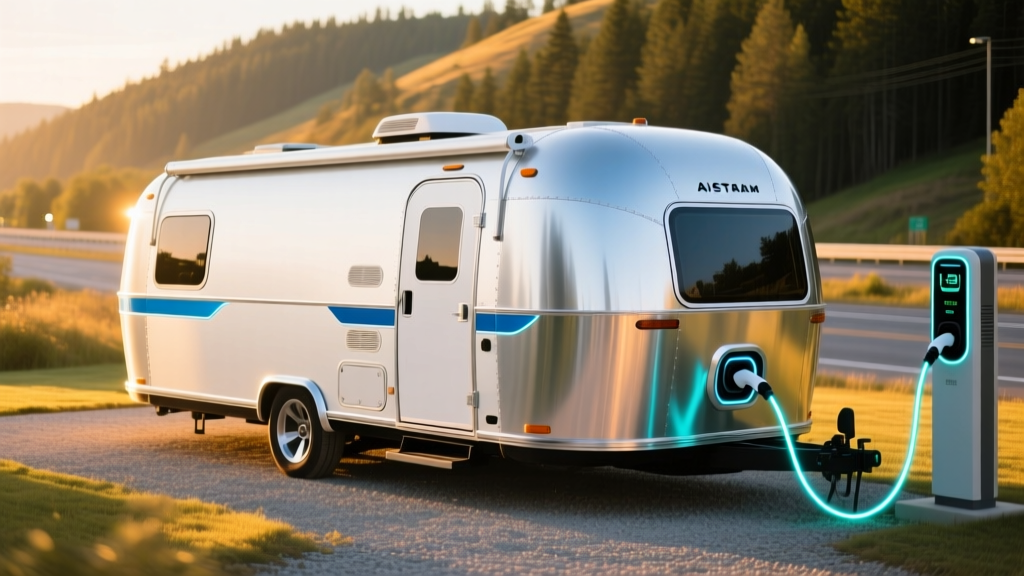
When people search for an "Airstream EV," they're typically asking about one of two things: towing a conventional Airstream travel trailer with an electric vehicle, or the long-rumored Airstream e-Trailer — a concept unveiled in 2022 that featured an integrated electric powertrain on the trailer axle itself, designed to assist the tow vehicle and recapture energy during braking and downhill travel.
As of 2026, the Airstream e-Trailer concept remains in development. Airstream's parent company, Thor Industries, has invested in the technology through its partnership with ZF (a major automotive supplier) and Lightship (a startup co-founded by former Tesla engineers building an all-electric, self-propelling travel trailer). However, no production Airstream e-Trailer is currently available for purchase.
What is available: the full lineup of conventional Airstream travel trailers — from the 2,900-lb Basecamp to the 7,000+ lb Globetrotter — all of which can be towed by today's electric trucks and SUVs, with significant caveats around range, charging time, and trip planning.
Real-World EV Range While Towing an Airstream
Towing is the single biggest range killer for any electric vehicle. Aerodynamic drag increases roughly with the square of speed, and a boxy travel trailer creates enormous drag compared to a bare truck. Add the trailer's weight (rolling resistance) and you get dramatic efficiency losses.
| Tow Vehicle (2026) | EPA Range (Unloaded) | Airstream Model (Approx. Weight) | Est. Towing Range (65 mph, 70°F) | Est. Towing Range (65 mph, 30°F) |
|---|---|---|---|---|
| Ford F-150 Lightning (Ext. Range, 131 kWh) | 320 mi | Caravel 22CB (~5,000 lb) | 155–180 mi | 115–140 mi |
| Rivian R1T Dual Max (149 kWh) | 352 mi | Flying Cloud 23FB (~5,500 lb) | 160–190 mi | 120–145 mi |
| Chevrolet Silverado EV 4WT (200 kWh) | 440 mi | Globetrotter 27FB (~7,200 lb) | 190–230 mi | 145–175 mi |
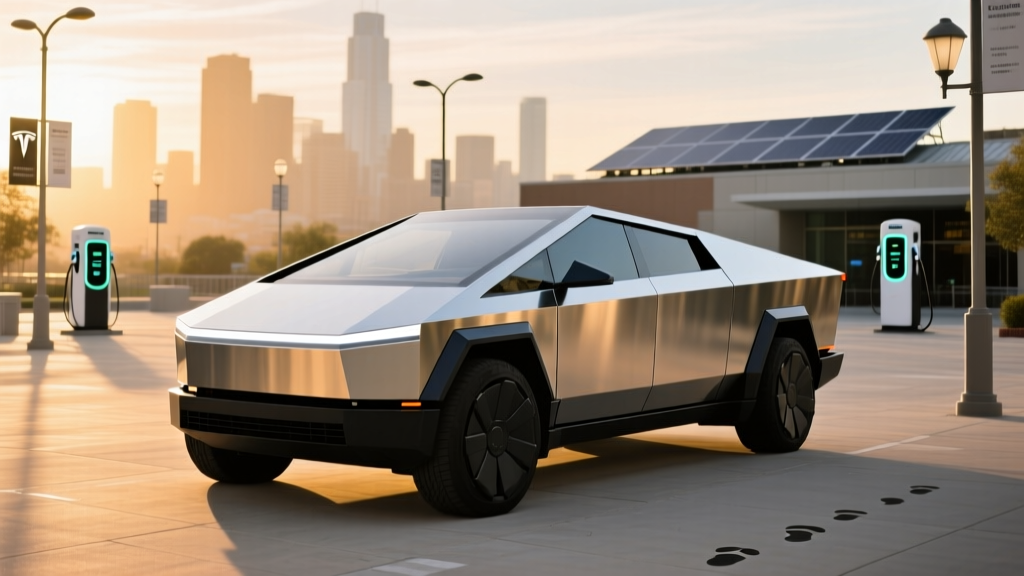
| Tesla Cybertruck AWD (123 kWh) | 340 mi | Basecamp 20X (~3,500 lb) | 175–210 mi | 135–160 mi |
| GMC Hummer EV Pickup (212 kWh) | 329 mi | International 25FB (~6,200 lb) | 150–175 mi | 110–135 mi |
Key takeaways: Lighter, more aerodynamic Airstream models (Basecamp, Caravel) preserve more range. Cold weather compounds the loss — battery chemistry is less efficient, cabin/trailer heating draws additional power, and regenerative braking is limited. Expect a combined 45–60% range reduction in worst-case conditions (cold + highway + heavy trailer).
Real-World Range Reality: A Ford F-150 Lightning Extended Range towing a 5,000-lb Airstream Caravel at 70 mph on a flat interstate in 75°F weather will typically achieve 1.5–1.8 kWh/mile (compared to ~0.45 kWh/mile unloaded). That translates to roughly 160 miles on the 131 kWh usable battery before you need to find a charger — and you'll want a buffer, so plan stops every 130 miles.
Charging Logistics: The Real Bottleneck
Range loss while towing is manageable with planning. The bigger challenge is charging — specifically, finding DC fast chargers that can physically accommodate a truck-and-trailer combination without unhitching.
Charging Speed and Time
| Vehicle | Battery (kWh Usable) | Peak DC Rate (kW) | 10–80% Time (Unloaded) | 10–80% Time (With Trailer) | Notes |
|---|---|---|---|---|---|
| F-150 Lightning Ext. | 131 | ~150 kW (sustained ~110 kW) | ~41 min | ~41 min (same — trailer doesn't affect charge rate) | Must find pull-through or unhitch |
| Rivian R1T Max | 149 | ~200 kW (sustained ~150 kW) | ~38 min | ~38 min | Rivian Adventure Network has pull-throughs |
| Silverado EV 4WT | 200 | ~350 kW (sustained ~250 kW) | ~30 min | ~30 min | Largest battery = longest session at lower rates |
| Cybertruck AWD | 123 | ~250 kW (sustained ~180 kW) | ~28 min | ~28 min | Tesla Supercharger V4 has some pull-through stalls |
Pull-through charging is critical. Most Electrify America, EVgo, and ChargePoint stalls are designed for passenger cars — you'd need to unhitch the Airstream, park it, then pull the truck up to the charger. This adds 10–20 minutes of hassle at every stop. Networks are slowly adding pull-through stalls (where you drive straight through with the trailer attached), but coverage remains sparse outside major travel corridors.
Tesla's Supercharger network has begun adding pull-through stalls at select locations, and Rivian's Adventure Network was designed with truck-and-trailer configurations in mind. For other networks, apps like PlugShare let you filter for pull-through or "large vehicle" access — use this before every trip.
Level 2 Charging at Campgrounds
Most RV parks and campgrounds offer 30-amp or 50-amp NEMA 14-50 outlets — the same outlet used for home Level 2 charging. With a portable Level 2 EVSE (like the Tesla Mobile Connector or Lectron V-Box), you can charge your tow vehicle overnight at 7–11 kW, adding roughly 25–45 miles of range per hour. A full overnight charge (10 hours) can replenish 250–400 miles of unloaded range — enough to leave the campground with a full battery.
Important: Do not use the campground's 50-amp outlet to charge your EV while simultaneously running the Airstream's air conditioner, microwave, and other loads — you'll trip the breaker. Coordinate charging with shore power usage, or confirm the site has a dedicated EV circuit.
EV vs. Gas Truck: Towing Cost and Efficiency Comparison
How does towing an Airstream with an EV compare to a gas or diesel truck? Here's a side-by-side for a typical 400-mile round-trip weekend camping scenario towing a 5,000-lb Airstream Caravel:
| Factor | F-150 Lightning (EV) | F-150 3.5L EcoBoost (Gas) |
|---|---|---|
| Towing Efficiency | ~1.7 kWh/mile | ~9–11 MPG |
| Energy/Fuel Used (400 mi) | ~680 kWh | ~40 gallons |
| Cost per Unit | $0.35/kWh (avg. DCFC) / $0.14/kWh (home) | $3.50/gallon (national avg.) |
| Estimated Fueling/Charging Cost | $175 (all DCFC) / $68 (all home L2) / ~$120 (mixed) | $140 |
| Number of Stops | 2–3 (at ~130 mi intervals) | 1 (36-gal tank = ~360 mi towing range) |
| Total Stop Time | ~70–100 min | ~10 min |
| Maintenance Cost (per 1,000 towing mi) | ~$15 (tire wear, cabin filter) | ~$45 (oil, filters, spark plugs over time) |
The verdict: EV towing is cheaper per mile if you can charge at home or at campgrounds on Level 2. Public DC fast charging narrows the gap or even exceeds gas costs, especially on networks with per-kWh pricing above $0.40. The bigger trade-off is time — expect 70+ additional minutes of charging stops on a 400-mile trip versus one quick gas fill-up.
What First-Time EV Buyers Should Know Before Towing an Airstream
If you're considering an EV specifically to tow an Airstream, here are the practical realities no brochure will tell you:
Home Charging Is Non-Negotiable
Towing drains the battery fast. You need a Level 2 home charger (240V, 40–80 amp circuit) to start every trip with a full battery. Installation typically costs $800–$2,500 depending on panel capacity, wire run length, and local permit requirements. If your home has a 100-amp electrical panel, you may need a $2,000–$4,000 panel upgrade to support a 60-amp EV circuit alongside existing loads. Get a licensed electrician to assess before purchasing.
Towing Capacity vs. Real Payload
Published tow ratings assume a base truck with no passengers or cargo. A Ford F-150 Lightning is rated to tow 10,000 lbs (Extended Range), but that's before accounting for the weight of passengers, bed cargo, and the hitch itself. Real-world usable towing capacity is often 1,500–2,500 lbs less than the sticker rating. Always check the truck's payload capacity (sticker on the driver's door jamb) and subtract the tongue weight of the loaded Airstream (typically 500–800 lbs) plus passengers and gear.
The Trailer Brake Controller Question
Airstream trailers use electric brakes, which require a trailer brake controller in the tow vehicle. The F-150 Lightning and Silverado EV have integrated trailer brake controllers. The Rivian R1T and Cybertruck require aftermarket solutions (like the Curt Echo or Tekonsha Prodigy) — verify compatibility with the EV's CAN bus system before purchasing.
Insurance Costs Are Higher
EVs generally carry 15–25% higher insurance premiums than comparable gas vehicles, due to higher repair costs and battery replacement risk. Adding a $50,000–$80,000 Airstream trailer to your policy compounds this. Get quotes from multiple insurers (GEICO, Progressive, and State Farm tend to be competitive for EVs) before finalizing your purchase.
| Myth | Fact |
|---|---|
| "EVs can't tow — the range drops to zero." | Range drops 40–60%, not to zero. A 320-mi truck still gives 150+ miles towing — enough for planned trips with charging stops. |
| "The Airstream e-Trailer is available now." | As of 2026, the Airstream e-Trailer is a concept/development program, not a production product. Lightship's L.1 (a separate brand) is closer to production. |
| "DC fast charging damages the battery if you tow frequently." | Modern battery thermal management systems (especially in the F-150 Lightning and Silverado EV) handle frequent DCFC well. Expect 1–2% additional degradation per year over baseline — not catastrophic. |
| "You can charge at any RV park." | Many RV parks have 30-amp or 50-amp outlets, but not all allow EV charging, and some have aging wiring that can't sustain 40-amp continuous draw. Call ahead. |
| "Towing voids the EV battery warranty." | Towing within the manufacturer's rated capacity does not void the battery warranty. The federal mandate requires 8-year/100,000-mile battery coverage (capacity retention above 70%). See fueleconomy.gov for details. |
Federal Tax Credits and Towing Vehicle Eligibility
If you're buying a new electric truck to tow your Airstream, the IRS §30D Clean Vehicle Credit may apply — but eligibility is complex and changes frequently:
- MSRP cap: Trucks and SUVs must have an MSRP under $80,000 (vans and sedans: $55,000).
- Buyer income cap: Modified AGI must not exceed $300,000 (joint), $225,000 (head of household), or $150,000 (single).
- Battery sourcing: Critical minerals and battery components must meet escalating domestic-sourcing thresholds — this eliminates some models from the full $7,500 credit.
- Point-of-sale transfer: As of 2024+, you can transfer the credit to the dealer for an immediate price reduction at purchase (instead of claiming it on your tax return).
- Assembly: Vehicle must undergo final assembly in North America.
As of 2026, the F-150 Lightning, Rivian R1T (with certain battery packs), and Silverado EV may qualify for partial or full credits depending on battery sourcing. Always verify current eligibility at fueleconomy.gov and consult a tax professional before relying on the credit in your purchase budget.
Decision Framework: Should You Tow an Airstream with an EV?
Choose an EV Tow Vehicle If:
- You have Level 2 home charging (or can install it) and start every trip at 100% SoC.
- Your typical towing trips are under 250 miles one-way, or you're willing to plan 2–3 charging stops per 400 miles.
- You camp at RV parks with 50-amp shore power where you can charge overnight.
- You value lower per-mile energy costs (home charging), instant torque for hill climbs, and zero tailpipe emissions at the campsite.
- You already own or plan to buy an electric truck for daily driving and want dual-use capability.
Stick with a Gas/Diesel Truck If:
- You regularly tow 300+ miles one-way through areas with sparse DC fast-charging infrastructure (rural Mountain West, parts of the Great Plains).
- You cannot install Level 2 home charging (apartment, street parking, older electrical panel without upgrade budget).
- Time efficiency on the road matters more than fuel cost savings (business use, large family that can't wait 40 minutes per charging stop).
- You tow a heavy Airstream (Globetrotter 30, Classic — 8,000+ lbs) where EV range drops below 100 miles and charging becomes impractical.
- You need the longest possible single-tank/tow range for boondocking or off-grid camping without shore power.
Frequently Asked Questions
When will the Airstream e-Trailer be available?
Airstream has not announced a firm production date for its self-propelling e-Trailer concept as of early 2026. Thor Industries' investment in Lightship (building the L.1 electric travel trailer) suggests the technology may arrive through Lightship first, potentially in 2026–2027, with Airstream's own product following. Until then, all Airstream trailers on sale are conventional, non-electrified models.
What's the lightest Airstream I can tow with an EV?
The Airstream Basecamp (starting at ~2,900 lbs dry) and Basecamp 20X (~3,500 lbs) are the lightest options. Paired with a Tesla Cybertruck or F-150 Lightning, you can expect 175–210 miles of real-world towing range — the best-case scenario in the current Airstream lineup.
Can I use a Tesla Supercharger while towing my Airstream?
Select Tesla Supercharger V4 stations have pull-through stalls designed for trucks with trailers. However, most legacy V2 and V3 stalls do not accommodate trailer parking. Use the Tesla app or PlugShare to confirm pull-through availability before routing through a Supercharger. The Cybertruck's NACS connector also works at non-Tesla NACS-equipped stations (growing rapidly in 2025–2026).
Does towing an Airstream with an EV damage the battery?
No — towing within the vehicle's rated capacity is a normal use case covered by the battery warranty (minimum 8 years / 100,000 miles federally mandated). High-load towing does accelerate battery wear slightly (similar to frequent DC fast charging), but modern thermal management systems mitigate this. Expect perhaps 1–2% additional capacity loss over 5 years compared to non-towing use — not a warranty-level concern.
How much does it cost to install a home Level 2 charger for EV towing?
A typical 240V/60-amp home charger installation runs $1,200–$2,500 (equipment + electrician + permit) if your panel has spare capacity. If you need a 200-amp panel upgrade, add $2,000–$4,000. For frequent towing, a 60-amp circuit (delivering ~11.5 kW / ~40 miles of range per hour) is recommended over a 30-amp circuit to fully replenish the battery overnight.
Is a plug-in hybrid (PHEV) truck a better towing compromise?
PHEV trucks (like the upcoming Ford F-150 PowerBoost hybrid, which is a conventional HEV, not a PHEV) offer longer total range without charging stops, making them better for long-distance towing through charging deserts. However, they lack the EV's home-charging cost advantage, instant torque, and campground zero-emission operation. If your towing trips are mostly under 200 miles with home charging, a BEV wins on cost. If you regularly exceed 300 miles between stops, a gas or diesel truck remains more practical in 2026.
Sources: fueleconomy.gov (EPA range and efficiency data), IRS §30D Clean Vehicle Credit, manufacturer specification pages for Ford, Rivian, GM, and Tesla.