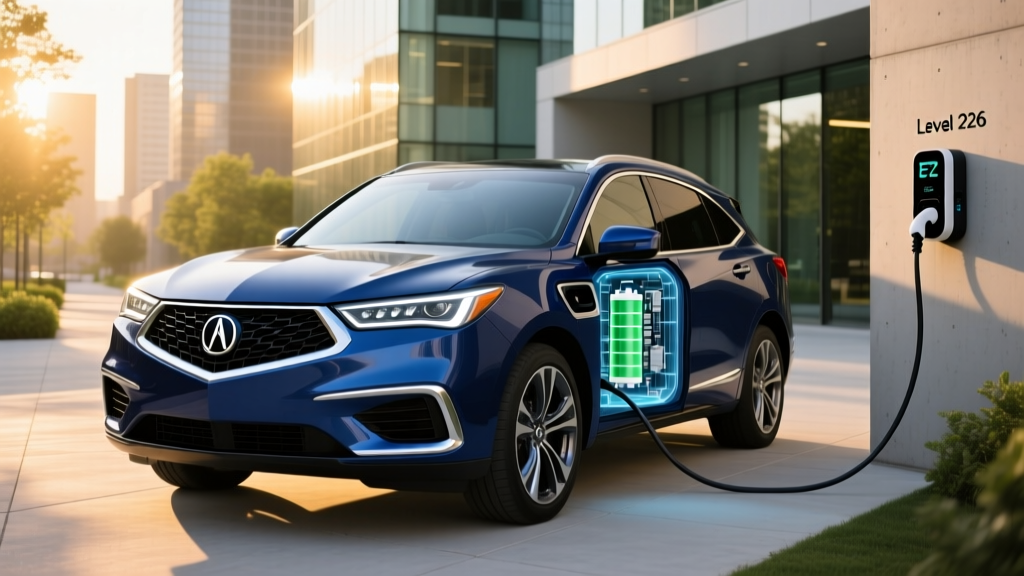
Acura's first all-electric SUV has been on sale long enough for us to move past the press-launch honeymoon and into real-world ownership territory. The 2026 Acura ZDX Type S — the performance flagship of the lineup — packs 500 horsepower, a dual-motor AWD system, and a 102 kWh battery into a premium midsize crossover that competes directly with the BMW iX, Audi Q8 e-tron, and Tesla Model X. But horsepower is only part of the story. Buyers searching for Acura ZDX HP figures also need to know how far that powertrain will take them on a single charge, how fast it recharges, and whether the math works after federal incentives.
We've spent time with the ZDX Type S across highway commutes, cold-weather mornings, and DC fast-charging stops to bring you the numbers that actually matter once the brochure goes in the glovebox.
2026 Acura ZDX Type S: Core Specs at a Glance
| Specification | 2026 Acura ZDX Type S |
|---|---|
| Powertrain | Dual-motor AWD |
| Horsepower | 500 hp (combined) |
| Torque | 543 lb-ft |
| 0–60 mph | 3.8 seconds |
| Battery (usable) | 102 kWh, NMC lithium-ion |
| EPA Range | 278 miles |
| Efficiency | 87 MPGe / 39 kWh/100 mi |
| Max DC Fast Charge | 190 kW (peak) |
| 10–80% DC Charge Time | ~33 minutes |
| Level 2 Home Charge Rate | 11.5 kW (~29 mi/hr) |
| Cargo (rear seats up) | 27.2 cu ft |
| Cargo (rear seats folded) | 56.4 cu ft |
| Rear Legroom | 37.8 in |
| Battery Warranty | 8 years / 100,000 miles |
| Base MSRP | $69,850 |
Real-World Range: What the EPA Sticker Doesn't Tell You
The ZDX Type S shares its Ultium-platform battery with the Cadillac Lyriq and Chevrolet Blazer EV, but the 500-hp dual-motor setup and heavier performance tuning extract a range penalty. The base ZDX A-Spec (single-motor RWD, 340 hp) achieves up to 313 miles EPA — a 35-mile advantage that matters on road trips.
Efficiency lands at 39 kWh per 100 miles (87 MPGe combined per fueleconomy.gov). That's competitive with the BMW iX xDrive50 (38 kWh/100 mi) but trails the more aerodynamic Tesla Model X Long Range (33 kWh/100 mi). If you're a lead-foot driver who routinely exceeds 80 mph, expect efficiency to drop into the mid-40s kWh/100 mi range, compressing real-world range below 220 miles even in fair weather.
Charging Speed: DC Fast and Home Level 2
The ZDX Type S uses an NACS (North American Charging Standard) connector natively for the 2026 model year, giving it direct access to Tesla Supercharger V3 and V4 stalls without an adapter — a significant practical advantage over CCS-equipped competitors.
| Charging Method | Power | Speed (approx.) | Notes |
|---|---|---|---|
| Level 1 (120V household) | 1.4 kW | ~3.5 mi/hr | Emergency/trickle only |
| Level 2 (240V home) | 11.5 kW | ~29 mi/hr | Full charge in ~9 hours |
| DC Fast Charge (peak) | 190 kW | ~150 mi in 20 min | Peak sustained to ~40% SoC |
| DC Fast 10–80% | — | ~33 minutes | Tapers above 60% SoC |
The 190 kW peak charge rate is respectable but not class-leading. The Hyundai Ioniq 5 peaks at 240 kW, and the Porsche Macan Electric hits 270 kW on 800V architecture. The ZDX's charge curve holds near peak through roughly 40% State of Charge, then progressively tapers. From 60–80%, you'll see rates drop to 80–100 kW. This means the 10–80% time of roughly 33 minutes is honest but not exceptional.
Preconditioning matters. The ZDX will warm its battery when you navigate to a DC fast charger via the built-in route planner. Arriving at a Supercharger without preconditioning on a cold morning can cut your peak charge rate by 30–40%, stretching that 33-minute stop to 45 minutes or more.
For home charging, the 11.5 kW onboard charger adds roughly 29 miles of range per hour. A full overnight session from 20% to 100% takes about 8–9 hours on a 48-amp Level 2 circuit. Installation of a hardwired Level 2 station typically costs $800–$2,200 depending on panel capacity and conduit runs — confirm with a licensed electrician whether your 200-amp panel has headroom for a 60-amp breaker.
Performance: 500 HP in a Luxury Crossover
The Type S badge isn't cosmetic. Dual permanent-magnet motors produce 500 hp and 543 lb-ft of torque, launching the 5,830-pound ZDX to 60 mph in 3.8 seconds. That's quicker than the BMW iX xDrive50 (4.4 sec) and essentially matches the Audi Q8 e-tron S (3.9 sec), though the Tesla Model X Plaid (2.5 sec, 1,020 hp) operates in a different universe.
Where the ZDX Type S distinguishes itself is chassis tuning. Acura fitted a double-wishbone front and five-link rear suspension with adaptive dampers that firm up noticeably in Sport+ mode. Body roll is well-controlled for a vehicle this tall, and the steering weight builds naturally — a rarity among EVs that default to numb, over-assisted racks.
The tradeoff is ride quality. On broken pavement with 22-inch wheels (standard on Type S), the ZDX transmits more road imperfections than the air-suspended BMW iX. For daily commuting on well-maintained roads, it's a non-issue. For pothole-riddled urban streets, you may find yourself toggling back to Comfort mode.
Pricing, Trims, and Federal Tax Credit Eligibility
| Trim | MSRP | Drivetrain | HP | EPA Range |
|---|---|---|---|---|
| ZDX A-Spec (RWD) | $59,850 | Single-motor RWD | 340 hp | 313 mi |
| ZDX A-Spec (AWD) | $63,850 | Dual-motor AWD | 340 hp | 291 mi |
| ZDX Type S (AWD) | $69,850 | Dual-motor AWD | 500 hp | 278 mi |
The ZDX Type S starts at $69,850 including destination. Add metallic paint ($600) and you're at an as-tested price near $70,450. There are no additional option packages — Acura loads the Type S with standard equipment including a 18-speaker Bang & Olufsen audio system, panoramic moonroof, heads-up display, and heated/ventilated front seats.
Federal Tax Credit: Does the ZDX Qualify?
If you qualify for the full $7,500, the effective Type S price drops to approximately $62,350 — putting it within striking distance of a well-equipped BMW iX xDrive50 ($73,800 base, no federal credit due to German assembly).
Interior, Tech, and Daily Livability
The ZDX cabin uses a Google Built-In infotainment system running on an 11.3-inch touchscreen. Google Maps handles navigation with real-time charger routing, and Google Assistant handles voice commands. Wireless Apple CarPlay and Android Auto are both supported, though the native Google system is capable enough that you may not need them.
Acura's AcuraWatch suite of driver-assistance features is standard: adaptive cruise control with stop-and-go, lane-keeping assist, blind-spot monitoring, and rear cross-traffic alert. This is an SAE Level 2 system — it assists with steering and speed but requires continuous driver attention and hands-on-wheel input. It is not self-driving, and it does not offer hands-free operation like GM's Super Cruise or Ford's BlueCruise.
Passenger space is generous for five adults. Rear legroom of 37.8 inches beats the BMW iX (37.2 in) and matches the Audi Q8 e-tron. Cargo volume at 27.2 cu ft behind the rear seats is adequate for weekly groceries and two large suitcases, but trails the Model X (37.1 cu ft) for family road-trip duty. Fold the rear seats and 56.4 cu ft opens up — enough for furniture-store runs.
One notable omission: there is no front trunk (frunk). The Ultium platform's packaging prioritizes cabin space over under-hood storage, so the space where a frunk might live is occupied by HVAC and power electronics.
How the ZDX Type S Stacks Up
| Spec | Acura ZDX Type S | BMW iX xDrive50 | Audi Q8 e-tron S | Tesla Model X LR |
|---|---|---|---|---|
| HP | 500 | 516 | 496 | 670 |
| 0–60 mph | 3.8 sec | 4.4 sec | 3.9 sec | 3.8 sec |
| EPA Range | 278 mi | 324 mi | 255 mi | 335 mi |
| Max DC Charge | 190 kW | 200 kW | 170 kW | 250 kW |
| Base MSRP | $69,850 | $73,800 | $74,400 | $79,990 |
| Federal Credit | Up to $7,500 | None | None | Up to $7,500 |
The ZDX Type S occupies a value sweet spot: it's the most affordable vehicle in this comparison by $4,000–$10,000, it qualifies for the federal credit (the German competitors do not), and it delivers comparable or better acceleration. Where it loses ground is range — the iX and Model X both crack 320+ miles EPA, which translates to 60–80 additional real-world highway miles per charge.
If range is your top priority and you can forgo the Type S performance tune, the base ZDX A-Spec RWD at $59,850 (313 miles EPA, $52,350 after credit) is arguably the smarter buy. But if you want 500 hp and can charge at home nightly, the Type S delivers a driving experience that justifies its range tradeoff.
Who the ZDX Type S Is For
Buy the ZDX Type S if: You want a premium performance SUV with American assembly, federal tax credit eligibility, native NACS/Supercharger access, and don't regularly drive more than 250 miles between overnight charging stops. It's well-suited for suburban commuters who value acceleration and cabin refinement over maximum range.
Look elsewhere if: You frequently road-trip 300+ miles between charging stops, need maximum cargo capacity for family hauling, or want hands-free highway driving (look at the Cadillac Lyriq with available Super Cruise instead). The ZDX's 278-mile EPA range and 33-minute charge stops require more route planning than the 320+ mile competitors on long hauls.
- 500 hp / 3.8-sec 0–60 in a $70K SUV
- Native NACS — no adapter for Superchargers
- Federal §30D credit eligible (up to $7,500)
- Well-tuned adaptive suspension, engaging steering
- Generous rear-seat legroom (37.8 in)
- Google Built-In infotainment with native EV routing
- 278-mi EPA range trails key rivals by 40–60 miles
- 190 kW peak DC charge is mid-pack for the class
- No frunk (front trunk)
- Firm ride on 22-inch wheels over rough pavement
- No hands-free driving feature (Level 2 only)
- 200–220 mi real-world range in cold weather
Frequently Asked Questions
What is the real-world range of the Acura ZDX Type S?
The EPA rates it at 278 miles. Expect 240–255 miles in mixed highway driving at moderate temperatures, and 200–220 miles in cold weather (below 30°F) with cabin heating active. The single-motor A-Spec trim delivers more range — up to 313 miles EPA, roughly 270–285 real-world.
How fast does the ZDX charge at home and on the road?
On a Level 2 home charger (11.5 kW), it adds about 29 miles per hour, fully recharging overnight in roughly 9 hours. On a DC fast charger, it peaks at 190 kW and reaches 10–80% in about 33 minutes — though charge speed tapers noticeably above 60% State of Charge.
Does the 2026 Acura ZDX qualify for the $7,500 federal EV tax credit?
The ZDX is assembled in Tennessee and falls under the $80,000 SUV MSRP cap, making it potentially eligible for the full $7,500 under IRS §30D. Eligibility depends on your income (≤$300K joint / ≤$150K single), the battery's critical-mineral and component sourcing compliance for the current year, and point-of-sale transfer availability. Confirm with your dealer and a tax professional before relying on the credit.
Is the ZDX Type S worth buying over the BMW iX or Tesla Model X?
It depends on priorities. The ZDX Type S undercuts both on price and qualifies for the federal credit (neither German rival does), making it the value play. However, the iX delivers 46 more miles of EPA range and a smoother air suspension, while the Model X offers 57 more miles of range and a frunk. If performance-per-dollar matters most, the ZDX wins. If range and cargo flexibility are paramount, look at the alternatives.
What battery chemistry does the ZDX use, and how long will it last?
The ZDX uses an NMC (nickel manganese cobalt) lithium-ion battery on GM's Ultium platform. NMC offers higher energy density than LFP chemistry but is more sensitive to sustained high State of Charge. Acura covers the battery for 8 years or 100,000 miles against defects and excessive capacity loss (typically defined as dropping below 70% State of Health). Best practice for NMC longevity: charge to 80% for daily use and reserve 100% charges for road trips.
Does the ZDX have hands-free self-driving?
No. The AcuraWatch suite is an SAE Level 2 driver-assist system. It provides adaptive cruise and lane-centering but requires your hands on the wheel and eyes on the road at all times. If hands-free highway driving is a priority, consider the Cadillac Lyriq (available Super Cruise) or Ford Mustang Mach-E (BlueCruise).