The Acura ZDX EV and the Federal Tax Credit: What You Need to Know for 2026
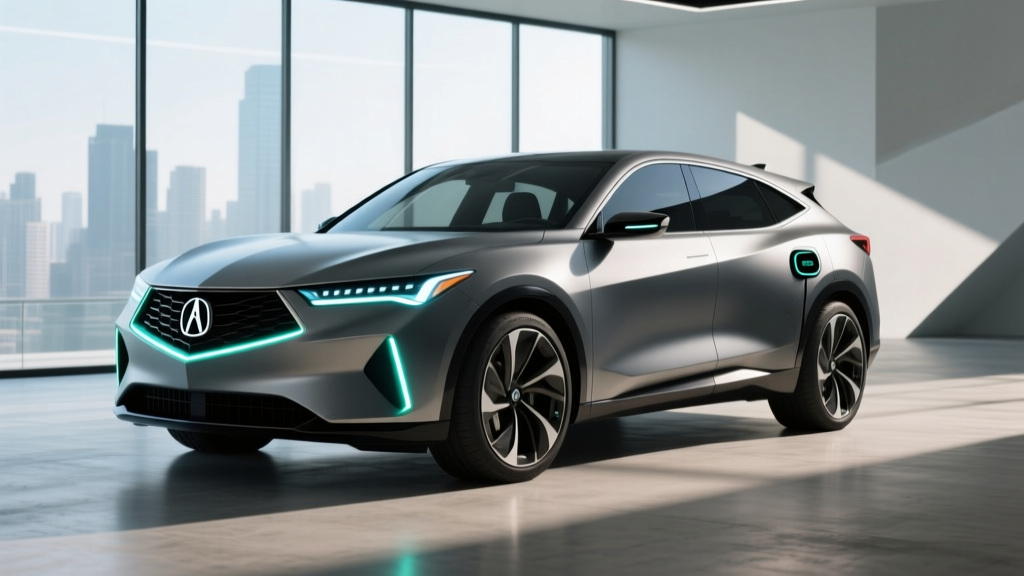
The 2026 Acura ZDX represents Honda's luxury division re-entering the electric SUV segment with a vehicle built on GM's Ultium platform. With an EPA-estimated range of up to 313 miles (Type S), a 102 kWh usable battery, and premium appointments, it's positioned against the BMW iX, Genesis Electrified GV70, and Tesla Model X. But for many buyers, the first question isn't about horsepower—it's whether the Acura ZDX EV tax credit applies and what total ownership actually costs.
The short answer on the tax credit is complicated. The ZDX's eligibility under IRS §30D hinges on battery component sourcing, critical mineral requirements, your household income, and the vehicle's MSRP. Below, we break down the exact rules, run the five-year cost math, and compare the ZDX's ownership economics against a gas-powered luxury SUV baseline.
2026 Acura ZDX Key Specs (A-Spec & Type S)
| EPA Range | 313 mi (A-Spec RWD) / 278 mi (Type S AWD) |
| Battery | 102 kWh usable, NMC (Ultium) |
| DC Fast Charge | Peak 190 kW, 10–80% in ~30 min |
| Level 2 Charge | 19.2 kW ( onboard charger) |
| Horsepower | 340 hp (A-Spec RWD) / 500 hp (Type S) |
| 0–60 mph | ~5.7 sec (A-Spec) / ~4.0 sec (Type S) |
| MPGe (combined) | 95 MPGe (A-Spec RWD, est.) |
| Base MSRP | $65,850 (A-Spec) / $74,850 (Type S) |
| Battery Warranty | 8 yr / 100,000 mi (≥70% capacity) |
Does the Acura ZDX Qualify for the $7,500 Federal EV Tax Credit?
The Acura ZDX EV tax credit situation is one of the most important ownership variables for 2026 buyers. Under IRS §30D, qualifying new EVs can receive up to $7,500—but the credit is split into two halves, each with its own requirements:
- $3,750 — Battery Component Requirement: A specified percentage of battery components must be manufactured or assembled in North America. The ZDX is built on GM's Ultium platform at the Spring Hill, Tennessee plant, which generally satisfies this requirement.
- $3,750 — Critical Minerals Requirement: A specified percentage of critical minerals (lithium, cobalt, nickel, graphite) must be sourced from the U.S. or a free-trade-agreement country. This threshold tightens annually and is the more uncertain half for many EVs.
- MSRP Cap: The ZDX must have an MSRP at or below $80,000 (SUVs/vans/pickups). The A-Spec trims qualify; some fully loaded Type S configurations may approach or exceed this cap—verify the exact window sticker.
- Buyer Income Cap: Modified adjusted gross income (MAGI) must not exceed $300,000 (married filing jointly), $225,000 (head of household), or $150,000 (single filers). This applies to the tax year of delivery or the prior year—whichever is lower.
- Point-of-Sale Transfer: As of 2024, you can transfer the credit to the dealer at purchase, reducing your out-of-pocket cost immediately rather than waiting to claim it on your tax return. The dealer must be IRS-registered.
Current status for 2026: The Acura ZDX (A-Spec trims under the $80K cap) has appeared on the IRS/Fueleconomy.gov qualified-vehicle list for the battery component half ($3,750). The critical-mineral half depends on the specific battery cell batch and supply-chain documentation for the model year. Always verify the exact VIN's eligibility on fueleconomy.gov before signing a purchase agreement—credit eligibility can change with battery sourcing updates mid-model-year.
State, Local, and Utility EV Incentives
Beyond the federal credit, your actual cost to own the ZDX can drop further depending on where you live and which utility serves your home. These programs vary significantly by jurisdiction, so treat the following as a framework—not a guarantee:
- State rebates: States like California (CVRP, up to $7,000 for income-qualified buyers), Colorado (up to $5,000), and Massachusetts (up to $3,500) offer additional purchase incentives. Many states have no EV rebate at all.
- Utility rebates: Some utilities offer $500–$1,500 for purchasing an EV and/or installing a Level 2 home charger. Examples include PG&E, SCE, ConEdison, and Xcel Energy programs—check your local utility's EV page.
- HOV lane access: Several states grant EVs access to carpool lanes regardless of occupancy, which can be worth thousands in time savings for commuters.
- Property tax exemptions: A handful of states exempt EVs from ad valorem or personal property taxes that apply to gas vehicles.
Always confirm current program availability with your state energy office or utility. Incentive programs frequently exhaust funding or change eligibility rules.
5-Year Total Cost of Ownership: Acura ZDX vs. Gas Luxury SUV
To understand whether the ZDX saves or costs you money over time, we modeled a five-year ownership scenario against a comparable gas-powered luxury midsize SUV (think BMW X5 xDrive40i or Mercedes GLE 350). Assumptions: 15,000 miles/year, 75,000 miles total, home Level 2 charging at $0.14/kWh national average, gas at $3.60/gallon, and the gas SUV averaging 22 MPG combined.
| Category | 2026 Acura ZDX (A-Spec) | Gas Luxury SUV Baseline |
|---|---|---|
| Purchase Price (MSRP) | $65,850 | $65,000 |
| Federal Tax Credit | –$3,750 to –$7,500 | $0 |
| Effective Purchase Price | $58,350–$62,100 | $65,000 |
| Fuel/Energy (75,000 mi) | $3,675 | $12,273 |
| Maintenance (5 years) | $2,200 | $5,500 |
| Insurance (5 years) | $14,500 | $11,000 |
| Depreciation (est. 5-yr) | $28,000 | $24,000 |
| 5-Year Total Cost | ~$102,725–$106,475 | ~$117,773 |
Net savings over 5 years: roughly $11,000–$15,000 in the ZDX's favor, driven primarily by fuel and maintenance savings plus the tax credit. However, higher insurance premiums and steeper EV depreciation eat into those gains. Your actual numbers depend heavily on local electricity rates, driving patterns, and whether you qualify for the full credit.
Charging Cost vs. Gas: The Per-Mile Math
The single largest ongoing savings for the ZDX comes from energy cost. Here's the breakdown using the EPA-estimated consumption of approximately 35 kWh/100 miles (A-Spec RWD):
| Scenario | Cost Per Mile | Annual (15K mi) |
|---|---|---|
| ZDX — Home charging ($0.14/kWh) | $0.049 | $735 |
| ZDX — Public DC fast ($0.45/kWh avg) | $0.158 | $2,363 |
| ZDX — Blended (70% home / 30% DCFC) | $0.082 | $1,225 |
| Gas SUV (22 MPG @ $3.60/gal) | $0.164 | $2,455 |
If you charge primarily at home, the ZDX costs roughly one-third per mile compared to the gas SUV. Even with a blended mix that includes public DC fast charging, you save ~$1,200/year. But if you rely exclusively on expensive public chargers (airport parking, road trips), the savings narrow dramatically—this is why home charging access is the single most important ownership variable.
For context, a full 0–100% charge of the ZDX's 102 kWh battery at home costs roughly $14.28, giving you ~280 real-world miles. That same distance in the gas SUV at 22 MPG costs about $45.82.
Maintenance Savings: Where EVs Pull Ahead
The Acura ZDX eliminates several routine maintenance items that gas-vehicle owners take for granted—and pay for—every year:
| Service Item | ZDX (EV) | Gas SUV |
|---|---|---|
| Oil changes | Never | $60–$120 × 2/yr |
| Transmission fluid | Rarely (reduction gear) | $200–$350 at 60K mi |
| Brake pads | 80K–120K+ mi (regen braking) | 30K–50K mi intervals |
| Spark plugs | N/A | $300–$600 at 60K mi |
| Coolant flush | Every ~5 yr (battery thermal) | Every 3–5 yr |
| Cabin air filter | Every 15K–20K mi (~$40) | Every 15K–20K mi (~$40) |
| Tire rotation | Every 7,500 mi (EVs wear tires faster due to torque + weight) | Every 7,500 mi |
Over five years, the ZDX's maintenance savings typically total $2,500–$3,500 compared to the gas SUV. One caveat: EV tires tend to wear 15–25% faster due to instant torque and heavier curb weight (~5,900 lbs for the ZDX). Budget for a tire replacement around 30,000–40,000 miles, which partially offsets the brake-pad savings. Acura's recommended maintenance schedule for the ZDX is minimal—primarily cabin filter, tire rotation, and periodic brake-fluid checks.
Insurance Cost Reality: The Hidden EV Premium
Here's where the ownership math gets less favorable. EV insurance premiums run 15–30% higher than equivalent gas vehicles, and the ZDX is no exception. Based on national averages for a luxury midsize EV, expect annual premiums of $2,600–$3,200 depending on your driving record, ZIP code, and coverage level.
Why the premium? Three factors:
- Higher repair costs: EV battery packs and power electronics are expensive to replace after collision damage. Even minor rear-end impacts can trigger battery-pack inspections or replacements costing $15,000–$30,000+.
- Specialized labor: Fewer body shops are certified for high-voltage EV repair, which drives up labor rates and cycle times.
- Vehicle price: The ZDX's $65K+ MSRP places it in a higher insurance tier regardless of powertrain.
Over five years, expect to pay $3,000–$4,000 more in insurance for the ZDX versus the gas SUV baseline. Shop quotes from multiple carriers before purchase—some insurers (like Progressive and State Farm) have begun offering EV-specific discounts that partially close the gap.
Depreciation and Resale Value: The EV Wildcard
EV depreciation has been volatile. Early luxury EVs (2020–2022 model years) experienced steeper-than-expected depreciation due to rapid price cuts on new models (notably Tesla), improving battery technology making older models less competitive, and general market uncertainty about long-term battery health.
For the 2026 Acura ZDX, our depreciation model estimates ~42–45% value retention after 5 years / 75,000 miles, translating to roughly $28,000 in depreciation from the effective purchase price. The gas SUV baseline retains ~48–52%, or about $24,000 in depreciation.
Factors working in the ZDX's favor: Acura's brand reputation for reliability, the proven Ultium platform shared with well-reviewed GM EVs, and the 8-year/100,000-mile battery warranty. Factors working against it: the general trend of EV price compression as battery costs fall, and the risk that future models will offer more range or faster charging at similar prices.
If you plan to keep the ZDX for 8–10 years, depreciation becomes less relevant as a cost factor—you'll ride out the steepest drop and benefit from the full maintenance and fuel savings window. If you trade every 3 years, the depreciation gap matters more.
Frequently Asked Questions
How much does it really cost to own the Acura ZDX over 5 years?
Our model estimates $102,725–$106,475 in total five-year cost (purchase, energy, maintenance, insurance, depreciation) assuming you qualify for at least the $3,750 battery-component tax credit. That's roughly $11,000–$15,000 less than a comparably priced gas luxury SUV over the same period, with savings driven primarily by lower fuel and maintenance costs.
Do I qualify for the Acura ZDX EV federal tax credit?
You qualify for up to $7,500 under IRS §30D if: (1) your MAGI is under $300K joint / $225K head of household / $150K single; (2) the vehicle MSRP is under $80,000; and (3) the specific VIN meets both battery-component and critical-mineral sourcing requirements. The ZDX generally satisfies the battery-component half ($3,750). Confirm critical-mineral eligibility on fueleconomy.gov for the exact model year and VIN.
How much do I save on fuel and maintenance with the ZDX?
With predominantly home charging at $0.14/kWh, you'll spend roughly $735/year on electricity versus $2,455/year on gasoline for a comparable luxury SUV—saving ~$1,720/year. Maintenance savings add another $500–$700/year from eliminated oil changes, longer brake-pad life (regenerative braking), and fewer fluid services. Combined annual savings: approximately $2,200–$2,400.
Are EVs like the ZDX more expensive to insure?
Yes. Expect premiums 15–30% higher than a gas SUV in the same price class, translating to roughly $600–$800 more per year. The higher cost reflects expensive battery repair/replacement after collisions, limited certified repair shops, and the ZDX's premium MSRP. Always get insurance quotes before committing to the purchase.
How well does the Acura ZDX hold its resale value?
Current projections estimate 42–45% value retention at 5 years / 75,000 miles. This is slightly below the gas-SUV average (48–52%) due to ongoing EV market price compression and technology improvements. The 8-year/100,000-mile battery warranty and Acura's reliability reputation provide some support. Long-term holders (8+ years) will see depreciation normalize while continuing to capture fuel and maintenance savings.
Can I charge the Acura ZDX on Tesla Superchargers?
The 2026 ZDX comes equipped with a NACS (North American Charging Standard) port, giving it native access to Tesla's Supercharger network—over 25,000 stalls in North America—without an adapter. This is a significant practical advantage for road trips and expands the ZDX's usable DC fast-charging infrastructure considerably beyond CCS-only networks.
What home charging setup do I need for the ZDX?
The ZDX supports up to 19.2 kW on Level 2 (requires a 100-amp circuit and hardwired EVSE for maximum rate). A more common 48-amp / 11.5 kW Level 2 setup on a 60-amp circuit will fully recharge the 102 kWh battery overnight in roughly 9–10 hours. Budget $800–$2,500 for a quality Level 2 charger and professional electrical installation, depending on your panel capacity and wiring distance. Check with your utility for EV-specific rate plans that offer off-peak charging discounts.
Should You Buy the Acura ZDX? The Decision Framework
Choose the ZDX if: You have reliable home charging access, your income falls under the §30D caps, you value a quiet and torque-rich daily commute, and you plan to own the vehicle for 5+ years to capture the full fuel and maintenance savings.
Reconsider if: You lack home charging and would rely entirely on public DC fast chargers (the cost-per-mile advantage shrinks dramatically), you trade vehicles every 2–3 years (depreciation risk is higher), or your state offers no additional EV incentives to stack with the federal credit.