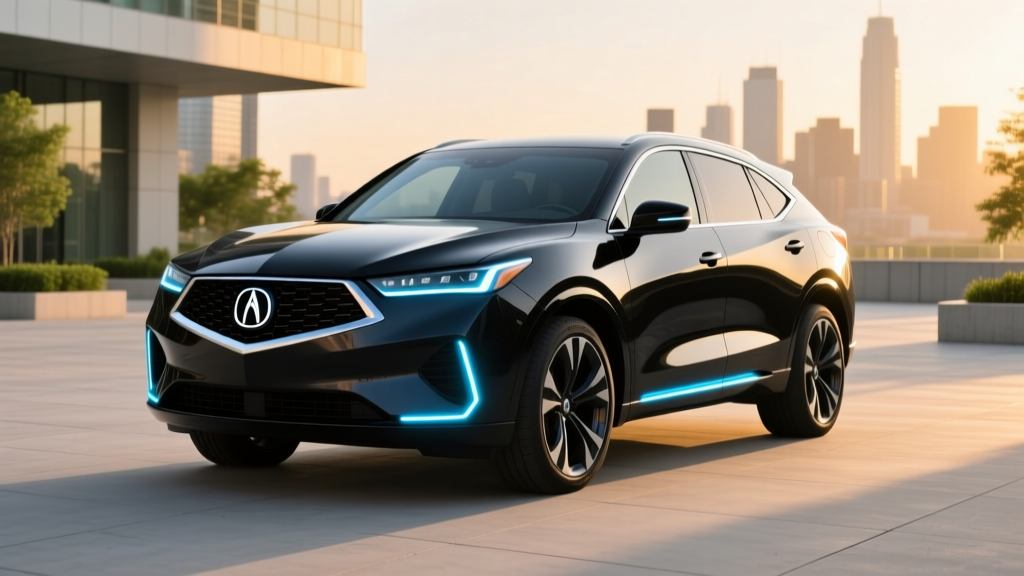
If you've been searching for a luxury electric SUV from Honda's premium brand, you've likely encountered headlines about the Acura ZDX EV SUV discontinued status. After launching for the 2024 model year as Acura's first battery-electric vehicle — built on General Motors' Ultium platform — the ZDX was pulled from production after just one model year. For 2026, the ZDX is no longer in Acura's new-vehicle lineup, leaving buyers to navigate the used-EV market or consider alternatives.
This guide covers everything current and prospective owners need to know: the specs the ZDX delivered during its brief run, real-world range and charging data, federal tax credit implications for used purchases, and which competing luxury EV SUVs make sense as replacements.
Why Acura Discontinued the ZDX EV
The Acura ZDX was born from the Honda-GM partnership that also produced the Honda Prologue. Both vehicles shared the Ultium battery architecture and were assembled at GM's Spring Hill, Tennessee plant. However, by mid-2025, Honda and Acura confirmed they would end the GM collaboration for future EVs, pivoting to an in-house platform developed with Sony (the Afeela sedan project) and Honda's own next-generation EV architecture.
The business case was straightforward: the ZDX and Prologue were stopgap products to get electrified vehicles into showrooms quickly. With Honda's dedicated EV platform nearing production readiness and EV demand growth slowing relative to initial projections, maintaining a GM-sourced model no longer aligned with Acura's long-term strategy. The ZDX's discontinuation means no 2025 or 2026 model year exists — the 2024 model year was both the first and the last.
Acura ZDX EV Specs at a Glance
| Specification | ZDX A-Spec (RWD) | ZDX A-Spec (AWD) | ZDX Type S |
|---|---|---|---|
| EPA Range | 313 miles | 304 miles | 278 miles |
| Battery Capacity (usable) | 102 kWh | 102 kWh | 102 kWh |
| Battery Chemistry | NMC (Ultium) | NMC (Ultium) | NMC (Ultium) |
| Horsepower | 340 hp | 340 hp | 500 hp |
| Torque | 325 lb-ft | 325 lb-ft | 557 lb-ft |
| 0-60 mph | ~7.2 sec | ~6.2 sec | ~4.5 sec |
| Drivetrain | Single-motor RWD | Dual-motor AWD | Dual-motor AWD (Performance) |
| Max DC Fast Charge | 190 kW | 190 kW | 190 kW |
| 10-80% DC Fast Charge | ~42 min | ~42 min | ~42 min |
| Level 2 Home Charging | 11.5 kW (~31 mi/hr) | 11.5 kW (~31 mi/hr) | 11.5 kW (~31 mi/hr) |
| MPGe (combined) | 94 MPGe | 90 MPGe | 77 MPGe |
| Efficiency | 36 kWh/100 mi | 37 kWh/100 mi | 44 kWh/100 mi |
| Cargo (behind 2nd row) | 28.4 cu ft | 28.4 cu ft | 28.4 cu ft |
| Cargo (max, seats folded) | 56.9 cu ft | 56.9 cu ft | 56.9 cu ft |
| Rear Legroom | 38.2 in | 38.2 in | 38.2 in |
| Battery Warranty | 8 yr / 100,000 mi | 8 yr / 100,000 mi | 8 yr / 100,000 mi |
| Original Base MSRP | $59,950 | $61,950 | $70,950 |
Sources: EPA Fueleconomy.gov, Acura Newsroom (2024 model year press kit).
Real-World Range: What Owners Actually Experienced
The EPA's 304-mile estimate assumes mixed driving at moderate temperatures. In real-world ownership:
• Highway cruising (70-75 mph, summer): ~240-260 miles
• City/suburban mixed driving (spring/fall): ~270-290 miles
• Cold weather (below 32°F, highway): ~190-220 miles
• Best-case scenario (city, 55 mph, mild temps): ~300+ miles achievable
The ZDX's 102 kWh usable battery is large by midsize-SUV standards, but the vehicle's 5,700+ lb curb weight and relatively boxy aerodynamic profile work against efficiency. The Type S, with its performance-tuned motors and stickier 22-inch wheel tires, sacrifices the most — its 77 MPGe combined is closer to a Porsche Cayenne E-Hybrid than a Tesla Model X.
For context, the mechanically similar Honda Prologue achieves nearly identical real-world results, while the Hyundai Ioniq 5 (with a smaller 84 kWh battery) can match or beat the ZDX's real-world highway range thanks to superior efficiency and an 800V architecture that enables faster charging.
Charging Speed: The ZDX's Notable Weakness
Charging performance is where the ZDX's GM Ultium underpinnings show their age relative to 2026 competitors. The peak DC fast-charge rate of 190 kW was acceptable in 2022 when the platform was finalized, but by 2026 standards, it trails significantly:
| Vehicle | Peak DC kW | 10-80% Time | Architecture |
|---|---|---|---|
| 2024 Acura ZDX | 190 kW | ~42 min | 400V (Ultium) |
| 2026 Hyundai Ioniq 5 | 240 kW | ~18 min | 800V (E-GMP) |
| 2026 Kia EV9 | 238 kW | ~24 min | |
| 2026 BMW iX xDrive50 | 200 kW | ~31 min | 400V |
| 2026 Cadillac Lyriq | 190 kW | ~38 min | 400V (Ultium) |
| 2026 Rivian R1S (Dual-Motor) | 220 kW | ~28 min | ~800V |
The ZDX's 42-minute 10-80% session is the practical consequence of its 400-volt architecture. On a 350 kW Electrify America or Tesla Supercharger (via adapter), the ZDX physically cannot accept more than 190 kW, and the charge curve tapers substantially above 60% State of Charge. Owners planning frequent road trips will spend noticeably more time at chargers than Ioniq 5 or EV9 drivers.
Home Level 2 charging is more competitive: the onboard 11.5 kW charger adds roughly 31 miles of range per hour, meaning a full overnight charge (10 hours from near-empty) is practical on a 48-amp home circuit. Most owners charging from 20% to 80% overnight will wake to a full battery in 6-7 hours.
Pricing, Depreciation, and Tax Credits for Used ZDX Buyers
Because the ZDX was discontinued after 2024, all available units are now on the used or certified pre-owned (CPO) market. This has significant pricing and incentive implications:
| Trim | Original MSRP (2024) | Est. Used Price (2026, ~25K mi) | Depreciation |
|---|---|---|---|
| ZDX A-Spec RWD | $59,950 | $36,000 - $42,000 | ~30-40% |
| ZDX A-Spec AWD | $61,950 | $38,000 - $44,000 | ~29-39% |
| ZDX Type S | $70,950 | $42,000 - $50,000 | ~29-41% |
The ZDX experienced steeper-than-average EV depreciation, driven by three factors: discontinuation uncertainty (buyers worry about parts and support), aggressive new-EV price competition, and general EV resale softening in 2024-2025. For buyers, this means genuine value — a lightly used ZDX A-Spec AWD can be had for under $40,000, which is competitive with a new Hyundai Ioniq 5 Limited.
Federal Used-EV Tax Credit (§25E)
Since the ZDX is no longer sold new, the new-vehicle §30D credit ($7,500) does not apply. However, buyers may qualify for the IRS §25E Used Clean Vehicle Credit, which provides up to $4,000 or 30% of the sale price (whichever is less) for qualifying used EVs. Key requirements:
- Vehicle price cap: Sale price must be $25,000 or less (this eliminates most ZDX listings from eligibility)
- Buyer income limits: AGI must not exceed $75,000 (single), $112,500 (head of household), or $150,000 (joint)
- Vehicle age: Must be at least 2 model years old (2024 ZDX qualifies in 2026)
- Dealer requirement: Must be purchased from a licensed dealer, not private party
- One-time use: Buyer cannot have claimed another used-EV credit in the prior 3 years
In practice, the $25,000 sale-price cap makes the ZDX ineligible for the used-EV credit at most dealerships. Only high-mileage or damaged examples might fall below that threshold. This is a critical detail many listing sites get wrong.
Technology, Interior, and Driver Assistance
The ZDX's cabin reflects its dual heritage: Acura designed the interior and infotainment, while GM supplied the underlying EV architecture. The result is a competent but not class-leading tech experience.
Infotainment: An 11.3-inch touchscreen running a Google Built-in system (Google Maps, Google Assistant, Play Store) handles navigation and media. Wireless Apple CarPlay and Android Auto are standard. The 11-inch digital instrument cluster is clear but lacks the configurability of BMW's iDrive or Mercedes MBUX.
Driver Assistance — AcuraWatch: The ZDX includes adaptive cruise control with stop-and-go, lane-keeping assist, blind-spot monitoring, and rear cross-traffic alert. This is SAE Level 2 driver assistance — the driver must keep hands on the wheel and eyes on the road at all times. It does not include hands-free driving on highways (unlike GM's Super Cruise, which Acura did not license for this model, or Ford's BlueCruise).
Notable interior strengths: 18-speaker Bang & Olufsen audio (Type S), heated and ventilated front seats (all trims), panoramic fixed glass roof, and respectable material quality with leatherette on A-Spec and available Milano leather on Type S.
Notable drawbacks: The rear-seat entertainment system available in competitors like the Kia EV9 is absent. The frunk (front trunk) is small — only about 3.5 cu ft — limiting its utility. And the absence of a heat pump (the ZDX uses resistive cabin heating) contributes to the steeper cold-weather range loss compared to heat-pump-equipped rivals like the Ioniq 5 or Model Y.
Who the ZDX Suits — and Who Should Look Elsewhere
- You want a luxury-badged electric SUV under $40K on the used market
- Your daily commute is under 80 miles round-trip (range is more than sufficient)
- You primarily charge at home and rarely road-trip more than 200 miles
- You value ride comfort and cabin quietness over sporty handling
- You want Acura's dealer service network for maintenance
- You road-trip frequently and need fast DC charging (consider Ioniq 5 or EV9)
- You want hands-free highway driving (Cadillac Lyriq with Super Cruise)
- You need three rows of seating (Kia EV9)
- You want the latest tech and newest platform (wait for Honda's next-gen EV SUV, expected 2027)
- You want native NACS/Tesla Supercharger access without an adapter
ZDX vs. Competitors: Quick Comparison
| Metric | 2024 Acura ZDX A-Spec AWD | 2026 Hyundai Ioniq 5 Limited AWD | 2026 BMW iX xDrive50 | 2026 Kia EV9 Land AWD |
|---|---|---|---|---|
| Price (est.) | ~$40,000 (used) | ~$57,000 (new) | ~$87,000 (new) | ~$60,000 (new) |
| EPA Range | 304 mi | 290 mi | 324 mi | 279 mi |
| 10-80% DC Time | ~42 min | ~18 min | ~31 min | ~24 min |
| Seating | 5-passenger | 5-passenger | 5-passenger | 7-passenger |
| 0-60 mph | 6.2 sec | 4.5 sec | 4.4 sec | 5.3 sec |
| Tax Credit | Unlikely (§25E cap) | $7,500 (§30D) | $7,500 (§30D) | $7,500 (§30D) |
Ownership Considerations for a Discontinued Model
Buying a discontinued vehicle raises legitimate questions about long-term support. Here's what ZDX owners and prospective buyers should know:
Parts and service: Acura has committed to supporting the ZDX with parts and warranty service for a minimum of 10 years from the last model year (through at least 2034). Because the ZDX shares its Ultium powertrain with the Honda Prologue, Chevrolet Blazer EV, and Cadillac Lyriq, many mechanical and electrical components remain in active production through GM's broader EV lineup.
Software updates: Over-the-air (OTA) updates were available during the ZDX's production run, but the frequency and scope of future updates for a discontinued model are uncertain. Don't expect major feature additions — bug fixes and security patches are more likely.
Insurance: Insurance premiums for the ZDX are moderate for the luxury-EV segment. Expect annual premiums of $1,800-$2,600 depending on your profile and state, per industry data. Discontinued status has not materially affected rates, as parts availability remains adequate.
Battery longevity: The NMC Ultium battery carries an 8-year/100,000-mile warranty against capacity loss below 70% of original. GM's Ultium packs in the broader fleet have shown promising early degradation data — typically 5-8% loss over the first 50,000 miles, though long-term (150K+ mile) data is still accumulating. The ZDX's liquid-cooled thermal management system helps mitigate calendar degradation.
Frequently Asked Questions
Is the Acura ZDX EV really discontinued?
Yes. Acura confirmed the ZDX was a one-model-year vehicle (2024). Honda's decision to end the GM collaboration for future EVs and develop an in-house electric platform means no successor is planned in the near term. Honda has announced plans for a next-generation electric SUV, but it is not expected before 2027.
Can I still buy a new Acura ZDX?
No new ZDX units are being produced. Some dealerships may still have unregistered 2024 models in stock as of early 2026, but these are increasingly rare. The vast majority of ZDX vehicles are now available only on the used or CPO market.
Does the ZDX qualify for any federal tax credit?
The new-vehicle §30D credit ($7,500) is not available since the ZDX is no longer sold new. The used-vehicle §25E credit (up to $4,000) technically applies but requires a sale price of $25,000 or less — a threshold most ZDX listings exceed. Always verify current rules at IRS.gov and consult a tax professional.
How does the ZDX compare to the Honda Prologue?
The two vehicles share the same Ultium platform, battery, and powertrain. The Prologue is slightly less expensive (used examples run $3,000-$5,000 less than equivalent ZDX trims) and offers a nearly identical driving experience. The ZDX adds Acura-specific styling, a more premium interior, and the B&O audio option on Type S. Mechanically, they are twins.
Will Acura release another electric SUV?
Honda has confirmed a next-generation EV platform is in development, with a new lineup of electric vehicles planned globally. Acura is expected to receive an electric SUV based on this platform, but no official timeline, name, or specs have been announced as of early 2026. Industry estimates suggest a 2027-2028 debut.
Is the ZDX reliable for daily commuting?
For daily commutes under 100 miles round-trip with home charging, the ZDX is well-suited. The 102 kWh battery provides ample range buffer, and the 11.5 kW Level 2 home charging rate easily replenishes daily usage overnight. The primary limitation is road-trip charging speed, not daily usability.
What is the ZDX's towing capacity?
The ZDX A-Spec AWD and Type S are rated for 3,500 lbs of towing capacity when properly equipped. The RWD model is not rated for towing. This is adequate for a small utility trailer or a pair of jet skis but falls well short of the Rivian R1S (7,700 lbs) or even the Kia EV9 (5,000 lbs).