Quick Verdict: The Electric Gran Coupe That Drives Like a BMW First
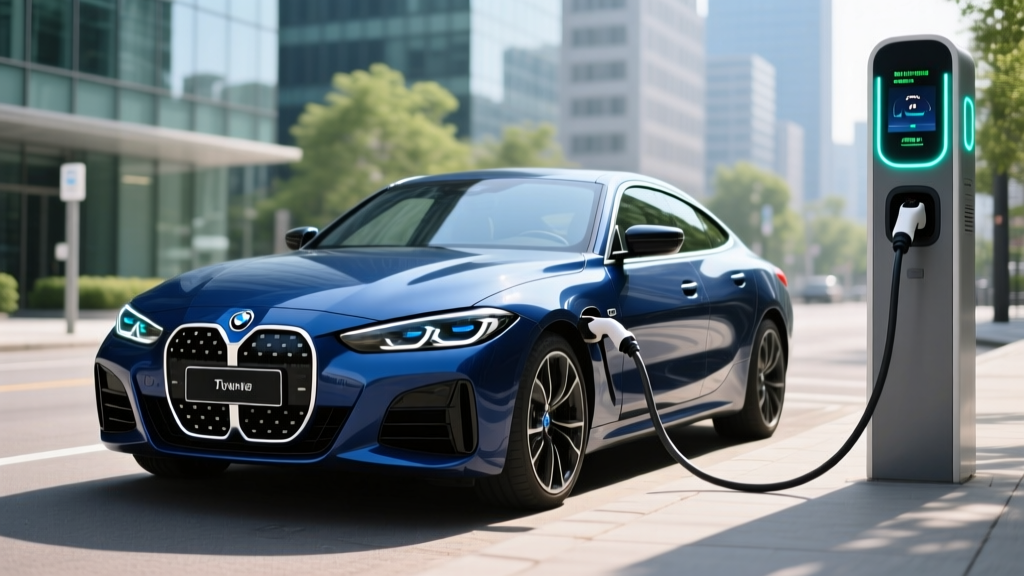
The 2023 BMW i4 eDrive40 Gran Coupe occupies a specific niche: a luxury electric sportback that prioritizes driving dynamics and build quality over maximum range or cutting-edge efficiency. With 339 horsepower, rear-wheel drive, and an EPA-estimated 301 miles of range from its 83.9 kWh battery pack, the eDrive40 is the volume seller in the i4 lineup — and for good reason. It balances everyday usability with the kind of chassis tuning that reminds you BMW still cares about steering feel.
As a used-EV prospect in 2026, the 2023 i4 eDrive40 is particularly compelling. Prices have depreciated into territory where the used EV tax credit (up to $4,000 under IRC §25E) can meaningfully reduce out-of-pocket cost, and BMW's 8-year/100,000-mile battery warranty still has years of coverage remaining on most examples. Here's everything you need to know before buying.
Spec Table: 2023 BMW i4 eDrive40 at a Glance
| Specification | 2023 BMW i4 eDrive40 |
|---|---|
| EPA Range | 301 miles (19" wheels) / 282 miles (18" wheels with all-season tires) |
| Battery (Usable/Total) | 83.9 kWh usable / 83.9 kWh gross (NMC lithium-ion) |
| Drivetrain | Rear-wheel drive (single motor) |
| Horsepower / Torque | 339 hp / 317 lb-ft |
| 0–60 mph | 5.5 seconds |
| Top Speed | 118 mph (electronically limited) |
| MPGe (Combined) | 97 MPGe (19" wheels) |
| Energy Consumption | 35 kWh/100 mi |
| Max DC Fast Charge | 200 kW (CCS1) |
| 10–80% DC Fast Charge | ~31 minutes |
| Level 2 Charge Rate | 11 kW (onboard charger) |
| Cargo Volume | 16.6 cu ft (rear seats up) / 45.6 cu ft (folded) |
| Base MSRP (2023) | $55,900 (before destination) |
| Battery/Powertrain Warranty | 8 years / 100,000 miles |
| Basic Vehicle Warranty | 4 years / 50,000 miles |
Source: fueleconomy.gov and BMW USA press materials.
Range & Efficiency: 301 Miles on Paper, What About the Real World?
Real-World Expectation: ~255–280 mi highway (70–75 mph); ~240–260 mi in cold weather (below 35°F); ~290–305 mi city/mixed driving in mild conditions.
The i4 eDrive40's 301-mile EPA figure is competitive for the luxury EV sportback segment, but real-world results depend heavily on how and where you drive. On a 70 mph highway cruise in 65°F weather, expect roughly 260–275 miles before needing to charge — the i4's aerodynamic efficiency (Cd 0.24) helps here, but the car's weight (~4,682 lbs) works against it at sustained speed.
Cold weather is the equalizer for all EVs, and the i4 is no exception. In temperatures below freezing, plan for 15–20% range reduction, putting real-world range around 240–255 miles. BMW does include a heat pump as standard equipment on the i4, which mitigates cabin-heating energy draw compared to resistive heaters, but battery chemistry itself loses efficiency in the cold.
The 97 MPGe combined rating translates to 35 kWh per 100 miles, which is mid-pack for the segment. The Tesla Model 3 Long Range achieves 132 MPGe combined (25 kWh/100 mi) thanks to lighter weight and more aggressive efficiency tuning, while the Mercedes EQB and Polestar 2 sit in similar territory to the i4. If efficiency-per-mile is your top metric, the i4 isn't the class leader — but it wasn't designed to be.
Charging Speed: 200 kW Peak with a Predictable Taper
| Charging Level | Power | Speed / Time |
|---|---|---|
| Level 1 (120V) | ~1.4 kW | ~3–4 miles per hour |
| Level 2 (240V, 48A) | 11 kW (onboard max) | ~28–32 miles per hour; 0–100% in ~8.25 hours |
| DC Fast Charge (CCS1) | 200 kW peak | 10–80% in ~31 minutes; 10–100% in ~45 minutes |
The i4 eDrive40 supports a peak DC fast-charge rate of 200 kW via its CCS1 connector. In practice, the charge curve is what matters more than the headline number. The i4 ramps quickly from 10% to roughly 40% SoC, sustaining close to 180–200 kW, then tapers progressively through the 50–80% window. Expect an average charge rate closer to 130–140 kW across the full 10–80% session — which is why BMW's stated 31-minute time is honest but not class-leading.
For comparison, Hyundai/Kia's E-GMP platform (Ioniq 5, EV6) hits 10–80% in roughly 18 minutes at 350 kW-capable chargers, and the Tesla Model 3 on V3 Superchargers achieves 10–80% in about 25 minutes. The i4's charging speed is adequate for road trips — you'll add roughly 160–180 miles in a 20-minute stop — but it won't win drag races at the charger.
At home, the 11 kW onboard charger is a strong point. On a 48-amp Level 2 circuit (hardwired, 60-amp breaker), you'll recover a full battery overnight in about 8 hours and 15 minutes. This requires a NEMA 14-50 outlet or hardwired EVSE installation — budget $800–$2,000 for a professional Level 2 home setup depending on your electrical panel capacity and run length.
Preconditioning note: The i4 supports battery preconditioning when a DC fast charger is set as your navigation destination. This warms the battery to optimal charging temperature, which is especially important in cold weather to avoid severely reduced charge rates. Always navigate to your charger — don't just drive there from memory.
Performance & Driving Dynamics: 339 HP of Rear-Drive Composure
The single rear-mounted electric motor produces 339 horsepower and 317 lb-ft of torque, delivering a 5.5-second 0–60 mph time. That's quick enough to feel genuinely sporty in daily driving without crossing into the absurd territory of the dual-motor i4 M50 (3.7 seconds). The instant torque delivery characteristic of electric motors means passing power is always available — no downshift lag, no turbo spool.
What distinguishes the i4 from rivals is chassis tuning. BMW adapted the CLAR platform (shared with the 4 Series Gran Coupe) for electric duty, and the result is a car that feels planted, communicative, and balanced in a way that most EVs — especially crossover-based ones — simply don't. The steering is weighted appropriately, body roll is well-controlled, and the 50/50-ish weight distribution (the battery pack sits low in the floor) gives the i4 a center of gravity that encourages confident cornering.
Adaptive M Suspension is standard on the eDrive40, allowing you to toggle between Comfort and Sport damping profiles. In Comfort, the i4 absorbs freeway expansion joints and rough pavement with a suppleness that belies its sportback badge. Switch to Sport and the damping firms up noticeably — appropriate for canyon roads but unnecessary for most daily commuting.
Regenerative braking offers multiple modes: a high-regen setting that enables near one-pedal driving in city traffic, a low-regen coasting mode, and an adaptive mode that uses radar and camera data to modulate regen based on traffic ahead. The adaptive mode is one of the best implementations in the industry — it anticipates slowdowns smoothly without the herky-jerky behavior of some competitors.
Interior, Tech & Practicality
The i4's cabin is lifted largely from the 4 Series Gran Coupe, which means premium materials, excellent seat comfort, and BMW's iDrive 8 infotainment system displayed on a curved panel (12.3" instrument cluster + 14.9" central touchscreen). The system is responsive, logically menu-structured, and supports wireless Apple CarPlay and Android Auto. Physical climate controls have been absorbed into the touchscreen — a common complaint from traditionalists, though the interface is reasonably quick to operate.
Cargo and passenger space:
- Rear cargo (seats up): 16.6 cu ft — comparable to a midsize sedan, aided by the hatchback liftgate design
- Rear cargo (seats folded): 45.6 cu ft — enough for a weekend trip for two with bulky gear
- Rear legroom: 34.5 inches — adequate for adults on shorter trips, tight for anyone over 6 feet on long drives
- Front legroom: 42.1 inches
- No front trunk (frunk) — the CLAR platform's ICE origins mean the front is occupied by power electronics and HVAC components
The lack of a frunk is a notable practicality gap compared to dedicated EV platforms (Tesla Model 3, Hyundai Ioniq 6). You're working with sedan-equivalent cargo space, not crossover space. For a couple or solo commuter, it's plenty. For a family of four on a road trip, you'll need to pack strategically.
Driver Assistance & Safety
The 2023 i4 comes equipped with BMW's Driving Assistant Professional package, which includes:
- Adaptive cruise control with stop-and-go
- Lane-keeping assist with active side collision avoidance
- Extended traffic jam assistant (hands-off, eyes-on at speeds up to 40 mph in certain conditions)
- Parking Assistant Plus with surround-view camera and automated parking
The NHTSA awarded the 2023 BMW i4 a 5-Star Overall Safety Rating. The IIHS named it a Top Safety Pick+ when equipped with specific headlight packages.
Pricing, Tax Credits & Ownership Cost
The 2023 BMW i4 eDrive40 launched with a base MSRP of $55,900 (plus $995 destination), putting it at roughly $56,895 out the door before options. Well-equipped examples with the Premium Package, larger wheels, and metallic paint pushed as-tested prices into the $62,000–$66,000 range.
| Item | Amount |
|---|---|
| Base MSRP (2023) | $55,900 |
| Destination Charge | $995 |
| Typical As-Tested Price | $60,000–$65,000 |
| Federal New EV Credit (§30D) — 2023 | Up to $7,500 (subject to MSRP cap, income cap, battery sourcing) |
| Used EV Credit (§25E) — 2026 purchase | Up to $4,000 (30% of sale price, max $4,000; vehicle must be <$25,000; buyer income caps apply) |
Federal tax credit nuance: When new, the 2023 i4 eDrive40 was eligible for the full $7,500 §30D credit for qualifying buyers, as its MSRP fell under the $55,000 sedan cap (base price before destination) and BMW's battery sourcing met 2023 critical-mineral thresholds. However, buyer income caps applied: $150,000 single / $300,000 joint MAGI. As of 2024, the point-of-sale transfer option allowed dealers to apply the credit at purchase rather than waiting for tax filing.
For 2026 buyers shopping the used market, the IRC §25E used EV credit is the relevant incentive. If you purchase a qualifying used 2023 i4 eDrive40 for $25,000 or less from a licensed dealer, and your income is below $75,000 single / $150,000 joint, you may claim up to $4,000 (30% of the sale price). The vehicle must be at least two model years old, and you must not have claimed the used-EV credit on another vehicle within the prior three years. Verify current rules at irs.gov — thresholds and eligibility change.
5-year ownership considerations:
- Insurance: Expect premiums 15–25% higher than a comparable gas-powered 4 Series. Average annual cost: $2,200–$2,800 depending on state, driving record, and coverage level.
- Maintenance: Minimal — no oil changes, fewer brake replacements (regen saves pads), cabin air filter every 2 years. BMW includes 3 years/36,000 miles of complimentary scheduled maintenance.
- Charging cost: At $0.14/kWh national average, a full 83.9 kWh charge costs roughly $11.75, yielding about $0.04–$0.05 per mile. Compare to a gas 430i at ~$0.12/mile at $3.50/gal and 27 MPG combined.
- Depreciation: The 2023 i4 has experienced steeper depreciation than Tesla or Hyundai/Kia EVs, partly due to luxury-EV market saturation and initial pricing. Typical 2026 used prices: $32,000–$42,000 depending on mileage and condition.
Pros & Cons: The Honest Scorecard
Pros
- Class-leading ride and handling — genuinely engaging to drive
- Premium interior with excellent build quality and materials
- Strong 200 kW DC fast-charging capability
- 301-mile EPA range is sufficient for most daily and road-trip use
- Adaptive regen system is among the best in the industry
- Heat pump standard (better cold-weather efficiency)
- 5-star NHTSA safety rating
- Significant used-market depreciation creates value opportunity
Cons
- No frunk — cargo space limited to rear hatch area
- Rear seat legroom is tight for taller passengers
- Energy efficiency (35 kWh/100 mi) trails Tesla Model 3 and Hyundai Ioniq 6
- iDrive 8 buries some climate/vehicle functions in touchscreen menus
- CCS1 connector only — no native NACS (Tesla Supercharger access requires adapter)
- Insurance costs above segment average
- Base MSRP pushed many examples above the §30D $55K sedan cap when options added
Who Should Buy the 2023 BMW i4 eDrive40?
Choose the i4 eDrive40 if:
- You prioritize driving dynamics and chassis feel over maximum efficiency or cargo space
- You want a luxury badge with premium materials and a quiet, refined cabin
- Your daily commute is under 80 miles round-trip and you have home Level 2 charging
- You value BMW's dealer/service network and 8-year battery warranty
- You're shopping the used market and can find one under $25,000 to maximize the §25E credit
Look elsewhere if:
- You need maximum rear-seat space for a family (consider the BMW iX, Tesla Model Y, or Kia EV9)
- Efficiency-per-mile is your top priority (Tesla Model 3 Long Range or Hyundai Ioniq 6)
- You frequently road-trip in charging-desert regions and need Tesla Supercharger network access without adapters
- You need a frunk or more than 16.6 cu ft of cargo without folding seats
Frequently Asked Questions
What is the real-world range of the 2023 BMW i4 eDrive40?
Expect 255–280 miles on the highway at 70–75 mph in mild weather, and 240–255 miles in freezing temperatures. City and mixed driving in moderate conditions can return close to the 301-mile EPA estimate, especially with adaptive regen recovering energy in stop-and-go traffic.
How fast does the i4 eDrive40 charge at home and on the road?
On a 48-amp Level 2 home charger, the 11 kW onboard charger adds about 28–32 miles per hour, fully recharging in roughly 8 hours. On a DC fast charger, it peaks at 200 kW and reaches 10–80% in about 31 minutes — adequate for road trips but slower than Hyundai/Kia's 800V E-GMP platform.
Does the 2023 BMW i4 qualify for the federal EV tax credit in 2026?
As a new vehicle in 2023, it could qualify for up to $7,500 under §30D for eligible buyers (income and battery-sourcing rules applied). In 2026, purchasing a used 2023 i4 eDrive40 from a dealer for under $25,000 may qualify you for the §25E used-EV credit of up to $4,000, subject to income caps ($75K single / $150K joint). Always confirm current eligibility at irs.gov or with a tax professional.
Is the 2023 i4 eDrive40 worth buying vs. the Tesla Model 3 or Hyundai Ioniq 6?
It depends on priorities. The i4 wins on ride quality, interior luxury, and brand prestige. The Model 3 Long Range wins on efficiency (132 MPGe vs. 97), Supercharger network access, and software features. The Ioniq 6 wins on charging speed (18-min 10–80%) and value pricing. None of the three is objectively "best" — they serve different buyer profiles.
What battery chemistry does the i4 eDrive40 use, and how long will it last?
The i4 uses NMC (nickel-manganese-cobalt) lithium-ion cells supplied by Samsung SDI. NMC offers high energy density but is more sensitive to sustained high-SoC storage than LFP chemistry. BMW warranties the battery for 8 years/100,000 miles against capacity loss below 70% of original. Real-world degradation data from early i4 owners suggests roughly 5–8% loss over the first 50,000 miles — well within warranty thresholds.
Can the 2023 i4 eDrive40 use Tesla Superchargers?
Not natively. The i4 uses a CCS1 connector. BMW has offered a CCS-to-NACS adapter for purchase, enabling access to Tesla's Supercharger network (V2 and V3 stalls with CCS support). Verify adapter availability and compatibility with your specific VIN through a BMW dealer, as adapter programs have evolved since 2023.