Quick Answer: Should You Buy an Acura EV in 2026?
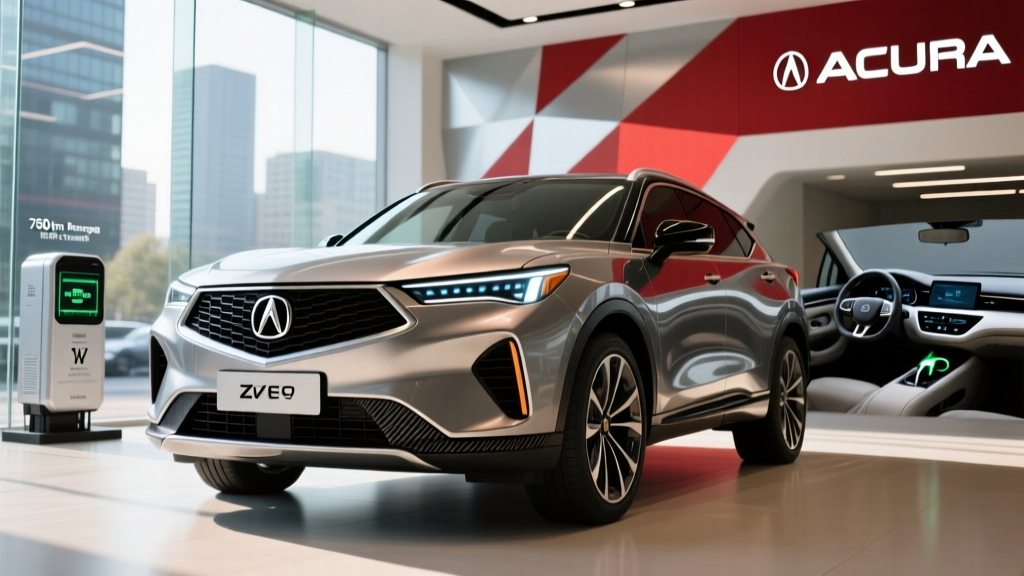
Acura's electric lineup centers on the ZDX, a midsize luxury crossover built on GM's Ultium platform. The 2025–2026 ZDX offers up to 325 miles of EPA range (RWD), DC fast charging up to 190 kW (10–80% in ~28 minutes), and a starting MSRP around $64,500. Federal §30D tax credit eligibility depends on battery sourcing and buyer income — the ZDX has qualified for partial or full credit depending on the model year and IRS sourcing updates. If you want a luxury EV with Acura's design language and don't need third-row seating, the ZDX is competitive with the BMW iX and Genesis Electrified GV70. If you need more space or want a sedan, you'll need to wait — Acura has announced a larger three-row EV (previewed as the RSX concept) for the 2027+ timeframe.
What Acura EVs Are Available Right Now?
Acura's electric vehicle strategy in 2026 is focused but narrow. Unlike Tesla, Hyundai, or BMW — which offer multiple EV body styles — Acura currently sells one battery-electric vehicle:
| Spec | 2026 Acura ZDX (RWD A-Spec) | 2026 Acura ZDX (AWD A-Spec) | 2026 Acura ZDX Type S |
|---|---|---|---|
| EPA Range | 325 mi | 304 mi | 278 mi |
| Battery (usable) | 102 kWh (NMC) | 102 kWh (NMC) | 102 kWh (NMC) |
| Powertrain | Single motor RWD | Dual motor AWD | Dual motor AWD (Performance) |
| Horsepower | 358 hp | 490 hp | 500 hp |
| 0–60 mph | ~6.0 sec | ~4.7 sec | ~4.5 sec |
| Max DC Fast Charge | 190 kW | 190 kW | 190 kW |
| 10–80% DCFC Time | ~28 min | ~28 min | ~28 min |
| Level 2 Charging (kW) | 11.5 kW (~37 mi/hr) | 11.5 kW (~37 mi/hr) | 11.5 kW (~37 mi/hr) |
| Base MSRP | ~$64,500 | ~$69,500 | ~$74,500 |
| MPGe (combined) | 94 MPGe | 89 MPGe | 85 MPGe |
| Battery Warranty | 8 yr / 100,000 mi | 8 yr / 100,000 mi | 8 yr / 100,000 mi |
The ZDX is built at GM's Spring Hill, Tennessee plant on the same Ultium architecture as the Cadillac Lyriq and Chevrolet Blazer EV. That shared platform means proven battery tech but also means Acura's EV identity is partly shaped by GM engineering decisions.
On the horizon: Acura has previewed a performance-oriented electric coupe/SUV concept (reviving the RSX nameplate) and a larger three-row electric SUV. Both are announced/preliminary — expect them no earlier than the 2027 model year.
Real-World Range vs. EPA: What to Actually Expect
The EPA sticker on the ZDX RWD reads 325 miles, but real-world results depend heavily on how and where you drive. Based on testing data and owner reports from the Ultium platform:
ZDX RWD A-Spec — Range Reality Check
EPA estimate: 325 miles
Real-world highway (70–75 mph, moderate climate): ~260–285 miles
Cold-weather highway (below 32°F): ~215–245 miles (25–35% reduction typical for NMC batteries without aggressive heat-pump preconditioning)
City/mixed driving (with regen): ~290–315 miles
The ZDX's 102 kWh usable NMC battery is large by class standards (the BMW iX xDrive50 has ~105 kWh usable; the Genesis Electrified GV70 has ~74 kWh). That large pack gives it a buffer against cold-weather losses, but the vehicle's 5,400+ lb curb weight works against highway efficiency. Expect roughly 2.8–3.2 miles per kWh in mixed driving, dropping to 2.3–2.6 mi/kWh at sustained highway speeds.
The ZDX includes a heat pump for cabin heating efficiency, which helps mitigate cold-weather range loss compared to resistive heating — but you should still plan for a 20–35% range reduction in sub-freezing temperatures, consistent with most NMC-based EVs.
Charging Speed and Infrastructure: What You Need to Know
The ZDX peaks at 190 kW on DC fast chargers using its CCS1 connector. That's competitive but not class-leading — the Hyundai Ioniq 5 peaks at 240 kW and the Tesla Model X at 250 kW. Here's what that means in practice:
| Charging Level | Power (kW) | Miles Added per Hour | Typical Use Case |
|---|---|---|---|
| Level 1 (120V household) | ~1.4 kW | ~4–5 mi/hr | Overnight trickle, emergencies |
| Level 2 (240V home/public) | 11.5 kW (max) | ~37 mi/hr | Daily home charging, workplace |
| DC Fast Charge | Up to 190 kW peak | ~180+ mi in 15 min (peak) | Road trips, highway corridors |
Charging curve reality: The 190 kW peak rate is sustained roughly from 10% to 35% state of charge. Above 50%, the rate tapers to ~120 kW, and above 80% it drops further to ~50–60 kW. A 10–80% session takes approximately 28 minutes at a capable charger (Electrify America, EVgo, or any CCS station rated 200+ kW). Charging from 80–100% adds another 25–30 minutes — plan accordingly on road trips and charge to 80% unless you need the full pack.
Connector note: The ZDX currently uses a CCS1 connector. Acura/Honda have committed to adopting the NACS (Tesla) connector for future models, and adapters for Tesla Supercharger access are expected for current Ultium-based vehicles. Check with your dealer for the latest adapter availability.
Home charging setup: To get the full 11.5 kW Level 2 rate, you need a 48-amp hardwired wallbox on a 60-amp dedicated circuit. Installation costs typically range from $800–$2,500 depending on panel proximity and local permitting. If your electrical panel is at capacity (common in older homes), a panel upgrade adds $1,500–$3,500.
Acura ZDX vs. Gas Acura MDX: Cost Comparison
The most common cross-shopping question is whether the ZDX makes financial sense compared to the gasoline Acura MDX, Acura's best-selling SUV. Here's a 5-year ownership comparison:
| Cost Factor (5 Years / 75,000 mi) | 2026 Acura ZDX AWD A-Spec | 2026 Acura MDX A-Spec (AWD) |
|---|---|---|
| Base MSRP | ~$69,500 | ~$58,000 |
| Federal Tax Credit (§30D)* | Up to $7,500 (see eligibility below) | $0 |
| Effective Purchase Price | ~$62,000 | ~$58,000 |
| Fuel/Energy Cost | ~$4,200 (home L2 @ $0.14/kWh avg) | ~$9,400 (22 MPG combined @ $3.60/gal) |
| Maintenance | ~$1,800 (no oil changes, fewer brake replacements) | ~$3,600 (oil, filters, brake pads, transmission fluid) |
| Insurance (avg) | ~$11,500 (EV premium ~10–15% higher) | ~$9,800 |
| Estimated Depreciation | ~$28,000 (~45% over 5 yr) | ~$22,000 (~38% over 5 yr) |
| 5-Year Total Cost of Ownership | ~$107,500 | ~$102,800 |
*Federal §30D tax credit eligibility depends on MSRP caps (SUVs: $80,000), buyer AGI limits ($150K single / $300K joint), battery critical-mineral sourcing, and North American assembly. The ZDX is assembled in Tennessee, which satisfies the assembly requirement. Critical-mineral and battery-component percentages shift annually — verify current eligibility on fueleconomy.gov and consult a tax professional. Point-of-sale transfer is available at participating dealers.
Key takeaway: The ZDX costs roughly $4,700 more over five years when you factor in higher insurance and steeper depreciation — but saves ~$7,000 on fuel and maintenance. The gap narrows further if you qualify for the full $7,500 credit, can charge at home with low electricity rates, or live in a state with additional EV incentives. If you drive more than 15,000 miles/year, the fuel savings widen substantially.
§30D Tax Credit Eligibility for the Acura ZDX
The ZDX's eligibility for the federal EV tax credit has been a moving target due to evolving battery-sourcing rules. Here's the current framework:
- MSRP cap: $80,000 for SUVs — ZDX qualifies across all trims (highest MSRP ~$74,500)
- Buyer income cap: AGI ≤ $150,000 (single) / $225,000 (head of household) / $300,000 (joint)
- North American assembly: ✅ Assembled in Spring Hill, Tennessee
- Critical minerals requirement: Varies by model year — check fueleconomy.gov for the specific percentage met
- Battery components requirement: Varies by model year — phased percentages increase annually through 2029
- Point-of-sale transfer: Available at participating dealers — reduces purchase price at time of sale rather than waiting for tax filing
- FEOC restriction: Battery components from Foreign Entities of Concern (primarily Chinese firms) disqualify credit — this is the most common reason credits are reduced or lost
Practical advice: Before purchasing, look up the specific ZDX trim on fueleconomy.gov to confirm its current credit amount. The credit can be $0, $3,750, or $7,500 depending on how many sourcing requirements the vehicle meets for the given model year. Ask the dealer to run the IRS VIN-check tool before signing.
Common Misconceptions About Acura EVs
| Myth | Fact |
|---|---|
| "The ZDX is just a rebadged Cadillac Lyriq" | While they share the Ultium platform and battery, the ZDX has distinct suspension tuning, interior design, Acura-specific software, and different exterior sheet metal. Driving dynamics and cabin experience are differentiated, though the underlying architecture is shared. |
| "EV batteries need replacing every 5 years" | NMC batteries like the ZDX's are warrantied for 8 years/100,000 miles with a minimum 70% capacity retention threshold. Real-world Ultium degradation data shows roughly 8–12% loss over 100,000 miles. Full replacement is rare and costs $15,000–$22,000 if out of warranty. |
| "You can't take an EV on a road trip" | The ZDX's 190 kW DC fast charging adds ~180 miles in 15 minutes. On a 500-mile trip, expect two charging stops of 25–30 minutes each. The CCS network (Electrify America, EVgo) covers major interstate corridors, though rural routes still require planning. |
| "EVs are worse in cold weather" | Range drops 20–35% in sub-freezing temps — this is real. But the ZDX's large 102 kWh battery provides a buffer: even with a 30% loss, the RWD model still delivers ~225 miles. Preconditioning the battery while plugged in mitigates both range loss and charging-speed reduction. |
| "Acura's driver-assist is self-driving" | AcuraWatch is a SAE Level 2 driver-assistance system. It provides adaptive cruise control, lane-centering, and emergency braking — but requires continuous driver attention and hands on the wheel. It is not autonomous driving. |
SAE Automation Level: AcuraWatch
Level: SAE Level 2 (Partial Driving Automation)
What it does: Adaptive cruise control, lane-keeping assist, traffic-sign recognition, blind-spot intervention, low-speed braking support
What it does NOT do: Navigate autonomously, handle all road scenarios, allow you to look away from the road, or operate without a licensed driver in the seat. You are always the driver.
Decision Framework: Is an Acura EV Right for You?
Choose the Acura ZDX if:
- You want a luxury midsize EV with 300+ miles of range and premium materials
- You have access to home Level 2 charging (or can install it)
- You value Acura's design language and dealer service network
- You primarily drive in suburban/urban environments with occasional road trips
- Your household AGI falls within §30D income limits and you want to leverage the tax credit
- You want the Ultium platform's proven battery architecture without buying a Cadillac
Look elsewhere if:
- You need a third row — the ZDX is strictly a 5-passenger SUV (wait for Acura's upcoming 3-row EV or consider the Kia EV9)
- You want a sedan — Acura currently offers no electric sedan (consider the BMW i5, Mercedes EQE, or Tesla Model S)
- You rely exclusively on public charging in an area with limited CCS infrastructure
- You want the fastest DC charging available — Hyundai/Kia's 800V architecture (240+ kW) outpaces the ZDX's 190 kW
- You need NACS (Tesla Supercharger) native access today — the ZDX uses CCS1, with adapter availability TBD
First-Time EV Buyer Checklist for the ZDX
If the ZDX would be your first electric vehicle, here's what to verify before signing:
- Home charging feasibility: Get a quote from a licensed electrician for a 60-amp dedicated circuit with a 48-amp Level 2 charger (e.g., ChargePoint Home Flex, Emporia Vue). Budget $1,200–$3,500 depending on panel capacity and run length.
- Electricity rate: Check your utility's EV time-of-use plan. Charging at off-peak rates ($0.08–$0.14/kWh) makes the ZDX cost roughly $0.04–$0.06 per mile vs. $0.15–$0.18 per mile for the gas MDX.
- Insurance quote: Get a quote before purchasing. EV insurance premiums run 10–20% higher than comparable gas vehicles due to repair costs and battery replacement risk.
- Tax credit confirmation: Look up the exact VIN on fueleconomy.gov and confirm the credit amount. Ask the dealer about point-of-sale transfer.
- Route test: Map your most common road trip. Identify DC fast chargers along the route using PlugShare or A Better Routeplanner. If your longest regular trip is under 250 miles one-way, the ZDX handles it with a single stop.
- Lease vs. buy: Leasing can bypass some §30D sourcing restrictions (the commercial clean vehicle credit §45W sometimes applies to leases). Compare lease terms with purchase + credit scenarios.
Frequently Asked Questions
Does Acura make any fully electric cars besides the ZDX?
As of 2026, the ZDX is Acura's only battery-electric vehicle. Acura has announced plans for additional EVs including a performance coupe/SUV (RSX nameplate revival) and a three-row SUV, but these are not yet available for purchase. Acura also sells the MDX and RDX as conventional gas vehicles and does not currently offer a plug-in hybrid in the U.S. market.
How much does it cost to charge an Acura ZDX at home?
A full 0–100% charge on the 102 kWh battery at the U.S. average residential rate of ~$0.16/kWh costs approximately $16.30. At off-peak EV rates (~$0.10/kWh), that drops to ~$10.20. Most owners charge partially rather than from empty — a typical daily top-up of 30–40 kWh costs $3–$6.
Can I use Tesla Superchargers with the Acura ZDX?
Not natively. The ZDX uses a CCS1 connector, while Tesla Superchargers use NACS. GM (the ZDX's platform partner) has committed to NACS adapter access for Ultium vehicles, and Acura/Honda have announced future NACS adoption. Check with your dealer for the latest CCS-to-NACS adapter availability and Supercharger network access agreements.
What happens if the ZDX battery degrades significantly?
Acura's battery warranty covers 8 years or 100,000 miles with a minimum 70% capacity retention guarantee. If your battery falls below 70% state of health within that period, Acura will repair or replace it at no cost. Out-of-warranty replacement for a 102 kWh Ultium pack is estimated at $15,000–$22,000 (parts + labor), though real-world data on Ultium packs suggests most will retain 85–90% capacity at 100,000 miles.
Is the Acura ZDX eligible for the $7,500 federal tax credit?
Eligibility varies by model year and specific battery sourcing compliance. The ZDX meets the North American assembly requirement (Tennessee) and MSRP cap (under $80,000 for SUVs). Whether it qualifies for the full $7,500, a partial $3,750, or no credit depends on the critical-minerals and battery-component percentages for the specific model year. Always verify on fueleconomy.gov before purchasing. Buyer income caps also apply.
How does the ZDX compare to the Cadillac Lyriq?
Both ride on GM's Ultium platform with the same 102 kWh battery option and similar charging speeds. The Lyriq starts lower (~$58,000) and offers a slightly more comfort-oriented ride. The ZDX differentiates with Acura-specific tuning, a sportier interior aesthetic, and access to Honda/Acura's dealer network. Range and charging specs are within 5–10% of each other depending on trim. If price is the priority, the Lyriq wins; if brand loyalty and driving dynamics matter, the ZDX holds its own.