Quick Verdict: The Acura ZDX at a Glance
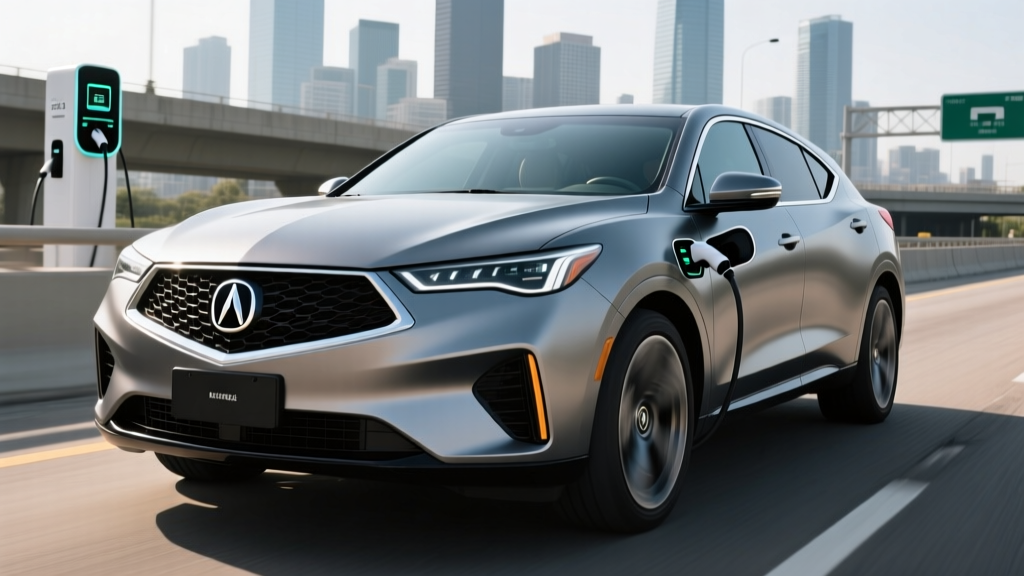
The Acura ZDX is Honda's luxury division's first ground-up electric vehicle, built on GM's Ultium platform alongside the Cadillac Lyriq and Chevrolet Blazer EV. It's a midsize luxury crossover that pairs striking coupe-SUV styling with competitive range, brisk acceleration in A-Spec and Type S trims, and Acura's trademark interior craftsmanship. For buyers cross-shopping the BMW iX, Genesis Electrified GV70, or Tesla Model Y, the ZDX offers a distinct value proposition: genuine luxury materials, a usable 313-mile EPA range in single-motor form, and access to the Tesla Supercharger network via NACS — all starting in the mid-$50K range before incentives.
This review breaks down the Acura ZDX dimensions, real-world range expectations, charging performance, and total ownership costs so you can decide whether it fits your garage, your commute, and your budget.
Acura ZDX Dimensions, Cargo & Interior Space
Searches for Acura ZDX dimensions spike for good reason — this is a vehicle that looks compact in photos but stretches out on the curb. Here's exactly how it measures up:
| Dimension | Measurement |
|---|---|
| Wheelbase | 121.8 in |
| Overall Length | 197.7 in |
| Overall Width (no mirrors) | 78.9 in |
| Overall Height | 63.7 in |
| Ground Clearance | 6.9 in |
| Curb Weight (A-Spec RWD) | 5,730 lbs |
| Front Headroom | 39.3 in |
| Rear Headroom | 37.4 in |
| Front Legroom | 42.6 in |
| Rear Legroom | 36.7 in |
| Cargo Volume (behind 2nd row) | 28.4 cu ft |
| Cargo Volume (seats folded) | 59.3 cu ft |
| Frunk | None |
The 121.8-inch wheelbase is generous — longer than a BMW iX (118.1 in) and close to the Rivian R1S. That translates to excellent rear-seat legroom, though the sloping roofline cuts rear headroom for taller passengers. The 28.4 cu ft cargo area behind the second row is competitive with the Lyriq (28.0 cu ft) but trails the Model Y (30.2 cu ft). Note the absence of a frunk; the Ultium platform's underhood packaging is consumed by HVAC and power electronics.
Real-World Range: What to Actually Expect
EPA Estimate: 313 miles (A-Spec RWD, 20" wheels) | 278 miles (Type S AWD, 22" wheels)
Real-World Highway (70-75 mph): Expect ~260-275 miles in the A-Spec RWD; ~230-245 miles in the Type S. Aerodynamic drag and the 22-inch wheel/tire package on the Type S exact a measurable efficiency toll.
Cold Weather (below 32°F): Budget for 20-30% range reduction. The ZDX uses a resistive PTC heater rather than a heat pump, which draws more from the 102 kWh (gross) pack in winter. Preconditioning while plugged in is essential to mitigate this.
Combined Real-World Expectation: Most owners will see 250-290 miles in mixed driving during moderate temperatures. Plan road trips around 200-220-mile segments to maintain a safety buffer.
Battery, Efficiency & Powertrain Specs
The ZDX uses GM's Ultium battery architecture with a 102 kWh gross / ~97 kWh usable lithium-ion pack. The cell chemistry is NMC (nickel manganese cobalt) — the standard for energy-dense, performance-oriented EVs. Unlike LFP chemistry (found in some base Tesla and BYD models), NMC delivers higher energy density but requires more careful state-of-charge management for long-term health. Acura recommends daily charging to 80-90% and 100% only for trips.
| Spec | A-Spec RWD | A-Spec AWD | Type S AWD |
|---|---|---|---|
| Battery (gross / usable) | 102 kWh / ~97 kWh | 102 kWh / ~97 kWh | 102 kWh / ~97 kWh |
| Chemistry | NMC | NMC | NMC |
| Drivetrain | Single motor RWD | Dual motor AWD | Dual motor AWD |
| Horsepower | 358 hp | 490 hp | 500 hp |
| Torque | 324 lb-ft | 450 lb-ft | 500 lb-ft |
| 0-60 mph | 5.7 sec | 4.5 sec | 3.8 sec (est.) |
| EPA Range | 313 mi | 289 mi | 278 mi |
| EPA Efficiency (combined) | 89 MPGe (38 kWh/100mi) | 83 MPGe (41 kWh/100mi) | 80 MPGe (42 kWh/100mi) |
| Towing Capacity | Not rated | Not rated | Not rated |
The 500-hp Type S is genuinely quick — its estimated 3.8-second 0-60 puts it in Porsche Cayenne E-Hybrid territory. But the A-Spec RWD is the efficiency sweet spot, delivering over 300 miles of range with a still-respectable 5.7-second sprint. For commuters covering 40-60 miles daily, the A-Spec RWD requires charging only every 4-5 days on a home Level 2.
Charging Speed: DC Fast & Home Level 2
The ZDX's charging performance is solid but not class-leading. Here's what the hardware supports:
| Level | Power / Rate | Time / Miles Added |
|---|---|---|
| Level 1 (120V, 12A) | ~1.4 kW | ~3-4 mi/hr |
| Level 2 (240V, 48A) | 11.5 kW (onboard charger) | ~27-30 mi/hr; 0-100% in ~9.5 hrs |
| DC Fast Charge (peak) | 190 kW | 10-80% in ~30 min |
| DC Fast Charge (sustained) | ~130-150 kW avg | ~170 mi in 20 min |
Charging curve reality check: The 190 kW peak is achievable only between roughly 10-35% state of charge (SoC) with a preconditioned battery. Above 50% SoC, the curve tapers to ~120 kW; above 80%, it drops to under 50 kW. This is typical for NMC Ultium packs but means the advertised 10-80% time of ~30 minutes assumes ideal conditions — a warm battery, a 350 kW-capable station, and minimal thermal throttling.
Connector: The 2026 ZDX ships with a native NACS (Tesla-style) charge port, granting direct access to Tesla Supercharger V3/V4 stations without an adapter. For legacy CCS stations (Electrify America, EVgo), Acura includes a NACS-to-CCS adapter.
Home charging setup: The 11.5 kW onboard charger means you'll want a 48-amp hardwired Level 2 wallbox (requiring a 60-amp circuit). At this rate, a full recharge takes about 9.5 hours — easily accomplished overnight. Budget $600-$1,200 for the charger and $800-$2,000 for professional installation depending on your electrical panel's capacity and proximity to the garage. If your panel is at or near 200 amps, an upgrade to 300-400 amps may be necessary, adding $2,000-$4,000.
Pricing, Trims & Federal Tax Credit Eligibility
| Trim | Base MSRP | As-Tested (typical) | Est. After §30D Credit* |
|---|---|---|---|
| A-Spec RWD | $56,950 | $58,500 (w/ destination, Tech pkg) | ~$49,450 |
| A-Spec AWD | $59,950 | $62,000 | ~$52,450 |
| Type S AWD | $70,950 | $73,500 (w/ Advance pkg) | ~$63,450 |
*Federal tax credit estimates assume eligibility. See rules below.
Federal EV Tax Credit (§30D) — 2026 Rules
- Maximum credit: Up to $7,500 ($3,750 for critical minerals + $3,750 for battery components)
- MSRP cap: SUVs/trucks/vans must be ≤$80,000 (all ZDX trims qualify)
- Buyer income cap: Modified AGI ≤$300,000 (joint) / ≤$225,000 (head of household) / ≤$150,000 (single)
- Battery sourcing: Critical minerals and battery components must meet escalating domestic/free-trade-partner thresholds — the Ultium platform's sourcing has been evolving; confirm current-year compliance at irs.gov or with your Acura dealer at point of sale
- Point-of-sale transfer: You can transfer the credit to the dealer for an immediate price reduction rather than claiming it on your tax return
- Consult a tax professional: Eligibility depends on your specific tax situation and the vehicle's build date/sourcing
The ZDX's positioning is aggressive. At ~$49K after the credit, the A-Spec RWD undercuts the BMW iX xDrive50 (~$87K MSRP, no credit due to MSRP cap) by a massive margin and competes directly with the Cadillac Lyriq ($58,595 base) and Genesis Electrified GV70 ($66,450). The Type S at ~$63K after credit is a performance bargain relative to the Porsche Macan Electric or Audi Q8 e-tron, though it sacrifices some range.
Tech, Safety & Driver Assistance
The ZDX runs an 11.3-inch touchscreen with Google Built-In (Google Maps, Assistant, and Play Store native to the car). Wireless Apple CarPlay and Android Auto are standard. A 11.0-inch digital gauge cluster and a head-up display round out the driver's view.
Driver assistance: AcuraWatch is standard, bundling adaptive cruise control, lane-keeping assist, blind-spot monitoring, and rear cross-traffic alert. This is an SAE Level 2 system — it assists with steering and speed but requires continuous driver supervision and hands-on-wheel attention. It is not self-driving.
Available hands-free driving on pre-mapped highways is not yet offered on the ZDX (unlike GM's Super Cruise on the Lyriq). This is a notable omission for a vehicle sharing the Ultium platform — and a key differentiator if highway cruise automation is a priority.
Safety ratings from NHTSA and IIHS should be confirmed for the 2026 model year; the Ultium platform has generally performed well in crash testing across its sibling models.
Warranty & Ownership Costs
| Coverage | Term |
|---|---|
| Limited Vehicle Warranty | 4 years / 50,000 miles |
| Powertrain Warranty | 6 years / 70,000 miles |
| Battery Pack Warranty | 8 years / 100,000 miles (min. 70% capacity retention) |
| Corrosion Perforation | 5 years / unlimited miles |
| Roadside Assistance | 4 years / 50,000 miles |
The 8-year/100,000-mile battery warranty with a 70% capacity-retention floor is industry-standard and aligns with federal requirements. NMC batteries in the Ultium platform have demonstrated moderate degradation — expect roughly 5-8% capacity loss over the first 100,000 miles based on sibling-model data, with a plateau afterward. Avoid habitual DC fast charging above 90% SoC and frequent 0% discharges to maximize longevity.
Estimated 5-year ownership costs: Electricity at the national average of $0.16/kWh works out to ~$610/year for 12,000 miles (at 38 kWh/100mi). Compare that to a gas equivalent at 22 MPG and $3.40/gallon: ~$1,855/year in fuel. That's roughly $6,200 in energy savings over five years. Insurance premiums for the ZDX run 10-20% higher than comparable ICE Acuras, so factor ~$200-$350/year additional cost.
Pros & Cons
Pros
- 313-mile EPA range (A-Spec RWD) is competitive in the luxury midsize segment
- Native NACS port with Supercharger access — no adapter needed at Tesla stations
- 500-hp Type S delivers genuine sports-SUV acceleration
- Premium interior materials and build quality exceed the Lyriq and rival BMW
- Generous rear-seat legroom (36.7 in) and usable 28.4 cu ft cargo area
- Point-of-sale tax credit can bring A-Spec RWD under $50K
- Google Built-In infotainment is responsive and well-integrated
Cons
- No frunk — missed utility for an EV platform
- No hands-free highway driving (Super Cruise not available)
- 190 kW peak DC charge rate trails Hyundai/Kia's 800V architecture (~240 kW)
- No heat pump — cold-weather range loss is more pronounced than competitors with heat pumps
- Type S range drops to 278 miles EPA; real-world highway driving closer to 230
- Towing not rated — a gap vs. the Model Y (3,500 lb) and R1S (7,700 lb)
- Rear headroom compromised by coupe-SUV roofline for passengers over 6'2"
Who Should Buy the Acura ZDX?
Choose the ZDX A-Spec RWD if:
- You want a 300+ mile luxury EV under $50K after incentives
- Your daily commute is under 70 miles and you can charge at home overnight
- You prioritize interior quality and ride comfort over outright performance
- You live near Tesla Superchargers and want seamless road-trip access
Choose the ZDX Type S if:
- You want sub-4-second acceleration in a luxury EV with premium materials
- You don't mind trading ~35 miles of range for 140+ extra horsepower
- You're cross-shopping the Porsche Macan Electric but want to save $15-20K
Look elsewhere if:
- You need hands-free highway driving (consider the Cadillac Lyriq with Super Cruise)
- You regularly tow (Model Y, Rivian R1S, or F-150 Lightning are better choices)
- You live in a cold climate and need maximum winter range (heat-pump-equipped rivals like the Ioniq 5 or Model Y lose less range in winter)
- You need maximum cargo space (the Model Y offers 76 cu ft with seats folded)
Frequently Asked Questions
What is the real-world range of the Acura ZDX?
The EPA rates the A-Spec RWD at 313 miles and the Type S AWD at 278 miles. In real-world highway driving at 70-75 mph, expect roughly 260-275 miles from the A-Spec RWD and 230-245 miles from the Type S. In cold weather (below freezing), plan for 20-30% further reduction. Always precondition the battery while plugged in to maximize available range.
How fast does the Acura ZDX charge at home and on the road?
At home on a 240V Level 2 charger (48A), the ZDX adds roughly 27-30 miles of range per hour, reaching a full charge in about 9.5 hours. On DC fast chargers, it peaks at 190 kW (adding ~170 miles in 20 minutes under ideal conditions) and charges from 10-80% in approximately 30 minutes. The native NACS port provides direct access to Tesla Superchargers.
Does the Acura ZDX qualify for the $7,500 federal EV tax credit?
The ZDX is eligible for up to $7,500 under IRS §30D, provided the buyer meets income caps ($300K joint / $150K single), the vehicle MSRP is under $80,000 (all trims qualify), and the battery meets current-year critical-mineral and component-sourcing requirements. The credit can be transferred to the dealer at point of sale for an immediate price reduction. Always verify current sourcing compliance at irs.gov and consult a tax professional.
Is the Acura ZDX worth buying over the Tesla Model Y or BMW iX?
The ZDX offers a more luxurious interior than the Model Y and costs significantly less than the BMW iX. It trades the Model Y's superior cargo space (76 cu ft), heat pump, and more extensive Supercharger-native ecosystem for Acura's build quality and dealership experience. Against the iX, the ZDX sacrifices some range and tech (no hands-free driving) but saves $25-30K. Your choice depends on whether luxury materials and value (ZDX) or cargo utility and charging speed (Model Y) matter more.
Does the ZDX have a heat pump?
No. The ZDX uses a resistive PTC heater for cabin warmth, which draws more energy from the battery in cold weather than a heat pump would. This means greater winter range loss compared to EVs equipped with heat pumps (like the Tesla Model Y or Hyundai Ioniq 5). Preconditioning the cabin and battery while plugged in is strongly recommended in cold climates.
What are the Acura ZDX's biggest drawbacks?
The main gaps are: no frunk, no hands-free highway driving feature, no heat pump (increasing cold-weather range loss), a 190 kW DC charge rate that trails 800V competitors, and no towing rating. If any of these are dealbreakers, consider the Model Y, Lyriq (Super Cruise), or Ioniq 5 (800V charging, heat pump).
Sources: EPA fuel economy data via fueleconomy.gov; Acura official specifications; IRS §30D clean vehicle credit guidance at irs.gov.