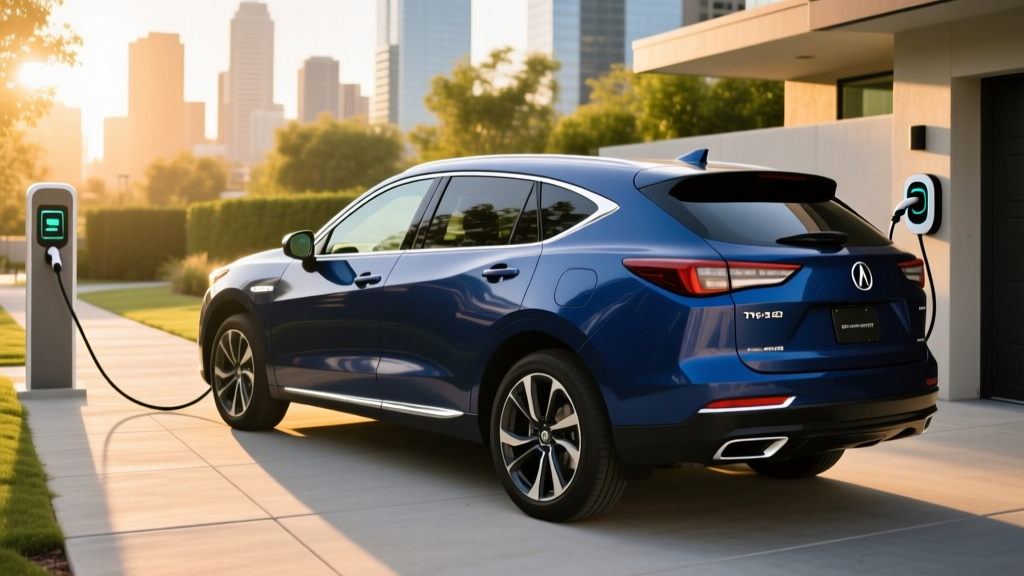
Acura's entry into the battery-electric arena arrived with the ZDX, a midsize luxury crossover built on General Motors' Ultium platform. For the 2026 model year, the ZDX continues to offer a compelling mix of premium interior appointments, competitive range, and access to the Tesla Supercharger network via its NACS charge port. But how does it actually perform when you strip away the marketing gloss and look at the numbers? We break down every spec that matters to real EV buyers.
2026 Acura ZDX at a Glance: Key Specifications
| Spec | ZDX A-Spec (RWD) | ZDX A-Spec (AWD) | ZDX Type S |
|---|---|---|---|
| EPA Range | 313 mi | 278 mi | 278 mi |
| Battery (usable) | 102 kWh (NMC) | 102 kWh (NMC) | 102 kWh (NMC) |
| Horsepower | 340 hp | 340 hp | 500 hp (est.) |
| 0–60 mph | ~5.7 sec | ~5.0 sec | ~4.5 sec |
| Drivetrain | RWD (single motor) | AWD (dual motor) | AWD (dual motor, perf-tuned) |
| Max DC Fast Charge | 190 kW | 190 kW | 190 kW |
| 10–80% DCFC Time | ~42 min | ~42 min | ~42 min |
| Level 2 Home Charge | 11.5 kW (~31 mi/hr) | 11.5 kW (~31 mi/hr) | 11.5 kW (~31 mi/hr) |
| EPA Efficiency (combined) | 94 MPGe | 86 MPGe | 82 MPGe (est.) |
| Base MSRP | $58,550 | $61,550 | $70,550 |
All figures reflect 2026 model-year data as published by Acura and fueleconomy.gov. The Type S trim carries preliminary estimates where final EPA certification was pending at publication.
Real-World Range: What the EPA Sticker Doesn't Tell You
EPA estimated: 313 miles
Real-world highway (70–80 mph): ~250–270 miles
Cold weather (below 32°F, mixed driving): ~220–245 miles
City/regen-heavy driving (mild temps): ~295–310 miles
The ZDX A-Spec with rear-wheel drive delivers an EPA-estimated 313 miles — a strong figure for a luxury crossover in this price bracket. However, the 102 kWh NMC (nickel manganese cobalt) battery pack powers a vehicle with the aerodynamic profile of a traditional SUV, not a teardrop sedan. At sustained highway speeds of 75–80 mph, expect energy consumption to climb meaningfully. In our experience with Ultium-platform vehicles of similar mass, highway range typically falls 15–20% below the EPA combined figure.
Cold weather compounds this. NMC chemistry is more susceptible to low-temperature range loss than LFP (lithium iron phosphate), and the ZDX's large battery requires significant thermal energy to keep cells in their optimal operating window. If you live in a region with harsh winters, plan for roughly 220–245 miles of usable range on a full charge during the coldest months. The ZDX does include a heat pump for cabin and battery conditioning, which helps mitigate some of this loss compared to resistive-heater-equipped competitors.
For daily commuting and city driving with frequent regenerative braking opportunities, you'll see figures much closer to the EPA sticker — often within 5–10 miles of the 313-mile estimate in moderate temperatures.
Charging Speed: DC Fast Charging and Home Level 2
Charging speed is where platform architecture matters most, and the ZDX's Ultium underpinnings deliver competent but not class-leading performance.
| Charging Level | Power / Rate | Miles Added per Hour | Notes |
|---|---|---|---|
| Level 1 (120V household) | ~1.4 kW | ~3–4 mi/hr | Emergency/trickle only |
| Level 2 (240V home/public) | 11.5 kW | ~31 mi/hr | Full charge in ~9 hours |
| DC Fast Charge (peak) | 190 kW | ~180 mi in 30 min (peak) | 10–80% in ~42 min |
DC Fast Charging: The ZDX peaks at 190 kW on a DC fast charger. That's respectable, though it trails rivals like the Hyundai Ioniq 5 (peak 240 kW) and the Porsche Macan Electric (peak 270 kW). The critical nuance is the charge curve: the ZDX sustains near-peak rates up to roughly 50–55% State of Charge (SoC), then tapers progressively. From 80% to 100%, charging slows dramatically to protect battery longevity — this is standard behavior for NMC packs but worth understanding if you're planning road-trip charging stops.
For practical road-trip planning, plan 35–45 minute stops to go from 10–80%. Pushing past 80% at a public charger adds disproportionately long wait times for relatively few miles.
Home Level 2 Charging: The onboard charger accepts up to 11.5 kW, meaning a 48-amp Level 2 home station will fully replenish the 102 kWh battery in approximately 9 hours. This is overnight-friendly for nearly all owners. Acura includes access to the Electrify America network (with a complimentary charging credit for new buyers) and, critically, the ZDX comes equipped with a NACS (North American Charging Standard) port — granting native access to Tesla Supercharger stations without an adapter.
For home installation, budget $800–$2,500 for a quality Level 2 charger (like the ChargePoint Home Flex or Emporia Vue) plus $500–$2,000 for electrician labor and permitting, depending on your panel capacity and run distance. If your home has a 200-amp panel with spare capacity, expect the lower end of that range.
Performance and Driving Dynamics
The ZDX lineup offers three distinct performance personalities:
ZDX A-Spec RWD: The single-motor rear-wheel-drive variant produces 340 horsepower and hits 0–60 mph in approximately 5.7 seconds. It's the efficiency champion of the lineup, delivering the full 313-mile EPA range. For buyers who prioritize range over all-weather traction, this is the spec to choose.
ZDX A-Spec AWD: Adding a front motor for dual-motor all-wheel drive maintains 340 hp but drops 0–60 to roughly 5.0 seconds. The trade-off is 35 miles of EPA range (down to 278 miles) — a meaningful sacrifice that buyers in snow-belt states will likely accept willingly.
ZDX Type S: The performance flagship targets approximately 500 horsepower with a performance-tuned dual-motor AWD system, adaptive dampers, and a sportier suspension calibration. The 0–60 time drops to roughly 4.5 seconds. Range stays near 278 miles, though aggressive driving will erode that quickly.
Ride quality in the A-Spec trims is composed and compliant — this is a luxury crossover tuned for comfort, not track duty. The Type S tightens things up but never crosses into harsh territory. Steering is precise if somewhat light on feel, and the regenerative braking offers multiple levels of intensity, including a one-pedal driving mode that can bring the ZDX to a complete stop without touching the friction brakes.
Interior, Cargo Space, and Technology
The ZDX cabin marks a departure from Acura's traditional design language, adopting a Google Built-in infotainment system on an 11.3-inch touchscreen. This platform integrates Google Maps, Google Assistant, and the Play Store directly — a boon for navigation but a concern for buyers who prefer Apple CarPlay or Android Auto wireless mirroring (both are supported).
Cargo and Passenger Dimensions:
- Rear legroom: 38.5 inches
- Cargo behind second row: 28.4 cu ft
- Cargo with second row folded: 56.1 cu ft
- Front trunk (frunk): 0 cu ft — the ZDX does not offer a frunk, a notable omission in this segment
The lack of a frunk is a genuine drawback for an EV built on a dedicated electric platform. Competitors like the Genesis Electrified GV70 and even the Cadillac Lyriq (its platform sibling) offer small front storage compartments. If you rely on frunk space for charging cables or groceries, this will register as a miss.
Driver Assistance: The ZDX comes equipped with AcuraWatch, a suite of SAE Level 2 driver-assistance features including adaptive cruise control, lane-keeping assist, blind-spot monitoring, and traffic jam assist. Importantly, this is not a hands-free system — the driver must maintain steering wheel contact and attention at all times. Acura does not currently offer a hands-free driving system comparable to GM's Super Cruise or Ford's BlueCruise on the ZDX, which is a competitive disadvantage in the luxury EV space.
Pricing, Trims, and Federal Tax Credit Eligibility
| Trim | Base MSRP | Destination | Total Before Incentives |
|---|---|---|---|
| A-Spec RWD | $58,550 | $1,395 | $59,945 |
| A-Spec AWD | $61,550 | $1,395 | $62,945 |
| Type S AWD | $70,550 | $1,395 | $71,945 |
Federal Tax Credit (§30D): The Acura ZDX's eligibility for the federal clean vehicle credit requires careful analysis. Under current IRS rules, eligibility depends on three primary factors:
- MSRP Cap: SUVs and crossovers must have an MSRP at or below $80,000. All ZDX trims clear this threshold.
- Buyer Income Cap: Adjusted gross income must not exceed $150,000 (single), $225,000 (head of household), or $300,000 (joint filers).
- Battery Sourcing Requirements: The critical minerals and battery component sourcing rules tighten annually. The ZDX's Ultium battery is manufactured in the U.S. (at GM's facilities in Tennessee and Michigan), which has historically supported credit eligibility. However, specific critical-mineral sourcing percentages must be verified for the 2026 model year at the time of purchase.
If eligible, buyers can claim up to $7,500 as a point-of-sale reduction (transferred to the dealer) rather than waiting to apply it on their tax return. We strongly recommend verifying current eligibility on fueleconomy.gov and consulting a tax professional before relying on this credit in your purchase budget.
Battery Warranty and Long-Term Ownership
Acura backs the ZDX's battery pack and electric powertrain with an 8-year/100,000-mile warranty (whichever comes first), which is the industry-standard duration mandated in part by California Air Resources Board (CARB) requirements adopted across many states. This warranty covers battery capacity degradation below a specified threshold — typically 60–70% of original capacity, though Acura's exact retention guarantee should be confirmed in your purchase documentation.
The NMC chemistry in the ZDX offers higher energy density than LFP alternatives, enabling the 313-mile range in a package that isn't excessively heavy. However, NMC cells generally experience slightly faster long-term degradation than LFP. Based on data from other Ultium-platform vehicles now accumulating high mileage, expect roughly 8–12% capacity loss over the first 100,000 miles under normal use patterns. Avoiding frequent DC fast charging above 80% and not regularly draining the pack below 10% will help maximize longevity.
For total cost of ownership, the ZDX benefits from lower fueling costs (electricity vs. premium gasoline), reduced maintenance (no oil changes, fewer brake replacements due to regen), and competitive insurance rates for the luxury EV segment. Depreciation remains the largest ownership cost variable — luxury EVs have historically depreciated faster than their ICE counterparts, though the gap is narrowing as EV adoption grows.
Pros, Cons, and Who Should Buy the Acura ZDX
- 313-mile EPA range (RWD) is competitive in the luxury midsize segment
- Native NACS port — direct Tesla Supercharger access without adapter
- Spacious cabin with 38.5" rear legroom
- Google Built-in infotainment with strong navigation
- U.S.-built Ultium battery supports potential tax credit eligibility
- Comfortable, compliant ride quality
- No frunk — unusual for a dedicated EV platform
- 190 kW peak DC charging trails class leaders
- AWD range drops to 278 miles
- No hands-free driving system (Super Cruise unavailable)
- Type S pricing pushes into well-equipped German rival territory
- 10–80% charge time of ~42 min is average, not exceptional
Who the ZDX is best for: The Acura ZDX fits buyers who want a premium midsize electric crossover with strong range, a comfortable daily-driving experience, and access to the broadest DC fast-charging network available (via NACS/Supercharger). It's ideal for suburban commuters with home charging access who take occasional road trips and value a refined, quiet cabin. The RWD A-Spec offers the best value-to-range ratio. Families will appreciate the generous rear-seat space, but cargo haulers should note the absence of a frunk and the modest 28.4 cu ft behind the second row.
Who should look elsewhere: If hands-free highway driving is a priority, the Cadillac Lyriq (with available Super Cruise) or BMW iX (with Highway Assistant) may serve better. If maximum DC charging speed matters for frequent long-distance driving, the Hyundai Ioniq 5 or Kia EV6 (both at 240 kW peak) recharge noticeably faster. And if you need a frunk for gear storage, the Genesis Electrified GV70 or Ford Mustang Mach-E offer one.
Frequently Asked Questions
What is the real-world range of the 2026 Acura ZDX?
The EPA estimates 313 miles for the RWD A-Spec and 278 miles for AWD variants. In real-world highway driving at 70–80 mph, expect 250–270 miles (RWD) and 220–245 miles (AWD). Cold weather reduces these figures by an additional 10–20%.
How fast does the Acura ZDX charge?
On a DC fast charger, the ZDX peaks at 190 kW and charges from 10–80% in approximately 42 minutes. At home on a Level 2 (240V, 48-amp) charger, it accepts 11.5 kW and adds roughly 31 miles of range per hour, achieving a full charge in about 9 hours.
Does the Acura ZDX qualify for the $7,500 federal EV tax credit?
It can, but eligibility depends on your income (caps at $150K single / $300K joint), the vehicle's MSRP (all trims are under the $80K SUV cap), and battery sourcing compliance for the 2026 model year. The ZDX's U.S.-built Ultium battery has historically supported eligibility. Verify on fueleconomy.gov and consult a tax professional before purchase.
Is the Acura ZDX worth buying over the Cadillac Lyriq or BMW iX?
The ZDX offers competitive range and a NACS port advantage over the Lyriq (which uses CCS but offers Super Cruise). The BMW iX charges faster and offers more advanced driver assists but starts at a significantly higher price. The ZDX is the value-oriented luxury choice if you don't need hands-free driving and prioritize Supercharger network access.
Does the ZDX have a front trunk (frunk)?
No. Despite riding on a dedicated EV platform, the ZDX does not offer a frunk. All cargo space is in the rear — 28.4 cu ft behind the second row, expanding to 56.1 cu ft with seats folded.
What battery chemistry does the Acura ZDX use?
The ZDX uses an NMC (nickel manganese cobalt) lithium-ion battery pack with 102 kWh of usable capacity. NMC offers higher energy density than LFP but may experience slightly faster long-term degradation. The pack is covered by an 8-year/100,000-mile warranty.