The Quick Verdict on Acura ZDX Pricing
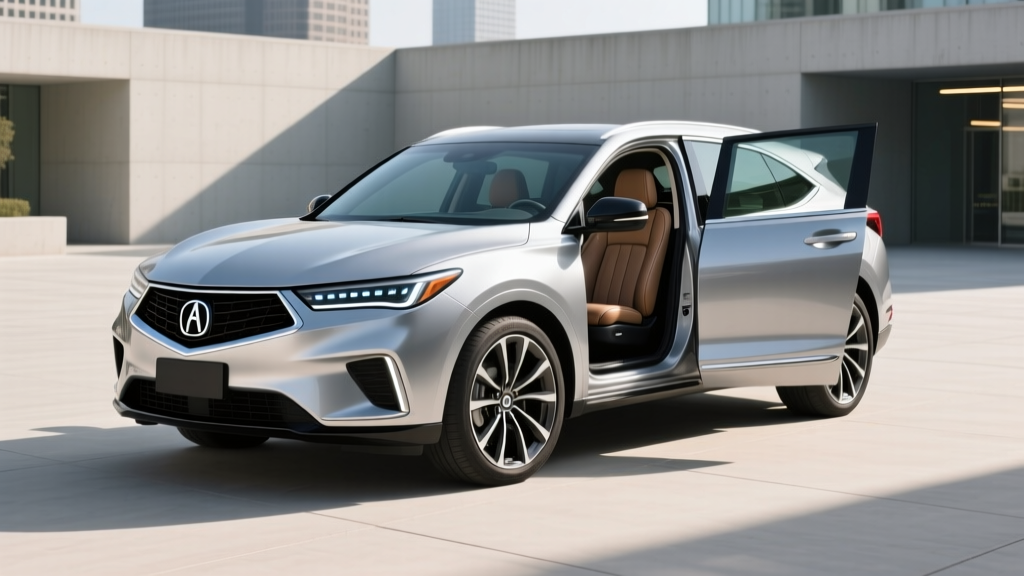
The 2026 Acura ZDX is Honda's premium electric marque making a genuine play in the luxury midsize EV SUV segment. Built on General Motors' Ultium platform — the same architecture underpinning the Cadillac Lyriq and Chevrolet Blazer EV — the ZDX blends Acura's interior refinement with proven GM battery tech. But at a base MSRP of $58,950 (including destination), the real question for buyers isn't just whether it's a good EV. It's whether the Acura ZDX cost makes sense against rivals like the BMW iX, Audi Q8 e-tron, and Genesis Electrified GV70, especially once you factor in federal tax credits, charging infrastructure, and long-term battery health.
This review breaks down every dollar: sticker price by trim, real-world efficiency costs, tax credit eligibility under current IRS §30D rules, and the total ownership picture. If you're cross-shopping the ZDX, here's the data you need.
Acura ZDX Trims and Starting Price
Acura keeps the ZDX lineup relatively streamlined compared to German rivals, which helps simplify the purchase decision. Here's the 2026 trim ladder:
| Trim | Drivetrain | HP | EPA Range | Base MSRP* |
|---|---|---|---|---|
| ZDX A-Spec (RWD) | Rear-Wheel Drive | 340 hp | 313 mi | $58,950 |
| ZDX A-Spec (AWD) | Dual-Motor AWD | 490 hp | 281 mi | $63,950 |
| ZDX Type S | Dual-Motor AWD (Perf.) | 500 hp | 278 mi | $73,950 |
*Destination charge included. Prices reflect 2026 MSRP as published by Acura. Dealer markups or discounts may apply.
The A-Spec RWD is the range champion and the value pick. Stepping to AWD costs $5,000 and sacrifices 32 miles of EPA range for all-weather traction and 150 additional horsepower. The Type S is the performance flagship — 500 hp, adaptive dampers, Brembo brakes, and a sport-tuned suspension — but the 35-mile range drop and $15,000 premium over the base make it an enthusiast's choice, not an efficiency play.
Real-World Range: What the EPA Sticker Doesn't Tell You
Real-World Expectation: In mixed driving at 65-75 mph highway speeds, expect approximately 265–285 miles from the RWD model and 240–260 miles from AWD trims. In sustained cold weather (below 30°F), reduce those figures by 15–25%, landing you closer to 210–240 miles on a full charge for the RWD.
The ZDX's 102 kWh Ultium battery pack (approximately 97 kWh usable) uses NMC (nickel manganese cobalt) chemistry, which prioritizes energy density over the extreme cycle life of LFP cells. That's typical for a luxury SUV where cabin space and range matter more than 5,000 charge cycles.
Efficiency lands at 89 MPGe combined for the RWD model, translating to roughly 37 kWh per 100 miles. That's competitive with the BMW iX xDrive50 (86 MPGe) but slightly behind the more aerodynamic Tesla Model X (102 MPGe). Heavier vehicles with larger frontal areas simply consume more electrons at highway speed — physics doesn't care about the badge.
For context, a 300-mile road trip in the AWD model at 75 mph in 45°F weather will likely require one DC fast-charge stop at around the 200-mile mark. Plan accordingly.
Charging Speed: DC Fast, Level 2, and the Curve Reality
The ZDX supports up to 190 kW peak DC fast charging via its CCS1 connector (an adapter is provided for NACS/Tesla Supercharger access, as Acura transitions to the North American Charging Standard for 2026 models). Here's what that means in practice:
| Charging Level | Power / Rate | Speed | Typical Use Case |
|---|---|---|---|
| Level 1 (120V) | 1.4 kW | ~4 mi/hr | Emergency / trickle top-off |
| Level 2 (240V, 48A) | 11.5 kW | ~34 mi/hr | Home overnight charging |
| DC Fast Charge | Up to 190 kW peak | 10–80% in ~30 min | Road trips / public stations |
A critical nuance: peak kW is not sustained kW. The ZDX's charge curve peaks near 190 kW at low state-of-charge (10-25% SoC) but tapers progressively above 60%, dropping to roughly 70-90 kW by 80% SoC. That 30-minute 10-80% time assumes you arrive at the charger with a preconditioned battery (the ZDX does this automatically when you navigate to a charge station) and connect to a functioning 200+ kW stall.
At home on a Level 2 wall connector, a full 10-100% charge takes approximately 9.5 hours — easily an overnight affair. If your daily commute is under 60 miles round-trip, you'll rarely deplete more than 25% of the battery and can top off in under three hours each night.
One ownership note: home Level 2 installation on a 240V/60A circuit typically runs $800–$2,500 depending on panel proximity and local permitting. If your electrical panel is maxed out at 100A or 150A, a panel upgrade to 200A can add $1,500–$3,000. Always get a quote from a licensed electrician before committing to a purchase.
Federal Tax Credit and Incentives: What You'll Actually Pay
Under current IRS §30D rules, the Acura ZDX may qualify for up to $7,500 in federal tax credits, available as a point-of-sale transfer to the dealer (effectively reducing your purchase price at signing). However, eligibility is not automatic. Here's the checklist:
- MSRP Cap: SUVs must have an MSRP at or below $80,000. All ZDX trims qualify — the Type S at $73,950 clears the cap.
- Buyer Income Cap: Modified adjusted gross income (MAGI) must not exceed $300,000 (joint filers), $225,000 (head of household), or $150,000 (single). This applies to the lesser of the current or prior tax year.
- Battery Sourcing: The $7,500 credit splits into two halves — $3,750 for critical minerals and $3,750 for battery component sourcing. Vehicles with battery components from a "foreign entity of concern" (FEOC) may lose one or both halves. Because the ZDX is assembled in Tennessee with GM Ultium batteries, it has historically qualified for the full credit, but sourcing requirements tighten annually. Confirm current eligibility at fueleconomy.gov before purchasing.
- Transfer at Sale: As of 2024, buyers can transfer the credit to the dealer, reducing the purchase price directly rather than waiting to claim it on their tax return. The dealer must be IRS-registered.
| Trim | MSRP | Est. Federal Credit | Effective Price |
|---|---|---|---|
| A-Spec RWD | $58,950 | Up to $7,500 | ~$51,450 |
| A-Spec AWD | $63,950 | Up to $7,500 | ~$56,450 |
| Type S | $73,950 | Up to $7,500 | ~$66,450 |
Many states stack additional incentives on top — California's CVRP, Colorado's innovative motor vehicle credit, and utility-company rebates can collectively reduce cost by $2,000–$7,500 depending on your jurisdiction. Check your state energy office and local utility for current programs.
Performance, Space, and Daily Livability
The ZDX A-Spec RWD delivers a 0-60 mph time of approximately 6.2 seconds — adequate for merging and passing but not thrilling. The AWD model drops that to 4.5 seconds, while the Type S reaches 60 in an estimated 3.8 seconds thanks to its 500 hp and performance-tuned torque delivery.
Inside, the ZDX seats five with 41.7 inches of front legroom and 38.2 inches in the rear — competitive with the BMW iX and slightly ahead of the Genesis Electrified GV70. Cargo volume measures 28.4 cubic feet behind the second row and 56.9 cubic feet with the rear seats folded. There is no front trunk (frunk), which is a missed opportunity for a vehicle built on a dedicated EV platform.
The infotainment system runs on an 11.3-inch touchscreen with Google Built-In, including native Google Maps navigation, Google Assistant, and Play Store app access. Wireless Apple CarPlay and Android Auto are standard. Acura's suite of driver assists — branded AcuraWatch — includes adaptive cruise control with stop-and-go, lane-keeping assist, blind-spot monitoring, and traffic-sign recognition. This is a Level 2 SAE driver-assist system, meaning the driver must remain fully engaged at all times. It is not autonomous driving.
Notable drawbacks: the brake pedal feel is somewhat vague — a common EV complaint due to regen blending with friction brakes. Rear visibility is compromised by the sloping roofline (a backup camera is standard, and a digital rearview mirror is available). And while the Google-based infotainment is responsive, some buyers may dislike the subscription dependency for certain navigation features after the initial trial period.
Warranty and Long-Term Battery Confidence
Acura backs the ZDX with:
- Limited Vehicle Warranty: 4 years / 50,000 miles
- Powertrain Warranty: 6 years / 70,000 miles
- Battery Warranty: 8 years / 100,000 miles (retains ≥70% capacity)
The 8-year/100,000-mile battery warranty with a 70% capacity retention threshold is industry-standard and mandated as the minimum by federal emissions warranty rules for EVs. Based on GM Ultium pack data from the Cadillac Lyriq and early Chevrolet Silverado EV deployments, NMC degradation typically runs 8-12% over the first 100,000 miles under normal use — well within the warranty buffer. Avoid habitual DC fast-charging above 90% SoC and frequent deep discharges below 10% to maximize longevity.
If out-of-warranty battery replacement is ever needed, current Ultium pack replacement estimates range from $14,000–$20,000 including labor, though this figure is expected to decline as the supply chain matures and refurbished packs become available.
Pros and Cons at a Glance
- 313-mile EPA range on RWD is class-competitive
- Eligible for full $7,500 federal tax credit (verify sourcing annually)
- Google Built-In infotainment is fast and intuitive
- Quiet, well-damped ride quality
- Competitive cargo space for the segment
- Acura dealer network provides broad service access
- No frunk — wasted EV platform space
- 190 kW peak charge rate trails Hyundai/Kia's 350 kW capability
- Brake pedal feel is soft and inconsistent
- Type S price pushes into BMW iX territory without the badge cachet
- Rear visibility hindered by roofline design
- Some Google infotainment features require subscription after trial
Who the Acura ZDX Suits Best
- You want a luxury EV SUV under $60K (after credits) from a mainstream brand with widespread dealer support
- Your daily commute is under 80 miles and you can charge at home overnight
- You prioritize ride comfort and cabin quietness over sport handling
- You live in a region with moderate winters (or garage the vehicle)
- You take frequent 400+ mile road trips and want the fastest possible DC charging (consider Hyundai Ioniq 5 or Kia EV6 at 350 kW peak)
- You need third-row seating (the Kia EV9 or Rivian R1S are better fits)
- Performance is the priority and budget allows — the BMW iX M60 or Tesla Model X Plaid deliver more
Frequently Asked Questions
What is the real-world range of the Acura ZDX?
The EPA rates the ZDX A-Spec RWD at 313 miles and the AWD at 281 miles. In real-world highway driving at 70+ mph, expect 265–285 miles from the RWD and 240–260 from AWD. Cold weather (below 30°F) can reduce range by an additional 15–25%.
How fast does the ZDX charge?
DC fast charging peaks at 190 kW, achieving a 10–80% charge in approximately 30 minutes with a preconditioned battery. At home on a Level 2 (240V/48A) charger, the onboard 11.5 kW charger adds roughly 34 miles per hour, with a full charge taking about 9.5 hours.
How much does the Acura ZDX cost after tax credits?
With the full $7,500 federal tax credit applied at point of sale, the ZDX A-Spec RWD drops from $58,950 to approximately $51,450. The A-Spec AWD falls to ~$56,450 and the Type S to ~$66,450. Eligibility depends on buyer income, battery sourcing requirements, and MSRP caps under IRS §30D.
Does the Acura ZDX qualify for the federal EV tax credit?
As of 2026, the ZDX is assembled in the US (Tennessee) with a GM Ultium battery, and has historically qualified for the full $7,500 credit. However, critical-mineral and battery-component sourcing rules tighten each year. Always verify current eligibility at fueleconomy.gov or with your dealer before purchasing.
Is the Acura ZDX worth buying vs. competitors?
Against the BMW iX (starting ~$87,000), the ZDX offers similar space and tech at a significantly lower price point, though the BMW delivers sharper handling and faster available charging. Against the Genesis Electrified GV70 (~$66,000), the ZDX offers more range and cargo space. Against the Tesla Model Y (~$45,000), the ZDX trades Tesla's Supercharger network and efficiency for a quieter, more traditionally luxurious cabin. Value depends on your priorities.
What's the battery warranty coverage?
Acura covers the ZDX battery for 8 years or 100,000 miles, guaranteeing it retains at least 70% of original capacity. This is the industry-standard minimum. Real-world Ultium degradation data suggests 8–12% loss over 100,000 miles under normal charging habits.