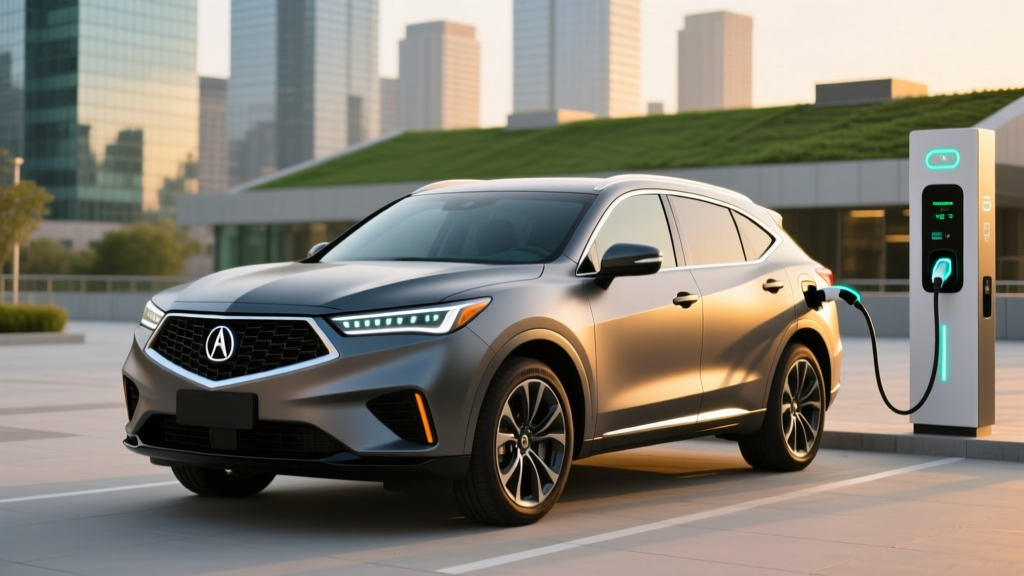
The 2026 Acura ZDX AWD at a Glance
Acura's first all-electric SUV returns for the 2026 model year with a clearer identity. Built on GM's Ultium platform, the ZDX AWD pairs a dual-motor drivetrain with a 102 kWh battery pack and a premium cabin that borrows heavily from Acura's luxury DNA while integrating Google Built-in infotainment. For buyers cross-shopping the Tesla Model X, BMW iX, and Genesis Electrified GV70, the ZDX AWD offers a compelling blend of range, ride comfort, and dealership convenience — but it isn't without trade-offs in charging speed and interior material choices.
| Spec | 2026 Acura ZDX A-Spec AWD | 2026 Acura ZDX Type S |
|---|---|---|
| EPA Range | 313 miles | 278 miles |
| Battery (usable) | 102 kWh (NMC) | 102 kWh (NMC) |
| Drivetrain | Dual-motor AWD | Dual-motor AWD |
| Horsepower | 490 hp | 500+ hp (est.) |
| 0-60 mph | ~5.0 sec | ~4.5 sec (est.) |
| Max DC Fast Charge | 190 kW | 190 kW |
| 10-80% DC Time | ~42 min | ~42 min |
| Level 2 Charge Rate | 11.5 kW (~22 mi/hr) | 11.5 kW (~22 mi/hr) |
| MPGe (combined) | 94 MPGe | 86 MPGe (est.) |
| Efficiency | 36 kWh/100 mi | ~39 kWh/100 mi |
| Cargo (behind 2nd row) | 26.4 cu ft | 26.4 cu ft |
| Cargo (seats folded) | 56.5 cu ft | 56.5 cu ft |
| Base MSRP | $65,850 | $74,850 |
| Battery Warranty | 8 yr / 100,000 mi | 8 yr / 100,000 mi |
Range and Efficiency: EPA vs. the Real World
EPA Estimated: 313 miles (A-Spec AWD) / 278 miles (Type S)
Real-World Expectation: ~265–285 miles in mixed highway driving; ~230–250 miles in sustained cold weather (below 30°F)
The A-Spec AWD's 313-mile EPA rating puts it squarely in the competitive sweet spot, roughly matching the BMW iX xDrive50 and trailing the Tesla Model X Long Range by about 30 miles. The Type S sacrifices range for performance, dropping to an estimated 278 miles — a meaningful gap if you road-trip frequently.
In practice, the 102 kWh NMC (nickel-manganese-cobalt) battery delivers consistent results on commutes and suburban loops where regenerative braking recovers energy. On sustained 75 mph highway runs, expect to use roughly 36–38 kWh per 100 miles, which translates to about 265–280 miles before you'll want to stop. Cold weather compounds this: battery chemistry slows in freezing temperatures, and cabin heating draws heavily on the pack. Plan for 20–25% range loss in deep winter conditions unless you precondition the battery while plugged in.
Efficiency lands at approximately 94 MPGe combined for the A-Spec AWD, per fueleconomy.gov. That's competitive with the Audi Q8 e-tron but below the more aerodynamic Tesla Model X. The ZDX's boxy crossover shape and 5,000+ pound curb weight work against highway efficiency — something to consider if most of your miles are interstate.
Charging Speed: DC Fast and Level 2 at Home
| Charging Level | Power | Speed | Notes |
|---|---|---|---|
| Level 1 (120V) | ~1.4 kW | ~3 mi/hr | Emergency/trickle only |
| Level 2 (240V home) | 11.5 kW | ~22 mi/hr | Full charge in ~10 hours |
| DC Fast (peak) | 190 kW | 10-80% in ~42 min | Tapers significantly above 80% |
| DC Fast (sustained avg) | ~130 kW | 10-80% realistic | Peak only at low SoC |
The ZDX AWD's peak 190 kW DC fast-charging capability is adequate but no longer class-leading. Competitors like the Hyundai Ioniq 5 (peaking at 240 kW on 800V architecture) and the Kia EV9 (236 kW) can add range faster at compatible chargers. The ZDX's 10-80% time of approximately 42 minutes means real road-trip stops will run 35–50 minutes depending on charger output and battery temperature.
One important detail about the charge curve: the ZDX hits peak 190 kW only at a low state of charge (roughly 5–15% SoC) and at an optimal battery temperature. As the battery fills, the rate tapers — by 60% SoC you'll likely see 120–140 kW, and above 80% it drops sharply to protect the NMC cells. This is normal behavior for all lithium-ion packs but means you should plan highway stops around 10–80% increments rather than trying to fill to 100%.
At home on a Level 2 charger (240V, 48-amp circuit), the ZDX's 11.5 kW onboard charger adds about 22 miles of range per hour. A full overnight charge from 20% to 100% takes roughly 10 hours. If you're installing a home Level 2 station, budget $800–$2,000 for equipment and electrician labor depending on panel capacity and run distance — a 60-amp dedicated circuit is standard for this class of vehicle.
The ZDX uses the CCS1 connector for DC fast charging. Acura has confirmed NACS (Tesla Supercharger) adapter compatibility for 2026 models, giving owners access to Tesla's 17,000+ Supercharger network — a significant practical advantage for road-trip charging reliability. See Acura's official ZDX page for adapter availability details.
Performance and Driving Dynamics
The dual-motor AWD system in the A-Spec trim produces 490 horsepower, launching the ZDX from 0-60 mph in approximately 5.0 seconds. That's brisk for a two-row luxury SUV and makes highway merging and passing effortless. The Type S variant bumps output to an estimated 500+ horsepower with a sport-tuned air suspension, shaving the 0-60 time to roughly 4.5 seconds.
Ride quality is where the ZDX differentiates itself from sportier rivals. The A-Spec's adaptive dampers prioritize comfort over corner-carving, soaking up highway expansion joints and rough pavement with a composure that feels more Genesis GV70 than BMW iX. Steering is light and precise if not particularly communicative — this is a cruiser, not a canyon carver, and that's by design for the target buyer.
The AWD system provides confident traction in rain and light snow, with torque vectoring between the front and rear motors. However, the ZDX's 8.0 inches of ground clearance and luxury-oriented all-season tires limit serious off-road or deep-snow capability. If you need true winter competence, plan for dedicated winter tires.
Interior, Tech, and Cargo Space
The ZDX cabin seats five with generous front and rear legroom — 42.1 inches up front and 38.2 inches in the second row, enough for adults on longer trips. The 11.3-inch touchscreen runs Google Built-in, which integrates Google Maps navigation, Google Assistant voice control, and access to the Play Store for apps like Spotify and Waze natively. Wireless Apple CarPlay and Android Auto are standard.
Acura's 11-inch digital gauge cluster is clear but conservative in design compared to the hyperscreen-style displays in German competitors. The available 18-speaker Bang & Olufsen audio system is a highlight, delivering rich, balanced sound that ranks among the best in this price bracket.
Cargo space measures 26.4 cubic feet behind the second row and 56.5 cubic feet with the rear seats folded. That's competitive with the Audi Q8 e-tron but trails the Tesla Model X's 91 cu ft maximum. There's no front trunk (frunk), which is a missed opportunity for additional storage. The flat load floor and wide hatch opening make loading bulky items straightforward.
On the ADAS front, the ZDX comes equipped with AcuraWatch, a suite of Level 2 driver-assistance features including adaptive cruise control with low-speed follow, lane-keeping assist, blind-spot monitoring, and traffic-sign recognition. These are SAE Level 2 systems — meaning the driver must remain fully attentive with hands on the wheel at all times. This is not autonomous driving. Hands-free driving capability is not currently offered on the ZDX, which may disappoint buyers expecting BlueCruise or Super Cruise-style features at this price point.
Pricing, Trims, and Federal Tax Credit Eligibility
| Trim | Base MSRP | Est. Federal Credit | Effective Price* |
|---|---|---|---|
| A-Spec (RWD) | $58,850 | Up to $7,500 | ~$51,350 |
| A-Spec AWD | $65,850 | Up to $7,500 | ~$58,350 |
| Type S AWD | $74,850 | Up to $7,500 | ~$67,350 |
*Effective price assumes full §30D credit eligibility. Actual credit depends on battery sourcing, buyer income, and MSRP caps. Consult a tax professional.
The 2026 ZDX AWD qualifies for the federal EV tax credit under IRS §30D, but eligibility is not automatic. Here's what determines whether you receive the full $7,500, a partial credit, or nothing:
- MSRP Cap: SUVs must have an MSRP at or below $80,000. All ZDX trims currently clear this threshold.
- Buyer Income Cap: Modified adjusted gross income must not exceed $150,000 (single), $225,000 (head of household), or $300,000 (joint filers).
- Battery Sourcing: The credit splits into two halves — $3,750 for critical-minerals sourcing and $3,750 for battery-component assembly. GM's Ultium batteries are assembled in the U.S., but critical-minerals compliance depends on the specific supply chain for each model year. Verify current sourcing status on IRS.gov's qualified vehicle list.
- Point-of-Sale Transfer: As of 2024, eligible buyers can transfer the credit to the dealer at purchase, reducing the out-of-pocket price immediately rather than waiting for a tax refund.
Destination charges, dealer-installed accessories, and state/local incentives are not reflected in the table above. Several states offer additional rebates or HOV-lane access — check your state's energy office or the AFDC state incentive database for details.
Warranty and Long-Term Ownership
Acura backs the ZDX's battery pack and electric powertrain with an 8-year / 100,000-mile warranty, which covers defects and capacity loss below 70% of original capacity. The limited vehicle warranty runs 4 years / 50,000 miles, with complimentary scheduled maintenance for 2 years / 24,000 miles.
The 102 kWh NMC battery is liquid-cooled with active thermal management, which helps slow degradation over time. Based on Ultium-platform data from GM's broader EV fleet, expect approximately 5–8% capacity loss over the first 100,000 miles under normal use — well within the warranty threshold. To maximize longevity, avoid routinely charging to 100% or letting the pack sit below 10% for extended periods. NMC chemistry prefers a daily operating window of 20–80% SoC.
If out-of-warranty replacement ever becomes necessary, a 100+ kWh pack currently costs between $15,000 and $22,000 including labor — though prices are declining as battery manufacturing scales. Most owners will never face this expense, but it's a figure worth knowing for long-term planning.
Pros
- 313-mile EPA range is genuinely road-trip capable
- Smooth, quiet ride quality with excellent comfort
- Google Built-in infotainment is fast and intuitive
- NACS adapter access to Tesla Supercharger network
- Generous rear-seat legroom for adults
- Strong B&O audio system
Cons
- 190 kW peak DC charging trails key competitors
- No frunk for additional cargo storage
- No hands-free driving feature available
- Type S trim range drops below 280 miles
- Efficiency lags more aerodynamic rivals
- Starting price above $65K for AWD
Who Should Buy the Acura ZDX AWD?
Choose the ZDX AWD if: You prioritize ride comfort and cabin quietness over sporty handling, want reliable road-trip range with Supercharger access, value Acura's dealership service network, and commute 30–60 miles daily with home charging available.
Look elsewhere if: You need the fastest possible DC charging (consider Ioniq 5 or EV9), want hands-free highway driving (Ford BlueCruise or GM Super Cruise vehicles), need three-row seating (Kia EV9), or want maximum cargo space (Tesla Model X).
The ZDX AWD is best understood as a luxury comfort cruiser that happens to be electric. It excels as a daily commuter and weekend-getaway vehicle for couples and small families who have access to Level 2 home charging. The combination of 313-mile range, NACS adapter compatibility, and Acura's established dealer network makes it one of the lower-risk entries into premium EV ownership — particularly for buyers who aren't ready to commit to a Tesla or who prefer traditional dealership service relationships.
Frequently Asked Questions
What is the real-world range of the 2026 Acura ZDX AWD?
The EPA rates the A-Spec AWD at 313 miles. In real-world mixed highway driving at 70–75 mph, expect 265–285 miles. In cold weather below 30°F, range can drop to 230–250 miles due to battery chemistry slowdown and cabin heating demands. Preconditioning while plugged in helps mitigate winter losses.
How fast does the ZDX AWD charge at home and on the road?
On a Level 2 home charger (240V, 48A), the ZDX adds about 22 miles of range per hour, fully charging overnight in roughly 10 hours. On DC fast chargers, it peaks at 190 kW with a 10–80% time of approximately 42 minutes, though sustained average power is closer to 130 kW due to charge-curve taper.
Does the Acura ZDX qualify for the $7,500 federal EV tax credit?
The ZDX is on the IRS qualified vehicles list, but the full $7,500 credit depends on battery-sourcing compliance, buyer income limits ($300K joint / $150K single), and the $80K SUV MSRP cap. Point-of-sale transfer is available if eligible. Verify current-year status on IRS.gov before purchasing.
Is the ZDX AWD worth buying over the BMW iX or Tesla Model X?
The ZDX wins on ride comfort, Google infotainment, and Acura's dealer service network. The BMW iX offers sportier handling and faster available charging; the Model X offers more cargo space, Supercharger-native access, and available hands-free driving on mapped highways. Your priority (comfort vs. performance vs. tech) determines the best fit.
What is the biggest drawback of the Acura ZDX?
The 190 kW peak charging speed is the most notable limitation. On long road trips, you'll spend 10–15 more minutes per stop compared to 800V-architecture rivals. The lack of a frunk and absence of any hands-free driving feature also fall short of expectations at this price point.
How long will the ZDX battery last?
The 102 kWh NMC battery is warranted for 8 years / 100,000 miles against capacity loss below 70%. Real-world Ultium-platform data suggests 5–8% degradation over 100K miles with normal charging habits. Avoiding routine 100% charges and extreme heat exposure will maximize longevity.