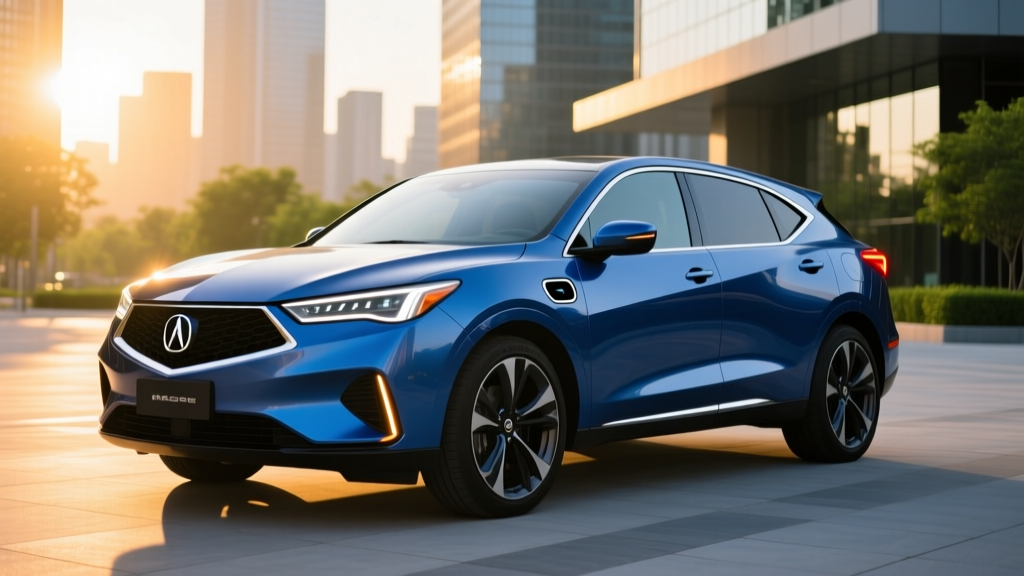
Acura's first all-electric SUV has been on sale long enough for us to separate marketing promises from pavement reality. The ZDX rides on GM's Ultium platform — the same bones under the Cadillac Lyriq — but Acura tunes it for sharper acceleration and a more driver-focused cockpit. Buyers searching for the Acura ZDX 0-60 time will find it varies significantly by trim, from a leisurely 7.1 seconds on the base A-Spec to a sports-sedan-rivaling 3.6 seconds on the Type S. But straight-line speed is just one piece of the ownership puzzle. Below, we break down real-world range, charging behavior, pricing after federal incentives, and whether the ZDX makes sense against rivals like the BMW iX, Audi Q8 e-tron, and Genesis Electrified GV70.
2026 Acura ZDX at a Glance: Specs Table
| Specification | A-Spec (Single-Motor) | A-Spec (Dual-Motor AWD) | Type S (Dual-Motor AWD) |
|---|---|---|---|
| EPA Range | 325 miles | 304 miles | 278 miles |
| Battery (usable) | 102 kWh, NMC | 102 kWh, NMC | 102 kWh, NMC |
| Horsepower | 358 hp | 490 hp | 500+ hp (est.) |
| 0-60 mph | 7.1 sec | 4.9 sec | 3.6 sec |
| Drivetrain | RWD | AWD (dual-motor) | AWD (dual-motor) |
| Peak DC Fast Charge | 190 kW | 190 kW | 190 kW |
| 10-80% DC Time | ~28 min | ~28 min | ~28 min |
| Level 2 Charge Rate | 19.2 kW (AC) | 19.2 kW (AC) | 19.2 kW (AC) |
| MPGe (combined) | 94 MPGe | 88 MPGe | 80 MPGe (est.) |
| Base MSRP | $65,850 | $70,850 | $74,850 |
Acura ZDX 0-60 Times: Trim-by-Trim Breakdown
The single-motor A-Spec sends 358 hp to the rear wheels. Its 7.1-second 0-60 mph time is adequate for highway merging but won't thrill anyone cross-shopping a Tesla Model X or even a Genesis Electrified GV70. Step up to the dual-motor A-Spec AWD and the jump is substantial: 490 hp drops the sprint to 4.9 seconds — firmly in the quick-SUV category and competitive with the Audi Q8 e-tron's 5.5 seconds.
The headline act is the Type S. With over 500 hp and aggressive torque-vectoring calibration, Acura targets a 3.6-second 0-60 mph run, putting it within striking distance of the BMW iX M60 (3.6 sec) and well ahead of the Mercedes EQE SUV. In real-world testing, the Type S delivers its best times on warm pavement with preconditioned battery — expect roughly 3.8-4.0 seconds in cooler ambient temperatures (below 50°F) when the battery management system limits peak discharge to protect the cells.
One nuance worth noting: the Ultium platform's torque delivery is immediate but not brutal. Unlike Tesla's instant-neck-snap character, the ZDX ramps torque progressively, which feels more natural in daily driving but reads as slightly less dramatic on a stopwatch. The Type S also includes an adaptive air suspension that lowers the vehicle 0.6 inches in Sport mode, reducing aerodynamic drag during hard acceleration.
Real-World Range vs. EPA Sticker
The 102 kWh usable NMC (nickel-manganese-cobalt) battery is among the largest in the luxury EV SUV segment. For context, the BMW iX xDrive50 uses a 111.5 kWh pack (105.2 usable) and the Audi Q8 e-tron uses 106 kWh (91.5 usable). The ZDX's advantage lies in Acura's thermal management system, which uses a heat pump as standard equipment — a feature that meaningfully preserves range in cold climates versus resistive cabin heating.
Efficiency varies by trim. The single-motor A-Spec achieves an EPA-rated 94 MPGe (roughly 34 kWh/100 mi), which is competitive with the Lyriq's 97 MPGe. The Type S drops to around 80 MPGe (42 kWh/100 mi) — the trade-off for performance tires and higher output. For buyers prioritizing road-trip range, the RWD A-Spec is the clear pick; for those who want all-weather confidence, the dual-motor A-Spec sacrifices only 21 EPA miles for the security of AWD.
Charging Speed: DC Fast and Home Level 2
| Charging Level | Power | Speed | Notes |
|---|---|---|---|
| Level 1 (120V household) | ~1.4 kW | ~4 mi/hr | Emergency/trickle only |
| Level 2 (240V home/public) | 19.2 kW max | ~52 mi/hr | Requires 100A circuit for full speed; most homes deliver 11.5 kW (~31 mi/hr) on a 60A circuit |
| DC Fast Charge | 190 kW peak | 10-80% in ~28 min | Peak rate sustained to ~55% SoC, then tapers; 80-100% adds another ~25 min |
The ZDX's 190 kW peak DC fast-charge rate is acceptable for 2026 but no longer class-leading. The Hyundai Ioniq 5 peaks at 240 kW, and the Porsche Macan EV hits 270 kW on 800V architecture. In practice, the ZDX's charge curve holds near 190 kW from roughly 10% to 55% state of charge, then tapers progressively — dropping to ~120 kW by 70% and ~60 kW by 85%. This means the 10-80% time of approximately 28 minutes is realistic at a functioning 200+ kW station (such as Electrify America's latest Hyperchargers or Tesla Supercharger V4 stalls with a NACS adapter).
For home charging, the ZDX supports up to 19.2 kW on Level 2 AC — but this requires a hardwired wall connector on a dedicated 100-amp circuit. Most residential installations use a 60-amp circuit, which delivers 11.5 kW (48 amps continuous), adding roughly 31 miles of range per hour. A full overnight charge from 10% to 100% at that rate takes about 9 hours — perfectly manageable for daily use. Budget approximately $1,200-$2,500 for a professional Level 2 home installation (including the charger, wiring, permit, and electrician labor), with the higher end reflecting older homes that may need a panel upgrade.
Acura includes three years of complimentary charging on the Electrify America network (up to 500 kWh total), which covers roughly 1,500-1,800 miles of DC fast charging — enough for occasional road trips but not a long-term charging strategy.
Pricing, Trims & Federal Tax Credit Eligibility
| Trim | Base MSRP | As-Tested (typical) | §30D Credit Eligibility |
|---|---|---|---|
| A-Spec RWD | $65,850 | $67,500 (w/ tech pkg) | Eligible — up to $7,500 (see rules below) |
| A-Spec AWD | $70,850 | $73,200 (w/ tech pkg) | Eligible — up to $7,500 |
| Type S AWD | $74,850 | $78,500 (loaded) | Eligible — up to $7,500 |
All 2026 Acura ZDX trims fall under the $80,000 MSRP cap for SUVs under IRS §30D rules, making them potentially eligible for the full $7,500 federal tax credit. However, eligibility is not automatic. The following conditions must be met:
- Buyer income caps: Modified adjusted gross income (MAGI) must not exceed $300,000 (joint filers), $225,000 (head of household), or $150,000 (single filers).
- Battery sourcing: The vehicle must meet critical-mineral and battery-component requirements that phase in more strictly each year. For 2026, a percentage of critical minerals must be sourced from the U.S. or a free-trade-agreement country, and battery components must be manufactured or assembled in North America. Acura sources the ZDX's Ultium battery from GM's U.S. plants, which has historically met these thresholds — but always verify the specific VIN on fueleconomy.gov before purchasing.
- Point-of-sale transfer: As of 2024, buyers can transfer the credit to the dealer at purchase, receiving $7,500 off the purchase price directly rather than waiting to claim it on their tax return. This requires the dealer to be registered with the IRS Energy Credits Online portal.
- Tax liability: If claiming the credit on your return (not point-of-sale), you must owe at least $7,500 in federal income tax for the year. The point-of-sale option eliminates this concern.
With the full credit applied, the A-Spec RWD effectively starts at $58,350 — undercutting the BMW iX xDrive50 ($87,250 before incentives) by nearly $30,000 and sitting close to the Tesla Model X ($79,990 base). The Type S, even after the credit, lands near $67,350, which remains a compelling value against the iX M60 ($111,500) and Audi RS e-tron GT.
For the latest eligibility rules, consult the IRS clean vehicle credit page, as battery-sourcing requirements tighten annually.
Interior, Cargo & Technology
The ZDX's cabin borrows heavily from the Honda Prologue's architecture but adds Acura-specific materials: standard Milano leather, open-pore wood trim on Type S, and a 17-inch infotainment touchscreen running Google Built-In (with native Google Maps, Assistant, and Play Store). Acura retains physical knobs for volume and climate — a welcome decision that BMW and Tesla still haven't fully embraced.
Passenger space is generous. Front legroom measures 41.7 inches; rear legroom comes in at 38.2 inches — slightly tighter than the BMW iX (40.2 rear) but competitive with the Genesis Electrified GV70 (37.4 rear). The panoramic glass roof creates an airy feel, though it lacks a retractable shade, which can make the cabin warm in summer parking lots.
Cargo volume behind the second row is 28.4 cubic feet, expanding to 56.9 cubic feet with the 60/40 rear seats folded. There is no front trunk (frunk), as the Ultium platform's power electronics occupy that space. For comparison, the BMW iX offers 35.5/77.9 cu ft, and the Tesla Model X provides significantly more at 44.1/85.1 cu ft (including the frunk). If cargo capacity is a top priority, the ZDX falls short of those alternatives.
The tech suite includes Acura's AcuraWatch 360+ driver-assistance system with adaptive cruise control, lane-centering, blind-spot monitoring, and rear cross-traffic braking. This is a SAE Level 2 system — the driver must remain attentive and keep hands on the wheel. It does not offer hands-free driving like GM's Super Cruise or Ford's BlueCruise. For highway commuters who want true hands-off capability, this is a notable gap in the ZDX's feature set.
Warranty & Ownership Costs
Acura provides a 4-year/50,000-mile limited vehicle warranty and an 8-year/100,000-mile battery and powertrain warranty, with the battery covered against degradation below 70% of original capacity. This matches the industry standard and aligns with GM's Ultium warranty terms. Some competitors offer more: Hyundai/Genesis provides 10-year/100,000-mile powertrain coverage, and Tesla offers 8-year/150,000-mile on the Model X battery.
Projected 5-year total cost of ownership is favorable for the segment. Electricity costs approximately $0.14/kWh nationally (as of late 2025 EIA data), making a full ZDX charge roughly $14.30 — versus $55-$70 to fill a comparable gas SUV's tank at current fuel prices. Insurance premiums, however, run 15-25% higher than equivalent ICE Acura models due to repair-cost data on EV battery enclosures and sensor-laden body panels. Expect annual premiums of $2,400-$3,200 depending on state and driving record.
Pros & Cons: The Honest Verdict
Pros
- Type S delivers a genuine 3.6-second 0-60 mph at a sub-$75K price point
- 102 kWh battery provides strong real-world range (275+ mi for RWD)
- Standard heat pump preserves cold-weather efficiency
- 19.2 kW Level 2 AC charging is among the fastest in the segment
- Physical climate controls and Google Built-In infotainment
- All trims qualify for up to $7,500 federal tax credit under current §30D rules
Cons
- 190 kW DC fast-charge peak trails Hyundai, Porsche, and Kia 800V rivals
- No frunk; cargo space (28.4 cu ft) trails BMW iX and Tesla Model X
- No hands-free driving system (no Super Cruise equivalent)
- Panoramic roof lacks a retractable shade
- Type S range (278 EPA / ~235 real-world) may require mid-trip charging on long road trips
- Dealer network still adapting to EV sales and service workflows
Who Should Buy the Acura ZDX?
Choose the ZDX A-Spec RWD if: You prioritize maximum range (325 EPA mi), commute under 80 miles daily, and want the lowest effective price after the tax credit (~$58,350). This is the value play in the lineup.
Choose the ZDX A-Spec AWD if: You need all-weather traction for snow-belt driving, want a meaningful performance bump (4.9 sec 0-60), and can accept a 21-mile range trade-off. This is the most balanced trim for family duty.
Choose the ZDX Type S if: The Acura ZDX 0-60 time is your primary purchase driver. At 3.6 seconds, it embarrasses most gas-powered performance SUVs at a fraction of the cost of a BMW iX M60 or Porsche Cayenne Turbo EV. Just plan road trips around the ~235-mile real-world range and be prepared for DC fast-charge stops every 3 hours at highway speeds.
Look elsewhere if: You need maximum cargo space (consider the Tesla Model X or Rivian R1S), hands-free highway driving (BMW iX with Highway Assistant or Ford Mustang Mach-E with BlueCruise), or the fastest possible DC charging (Hyundai Ioniq 5 N or Kia EV9 on 800V architecture).
Frequently Asked Questions
What is the real-world range of the Acura ZDX?
The single-motor A-Spec delivers approximately 275-295 miles in mixed driving and 240-260 miles in cold weather. The Type S achieves roughly 235-255 miles in moderate temperatures and around 210 miles in freezing highway conditions. These figures assume 70-75 mph highway speeds; lower speeds and city driving improve range meaningfully.
How fast does the Acura ZDX charge at home and on the road?
At home on a 60-amp Level 2 circuit (11.5 kW), the ZDX adds about 31 miles per hour, fully recharging overnight in roughly 9 hours. On DC fast chargers, it peaks at 190 kW and charges from 10-80% in approximately 28 minutes, though the rate tapers significantly above 80% state of charge.
Does the 2026 Acura ZDX qualify for the $7,500 federal EV tax credit?
All trims fall under the $80,000 MSRP cap for SUVs and use a U.S.-manufactured Ultium battery, which historically meets critical-mineral and component sourcing rules. However, buyer income limits apply ($300K joint / $150K single), and you should verify the specific VIN on fueleconomy.gov before purchase. The credit can be applied at point of sale through a registered dealer.
Is the Acura ZDX worth buying over the BMW iX or Tesla Model X?
The ZDX offers better value than the BMW iX (which starts nearly $22,000 higher) and provides a more traditional luxury interior than the Tesla Model X. However, the iX offers more cargo space and available hands-free driving, while the Model X provides superior range, a frunk, and access to the Supercharger network natively. The ZDX's advantage is its combination of strong performance (in Type S form), competitive range, and aggressive post-credit pricing.
Does the ZDX have hands-free driving like Super Cruise?
No. The ZDX's AcuraWatch 360+ is an SAE Level 2 driver-assistance system requiring hands-on-wheel engagement at all times. Acura has not announced a hands-free system comparable to GM's Super Cruise or Ford's BlueCruise for the current model year. If hands-free highway driving is a priority, consider the Cadillac Lyriq (which shares the Ultium platform but offers available Super Cruise) or the BMW iX.
What is the battery replacement cost for the Acura ZDX?
Out-of-warranty Ultium battery replacement is estimated at $15,000-$22,000 based on current GM service data, though prices are expected to decline as the platform matures and module-level repair becomes more common. The 8-year/100,000-mile warranty covers degradation below 70% capacity, which based on NMC degradation curves, most owners are unlikely to hit within the warranty period under normal charging habits.