Quick Answer: What Is the Acura RSX Prototype EV?
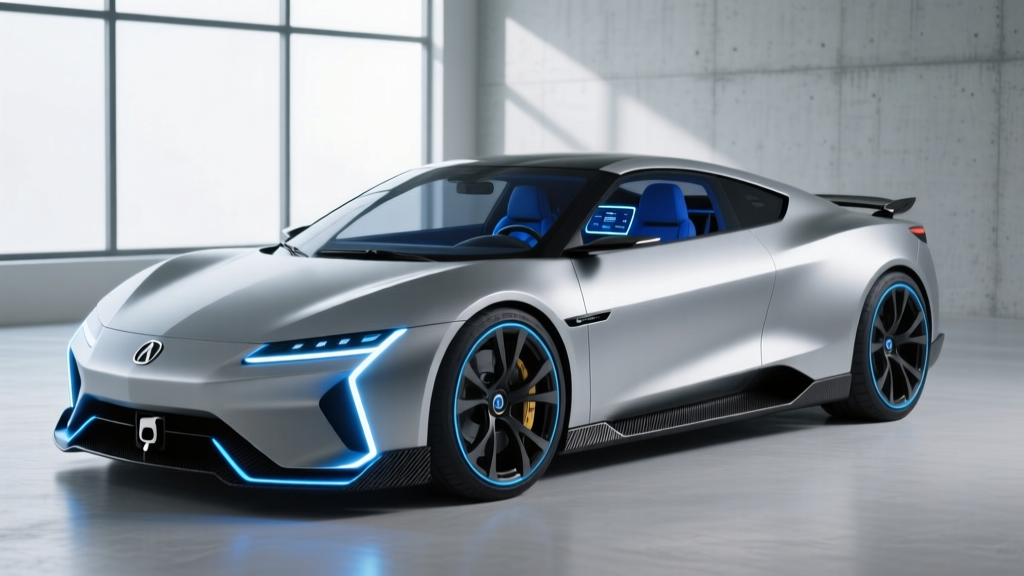
The Acura RSX prototype EV is an all-electric performance coupe built on Honda's new dedicated EV architecture, announced in 2024 and targeted for production in the 2026–2027 timeframe. It will be Acura's first standalone battery-electric model and the spiritual successor to the 2001–2006 RSX (sold as the Honda Integra in Japan). As of early 2026, Acura has not released final EPA range, battery capacity, or MSRP figures — all specs below are based on Honda's published platform targets and industry analysis. If you need an EV you can buy and register today, this is not it yet; if you're planning a 2027 purchase and want a premium electric coupe, here's what to expect and how to prepare.
What We Know: Platform, Battery, and Performance Targets
The RSX prototype EV rides on Honda's newly developed 0 Series EV platform, which the automaker debuted at CES 2024. Honda has stated this architecture will use thin, lightweight battery packs with a focus on aerodynamic efficiency and driver engagement — a deliberate contrast to the heavy, tall-riding EVs that dominate the current market.
| Attribute | Target / Estimate | Notes |
|---|---|---|
| Platform | Honda 0 Series (dedicated EV) | Rear-drive biased, low-slung |
| Battery Chemistry | NMC (nickel manganese cobalt) | Expected; Honda has not confirmed LFP |
| Usable Battery Capacity | ~75–85 kWh (est.) | Honda targets "thin" pack design |
| EPA Range (est.) | ~280–320 miles | Based on Honda's 300+ mi platform goal |
| Peak DC Fast Charge Rate | ~200–250 kW (est.) | 800V architecture confirmed by Honda |
| 10–80% DC Charge Time | ~18–24 minutes (est.) | Depends on sustained charge curve |
| Level 2 AC Charging | ~11–19.2 kW | Standard J1772/NACS expected |
| 0–60 mph | ~5.0–5.5 seconds (est.) | Single or dual motor TBD |
| Horsepower | ~300–400 hp (est.) | Type S variant may exceed this |
| Connector | NACS (Tesla standard) | Honda joining NACS network for 2025+ models |
| Estimated Base MSRP | $45,000–$55,000 | Premium coupe positioning |
Important caveat: Every figure above is preliminary. Honda's 0 Series platform targets a "300+ mile" range and sub-20-minute fast charging on an 800-volt architecture, but final EPA certification and production specs won't be available until closer to launch. We'll update this guide as official data is released.
EV vs. Gas: How the RSX Prototype Compares to the Old RSX and Modern Rivals
The original Acura RSX (2002–2006) delivered 160–210 hp from a 2.0L four-cylinder and achieved roughly 27 MPG combined. The new electric RSX will produce roughly double the power while eliminating tailpipe emissions — but the ownership economics look very different.
| Metric | Acura RSX Prototype EV (est.) | Original RSX Type-S (2006) | 2026 Toyota GR86 (gas baseline) |
|---|---|---|---|
| Powertrain | Battery electric (NMC) | 2.0L I4 gas | 2.4L flat-4 gas |
| Horsepower | ~300–400 hp | 210 hp | 228 hp |
| 0–60 mph | ~5.0–5.5 sec | 6.7 sec | 6.1 sec |
| Fuel/Energy Cost per Mile | ~$0.04–$0.06 (home L2) | ~$0.13–$0.16 | ~$0.12–$0.15 |
| EPA Range / Tank Range | ~280–320 mi | ~370 mi (13.2 gal) | ~350 mi (13.2 gal) |
| "Refuel" Time | 18–24 min (10–80% DC) | ~5 min | ~5 min |
| Annual Maintenance | ~$300–$500 | ~$800–$1,200 | ~$700–$1,000 |
| Est. Base Price | $45,000–$55,000 | $23,000 (2006 MSRP) | ~$30,000 |
The RSX prototype EV will cost significantly more upfront than a gas sports coupe, but the per-mile energy cost at home is roughly one-third that of gasoline. Where the EV wins decisively is instant torque delivery and lower ongoing maintenance — no oil changes, spark plugs, or timing belts. Where it loses is road-trip refueling convenience and the higher purchase price.
Real Ownership Costs: 5-Year Breakdown
Let's model what owning the RSX prototype EV would actually cost compared to a gas alternative, using a $50,000 estimated purchase price and 12,000 miles/year driven.
| Category | RSX Prototype EV (est.) | Gas Sports Coupe ($35,000) |
|---|---|---|
| Purchase Price | $50,000 | $35,000 |
| Federal Tax Credit (§30D) | –$0 to –$7,500* | $0 |
| Home Charger Install (L2) | $800–$2,000 | $0 |
| Energy/Fuel (5 yrs, 60K mi) | $2,400–$3,600 | $7,200–$9,000 |
| Maintenance (5 yrs) | $1,500–$2,500 | $3,500–$5,000 |
| Insurance (5 yrs, est.) | $8,000–$11,000 | $6,000–$8,000 |
| Estimated Depreciation | $18,000–$22,000 | $14,000–$18,000 |
| 5-Year Total (est.) | $53,700–$67,100 | $51,700–$57,000 |
*The IRS §30D clean vehicle credit provides up to $7,500 but requires the vehicle to meet battery critical-mineral and component sourcing rules, buyer income caps ($150K single / $300K joint MAGI), and an MSRP cap ($55,000 for sedans/coupes). Eligibility for the RSX prototype EV cannot be confirmed until Honda certifies the production vehicle's supply chain. Consult a tax professional before relying on this credit.
The EV's higher purchase price and insurance premiums are partially offset by dramatically lower fuel and maintenance costs. Over five years, the gap narrows to roughly $2,000–$10,000 depending on your electricity rates, insurance profile, and whether you qualify for the full tax credit. Stretch ownership to seven or eight years and the EV typically breaks even or pulls ahead — assuming the battery holds up, which Honda's warranty should cover (typically 8 years/100,000 miles for EV battery capacity retention).
Charging Reality: Home, Public, and Road Trips
Honda has confirmed that its 0 Series vehicles will use an 800-volt architecture, which enables faster DC charging and more efficient power delivery. Combined with Honda's commitment to the NACS connector (the Tesla Supercharger standard), the RSX prototype EV should be one of the better-charging coupes on the market when it arrives.
| Level | Power (kW) | Miles Added per Hour | Use Case |
|---|---|---|---|
| Level 1 (120V outlet) | 1.2–1.4 kW | ~3–5 mi/hr | Overnight trickle; emergency only |
| Level 2 (240V home) | 7.2–11.5 kW | ~22–38 mi/hr | Daily home charging; 0–100% in ~8–10 hrs |
| Level 2 (240V, 48A) | 11.5–19.2 kW | ~38–60 mi/hr | Faster home/workplace; requires 60A+ circuit |
| DC Fast Charge | 200–250 kW (peak) | ~600–800 mi/hr (peak) | Road trips; 10–80% in ~18–24 min |
Real-world charging caveat: Peak kW ratings are never sustained across the full charge session. Expect the RSX prototype EV to charge fastest between 10–50% state of charge, then taper significantly above 80%. On a road trip, plan your stops around the 10–80% window for the fastest sessions. Charging from 80–100% on DC can take as long as the 10–80% portion.
Home charging access is critical. If you can install a Level 2 charger at home (a 240V, 40-amp or higher circuit), daily EV ownership is effortless — you wake up every morning with a full "tank." A typical Level 2 installation runs $800–$2,000 including the charger unit ($300–$600) and electrician labor, assuming your electrical panel has capacity. If your home has a 100-amp panel that's already near capacity, a panel upgrade to 200 amps can add $1,500–$3,000. Always get a quote from a licensed electrician before committing to an EV purchase.
If you cannot charge at home (apartment, street parking, no garage), ownership becomes significantly more dependent on public charging. Honda's adoption of NACS means RSX prototype EV owners will have access to Tesla's Supercharger network — currently the most reliable DC fast-charging infrastructure in the U.S. with over 25,000 stalls. This is a meaningful advantage over vehicles locked to CCS-only networks.
Common Misconceptions — Fact-Checked
| Myth | Fact |
|---|---|
| "EV batteries need replacing every 5 years." | Modern NMC batteries typically retain 70–80% capacity after 150,000+ miles. Honda's expected warranty will cover battery degradation below ~70% for 8 years/100,000 miles. Full replacement (if ever needed) costs $8,000–$15,000 but is rare within the first decade. |
| "The EPA range number is what you'll actually get." | EPA range is a standardized lab estimate. Real-world highway driving at 75 mph typically yields 85–90% of EPA range. In cold weather (below 30°F), expect 20–35% range loss due to battery chemistry and cabin heating demands. An RSX rated at 310 miles EPA may deliver ~220–250 miles on a cold highway day. |
| "Everyone gets the $7,500 tax credit." | The §30D credit has income caps, MSRP caps, and strict battery-sourcing requirements. Many EVs qualify for only $3,750 (half credit) or $0 depending on where critical minerals and battery components are sourced. The credit can be transferred to the dealer at point of sale as an upfront discount, but you must meet all eligibility criteria. |
| "EVs are worse in the rain and snow." | EVs have no air intake to hydroplane through, and the low center of gravity (battery on the floor) improves stability. Traction depends on tires, not powertrain. However, cold weather does reduce range — plan accordingly. |
| "Public charging is always broken." | Reliability varies by network. Tesla Superchargers consistently report 97%+ uptime. Electrify America and EVgo have improved but still lag. The RSX prototype EV's NACS compatibility gives it access to the best-performing network. |
Decision Framework: Should You Wait for the RSX Prototype EV?
Choose to wait for the Acura RSX Prototype EV if:
- You want a premium electric coupe with sporty handling and don't need a vehicle before late 2026/2027
- You have (or can install) Level 2 home charging and drive under 300 miles/day
- You value access to Tesla Superchargers via NACS for road trips
- You're willing to pay $45,000–$55,000+ for a performance-oriented EV
- You want Honda/Acura's reliability reputation applied to an EV platform
Look at available alternatives now if:
- You need a vehicle within the next 6 months — the RSX prototype EV is not yet on sale
- Your budget is under $40,000 — consider the Hyundai Ioniq 6, Tesla Model 3, or a used EV
- You need rear seats that adults can use comfortably — the RSX will likely be a 2+2 or tight 4-seater
- You frequently drive 400+ miles in a single day in cold climates — a PHEV or gas car still has a convenience edge for extreme road trips
- You cannot charge at home and your area has sparse public DC charging infrastructure
Consider a plug-in hybrid (PHEV) instead if:
- You want electric commuting (25–40 miles) but gas flexibility for long road trips
- You're not ready to commit to full EV ownership logistics
- Your daily drive is under 35 miles but you take frequent 500+ mile trips
What First-Time EV Buyers Should Know Before Committing
If the RSX prototype EV would be your first electric vehicle, here are the practical realities that spec sheets don't convey:
- Preconditioning matters. The RSX's 800V battery will charge fastest when it's warm. Use the car's navigation to route to a DC charger — this triggers battery preconditioning, heating the pack to optimal temperature for faster charging. Skipping this can add 10+ minutes to your charge session in cold weather.
- The 80% rule. For daily driving, charge to 80% and don't stress about 100%. NMC batteries degrade slower when kept between 20–80% state of charge. Charge to 100% only for road trips, and try not to let it sit at 100% for extended periods.
- Regenerative braking changes how you drive. Most EVs offer adjustable regen, and the RSX will likely support one-pedal driving — lifting off the accelerator slows the car significantly without touching the brake pedal. Expect a 1–2 week adaptation period.
- Tire costs are higher. EVs are heavier (due to the battery) and deliver instant torque, which wears tires 20–30% faster than comparable gas cars. Budget for premium tire replacements every 25,000–35,000 miles instead of 40,000–50,000.
- Insurance will likely cost more. EV insurance premiums run 15–25% higher on average due to higher repair costs and specialized parts. Get quotes before purchasing — your rate depends on your driving record, ZIP code, and insurer.
- Cold weather is manageable but real. If you live in a climate with sustained sub-freezing winters, budget 25–30% less range than the EPA sticker. A heat pump (likely standard on the RSX given Honda's platform targets) reduces cabin-heating energy draw and helps preserve range.
Frequently Asked Questions
When can I actually buy the Acura RSX prototype EV?
Honda has targeted production of its 0 Series vehicles starting in the 2026 model year, with the RSX coupe expected as an early product. Realistic retail availability is late 2026 at the earliest, more likely early-to-mid 2027. Reservations or pre-orders have not been announced as of early 2026.
Will the RSX prototype EV qualify for the $7,500 federal tax credit?
It's too early to confirm. The §30D credit requires the vehicle's battery to meet critical-mineral and component sourcing thresholds that tighten annually. Honda has been working to localize its EV supply chain in North America (including a new Ohio EV hub), which improves the odds — but final eligibility depends on the production battery's supply chain. The MSRP cap for coupes/sedans is $55,000, and buyer income must not exceed $150K (single) or $300K (joint). If the RSX starts above $55,000 on higher trims, those trims would be ineligible.
How does the RSX prototype EV compare to the Tesla Model 3 Performance?
The Model 3 Performance (2026: ~$53,000, 315 miles EPA, 0–60 in 2.9 seconds, NACS native) is the most direct competitor. The RSX will likely offer a more premium interior, sportier coupe styling, and potentially a more engaging chassis, but may fall short on raw acceleration and range-per-dollar. The Model 3 is available now; the RSX is not.
What battery chemistry will the RSX prototype EV use?
Honda has not officially confirmed chemistry for the RSX specifically. The 0 Series platform is expected to use NMC (nickel manganese cobalt) chemistry for its energy density advantages in a performance-oriented, low-slung package. LFP (lithium iron phosphate) is heavier and less energy-dense, making it less likely for a sports coupe application, though it offers longer cycle life and can be charged to 100% daily without degradation concerns.
Can I charge the RSX prototype EV at Tesla Superchargers?
Yes. Honda has committed to the NACS connector for its North American EVs, meaning the RSX prototype EV will have native access to Tesla's Supercharger network without an adapter. This is one of the strongest charging-infrastructure advantages any non-Tesla EV can have.
Is the RSX prototype EV self-driving?
No. Any driver-assistance system Honda equips (likely a next-generation AcuraWatch suite) will be an SAE Level 2 system — meaning the driver must remain fully engaged, hands on or near the wheel, and eyes on the road at all times. This is the same regulatory category as Tesla Autopilot, Ford BlueCruise, and GM Super Cruise. No consumer vehicle sold in the U.S. is self-driving (Level 4/5).
Sources: Honda 0 Series platform announcement (Honda Global), IRS §30D Clean Vehicle Credit, fueleconomy.gov for comparison vehicle data.