Quick Answer: The Acura RSX EV Was Canceled
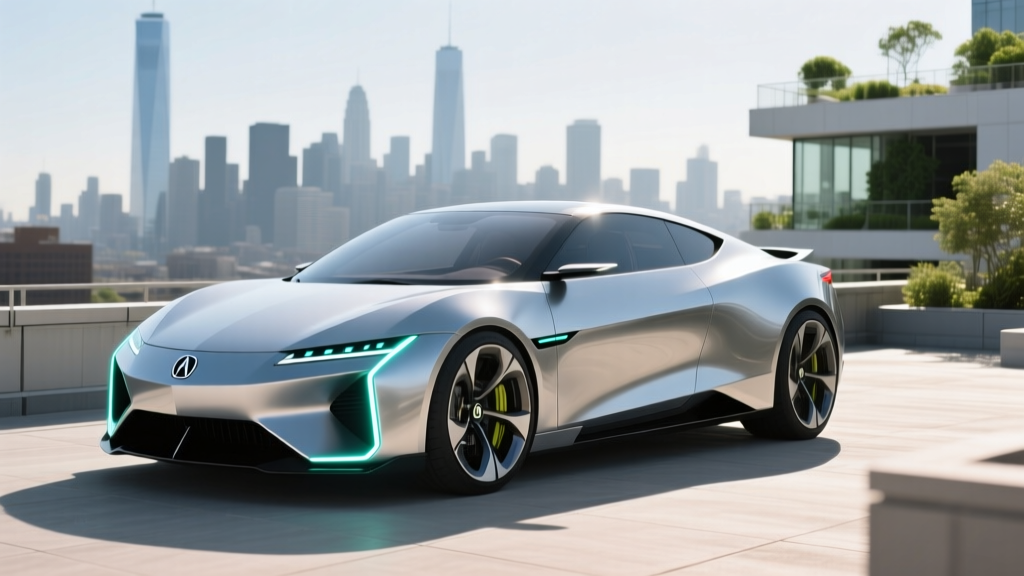
Acura's planned electric RSX revival — previewed by the Performance EV Concept at Monterey Car Week in August 2024 — was officially scrapped in mid-2025 as part of Honda's broader restructuring of its North American EV strategy. Honda canceled multiple planned EVs built on its proprietary large-vehicle e-Architecture, citing slower-than-expected EV demand, tariff uncertainty, and the need to protect profitability. The RSX EV was never available for purchase, never entered production, and has no announced replacement on the same platform as of early 2026. Buyers looking for a sporty, compact electric coupe should instead consider vehicles already on sale — or wait for Acura's revised EV roadmap tied to its upcoming 0 Series platform, expected no earlier than the 2027 model year.
Why Honda Scrapped the Acura RSX EV
In May 2025, Honda announced a sweeping strategic reset that effectively killed several planned EVs for the North American market. The company took a ¥700 billion (~$4.5 billion USD) write-down, canceled three mid-to-large EV models planned for the U.S. and Canada, and scaled back its global EV production target from 2 million units annually by 2030 to roughly 1.2 million. The Acura RSX EV — a compact performance coupe that would have ridden on Honda's in-house e-Architecture — was among the casualties.
The reasons were both macroeconomic and strategic:
- Softening EV demand growth: U.S. EV sales continued to grow in 2025 but at a decelerating rate. Honda projected that its large EVs would struggle to achieve volume targets in a market increasingly dominated by Tesla, Hyundai/Kia, and Chinese OEMs.
- Tariff and trade-policy risk: Uncertainty around U.S. import tariffs on battery materials and Chinese-manufactured components made long-term EV investment planning difficult.
- Profitability concerns: Honda's EV division was operating at a loss, and the company chose to redirect capital toward hybrids, which were seeing stronger consumer uptake and better margins.
- Platform pivot: Honda is now focusing its next-generation EV ambitions on the 0 Series platform — a thinner, lighter architecture with steer-by-wire and a next-generation ADAS suite — rather than the older e-Architecture that would have underpinned the RSX EV.
Honda's CEO Toshihiro Mibe stated publicly that the company would "re-examine resource allocation" and lean harder into its hybrid lineup as a bridge technology. For Acura, this means the brand's next EV will likely debut on the 0 Series platform, not the canceled e-Architecture.
What the RSX EV Would Have Offered (Preliminary Specs)
Before cancellation, Honda and Acura shared limited details about the Performance EV Concept and the production RSX EV it previewed. Here is what was known or estimated based on concept disclosures and industry analysis — all figures were preliminary and never finalized:
| Specification | Estimated / Announced | Status |
|---|---|---|
| Platform | Honda e-Architecture (large) | Canceled |
| Body Style | 2-door sport coupe, low-slung | Concept shown |
| Drivetrain | Rear-wheel drive, AWD variant planned | Unconfirmed |
| Battery Chemistry | NMC (nickel manganese cobalt) | Estimated |
| Battery Capacity | ~80–100 kWh usable | Estimated |
| EPA Range | ~280–320 miles (target) | Never certified |
| DC Fast Charging | ~200–250 kW peak (target) | Unconfirmed |
| 0–60 mph | Sub-5.0 seconds (target, AWD) | Never tested |
| Estimated Base MSRP | ~$50,000–$60,000 | Never priced |
| Planned Model Year | 2026–2027 | Canceled |
None of these numbers were ever validated by EPA testing or confirmed in a production vehicle. They should be treated as directional targets that will not materialize.
Best EV Alternatives to the Scrapped Acura RSX EV
If you were drawn to the RSX EV's promise of a sporty, compact electric coupe with premium branding, here are the closest alternatives currently available in the U.S. market for the 2026 model year:
| Model | EPA Range | Battery (kWh) | Peak DC Charge | 0–60 mph | Base MSRP |
|---|---|---|---|---|---|
| BMW i4 M50 | 271 mi | 81.5 (NMC) | 205 kW | 3.7 sec | $67,795 |
| Hyundai Ioniq 6 SE Long Range | 361 mi | 77.4 (NMC) | 235 kW | 5.1 sec | $42,715 |
| Polestar 2 Long Range Dual Motor | 276 mi | 82.0 (NMC) | 205 kW | 4.2 sec | $51,300 |
| Tesla Model 3 Performance | 315 mi | ~75.0 (NMC) | 250 kW | 2.9 sec | $54,990 |
| Lexus RZ 450e | 220 mi (20" wheels) | 71.4 (NMC) | 150 kW | 5.0 sec | $55,150 |
Real-world range note: EPA figures assume mixed driving. Expect highway-only range to drop 10–15% below EPA, and cold-weather (below 32°F) range to drop 20–30% for all of these models. The Ioniq 6's aerodynamic sedan shape gives it an edge in real-world highway efficiency, while the Model 3 Performance and i4 M50 sacrifice some range for substantially quicker acceleration.
Charging reality: Peak DC charge rates (measured in kW) represent the maximum the vehicle can accept under ideal conditions. Sustained charging from 10–80% SoC is what matters. The Ioniq 6's 800V architecture enables a 10–80% charge in approximately 18 minutes on a 350 kW charger, while the i4 M50 and Polestar 2 (400V systems) typically take 28–31 minutes for the same session. The Model 3 Performance achieves 10–80% in roughly 20 minutes on a V3/V4 Supercharger.
EV vs. Gas: Cost Comparison for a Sporty Coupe Buyer
Many RSX EV watchers were also cross-shopping gas-powered sport coupes like the Acura Integra Type S ($46,895 MSRP, 320 hp) or the BMW M2 ($64,195 MSRP, 453 hp). Here's how a 5-year ownership cost comparison looks between a typical EV in this segment and a comparable gas coupe, assuming 12,000 miles/year, home Level 2 charging at $0.14/kWh, and premium gasoline at $4.50/gallon:
| Cost Category (5 Years) | EV (e.g., Ioniq 6 SE LR) | Gas Coupe (e.g., Acura Integra Type S) |
|---|---|---|
| Purchase Price (MSRP) | $42,715 | $46,895 |
| Federal Tax Credit (§30D) | $0–$7,500 (see eligibility below) | $0 |
| Fuel / Electricity (60,000 mi) | ~$2,350 (27 kWh/100mi) | ~$9,000 (26 MPG combined) |
| Maintenance | ~$1,200 | ~$3,800 |
| Insurance (avg) | ~$9,500 | ~$8,200 |
| Estimated Depreciation | ~$18,000 | ~$15,500 |
| 5-Year Total (before credit) | ~$73,765 | ~$83,395 |
| 5-Year Total (with $7,500 credit) | ~$66,265 | ~$83,395 |
Key takeaways: The EV saves significantly on fuel and maintenance over five years — roughly $9,250 combined. However, EV insurance premiums tend to run 10–20% higher due to repair costs and battery replacement exposure, and EV depreciation can be steeper depending on the model. The Hyundai Ioniq 6 does not currently qualify for the full §30D federal tax credit due to battery sourcing requirements, which narrows the gap. Always verify current eligibility at irs.gov before purchasing.
Federal Tax Credit Eligibility: What You Need to Know
The §30D Clean Vehicle Credit offers up to $7,500 for qualifying new EVs, but eligibility depends on several factors that change annually. As of the 2026 tax year:
- MSRP caps: Vans, SUVs, and trucks: ≤$80,000. All other vehicles (sedans, coupes, hatchbacks): ≤$55,000.
- Buyer income limits: Modified AGI ≤$300,000 (married filing jointly), ≤$225,000 (head of household), ≤$150,000 (single).
- Battery sourcing: A percentage of critical minerals and battery components must be sourced from the U.S. or FTA-partner countries. These thresholds increase yearly, disqualifying some models that previously qualified.
- Point-of-sale transfer: Since Jan 1, 2024, buyers can transfer the credit to the dealer for an immediate price reduction at purchase — you don't need to wait until tax filing.
- Final assembly: Vehicle must undergo final assembly in North America.
For sporty sedans and coupes under $55,000, the Tesla Model 3 (certain trims) has historically qualified for partial or full credit depending on the sourcing year. The BMW i4, built in Germany, does not qualify. Always confirm the specific VIN's eligibility through the dealer or at fueleconomy.gov.
Common Misconceptions About Canceled EVs and the Market
| Myth | Fact |
|---|---|
| "Honda is abandoning EVs entirely." | Honda is pivoting to its 0 Series platform for EVs launching ~2027 and expanding its hybrid lineup as a bridge. The company still plans to sell EVs in North America — just on a revised timeline and with fewer models. |
| "Canceled EVs mean the EV market is dying." | U.S. EV sales surpassed 1.3 million units in 2025. Automakers like Honda are recalibrating product plans, not exiting the segment. The market is maturing, not collapsing. |
| "I should wait for the next Acura EV." | Acura's next EV won't arrive before the 2027 model year at the earliest, and its specs, pricing, and availability are entirely unknown. Meanwhile, excellent sporty EVs are on sale today with known specs, real-world reviews, and immediate availability. |
| "EVs don't make sense as sport coupes." | EVs offer instant torque and low centers of gravity that benefit performance driving. The Tesla Model 3 Performance does 0–60 in 2.9 seconds — faster than nearly any gas coupe under $100,000. The trade-off is higher weight and less engaging steering feel in most models. |
Decision Framework: What Should You Buy Now?
Choose the Hyundai Ioniq 6 if: You prioritize maximum real-world range (361 mi EPA, ~300+ mi highway), fast 800V charging (10–80% in ~18 min), and a sub-$45,000 entry price. Its aerodynamic shape makes it one of the most efficient EVs on sale. Trade-off: the design is polarizing, and rear headroom is tight.
Choose the Tesla Model 3 Performance if: You want the quickest acceleration in the segment (2.9 sec 0–60), access to the Supercharger network (the most reliable public charging infrastructure in the U.S. as of 2026), and strong software/ADAS features. Trade-off: Tesla's build quality is inconsistent, and insurance costs are among the highest in the segment.
Choose the BMW i4 M50 if: You value premium build quality, a traditional luxury brand experience, and strong driving dynamics with 536 hp. Trade-off: at $67,795, it's significantly more expensive, and it does not qualify for the federal tax credit due to German assembly.
Choose a hybrid (e.g., Acura Integra A-Spec Tech with available hybrid powertrain) if: You don't have reliable home charging access, you frequently drive in extreme cold, or you want to avoid range uncertainty entirely while still reducing fuel consumption. Trade-off: no electric-only driving experience, and you still pay for gasoline.
Wait for Acura's next EV if: You're a loyal Acura/Honda buyer who specifically wants the brand's design language, dealer network, and Acura-specific ADAS tuning — and you're comfortable waiting until at least 2027 with no guaranteed specs or pricing.
Real-World Ownership Considerations for First-Time EV Buyers
If you were excited about the RSX EV and this is your first EV purchase, here's what actually matters day-to-day:
- Home charging is essential. Level 2 home charging (240V, 7–11.5 kW) adds roughly 25–40 miles of range per hour and costs $800–$2,500 to install depending on your electrical panel. Without home charging, EV ownership becomes significantly less convenient. Public DC fast charging costs 2–4x more per kWh than home charging and is best used for road trips, not daily needs.
- Cold weather reduces range by 20–30%. If you live in a climate with sustained sub-freezing winters, plan for your effective range to drop substantially. Models with heat pumps (standard on the Ioniq 6 and Model 3) mitigate this somewhat but don't eliminate it.
- Charging curves taper above 80% SoC. A "250 kW peak charge rate" does not mean you charge at 250 kW the entire session. Most EVs charge rapidly from 10–50% SoC, then progressively slow to protect the battery. Plan road-trip stops around 10–80% sessions, not 0–100%.
- Battery warranties cover 8 years/100,000 miles minimum. Federal law mandates that EV batteries carry at least an 8-year/100,000-mile warranty (10 years/150,000 miles in CARB states). Most manufacturers warrant that the battery will retain at least 70% of original capacity during this period. NHTSA and manufacturer sites list specific terms.
- Insurance costs more. EV insurance premiums average 10–25% higher than comparable gas vehicles. Get quotes before purchasing — the difference can be $200–$500/year depending on the model and your driving record.
Frequently Asked Questions
Will Honda ever build an Acura RSX EV?
Not on the originally planned platform. Honda canceled the e-Architecture-based EVs in 2025. A future Acura performance EV on the 0 Series platform is possible but not confirmed, and would not arrive before the 2027 model year at the earliest.
What happened to Honda's partnership with GM on EVs?
Honda and GM's plan to co-develop affordable EVs was abandoned in late 2023. Honda then pivoted to its own in-house platforms, first the e-Architecture (now largely scrapped for North America) and now the upcoming 0 Series.
Is the Acura ZDX still available?
Yes. The Acura ZDX, built on GM's Ultium platform, went on sale for the 2024 model year and continues into 2026. It's a mid-size SUV, not a sport coupe, so it fills a different role than the canceled RSX EV. The ZDX A-Spec starts at approximately $65,950 with an EPA range of up to 313 miles.
Should I buy a used EV instead of waiting?
Used EVs offer strong value due to steep first-year depreciation. A 2–3 year-old EV with 20,000–40,000 miles can save 30–45% off the original MSRP. The used EV tax credit (§25E) offers up to $4,000 for qualifying pre-owned EVs priced at $25,000 or less, subject to income limits. Verify eligibility at irs.gov.
How do I check if a specific EV qualifies for the federal tax credit?
Use the VIN lookup tool at fueleconomy.gov or ask the dealer to confirm §30D eligibility at the point of sale. Eligibility depends on the vehicle's MSRP, battery sourcing, final assembly location, and your personal income — all of which are subject to change annually.