Why Tesla Owners Ask About AAA Roadside Assistance
If you own or are considering a Tesla, you've likely wondered what happens when things go wrong on the road. Tesla provides its own limited roadside assistance, but many owners supplement it with AAA for broader coverage — especially for flat tires, lockouts, and out-of-charge tows that exceed Tesla's policy limits. Understanding how AAA roadside assistance for Tesla vehicles works is essential for anyone budgeting the full cost of EV ownership in 2026.
This guide covers exactly what AAA will (and won't) do for your Tesla, how Tesla's own roadside program compares, and the full ownership picture for the current 2026 Tesla Model 3 Long Range AWD — the most popular trim for drivers who want maximum range and dual-motor security.
2026 Tesla Model 3 Long Range: Quick Verdict
The 2026 Model 3 Long Range AWD remains the efficiency benchmark in the premium electric sedan segment. With an EPA-estimated 341 miles of range, a refined Highland-generation interior, and access to Tesla's Supercharger network (now open to NACS-equipped competitors), it's the default choice for buyers who prioritize range-per-dollar and road-trip charging ease. The trade-offs? A minimalist cabin that frustrates some traditionalists, the absence of physical stalks, and a ride that's firm on rough pavement.
| Spec | Value |
|---|---|
| EPA Range | 341 miles |
| Battery (usable) | ~79 kWh, NMC chemistry |
| Drivetrain | Dual-Motor AWD |
| Horsepower | 384 hp (combined) |
| 0–60 mph | 4.2 seconds |
| Peak DC Fast Charge | 250 kW (V3 Supercharger) |
| 10–80% DC Charge Time | ~25 minutes |
| Level 2 Home Charge Rate | 11.5 kW (~44 mi/hr) |
| MPGe (combined) | 134 MPGe |
| Efficiency | 25 kWh/100 mi |
| Cargo Volume | 23 cu ft (rear trunk + frunk) |
| Rear Legroom | 35.3 inches |
| Base MSRP | $47,740 (incl. destination) |
| Battery Warranty | 8 years / 120,000 miles |
Real-World Range: What the EPA Sticker Doesn't Tell You
EPA Estimate: 341 miles
Real-World Expectation: ~280–310 miles on highway road trips at 70–75 mph; ~240–270 miles in freezing temperatures (below 32°F) with cabin heat running.
The Model 3 Long Range's 341-mile EPA figure is achievable in mixed city/suburban driving at moderate speeds. However, sustained highway driving at 75 mph reduces efficiency to roughly 260–290 miles depending on elevation and wind. Cold weather is the bigger equalizer: LFP chemistry isn't used here (Tesla reserves LFP for the Standard Range RWD trim), but even the NMC pack loses 15–25% of usable range when temperatures dip below freezing, especially if you precondition infrequently.
For context, on a 300-mile winter road trip from Denver to Grand Junction (elevation changes, 35°F ambient), expect to arrive with roughly 10–15% state of charge if you don't stop — which means planning at least one 15-minute Supercharger break is prudent. Always use the car's built-in trip planner; it's accurate within ~5% when the battery is preconditioned.
According to fueleconomy.gov, the Model 3 LR AWD achieves 134 MPGe combined, translating to 25 kWh per 100 miles — among the most efficient AWD sedans in its class.
Charging Speed: DC Fast, Level 2, and the Supercharger Advantage
Charging speed is where Tesla still holds a tangible edge, even as competitors gain NACS access to Superchargers in 2025–2026.
| Charging Level | Power / Rate | Time / Miles Added |
|---|---|---|
| Level 1 (120V household) | ~1.4 kW | ~3–4 miles per hour |
| Level 2 (240V home, 48A) | 11.5 kW | ~44 miles per hour; full charge ~7.5 hrs |
| DC Fast (V3 Supercharger) | Peak 250 kW | 10–80% in ~25 min; 175 mi in 15 min |
| DC Fast (CCS adapter, non-Tesla) | Up to ~150–250 kW (site-dependent) | Varies; plan for ~30 min 10–80% |
The 250 kW peak rate on V3 Superchargers is real but not sustained. The charge curve tapers significantly above 60% state of charge, dropping to ~80 kW by 80% and below 40 kW past 90%. This is normal lithium-ion behavior, but it means the advertised 10–80% time of ~25 minutes is the practical window — charging from 80–100% can add another 25+ minutes. For road trips, the 10–80% window is all that matters.
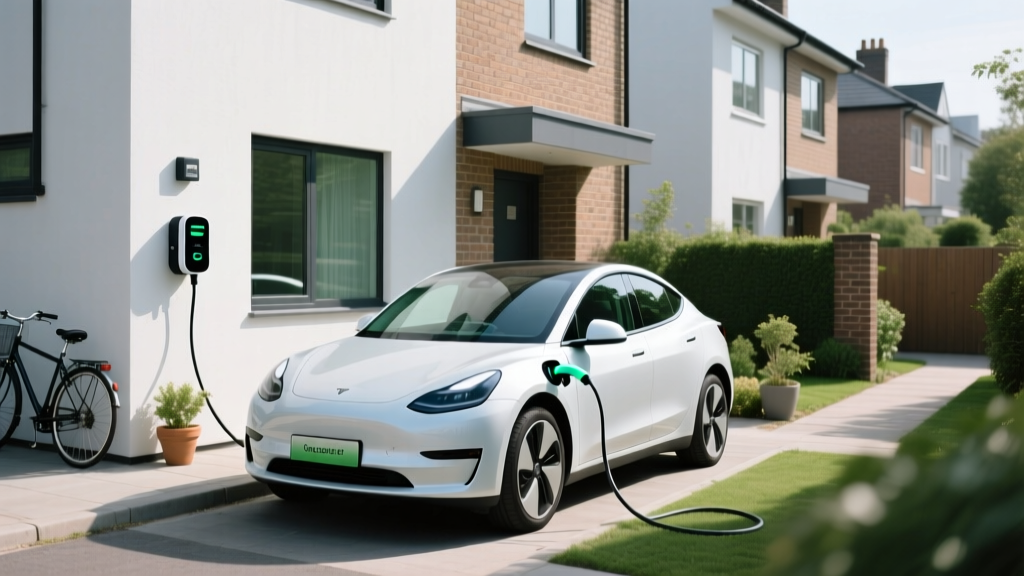
At home on a Level 2 wall connector (Tesla's $420 unit, installed by a licensed electrician), you'll add roughly 44 miles of range per hour of charging. Most owners who charge overnight from 30% to 80% wake up fully replenished. Installation costs for a 60-amp dedicated circuit typically run $800–$2,000 depending on panel proximity and local permit requirements.
AAA Roadside Assistance for Tesla: What's Actually Covered
AAA's standard roadside assistance plans (Classic, Plus, and Premier) cover Tesla vehicles the same way they cover any other car — with a few EV-specific nuances worth understanding.
What AAA Will Do for Your Tesla
- Flat tire service: AAA will mount your spare — but the Model 3 has no spare tire. AAA will tow you to the nearest tire shop or Tesla Service Center within your plan's mileage allowance.
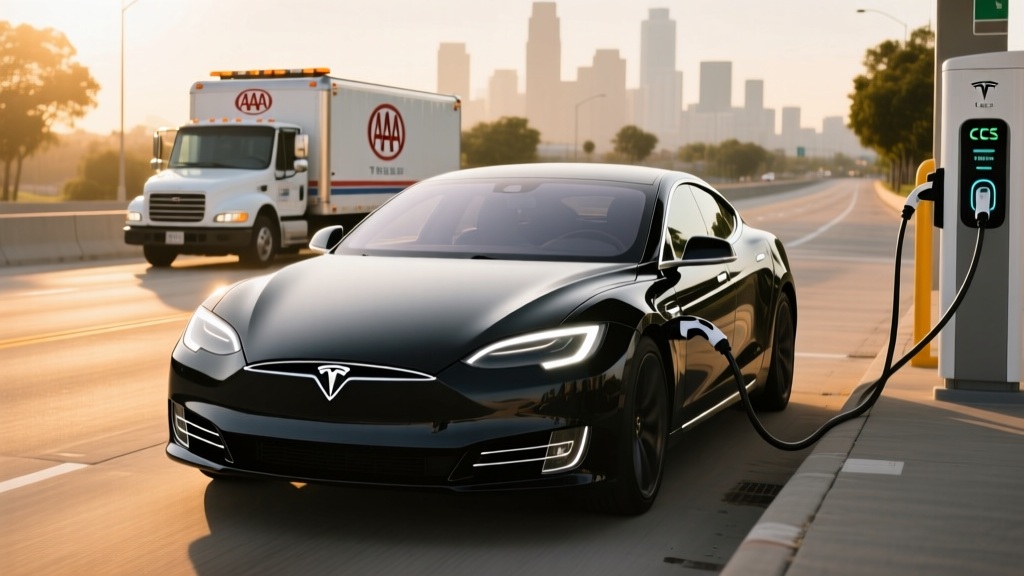
- Out-of-charge towing: If your battery is depleted, AAA will tow your Tesla to the nearest charging station. Classic covers 5 miles; Plus covers 100 miles; Premier covers 200 miles (first tow) plus additional tows at shorter distances.
- Lockout service: AAA locksmiths can assist, though Tesla's keyless entry and app-based unlock mean lockouts are rare unless your phone and key card are both inaccessible.
- Winching/extrication: Covered if the vehicle is stuck on or near a paved road (Plus and Premier).
- 12V battery jump: Teslas have a small 12V lithium auxiliary battery. AAA can assist with a jump, though Tesla's 12V system differs from conventional vehicles — inform the dispatcher it's an EV.
What AAA Won't Do
- No mobile charging: AAA does not carry mobile DC chargers or battery packs to give you a few miles of range on the spot (unlike Tesla's own roadside, which may dispatch a mobile charger in select metro areas).
- No flatbed guarantee on first call: Teslas must be flatbed-towed or towed with wheels off the ground (towing with wheels down can destroy the motors). AAA Classic may send a wheel-lift truck; always specify "EV requiring flatbed" when calling.
- Tire replacement: AAA mounts spares — since you have none, expect a tow, not a roadside fix.
Tesla's Own Roadside Assistance vs. AAA
Tesla includes roadside assistance for the duration of the vehicle's basic warranty (4 years / 50,000 miles). Tesla's program covers towing to the nearest Service Center or Supercharger (typically up to 50 miles), flat-tire assistance (they'll tow you or, in some regions, bring a loaner wheel), and lockout help. After the warranty expires, you can purchase Tesla Extended Roadside Assistance.
Many owners carry both: Tesla's program for warranty-period EV-specific needs, and AAA Plus or Premier for broader coverage, longer tow distances, and travel-related benefits (trip interruption, rental car discounts). A AAA Plus membership costs roughly $100–$130/year; Premier runs $130–$170/year depending on your region.
Pricing, Tax Credits, and Total Cost
| Item | Amount |
|---|---|
| Base MSRP (incl. destination) | $47,740 |
| As-Tested (Full Self-Driving, red paint, 19" wheels) | ~$56,740 |
| Federal §30D Tax Credit (if eligible) | Up to $7,500 |
| Effective Price After Max Credit | From ~$40,240 |
The IRS §30D Clean Vehicle Credit offers up to $7,500, split into two halves: $3,750 for meeting critical-minerals sourcing requirements and $3,750 for battery-component manufacturing in North America. As of 2026, the Model 3 Long Range (built in Fremont, CA) qualifies for the full $7,500 — but only if you meet all eligibility criteria:
- MSRP cap: Sedans must be at or below $55,000 MSRP. The base Model 3 LR qualifies; a heavily optioned build may exceed the cap.
- Income cap: Modified adjusted gross income must not exceed $150,000 (single), $225,000 (head of household), or $300,000 (joint filers).
- Point-of-sale transfer: As of 2024, you can transfer the credit to the dealer at purchase, reducing your out-of-pocket cost immediately rather than waiting for tax filing.
- Battery sourcing: Critical-mineral and component requirements tighten annually. Verify current-year eligibility on the DOE's fueleconomy.gov tax credit page before purchasing.
Always consult a tax professional before relying on credit eligibility. Rules are subject to change and individual circumstances vary.
Pros and Cons: The Honest Scorecard
Pros
- Class-leading efficiency: 25 kWh/100 mi beats nearly every AWD rival
- Supercharger network: 17,000+ stalls in North America with reliable plug-and-charge billing
- 341-mile EPA range covers most commutes and road trips without mid-day charging
- Over-the-air updates continuously add features and refine performance
- Strong resale value relative to non-Tesla EVs (though EV depreciation overall has softened)
- Excellent IIHS Top Safety Pick+ rating
Cons
- No spare tire — flat-tire incidents require a tow (AAA or Tesla)
- Turn signals on steering wheel buttons (no stalks) frustrate many drivers
- FSD (Supervised) remains SAE Level 2 — requires full driver attention at all times
- Firm ride quality on broken pavement; road noise is noticeable at highway speeds
- Service center availability can be limited in rural areas — tow distances may be long
- Rear-seat legroom (35.3") trails midsize competitors like the Hyundai Ioniq 6
Who Should Buy the Model 3 Long Range (and Who Shouldn't)
Buy it if: You want the most efficient long-range electric sedan available, rely on road-trip charging infrastructure, and value Tesla's software ecosystem. It's ideal for tech-forward commuters who drive 30–60 miles daily and take 2–4 road trips per year.
Skip it if: You need maximum rear-seat space (consider the Model S or Hyundai Ioniq 6), prefer physical controls and stalks, or live in a rural area where Tesla Service Centers are 100+ miles away. If you tow, look at the Model Y or a truck-based EV — the Model 3 is not rated for towing.
AAA membership tip: If you opt for the Model 3 and live outside a major metro area, AAA Premier's 200-mile tow allowance is worth the premium over Tesla's 50-mile roadside coverage, especially once the factory warranty expires.
Frequently Asked Questions
Does AAA cover Tesla out-of-charge tows?
Yes. AAA will tow a Tesla that has run out of charge to the nearest charging station or your destination, within your plan's mileage limit (5 mi for Classic, 100 mi for Plus, 200 mi for Premier). Always specify that the vehicle is an EV requiring flatbed towing.
Can AAA tow my Tesla to a Supercharger instead of a service center?
Yes — you can direct the tow to any accessible location within your mileage allowance, including a Supercharger station, a Level 2 public charger, or your home. You're not restricted to Tesla Service Centers.
How does Tesla's roadside assistance compare to AAA?
Tesla's included roadside assistance covers 50-mile tows to the nearest Service Center or Supercharger during the 4-year/50,000-mile basic warranty. AAA Plus/Premier offers longer tow distances, trip-interruption benefits, and coverage that continues after Tesla's warranty expires. Many owners carry both.
Does the 2026 Model 3 Long Range qualify for the $7,500 federal tax credit?
As of early 2026, the base Model 3 Long Range (MSRP $47,740) qualifies for the full $7,500 §30D credit, provided the buyer meets income caps ($150K single / $300K joint) and the vehicle meets battery-sourcing requirements. Verify on fueleconomy.gov before purchase, as rules tighten annually.
What happens if my Tesla gets a flat tire and I don't have AAA?
Tesla's roadside assistance (during the warranty period) will tow you to the nearest Service Center or tire shop. Without AAA or Tesla coverage, you'll pay out-of-pocket for a flatbed tow, which typically costs $200–$500+ depending on distance. Given that the Model 3 has no spare tire, a roadside plan is strongly recommended.
Is the Model 3 Long Range better than the Model Y for road trips?
The Model 3 LR has longer range (341 vs. ~310 miles) and charges slightly faster, making it more efficient for road trips. The Model Y offers more cargo space (76 cu ft with seats folded) and available 7-seat configuration. For couples or solo drivers, the Model 3 is the range king; for families needing space, the Model Y wins.