Quick Answer: Should You Buy an 800V EV?
800-volt EVs charge significantly faster than standard 400V models — typically adding 10-80% in 18-22 minutes at a compatible DC fast charger, versus 30-40 minutes for 400V rivals. If you road-trip more than 3,000 miles annually and have reliable access to 350 kW chargers (like Electrify America or IONNA corridors), an 800V EV pays dividends in time saved. If you primarily commute and charge at home on Level 2, the 800V premium ($2,000-$6,000 depending on model) rarely justifies itself. The technology also enables lighter wiring and marginally better efficiency, but the charging speed is the headline benefit.
What 800V Architecture Actually Means for Your EV
Most EVs on the road today use a 400-volt battery architecture — the same basic voltage used in early EVs like the first-generation Nissan Leaf. An 800V EV doubles the system voltage, which changes the physics of how energy flows into and out of the battery pack.
Here's the practical translation: electrical power (kW) equals voltage (V) multiplied by current (A). By doubling voltage, an 800V system can deliver the same power with half the current. Lower current means:
- Thinner, lighter wiring harnesses — saving 10-20 lbs of copper
- Less heat generation during fast charging, reducing thermal stress on cells
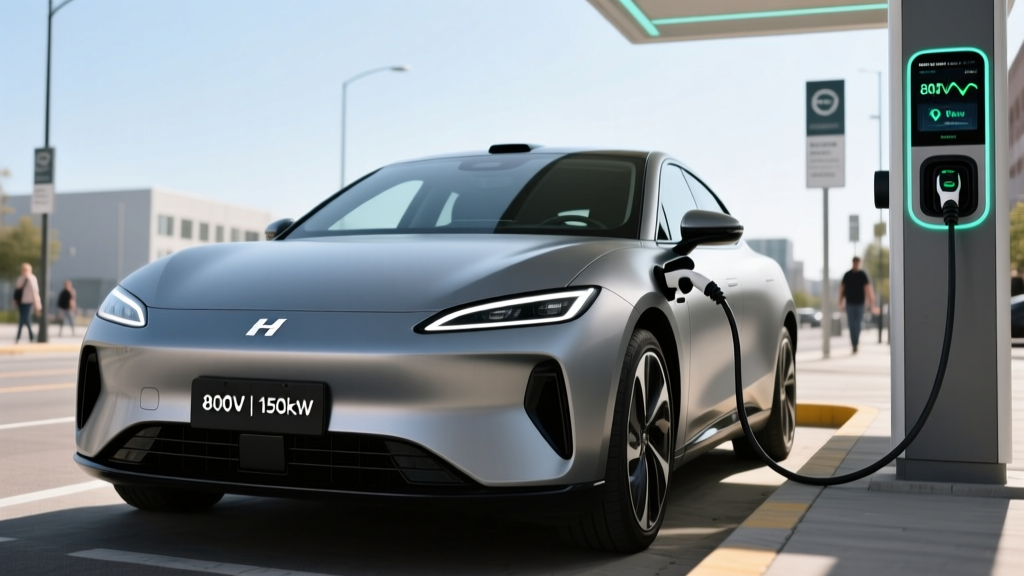
- Higher peak charge rates — many 800V EVs accept 250-350 kW at the charger
- More sustained power delivery — less charge-curve taper above 80% SoC
The trade-off is cost: 800V requires higher-spec power electronics (silicon carbide inverters), more robust insulation, and more sophisticated battery management. That cost gets passed to the buyer, though it has been dropping as silicon carbide production scales.
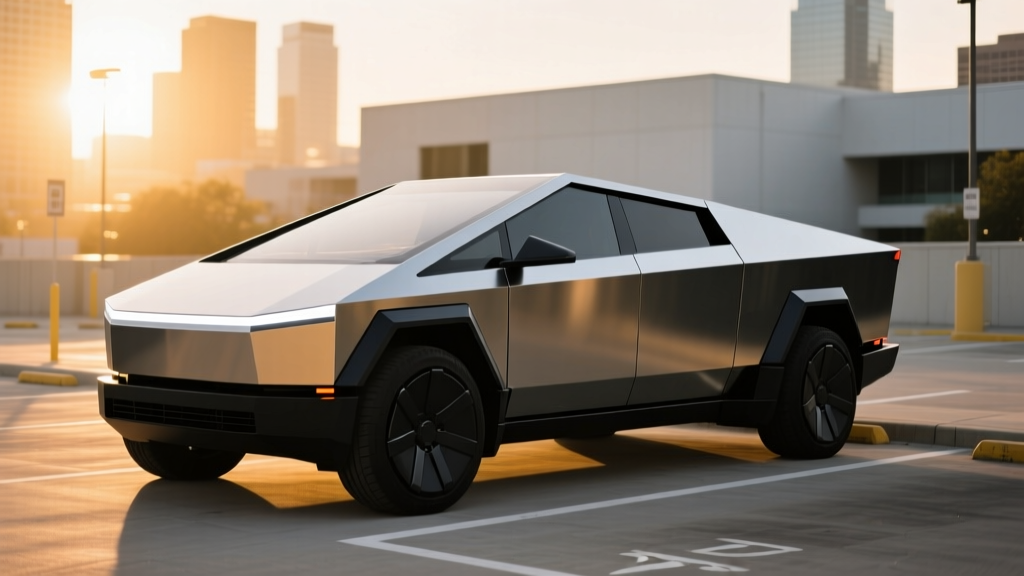
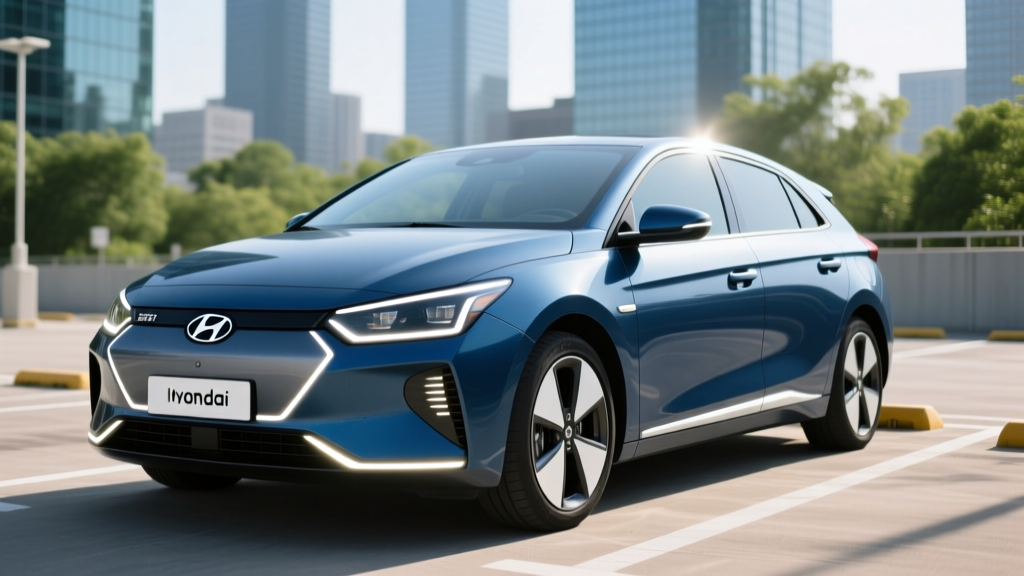
For 2026, notable 800V EVs include the Hyundai Ioniq 5/6, Kia EV6/EV9 (GT-Line trims), Porsche Taycan, Audi e-tron GT, Genesis GV60/Electrified GV70, Lotus Eletre, and the Chevrolet Silverado EV. Tesla's Cybertruck also uses an 800V architecture. Most mainstream models — including the Tesla Model 3/Y, Ford Mustang Mach-E, and Volkswagen ID.4 — remain on 400V platforms.
800V vs 400V Charging: Real-World Speed Comparison
Manufacturer claims of "ultra-fast charging" need context. Peak kW is a headline number; the charge curve — how long the car sustains that peak — is what actually determines your stop duration.
| Metric | 800V Example (2026 Hyundai Ioniq 5 Long Range AWD) | 400V Example (2026 VW ID.4 Pro S AWD) |
|---|---|---|
| Battery (usable kWh) | 84 kWh (NMC) | 82 kWh (NMC) |
| Peak DC charge rate | 240 kW | 170 kW |
| 10-80% time (ideal conditions) | ~18 minutes | ~28 minutes |
| Sustained rate 10-60% | ~210 kW average | ~140 kW average |
| 60-80% taper | Drops to ~120 kW | Drops to ~80 kW |
| Miles added in 15 min (EPA basis) | ~150 miles | ~95 miles |
| EPA range | 290 miles | 275 miles |
| MPGe (combined) | 110 MPGe | 104 MPGe |
Real-world charging caveat: To see these peak speeds, you need a 350 kW CCS or NACS charger with the vehicle preconditioned (battery warmed to ~30-35°C). On a 150 kW charger — still the majority of public infrastructure — the 800V advantage shrinks significantly. Both vehicles above will charge at roughly the same rate on a 150 kW post. The 800V premium pays off primarily on high-power corridors.
Total Ownership Cost: 800V EV vs Gas vs Hybrid
The purchase decision shouldn't hinge on charging speed alone. Here's a five-year total cost of ownership (TCO) comparison using the Hyundai Ioniq 5 (800V BEV), the Toyota RAV4 Hybrid (HEV), and the Toyota RAV4 AWD (gas) — three vehicles competing for the same family-crossover buyer.
| Cost Category (5 Years) | 2026 Ioniq 5 SEL AWD (800V BEV) | 2026 RAV4 Hybrid XLE AWD | 2026 RAV4 LE AWD (Gas) |
|---|---|---|---|
| MSRP (before incentives) | $49,100 | $35,425 | $31,925 |
| Federal §30D tax credit | Up to $7,500* | $0 (HEV) | $0 |
| Effective purchase price | ~$41,600 | $35,425 | $31,925 |
| Fuel/energy (75,000 mi) | $3,200 (home L2 avg $0.14/kWh) | $5,100 (39 MPG, $3.40/gal) | $8,300 (29 MPG, $3.40/gal) |
| Maintenance (5 yr) | $1,100 | $2,800 | $3,200 |
| Insurance (5 yr avg) | $9,800 | $7,200 | $6,900 |
| Estimated depreciation | $16,500 | $12,400 | $13,200 |
| 5-Year TCO | ~$72,200 | ~$62,925 | ~$63,525 |
*§30D credit eligibility depends on buyer income caps ($150K single / $300K joint AGI), MSRP caps ($55K for SUVs), battery critical-mineral and component sourcing requirements, and manufacturer compliance. Verify current-year rules at IRS.gov §30D. Point-of-sale transfer is available through registered dealers.
Key takeaways from the data:
- The Ioniq 5's energy cost is 61% lower than the gas RAV4 and 37% lower than the hybrid — but only if you charge primarily at home. Public DC fast charging at $0.40-$0.55/kWh erases most of this advantage.
- EV insurance premiums remain 25-40% higher than gas equivalents due to repair costs and battery replacement risk.
- Maintenance savings are real: no oil changes, fewer brake replacements (regen braking saves pads), no transmission fluid. Expect ~$1,700-2,100 less over five years.
- Depreciation on EVs has been volatile. The Ioniq 5 has held value better than some competitors, but EV resale is sensitive to battery health perception and new-model price undercutting.
Who Actually Benefits From 800V? A Decision Framework
Not every buyer needs 800V architecture. Use this framework to decide:
Choose an 800V EV if:
- You take road trips of 300+ miles at least 4-6 times per year
- You have reliable access to 350 kW chargers on your common routes (check PlugShare or the charger network app)
- You cannot charge at home and depend on public fast charging — 800V makes this significantly more tolerable
- You value time savings: 18 minutes vs 30 minutes per stop adds up on long drives
- You're buying a premium vehicle anyway (Taycan, e-tron GT) where 800V is standard
A 400V EV or PHEV is sufficient if:
- You charge at home on Level 2 overnight (800V offers zero benefit for L2 charging — both max out at ~11-19 kW)
- Your daily commute is under 80 miles round-trip
- You road-trip fewer than 2,000 miles per year
- Budget is a primary concern — the 800V premium is better spent on a home charger installation
- You live in a region with sparse 350 kW infrastructure (most of rural America, as of 2026)
Real-World Ownership Considerations for 800V EVs
Beyond the spec sheet, 800V ownership has nuances that reviews often gloss over:
Home Charging: No 800V Advantage
Every Level 2 home charger in North America delivers 240V AC. The vehicle's onboard charger converts this to DC, and both 800V and 400V EVs typically use 11 kW or 19.2 kW onboard chargers. An 800V Ioniq 5 and a 400V Model Y will charge at nearly identical rates on the same Level 2 home unit. The 800V architecture only activates its speed advantage on DC fast chargers that can deliver 800V directly to the battery.
Cold-Weather Charging Penalty
800V batteries are not immune to cold-weather slowdowns. Below 32°F, lithium-ion cells resist accepting high current. Even with preconditioning, expect 10-80% times to stretch 30-50% longer in sub-freezing conditions. An 18-minute charge becomes 25-28 minutes. The 800V system still outperforms a 400V equivalent in the cold, but the gap narrows.
Charger Availability Reality
As of early 2026, roughly 15-20% of public DC fast chargers in the U.S. can deliver 350 kW. The majority max out at 50-150 kW. On a 150 kW charger, an 800V EV charges at the same rate as a 400V EV — the architecture advantage requires infrastructure that matches it. The EPA's fueleconomy.gov and network apps like PlugShare can help you map high-power charger availability on your routes.
Battery Longevity
Higher charge rates theoretically accelerate cell degradation, but 800V systems manage this with advanced thermal management. Hyundai/Kia backs their 800V packs with a 10-year/100,000-mile warranty (70% capacity retention threshold). Porsche offers 8 years/100,000 miles. Independent data from Recurrent Auto shows modern NMC packs with active thermal management degrading 8-12% over the first 100,000 miles regardless of voltage architecture. The 800V system's lower current and reduced heat generation may actually provide a slight longevity edge, though long-term data is still maturing.
Common 800V EV Misconceptions
| Myth | Fact |
|---|---|
| "800V charges twice as fast" | Peak rate is ~40-50% faster, not double. Real-world 10-80% improvement is 10-12 minutes, not a halving. |
| "800V is safer or more dangerous" | Voltage level doesn't determine safety. All EVs have sealed, crash-protected battery enclosures. 800V systems use higher-spec insulation rated for the voltage. |
| "I need a special home charger for 800V" | No. Home Level 2 chargers work identically with 800V and 400V vehicles. The car handles the conversion. |
| "800V means more range" | Voltage architecture doesn't directly affect range. Range depends on battery kWh, vehicle weight, aerodynamics, and efficiency. Some 800V EVs are slightly more efficient due to lighter wiring and better power electronics, but the difference is 2-5%, not transformative. |
| "All fast chargers support 800V" | Only chargers rated for 350 kW and 800V+ output can deliver the full benefit. Many 50-150 kW chargers cap at 500V output, limiting 800V vehicles to the same rate as 400V ones. |
Which 2026 800V EVs Are Worth Considering?
Here's a snapshot of the current 800V landscape with the numbers that matter:
| Model (2026) | Base MSRP | EPA Range | Battery (kWh) | Peak DC kW | 10-80% Time | 0-60 mph |
|---|---|---|---|---|---|---|
| Hyundai Ioniq 5 SEL AWD | $49,100 | 290 mi | 84 (NMC) | 240 kW | ~18 min | 5.1 sec |
| Kia EV6 GT-Line AWD | $52,500 | 282 mi | 84 (NMC) | 240 kW | ~18 min | 4.5 sec |
| Porsche Taycan (base) | $92,950 | 272 mi | 83.7 (NMC) | 270 kW | ~20 min | 4.5 sec |
| Audi e-tron GT Premium | $107,500 | 270 mi | 83.7 (NMC) | 270 kW | ~22 min | 3.9 sec |
| Chevy Silverado EV 4WT | $55,900 | 370 mi | ~120 (NMC) | 350 kW | ~20 min | ~5.5 sec |
| Tesla Cybertruck AWD | $79,990 | 340 mi | ~123 (NMC) | 250 kW | ~22 min | 4.1 sec |
Range figures are EPA estimates. Expect 15-25% reduction at sustained highway speeds (75+ mph) and 20-35% reduction in sub-freezing temperatures. Source: fueleconomy.gov and manufacturer specifications.
Frequently Asked Questions
Is an 800V EV worth it if I only charge at home?
No. Home Level 2 charging delivers the same speed regardless of whether your EV is 800V or 400V. The onboard charger limits the rate to 11-19 kW AC. The 800V advantage only manifests at high-power DC fast chargers (250-350 kW). If 95%+ of your charging happens at home, invest in a quality Level 2 installation instead of paying the 800V premium.
Will 800V chargers become more common?
Yes. The NEVI (National Electric Vehicle Infrastructure) program and private networks like Electrify America, IONNA (the GM/Pilot/Hyundai joint venture), and Tesla's expanding Supercharger network are increasingly deploying 350 kW+ stations. By 2028-2030, high-power chargers should be substantially more common along major interstate corridors. Buying an 800V EV now positions you to benefit as infrastructure catches up.
Can a 400V EV charge at a 350 kW charger?
Yes, but it will only draw its maximum rated power — typically 150-175 kW. The charger is backward compatible. You're paying for capability the 400V car can't use.
Does 800V affect insurance costs?
Indirectly. EVs already carry higher insurance premiums (25-40% above gas equivalents). 800V EVs tend to be higher-priced models, which pushes premiums further. The voltage architecture itself isn't a direct insurance factor, but the vehicle's repair cost profile and replacement value are. Get quotes before purchasing — the difference can be $400-$800/year versus a 400V competitor.
What about NACS vs CCS on 800V vehicles?
Hyundai, Kia, and Genesis have transitioned to the NACS (Tesla-style) connector for 2026 models in North America. Porsche and Audi still use CCS1 but offer NACS adapters. The connector doesn't affect the 800V architecture's performance — both NACS and CCS1 can handle 800V+ at high power. Confirm your vehicle's native connector and whether adapters are included or require a separate purchase ($200-$400).