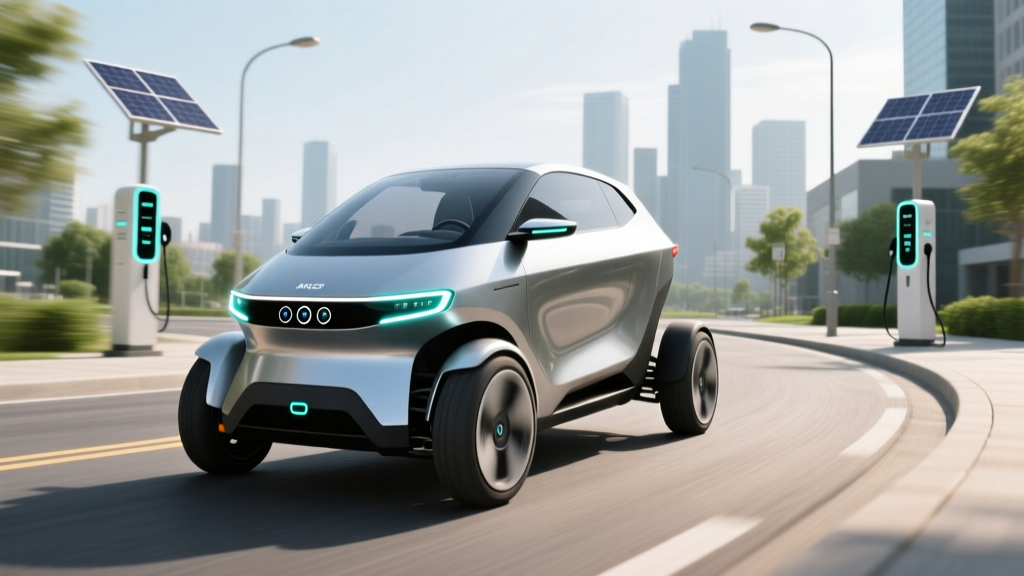
Looking for a 3 wheel car electric vehicle? You're likely eyeing one of two categories: autocycles (like the Polaris Slingshot or Arcimoto FUV) or neighborhood electric vehicles (NEVs) (low-speed, street-legal runabouts). The quick answer: as of 2026, the three-wheel electric market remains niche, with very few highway-capable models available new. Most buyers are better served by a compact 4-wheel BEV — but if you specifically want a three-wheeler for short urban commutes, fair-weather fun, or last-mile errands, here's exactly what you need to know before buying.
Quick Verdict: 3 Wheel Electric Cars in 2026
Highway-speed 3-wheel EVs (autocycles) are scarce and often priced above $25,000 with ranges under 100 miles. NEVs (low-speed vehicles) cost $8,000–$18,000 but are limited to 25 mph roads. For most daily commuters, a used 4-wheel EV like the Chevy Bolt EV (~$18,000 used, 259-mile EPA range) offers dramatically better range, safety, and practicality.
What Qualifies as a 3 Wheel Car Electric Vehicle?
The term "3 wheel car electric" covers a surprisingly wide spectrum of vehicles. Understanding where each falls matters because it determines licensing, insurance, safety regulation, and where you can legally drive.
Autocycles (FMVSS-regulated): Three-wheeled vehicles with a steering wheel, pedals, and seats that meet federal motor vehicle safety standards. They're titled and registered like cars in most states. Examples include the Arcimoto FUV (Fun Utility Vehicle) and, historically, the Elio Motors concept (never reached production). These can reach highway speeds (60–80+ mph).
Neighborhood Electric Vehicles (NEVs / LSVs): Low-speed vehicles capped at 25 mph per federal regulation, street-legal only on roads with speed limits of 35 mph or less. Many are three-wheeled. Brands like GEM (now part of Waev, previously Polaris) produce enclosed or semi-enclosed models. Range is typically 30–60 miles.
Electric trikes / enclosed scooters: Motorcycles with three wheels and electric powertrains, like the Can-Am Ryker (gas-only as of 2026) or smaller Chinese-market imports. These fall under motorcycle licensing and lack car-like crash protection.
The Real Market: What 3 Wheel EVs Can You Actually Buy?
The honest picture in 2026: the highway-capable 3-wheel electric car market is thin. Here's what's realistically available or recently available:
| Vehicle | Type | Top Speed | EPA Range | Battery | MSRP (approx.) | Status |
|---|---|---|---|---|---|---|
| Arcimoto FUV (Evergreen) | Autocycle | 75 mph | ~102 mi (base) | ~12 kWh (base) / 24 kWh (Evergreen) | $23,900–$31,900 | Limited production / check availability |
| Waev GEM e6 (if available) | NEV / LSV | 25 mph | ~30–55 mi | ~12–15 kWh (lead-acid or Li-ion) | $13,000–$18,000 | Check dealer stock |
| Golf-cart-class LSVs (various) | NEV | 25 mph | 15–40 mi | 6–12 kWh | $8,000–$14,000 | Widely available |
The Arcimoto FUV is the closest thing to a real "3 wheel electric car" that meets highway-capable expectations. Based in Eugene, Oregon, Arcimoto has produced the FUV in limited batches, with the Evergreen trim offering a 24 kWh battery and an estimated 102-mile range. However, production volumes are low, and availability fluctuates — always confirm current stock directly with the manufacturer.
3 Wheel EV vs. Compact 4-Wheel EV: Cost and Practicality Compared
Most shoppers considering a 3 wheel car electric vehicle are motivated by price, size, or novelty. But how does the economics actually stack up against a compact 4-wheel BEV?
| Factor | Arcimoto FUV (Evergreen) | Chevy Bolt EV (2023, used 2026) | Nissan LEAF S (2026 new) |
|---|---|---|---|
| Purchase Price | $29,900 (base) | ~$16,000–$20,000 used | $28,140 MSRP |
| EPA Range | ~102 mi | 259 mi (new sticker) | 212 mi |
| Battery Capacity | 24 kWh (NMC) | 65 kWh (NMC) | 60 kWh (NMC) |
| DC Fast Charge (peak kW) | None (AC only, ~6.6 kW L2) | 55 kW (CCS) | 50 kW (CHAdeMO) |
| 10–80% Charge Time (DC) | N/A | ~48 min | ~60 min |
| Level 2 Full Charge Time | ~4 hours | ~9.5 hours | ~10 hours |
| Seats | 2 (tandem) | 5 | 5 |
| Cargo | Minimal | 16.3 cu ft | 23.6 cu ft |
| Crash Safety Ratings | Not rated by NHTSA/IIHS | IIHS Top Safety Pick | NHTSA 5-star |
| Federal Tax Credit (§30D) | Likely ineligible (autocycle classification) | Eligible as used ($4,000 used credit, §25E) | Check current sourcing rules |
The comparison is stark. A used Chevy Bolt EV at $16,000–$20,000 delivers more than double the range, five seats, proper crash protection, DC fast charging, and eligibility for the §25E used EV tax credit (up to $4,000, subject to income limits and dealer documentation). The Arcimoto FUV, while fun and compact, offers no fast charging, no crash ratings, and limited practicality for anything beyond a solo urban commute.
Ownership Costs: What You'll Actually Spend
Whether you go three-wheel or four-wheel, here's a realistic 5-year cost picture for a light-duty electric commuter vehicle.
| Cost Category | 3-Wheel EV (e.g., FUV) | Compact 4-Wheel EV (e.g., Bolt EV used) | Gas Car (e.g., Honda Civic, used) |
|---|---|---|---|
| Purchase Price | $29,900 | $18,000 | $18,000 |
| Federal Tax Credit | $0 (likely ineligible) | Up to $4,000 (§25E used) | $0 |
| Net Purchase | $29,900 | ~$14,000 | $18,000 |
| Annual Electricity/Fuel (10,000 mi/yr) | ~$350 (at $0.14/kWh, 3.5 mi/kWh) | ~$420 (at $0.14/kWh, 3.3 mi/kWh) | ~$1,250 (at $3.50/gal, 35 MPG) |
| 5-Year Energy Cost | $1,750 | $2,100 | $6,250 |
| 5-Year Maintenance | ~$500 | ~$800 | ~$2,500 |
| Annual Insurance (avg.) | $900–$1,400 (specialty) | $1,100–$1,500 | $1,000–$1,400 |
| 5-Year Insurance | $4,500–$7,000 | $5,500–$7,500 | $5,000–$7,000 |
| Estimated 5-Year Total Cost | $36,650–$41,150 | $22,400–$26,100 | $31,750–$33,750 |
Key takeaways from this breakdown:
- The 3-wheel EV is the most expensive option over 5 years, driven by a higher purchase price and no tax credit offset.
- A used Bolt EV with the §25E credit is the cheapest path to electric driving by a wide margin.
- Insurance for autocycles can be tricky — some insurers classify them as motorcycles, others as specialty vehicles. Get quotes before purchasing.
- Maintenance is low for all EVs, but three-wheelers may have fewer qualified service centers, increasing downtime risk.
Charging Reality for 3 Wheel Electric Cars
Charging is where most three-wheel EVs face their biggest limitation. The Arcimoto FUV, for example, supports Level 2 AC charging only — no DC fast charging capability. That means:
- Level 1 (120V standard outlet): Adds roughly 5–8 miles of range per hour. A full charge from empty takes 12–20 hours depending on battery size.
- Level 2 (240V home charger, 6.6 kW): Adds roughly 25–30 miles per hour. A full charge of the 24 kWh Evergreen battery takes about 3.5–4 hours.
- DC fast charging: Not available. This is a dealbreaker for road trips or anyone without reliable home/workplace charging.
Without DC fast charging, a 3-wheel EV is effectively limited to a daily-commuter role with a hard ceiling on trip length. If your one-way commute is 40 miles, you'll return home at roughly 20% state of charge — fine if you charge nightly, but risky if you forget or if your Level 2 charger develops a fault.
For NEVs and low-speed three-wheelers, charging is even simpler: most plug into a standard 120V outlet and fully charge overnight. But the 25-mph speed cap means they're only viable in specific environments — planned communities, campuses, resort towns, or rural roads with low speed limits.
Tax Credits: Does a 3 Wheel EV Qualify?
This is where three-wheel buyers often face disappointment. The IRS §30D new clean vehicle credit (up to $7,500) and the §25E used vehicle credit (up to $4,000) both require the vehicle to meet specific definitions — primarily, it must be a four-wheeled motor vehicle for most credit provisions.
| Claim | Reality |
|---|---|
| "All EVs qualify for the $7,500 tax credit" | False. Three-wheel autocycles often don't meet the four-wheel requirement. Additionally, MSRP caps ($55,000 for cars, $80,000 for SUVs/trucks), buyer income limits, and battery-sourcing rules all apply. |
| "A 3-wheel EV counts as a motorcycle for tax purposes" | Motorcycles are excluded from §30D and §25E credits entirely. |
| "State incentives will cover the gap" | Some states offer rebates for low-speed or neighborhood EVs, but amounts and eligibility vary widely. Check your state energy office or AFDC state incentive database. |
| "I can claim the credit at point of sale" | Point-of-sale transfer under §30D is available for qualifying new vehicles only — if the three-wheeler doesn't qualify, neither does the transfer. |
Bottom line: Consult a tax professional and verify the specific vehicle's VIN eligibility on the IRS clean vehicle portal before counting on any federal credit for a three-wheel purchase.
Who Should Actually Buy a 3 Wheel Electric Car?
Despite the limitations, there are legitimate use cases where a 3 wheel car electric vehicle makes sense:
Decision Framework: Is a 3-Wheel EV Right for You?
Choose a 3-wheel EV if:
- Your daily commute is under 30 miles round-trip and you have home charging.
- You live in a warm climate (three-wheelers have minimal cabin heating and cold weather reduces range by 20–35%).
- You want a fair-weather, open-air or semi-enclosed commuter and already own a primary vehicle.
- You're in a planned community, small town, or campus environment where an NEV's 25-mph limit isn't a problem.
- You value novelty, compact parking, and motorcycle-like agility over cargo space and passenger capacity.
Choose a compact 4-wheel EV instead if:
- You need more than 100 miles of range on a regular basis.
- You carry passengers or cargo more than occasionally.
- You live in a region with cold winters or need year-round daily-driver reliability.
- You want DC fast charging for occasional road trips.
- Crash safety ratings (NHTSA/IIHS) are important to you.
- You want to maximize federal and state tax incentives.
Frequently Asked Questions
Are 3 wheel electric cars street-legal?
It depends on the classification. Autocycles like the Arcimoto FUV are street-legal in most states and registered as motor vehicles, though some states require a motorcycle endorsement. NEVs (low-speed vehicles) are legal on roads with speed limits of 35 mph or less. Always check your state DMV for specific registration and licensing requirements.
How far can a 3 wheel electric car go on a charge?
The Arcimoto FUV Evergreen achieves roughly 102 miles EPA-estimated range with its 24 kWh battery. NEVs and low-speed three-wheelers typically manage 30–55 miles. Real-world range drops 20–35% in cold weather and at sustained highway speeds due to increased aerodynamic drag and battery resistance.
Can I charge a 3 wheel EV at a public fast charger?
Most three-wheel EVs, including the Arcimoto FUV, do not support DC fast charging. They rely on Level 1 (120V) or Level 2 (240V) AC charging only. This means public charging infrastructure — which is dominated by DC fast chargers along highways — offers limited utility for three-wheel owners.
Is a 3 wheel electric car safer than a motorcycle?
Generally, yes — enclosed or semi-enclosed autocycles offer more weather protection and stability than motorcycles, and you don't need to balance at stops. However, they lack the crumple zones, airbags, and crash-test validation of a standard 4-wheel passenger car. NHTSA does not rate autocycles through its standard 5-star safety program.
Do 3 wheel electric cars qualify for HOV lane access?
HOV lane rules are set by individual states. Some states grant clean-air vehicle decals to qualifying EVs regardless of wheel count, while others restrict access to four-wheeled vehicles. Check your state's DMV or transportation authority for specifics.
What's the best 3 wheel electric car to buy in 2026?
If you need highway capability, the Arcimoto FUV (Evergreen trim, 102-mile range, ~$29,900) is the most credible option — but verify production availability. For low-speed neighborhood use, look at NEV options from Waev (GEM) or imported LSVs. For most buyers, a used 4-wheel EV like the Chevy Bolt EV or Nissan LEAF offers far more range, safety, and value.