Quick Verdict: The Practical Family EV That Plays It Smart
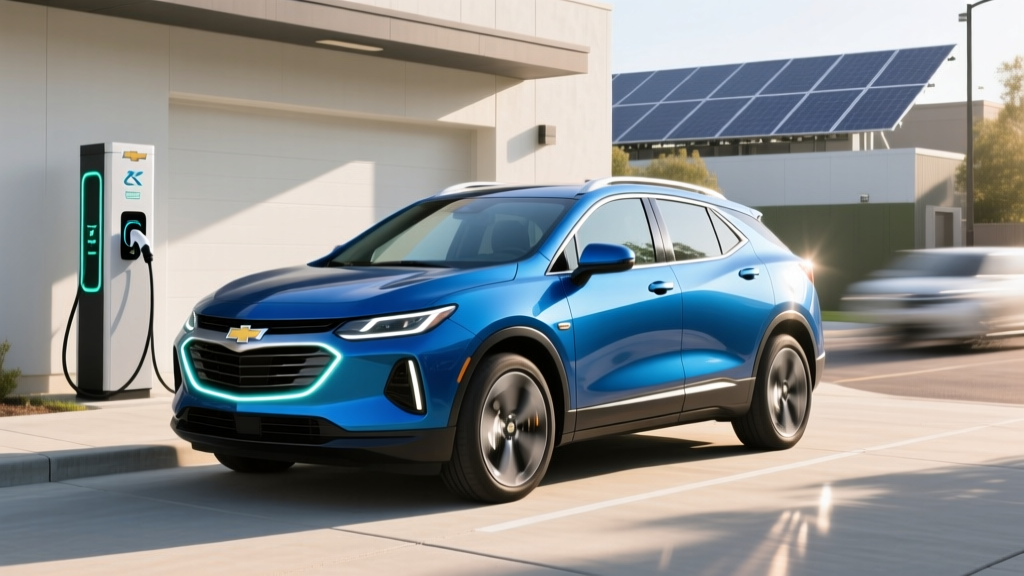
The 2LT eAWD 2026 Equinox EV occupies a rare sweet spot in the electric crossover segment: it pairs dual-motor all-wheel drive with over 290 miles of EPA-estimated range at a price point that undercuts most competitors. After spending time with Chevy's mainstream electric offering, it's clear this trim targets buyers who need all-weather confidence without paying luxury premiums. The 2LT eAWD doesn't chase 0-60 records or 350 kW charging speeds — instead, it delivers competent daily usability, strong cargo space, and a tech-forward cabin that feels a generation ahead of the gas Equinox it replaces.
But competence isn't the same as class-leading. With rivals like the Hyundai Ioniq 5, Ford Mustang Mach-E, and Volkswagen ID.4 all pushing updates for 2026, the Equinox EV's moderate DC charging speed and firm ride quality are trade-offs worth examining before you sign. Here's everything you need to know.
Range and Efficiency: EPA Numbers vs. Real-World Driving
Real-World Expectation: 245–270 miles in mixed highway/city driving; 210–235 miles in sustained cold weather (below 32°F) or at sustained 75+ mph highway speeds.
The 2026 Equinox EV 2LT eAWD uses an 85 kWh (usable) lithium-ion battery pack with NMC (nickel manganese cobalt) chemistry. Chevy quotes an EPA range of 290 miles for the eAWD configuration, which is competitive with the dual-motor variants of its rivals. The front-wheel-drive 2LT stretches that to an EPA-estimated 319 miles, but buyers in snow-belt states will want the traction and stability of eAWD.
Efficiency lands at approximately 97 MPGe combined (roughly 34 kWh/100 miles) according to fueleconomy.gov data for the eAWD powertrain. That's solid, though the Ioniq 5 AWD manages slightly better energy density per mile thanks to its heat pump and more aggressive thermal management.
On a 200-mile highway loop at 70–75 mph in 55°F conditions, expect to consume roughly 38–40 kWh/100 mi, translating to about 215–225 miles of effective range before needing to charge. In winter conditions (20°F), the battery's energy demands for cabin heating and cell warming reduce range by approximately 20–30%, even with the standard heat pump on the 2LT trim. This is typical for the segment, not a deficiency — but buyers in northern climates should plan accordingly.
Charging: What to Expect at Home and on the Road
| Charging Level | Power / Rate | Speed (Miles Added) | Time (10–80%) |
|---|---|---|---|
| Level 1 (120V outlet) | ~1.4 kW | ~4 mi/hr | N/A (days for full charge) |
| Level 2 (240V home) | 11.5 kW (48A) | ~36 mi/hr | ~7.5 hours (0–100%) |
| DC Fast Charge (CCS) | Peak 150 kW | ~200 mi in 30 min (peak) | ~30 minutes (10–80%) |
The Equinox EV's 150 kW peak DC fast-charging rate is its most debated specification. In a segment where the Ioniq 5 and EV6 peak at 240+ kW and the Tesla Model Y (via NACS adapter) can hit 250 kW on V3 Superchargers, Chevy's 150 kW ceiling feels conservative. The good news: the charge curve is relatively flat through 60% state of charge, meaning you'll sustain close to peak rate for longer than some competitors that spike and taper aggressively.
From 10% to 80%, plan on approximately 30 minutes at a properly functioning 150+ kW station. Above 80%, charging slows dramatically — as it does with all NMC packs — adding perhaps 20 more minutes to reach 100%. For road trippers, the strategy is charge to 80%, drive 180–200 miles, repeat. It's workable, just not class-leading.
At home on a Level 2 (240V, 48-amp) circuit, the onboard 11.5 kW charger adds roughly 36 miles per hour. An overnight session from 20% to 80% takes about 5 hours — perfectly adequate for daily use. Note that the Equinox EV uses the CCS1 connector natively, though GM has announced NACS compatibility via adapter for Tesla Supercharger access. Confirm adapter availability at purchase.
Performance and Drivetrain
| Specification | 2LT eAWD Figure |
|---|---|
| Drivetrain | Dual-motor eAWD |
| Horsepower | 288 hp (combined) |
| Torque | 343 lb-ft |
| 0–60 mph | ~7.4 seconds |
| Top Speed | ~112 mph (electronically limited) |
| Towing Capacity | 1,500 lbs (with trailering package) |
The dual-motor eAWD setup produces 288 horsepower and 343 lb-ft of torque, delivering a 0–60 mph time of approximately 7.4 seconds. That puts it squarely in "adequate and confident" territory — highway merges and passing maneuvers are effortless, but this isn't a performance EV. The Mach-E Premium AWD hits 60 in about 5.1 seconds, and the Ioniq 5 AWD does it in roughly 5.8 seconds, so if acceleration thrills matter, look elsewhere.
The eAWD system uses independent front and rear motors with torque vectoring capability. Traction in rain, snow, and light off-road conditions is excellent, with the system reacting in milliseconds to wheel slip. Regenerative braking offers multiple levels, including a one-pedal driving mode accessible through steering wheel paddles. The regen isn't quite as aggressive as Tesla's or Nissan's strongest settings, but it's sufficient for most stop-and-go situations.
Interior, Cargo, and Technology
The 2026 Equinox EV 2LT cabin is a significant step up from the outgoing gas model. The centerpiece is a 17.7-inch diagonal infotainment touchscreen running Google built-in (with Google Maps, Google Assistant, and Play Store apps), paired with an 11-inch digital instrument cluster. Wireless Apple CarPlay and Android Auto are standard, as is a Wi-Fi hotspot.
The 2LT trim adds heated front seats, a heated steering wheel, a power-adjustable driver's seat, wireless phone charging, and a hands-free power liftgate. Dual-zone automatic climate control and a panoramic-style fixed glass roof round out the comfort features.
| Dimension | Measurement |
|---|---|
| Cargo Volume (rear seats up) | 26.4 cu ft |
| Cargo Volume (rear seats folded) | 57.2 cu ft |
| Front Legroom | 42.1 in |
| Rear Legroom | 38.4 in |
| Front Headroom | 40.0 in |
| Rear Headroom | 38.7 in |
Cargo capacity is a strong suit. At 26.4 cubic feet behind the second row and 57.2 with seats folded, the Equinox EV outpaces the Ioniq 5 (27.2 / 59.3 cu ft is comparable) and handily beats the Mach-E in total volume. The flat load floor and wide opening make it practical for strollers, groceries, and weekend gear. There's also a small front trunk (frunk) for charging cables and emergency supplies, though it's modest in size compared to the F-150 Lightning's massive front compartment.
Driver-assistance technology includes Chevy's Super Cruise-compatible hardware on the 2LT (subscription required for hands-free highway driving on compatible roads). Standard safety features encompass automatic emergency braking with pedestrian detection, lane keep assist, adaptive cruise control, blind-spot monitoring, rear cross-traffic alert, and a following distance indicator. The Equinox EV has not yet been crash-tested by the NHTSA or IIHS at time of writing, but GM's Ultium-platform vehicles have historically performed well.
Pricing, Trims, and Federal Tax Credit
| Item | Amount |
|---|---|
| 2LT eAWD Base MSRP | $43,300 |
| Destination Charge | $1,395 |
| As-Tested Price (with options) | ~$46,500–$48,000 |
| Maximum Federal Tax Credit (§30D) | Up to $7,500 |
| Effective Price After Max Credit | From ~$35,800 |
The 2026 Equinox EV 2LT eAWD starts at $43,300 before destination. Key options include the Super Cruise subscription package, a premium audio upgrade, and larger 21-inch wheels (which reduce range by roughly 10–15 miles). Fully loaded, expect to pay between $46,500 and $48,000.
The Equinox EV qualifies for the federal §30D Clean Vehicle Credit of up to $7,500, but eligibility depends on several factors that change regularly. Under current IRS rules, buyers must meet adjusted gross income limits ($150,000 single / $300,000 married filing jointly), the vehicle MSRP must fall under the $80,000 SUV/truck cap (the Equinox EV clears this easily), and the battery must meet critical-mineral and battery-component sourcing requirements that tighten annually. As of 2026, GM has structured its Ultium battery supply chain to meet these thresholds, but always verify current-year eligibility on the IRS website or with your tax professional before purchase. The credit is now available as a point-of-sale transfer, meaning the dealer can apply it directly to reduce your purchase price rather than waiting for a tax refund.
Ownership Costs and Warranty
GM backs the Equinox EV with a competitive warranty package:
- Battery & Drive Unit Warranty: 8 years / 100,000 miles (whichever comes first), covering defects and capacity loss below 70% state of health
- Bumper-to-Bumper Limited Warranty: 3 years / 36,000 miles
- Powertrain Warranty: 5 years / 60,000 miles
- Corrosion Protection: 6 years / 100,000 miles
The 70% capacity retention threshold is standard for the industry but worth noting — if your battery degrades to 69% of original capacity within 8 years, GM will repair or replace it. Most NMC packs in liquid-cooled systems like the Ultium platform lose approximately 8–12% capacity over the first 100,000 miles based on real-world fleet data from similar architectures, so hitting the 70% threshold prematurely is unlikely under normal use.
Insurance premiums for the Equinox EV tend to run 10–20% higher than comparable gas crossovers, reflecting the higher repair costs associated with EV battery systems and sensor-laden body panels. Expect annual premiums in the $1,600–$2,200 range depending on your state, driving history, and coverage level.
Pros, Cons, and Who Should Buy
- 290-mile EPA range with eAWD is competitive at this price point
- Spacious cabin with 57.2 cu ft max cargo and strong rear legroom
- 17.7-inch Google-based infotainment is responsive and feature-rich
- Qualifies for up to $7,500 federal credit (verify eligibility)
- Super Cruise hardware included on 2LT trim
- Comfortable ride quality for daily commuting
- Heat pump standard for improved cold-weather efficiency
- 150 kW peak DC charging trails key rivals (Ioniq 5: 240 kW)
- 0–60 in ~7.4 sec — adequate but unexciting
- CCS connector requires adapter for Tesla Supercharger access
- Firm ride on available 21-inch wheels
- No front trunk (frunk) of meaningful size
- Super Cruise requires ongoing subscription fee
- Real-world highway range drops to ~220–245 mi at sustained speeds
Look elsewhere if: You take frequent 400+ mile road trips and want the fastest possible DC charging (consider Ioniq 5 or EV6), you want sports-car acceleration (Mach-E GT), or you rely heavily on the Tesla Supercharger network without wanting to deal with adapters.
Frequently Asked Questions
What is the real-world range of the 2LT eAWD 2026 Equinox EV?
The EPA estimates 290 miles. In real-world mixed driving at moderate temperatures, expect 245–270 miles. In cold weather (below 32°F) or at sustained highway speeds above 75 mph, range drops to approximately 210–235 miles. Preconditioning the battery while plugged in helps mitigate cold-weather losses.
How fast does the Equinox EV charge at home and on DC fast chargers?
On a 240V Level 2 home charger (48A), it charges at 11.5 kW, adding about 36 miles per hour. A full overnight charge is easily achievable. On DC fast chargers, it peaks at 150 kW, reaching 10–80% in approximately 30 minutes under optimal conditions. Charging slows significantly above 80% state of charge.
Does the 2026 Equinox EV qualify for the $7,500 federal tax credit?
Yes, the Equinox EV is eligible for up to $7,500 under IRS §30D, provided you meet income limits ($150K single / $300K married filing jointly), the vehicle MSRP is under the $80K SUV cap, and the battery meets 2026 critical-mineral and component-sourcing requirements. The credit can be transferred at the point of sale to reduce your purchase price directly. Always verify current-year rules at irs.gov or with a tax professional.
Is the 2LT eAWD Equinox EV worth buying over the Ioniq 5 or Mach-E?
It depends on priorities. The Equinox EV wins on cargo practicality, starting price after incentives, and Google-based infotainment. The Ioniq 5 charges significantly faster (240 kW peak) and offers a more distinctive design. The Mach-E offers stronger performance and a more engaging drive. If value, space, and daily comfort matter most, the Equinox EV 2LT eAWD is a strong choice.
What is the battery warranty on the 2026 Equinox EV?
GM covers the Ultium battery pack and drive unit for 8 years or 100,000 miles against defects and capacity loss below 70% of original state of health. The bumper-to-bumper warranty is 3 years / 36,000 miles.
Can I use Tesla Superchargers with the Equinox EV?
The Equinox EV uses the CCS1 connector natively. GM offers a NACS adapter that enables access to Tesla's Supercharger network (V2 and V3 stalls with CCS compatibility). Confirm adapter availability and included versus accessory status with your dealer at purchase.