Quick Answer: The 2027 Ford EV Truck
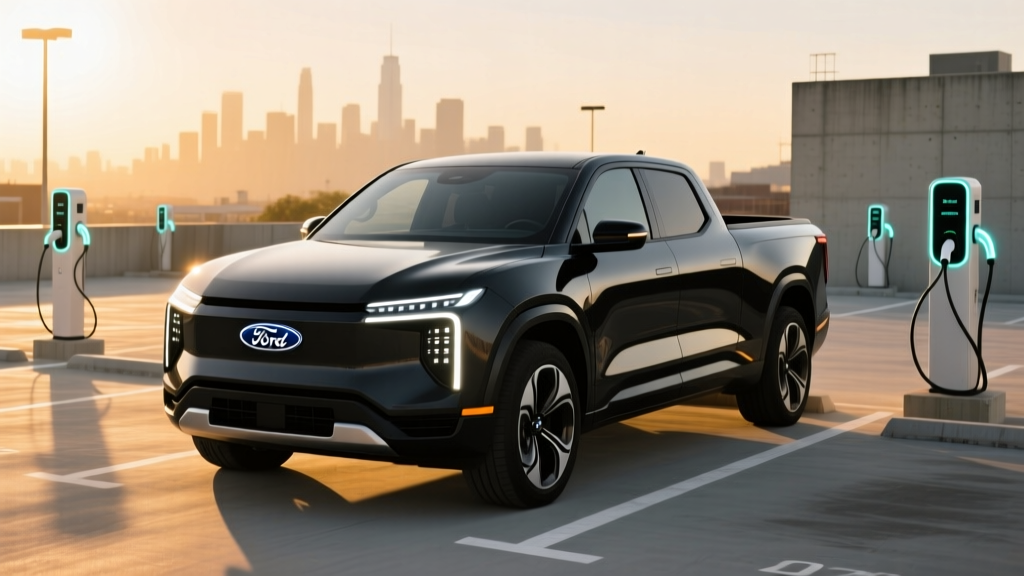
Ford's next-generation electric truck, built on the new universal EV platform, is announced for late 2026 production with 2027 model-year availability. Ford has confirmed a starting price target near $30,000 for the entry variant (a midsize pickup), with a projected EPA range of over 300 miles. This is a new vehicle line — not a direct F-150 Lightning replacement — leveraging a ground-up EV architecture designed for lower manufacturing cost. Final EPA certification, trim specs, and battery chemistry details remain preliminary as of mid-2026. If you need a full-size electric truck today, the F-150 Lightning remains Ford's current offering.
What Is the 2027 Ford EV Truck — and What It Isn't
Ford CEO Jim Farley confirmed in 2024 that the company is developing a family of next-generation electric vehicles on a new, cost-competitive platform. The first vehicle on this platform is a midsize electric pickup truck targeting the $30,000 price point — positioning it against vehicles like the Tesla Model Y in price but in a truck body style. This is not the F-150 Lightning, which rides on a modified version of Ford's existing full-size truck architecture.
The strategic distinction matters for buyers:
- F-150 Lightning (current): Full-size, body-on-frame EV truck starting around $55,000 (2026 model year). Best for heavy towing, large payloads, and fleet use.
- 2027 Ford EV Truck (announced): Midsize, unibody/skateboard-platform EV pickup starting near $30,000. Best for daily driving, light hauling, and buyers priced out of current full-size EVs.
Ford has stated this new platform will use lithium iron phosphate (LFP) battery cells in at least some variants, a chemistry choice that trades peak energy density for lower cost, longer cycle life, and reduced reliance on cobalt and nickel. This mirrors the approach Tesla uses in its standard-range models.
Projected Specs: Range, Battery, Charging, and Performance
All figures below are preliminary and based on Ford's public statements and industry analysis. Final EPA-certified numbers will be released closer to launch.
| Specification | Projected Figure | Notes |
|---|---|---|
| Starting MSRP | ~$30,000 | Entry trim; higher trims TBD |
| EPA Range (target) | 300+ miles | Top battery option; entry pack likely ~230-250 mi |
| Battery Chemistry | LFP (confirmed for base) | NMC possible for extended-range variant |
| Battery Capacity (est.) | ~70-100 kWh usable | Depends on pack configuration |
| DC Fast Charge (peak) | ~170-200 kW (est.) | LFP cells typically sustain lower peak than NMC |
| 10-80% DC Charge Time | ~25-35 minutes (est.) | Varies by pack size and thermal conditions |
| Level 2 Charge Rate | ~11.5 kW (est.) | ~30-35 miles of range per hour |
| Drivetrain | RWD standard; AWD available | Single and dual motor options expected |
| Towing Capacity | ~4,000-6,000 lbs (est.) | Midsize class; well below F-150 Lightning's 10,000 lbs |
| Bed Length | ~4.5-5.5 ft (est.) | Compact/midsize bed; not full-size |
| ADAS | Ford BlueCruise (Level 2) | Hands-free on approved highways; driver must remain attentive |
Real-World Range Expectations
If Ford achieves its 300+ mile EPA target on the extended-range pack, expect ~240-270 miles in real-world highway driving at 70-75 mph. In cold weather (below 32°F), LFP batteries can see 20-30% range reduction due to reduced chemical efficiency and cabin heating demands. A 300-mile EPA truck might deliver 210-240 miles on a freezing winter highway. Preconditioning the battery before fast charging will be essential for optimal charge speeds.
How It Compares: 2027 Ford EV Truck vs. Gas Trucks vs. F-150 Lightning
The value proposition of a $30,000 electric pickup becomes clear when you compare total ownership costs against both gas-powered midsize trucks and Ford's own full-size EV.
| Category | 2027 Ford EV Truck (est.) | Gas Midsize Truck (~$35K) | F-150 Lightning (~$55K) |
|---|---|---|---|
| Purchase Price | $30,000 | $35,000 | $55,000 |
| Fed. Tax Credit (§30D) | Up to $7,500* | $0 | Up to $7,500* |
| Effective Purchase Price | ~$22,500 | $35,000 | ~$47,500 |
| Fuel/Energy (5 yr, 75K mi) | ~$3,750 (home charging)** | ~$9,400 (22 MPG, $3.50/gal) | ~$4,500 (larger battery) |
| Maintenance (5 yr) | ~$1,500 | ~$3,500 | ~$1,800 |
| Insurance (5 yr est.) | ~$7,500 | ~$6,000 | ~$8,500 |
| Est. 5-Year Total | ~$35,250 | ~$53,900 | ~$62,300 |
* §30D tax credit eligibility depends on MSRP caps (trucks: $80,000), buyer income limits ($150K single / $300K joint), and battery component/critical mineral sourcing requirements. Always verify current rules at IRS.gov before purchasing. Point-of-sale transfer is available at participating dealers.
** Based on $0.15/kWh national average and ~3.0 mi/kWh efficiency. Public DC fast charging costs significantly more ($0.30-$0.50/kWh).
Real-World Ownership: What First-Time EV Truck Buyers Must Know
Buying an electric truck introduces ownership dynamics that differ from gas pickups. Here are the practical realities:
Home Charging Is Non-Negotiable for Cost Savings
The $3,750 five-year energy estimate above assumes primarily home Level 2 charging at residential electricity rates. If you rely exclusively on public DC fast chargers at $0.35-$0.50/kWh, your five-year fuel cost jumps to $8,750-$12,500 — erasing much of the savings advantage over gas. A Level 2 home charger installation typically costs $800-$2,500 (equipment + licensed electrician + permit), assuming your electrical panel has capacity. Older homes may need a $2,000-$5,000 panel upgrade to support a 48-amp (11.5 kW) charger circuit.
LFP Battery Care Differs From NMC
If the base 2027 Ford EV truck uses LFP cells, Ford will likely recommend charging to 100% regularly — the opposite of NMC best practices (which suggest 80% daily limits). LFP chemistry tolerates full charges well and actually benefits from periodic 100% charges for battery management system (BMS) calibration. This is a genuine ownership advantage for truck buyers who want maximum range available every morning.
Towing Will Slash Range
This is the universal EV truck limitation. Towing a 3,500-pound trailer at highway speeds can reduce range by 40-50%. A 300-mile EPA truck towing a mid-weight camper might deliver 150-180 miles before needing a charge. If you tow frequently over long distances, a gas or diesel truck remains the pragmatic choice — or plan routes around reliable DC fast charging infrastructure.
Climate Matters
Buyers in northern states (Minnesota, Maine, Colorado) should budget for winter range loss of 20-30% and slower DC fast charging in sub-freezing temperatures unless the vehicle has robust battery preconditioning. Southern-state buyers will see less range variance but should note that sustained high-speed driving in extreme heat also increases battery cooling loads.
Common Misconceptions About the 2027 Ford EV Truck
| Myth | Fact |
|---|---|
| "It's a $30,000 F-150 Lightning." | It's a smaller, midsize truck on a different platform. Think Maverick-sized, not F-150-sized. Towing and payload will be significantly lower. |
| "LFP batteries are inferior." | LFP offers longer cycle life (3,000+ cycles vs. ~1,500-2,000 for NMC), better thermal stability, and 100% daily charging capability. The trade-off is lower energy density — meaning a heavier or physically larger pack for the same range. |
| "It will replace the F-150 Lightning." | Ford has indicated the Lightning and this new truck will coexist. The Lightning serves full-size truck buyers; the 2027 EV truck targets a different segment entirely. |
| "I'll get $7,500 off no matter what." | The §30D credit has income caps, MSRP caps, and battery sourcing requirements that change yearly. A $30,000 truck clears the MSRP cap easily, but your income and the vehicle's battery sourcing determine eligibility. Check IRS guidelines before committing. |
| "300 miles of range means 300 miles of driving." | EPA range is measured on a mixed driving cycle. Highway-only driving at 75 mph, cold weather, towing, and mountain terrain all reduce real-world range by 15-50%. |
Decision Framework: Should You Wait for the 2027 Ford EV Truck?
Choose the 2027 Ford EV Truck If:
- You want an affordable electric pickup under $35,000 and don't need full-size towing or payload capacity.
- You have home charging access (garage or driveway with a 240V circuit or the ability to install one).
- Your daily driving is under 150 miles round-trip, with occasional longer road trips you can plan around DC fast chargers.
- You're willing to wait — production timing could shift, and early build slots may be limited.
- You want LFP battery longevity and don't mind a slightly heavier vehicle.
Buy an F-150 Lightning (or Competitor) Now If:
- You need 7,000-10,000 lbs of towing capacity or a full 5.5-6.5 ft bed for work use.
- You can't wait 12-18+ months for an unproven new model with no real-world reliability data.
- You need proven EPA-certified specs to make a fleet or business purchase decision today.
Stick With Gas or Hybrid If:
- You tow heavy trailers frequently over long distances — EV range loss while towing remains a real limitation.
- You lack home charging access and live in an area with sparse public DC fast charging infrastructure.
- Your budget is strictly under $25,000 and you need a truck immediately (the used gas truck market offers more options at that price point today).
Charging Infrastructure and the NACS Advantage
By 2027, Ford's EVs will use the North American Charging Standard (NACS) connector natively — the same connector used by Tesla's Supercharger network. Ford EV owners already have access to Tesla Superchargers via adapter (for CCS-equipped vehicles) and will have native NACS ports on new models. This is a significant infrastructure advantage: Tesla's Supercharger network has over 25,000 fast-charging stalls in North America with industry-leading uptime (~97%).
For the 2027 Ford EV truck, expect:
- Native NACS port — no adapter needed for Superchargers
- CCS adapter availability for Electrify America, EVgo, and other non-Tesla networks
- Peak DC charge rate of ~170-200 kW — adequate for road trips but not class-leading (Hyundai/Kia E-GMP vehicles peak at 240+ kW)
- Level 2 home charging at 11.5 kW — a full overnight charge from 10-100% in ~7-9 hours depending on pack size
Frequently Asked Questions
When can I actually buy the 2027 Ford EV truck?
Ford has targeted late 2026 for production start, meaning first deliveries would likely occur in early-to-mid 2027 as a 2027 model-year vehicle. Reservation or pre-order details have not been announced. Timing could shift based on supply chain, battery cell availability, or market conditions.
Will it qualify for the $7,500 federal EV tax credit?
At a ~$30,000 MSRP, it clears the §30D truck MSRP cap of $80,000 easily. However, eligibility also depends on your adjusted gross income (≤$150K single / ≤$300K joint filers) and whether the battery's critical minerals and components meet domestic sourcing thresholds. These sourcing rules tighten annually. Verify current requirements at IRS.gov closer to your purchase date.
How does it compare to the Ford Maverick hybrid?
The Maverick Hybrid starts around $28,000 and delivers ~42 MPG combined with a 4.5-foot bed. It's a strong alternative if you don't have home charging access or want a sub-$30K truck today. The 2027 EV truck will offer zero tailpipe emissions and lower per-mile energy costs (with home charging), but likely less cargo space and higher upfront complexity for charging setup.
What will insurance cost?
EV insurance premiums typically run 15-25% higher than equivalent gas vehicles due to higher repair costs, specialized parts, and battery replacement considerations. Budget approximately $1,400-$1,800/year depending on your state, driving record, and coverage level. Shop quotes from EV-friendly insurers (Geico, Progressive, and State Farm have competitive EV rates) before purchasing.
Is the battery covered by warranty?
Federal law mandates a minimum 8-year/100,000-mile battery warranty for EVs (covering defects and capacity loss below a stated threshold, typically 70% of original capacity). Ford has historically met or exceeded this standard on the F-150 Lightning and Mustang Mach-E. Expect similar or better coverage on the 2027 EV truck, especially given LFP's inherently longer cycle life.
Can I tow a boat or camper with it?
Light towing — yes, within the projected 4,000-6,000 lb capacity. But understand that towing at or near max capacity will cut your range roughly in half. A 300-mile truck becomes a 150-mile truck when pulling a 4,000-lb trailer at highway speed. For frequent heavy towing, a gas or diesel truck (or the F-150 Lightning with its 10,000-lb rating) remains more practical.