Quick Answer: What Is the 2028 Ford Electric Pickup?
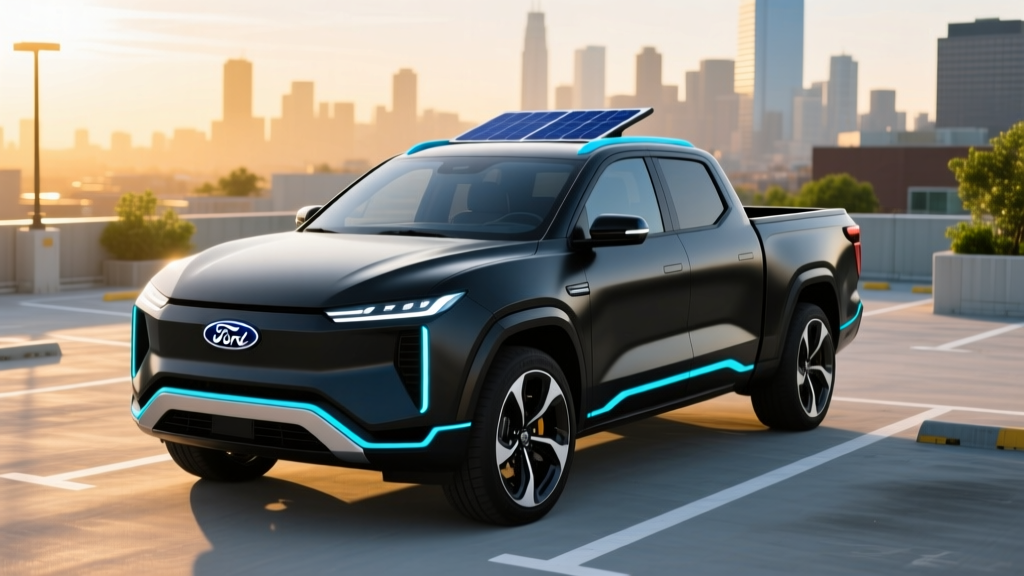
The 2028 Ford electric pickup is the anticipated next-generation successor to the current F-150 Lightning, expected to ride on Ford's new universal EV platform (announced in 2025 for next-gen electric trucks). As of early 2026, Ford has confirmed the platform's existence but has not released final specs. Based on current trajectory and industry reporting, expect a targeted EPA range of 350+ miles, DC fast charging at 350 kW peak, a starting MSRP in the $55,000–$60,000 range, and a production start in late 2027 or early 2028. All figures below are projections based on Ford's announced platform goals, current F-150 Lightning benchmarks, and competitive positioning — treat them as estimates until Ford publishes official specs.
Why Ford Is Betting on a Next-Gen Electric Truck Platform
The current F-150 Lightning launched for the 2022 model year on a modified version of Ford's body-on-frame architecture — essentially an internal-combustion F-150 adapted for electric power. That approach got the Lightning to market quickly but came with compromises: a battery pack limited to 131 kWh usable (Extended Range), curb weight exceeding 6,500 lbs, and a real-world highway range that often falls 20–25% below the EPA's 320-mile sticker.
Ford's next-generation electric truck platform, which will underpin the 2028 pickup, is being engineered from the ground up as a dedicated EV architecture. Ford CEO Jim Farley confirmed in 2025 earnings calls that the company is developing a "universal EV platform" for body-on-frame vehicles, designed to support multiple truck and SUV nameplates. The goals are straightforward: reduce weight, increase energy density, lower production costs, and enable faster DC charging.
This matters for buyers because a dedicated platform typically yields meaningful improvements in interior packaging (flat floor, larger frunk), structural battery integration (lower center of gravity, better crash performance), and thermal management (critical for sustained fast charging and cold-weather range retention).
Projected Specs: Range, Battery, Charging & Performance
Until Ford releases official specifications, here is what we can reasonably project based on the company's platform announcements, supply-chain reporting on next-gen battery cell contracts, and the competitive landscape (Chevrolet Silverado EV, Rivian R2T, Tesla Cybertruck, Ram 1500 REV).
| Attribute | Projected / Estimated | Current F-150 Lightning (2025) |
|---|---|---|
| Battery Chemistry | NMC (nickel manganese cobalt) — Extended Range; possible LFP for base trim | NMC (98 / 131 kWh usable) |
| Battery Capacity (usable) | ~140–160 kWh (Extended Range) | 131 kWh |
| EPA Range (target) | 350–400 miles (Extended Range) | 320 miles (ER) |
| Peak DC Fast Charge Rate | 350 kW (projected) | 150 kW (peak) |
| 10–80% DC Charge Time | ~18–22 minutes (projected) | ~41 minutes |
| Level 2 Charging (240V) | 19.2 kW onboard charger (expected) | 19.2 kW |
| Horsepower | 580–650 hp (dual-motor, projected) | 580 hp (ER) |
| 0–60 mph | ~3.8–4.2 seconds (projected) | 3.8 sec (ER) |
| Max Towing Capacity | 10,000–12,000 lbs (target) | 10,000 lbs (ER) |
| Starting MSRP (est.) | $55,000–$60,000 | $54,995 (Pro, 2025) |
| Battery/Powertrain Warranty | 8 years / 100,000 miles (expected) | 8 yr / 100,000 mi |
Real-World Range Reality Check
If the 2028 model achieves a 380-mile EPA rating, plan for approximately 290–320 miles on the highway at 70–75 mph in moderate temperatures. In sub-freezing winter conditions (20°F and below), expect a further 15–25% reduction, bringing effective range to roughly 220–270 miles. Towing a 6,000-lb trailer at highway speed will cut range roughly in half regardless of platform — physics doesn't change. These estimates are consistent with observed real-world performance of current full-size electric trucks and are a function of aerodynamic drag and battery thermodynamics, not a Ford-specific flaw.
Charging Infrastructure: What You'll Actually Need
A 350 kW peak charge rate means nothing if you can't access a charger that delivers it. Here is the practical breakdown for a 2028 Ford electric pickup owner:
Home Charging (Level 2 — Daily Reality)
Most daily charging will happen at home. A Level 2 charger at 19.2 kW (80A circuit, hardwired) will add roughly 50–55 miles of range per hour. Fully recharging a ~150 kWh battery from 10% to 100% overnight takes approximately 8–9 hours. This requires a 200-amp electrical panel with spare capacity — if your home has a 100-amp panel, budget $1,500–$3,000 for a panel upgrade, which a licensed electrician must evaluate.
Public DC Fast Charging (Road Trips)
The 2028 truck will almost certainly use the NACS (North American Charging Standard) connector, as Ford transitioned to NACS for the 2025 model year. This gives access to the Tesla Supercharger network (now open to Ford EVs) plus Electrify America, EVgo, and other networks deploying 350 kW hardware. At a 350 kW stall, the charge curve will likely peak briefly then taper — expect sustained rates of 200–250 kW through the 30–70% range, then a steep taper above 80%. This is normal battery-protection behavior, not a defect.
| Level | Power (kW) | Miles Added per Hour | Use Case |
|---|---|---|---|
| Level 1 (120V household) | 1.4 kW | ~3–4 mi/hr | Emergency/trickle only |
| Level 2 (240V home/work) | 11.5–19.2 kW | ~30–55 mi/hr | Daily charging |
| DC Fast (150 kW stall) | 150 kW | ~250–300 mi in 30 min | Road trips (older stations) |
| DC Fast (350 kW stall) | 350 kW peak | ~200+ mi in 15 min | Road trips (newer stations) |
Cost Breakdown: Purchase, Fueling, Maintenance & Insurance
The decision to buy an electric pickup isn't just about sticker price — total cost of ownership (TCO) over 5 years tells the real story. Below is a projected comparison using estimated 2028 pricing and current energy/fuel costs.
| Category | 2028 Electric Pickup (est.) | 2025 F-150 Gas (3.5L EcoBoost) |
|---|---|---|
| Base MSRP | $57,000 (est.) | $52,000 |
| Federal Tax Credit (§30D) | Up to $7,500 (if eligible)* | $0 |
| Effective Purchase Price | ~$49,500 (est.) | ~$52,000 |
| Fuel / Energy (5 yr, 75,000 mi) | $5,200–$7,800** | $11,250–$13,500*** |
| Maintenance (5 yr) | $1,500–$2,500 | $4,000–$5,500 |
| Insurance (5 yr avg.) | $12,000–$15,000 | $9,000–$12,000 |
| Estimated 5-Year TCO | $68,200–$74,800 | $76,250–$83,000 |
*Federal §30D tax credit eligibility depends on buyer income caps ($150K single / $300K joint), MSRP caps ($80K for trucks/vans/SUVs), battery sourcing requirements, and point-of-sale transfer rules. Check current rules at IRS.gov. Credit availability for the 2028 model year cannot be confirmed until closer to launch.
**Electric cost assumes $0.14/kWh home charging (national avg.) and $0.45/kWh public DCFC blended rate. Actual costs vary significantly by utility rate and home-charging percentage.
***Gas cost assumes $3.50/gallon avg. and 19 MPG combined (EPA for F-150 4WD EcoBoost).
EV Pickup vs. Gas Pickup: Head-to-Head Comparison
For buyers cross-shopping the 2028 electric Ford against a conventional F-150 or hybrid F-150 PowerBoost, here is how the key attributes stack up:
| Attribute | 2028 Electric (Projected) | 2025 F-150 Gas (3.5L EB) | 2025 F-150 PowerBoost Hybrid |
|---|---|---|---|
| EPA Range / Tank | 350–400 mi | ~480 mi (26 gal × 19 MPG) | ~570 mi (30.6 gal × 22 MPG city) |
| "Refuel" Time | 18–22 min (10–80% DCFC) | ~5 min (gas station) | ~5 min (gas station) |
| Towing Impact on Range | Range cut ~50% | MPG drops to ~11–13 | MPG drops to ~12–14 |
| Instant Torque | Yes (electric motors) | No (turbo lag) | Partial (electric assist) |
| V2L / Pro Power Onboard | 9.6 kW (expected, upgraded) | 2.0 kW (7.2 kW option) | 7.2 kW |
| Home "Refueling" | Yes (Level 2 overnight) | No | No |
| Cold-Weather Range Loss | 15–25% at 20°F | Minimal (engine heat) | Minimal |
| Maintenance Burden | Low (no oil, filters, plugs) | Standard (oil, filters, plugs) | Standard + hybrid system |
| Frunk (Front Trunk) | Yes (~14 cu ft expected) | No | No |
Real-World Ownership: What First-Time EV Pickup Buyers Must Know
Buying an electric truck is different from buying a gas truck in ways that go beyond the powertrain. Here are the practical realities that spec sheets don't capture:
Home Charging Access Is Non-Negotiable for Most Owners
If you cannot install a Level 2 charger at home (240V, 48–80A), owning a full-size electric pickup becomes significantly more difficult. Public DC fast charging works for road trips, but relying on it daily is expensive ($0.40–$0.60/kWh at many stations), time-consuming, and hard on long-term battery health. Apartment dwellers and street-parkers should seriously consider a PHEV or hybrid instead.
Cold Climate = Range Planning
If you live in the upper Midwest, Northeast, or mountain states, winter will reduce your effective range by 15–25%. A heat pump (expected on the 2028 platform) mitigates cabin-heating energy draw but does not eliminate the physics of cold lithium-ion cells. Plan your winter highway trips around 250 miles of usable range, not the 380-mile sticker.
Towing With an Electric Truck Requires Route Planning
Every current electric pickup — Lightning, Silverado EV, Rivian R1T — sees range drop roughly 40–55% when towing a trailer in the 5,000–8,000 lb range at highway speed. The 2028 Ford will be no exception. If you tow frequently over long distances, you will stop to charge more often than you stop for gas with a truck. This is a current limitation of battery energy density versus liquid fuel.
Insurance Costs Are Higher
EV insurance premiums run 15–30% higher than equivalent gas vehicles, driven by higher repair costs (specialized body shops, battery replacement risk, aluminum-intensive structures). Budget $200–$400 more per year compared to a gas F-150.
Common Misconceptions About the 2028 Ford Electric Pickup
| Myth | Fact |
|---|---|
| "The battery will need replacing in 5 years." | Modern NMC and LFP packs are warrantied for 8 years / 100,000 miles at 70% capacity retention. Real-world degradation data from current Lightnings shows ~5–8% loss over 100K miles. Full replacement is rare and typically covered under warranty. |
| "It can't tow as much as a gas truck." | Electric motors produce maximum torque at 0 RPM, giving excellent low-speed pulling power. The current Lightning tows 10,000 lbs (ER). The 2028 model is expected to match or exceed this. The limitation is range while towing, not pulling capability. |
| "I'll save $7,500 no matter what." | The §30D federal tax credit has income caps, MSRP caps, battery-sourcing requirements, and may be claimed as a point-of-sale reduction. Eligibility varies by buyer and model year. Always verify at IRS.gov before counting on the credit. |
| "350 kW charging means a full charge in 15 minutes." | Peak charge rate is only sustained for a portion of the session. The charge curve tapers significantly above 80% SoC to protect battery health. A 10–80% session at 350 kW peak may take 18–22 minutes; 10–100% will take considerably longer. |
| "Electric pickups can't go off-road." | Instant torque, low center of gravity (battery in floor), and precise individual-wheel torque vectoring give electric trucks strong off-road capability. Ford's current Lightning off-road modes are competent; the 2028 dedicated platform should improve further with better weight distribution. |
Decision Framework: Is the 2028 Ford Electric Pickup Right for You?
Buy the 2028 Ford Electric Pickup If:
- You have Level 2 home charging (or can install it) and drive under 300 miles daily
- Your typical use is commuting, job-site visits, light hauling, and weekend trips — not daily long-distance towing
- You value instant torque, quiet operation, V2L/V2H capability (powering tools or your home during outages), and lower maintenance costs
- You qualify for the §30D tax credit, bringing effective pricing close to a gas F-150
- You can wait until late 2027 or 2028 for delivery (reservation holders may get priority)
Stick With Gas or Hybrid F-150 If:
- You tow heavy trailers over 200+ miles regularly and can't afford 30-minute charge stops every 150 miles
- You live in an apartment or park on the street with no home charging access
- You operate in extreme cold (consistently below 0°F) where range loss compounds with towing demands
- You need a truck now and can't wait for 2028 production
- Your annual mileage is under 8,000 miles — the fuel savings won't offset the price premium within 5 years
Consider the Current F-150 Lightning Instead If:
- You want a proven electric truck with real-world ownership data and available inventory today
- 320 miles of EPA range and 150 kW DC charging meet your needs
- You can take advantage of current dealer incentives and confirmed §30D eligibility
Release Timeline & How to Prepare
Ford has not announced an exact reveal or on-sale date for the 2028 electric pickup. Based on typical automotive development cycles and Ford's 2025 platform announcement, a reasonable timeline looks like this:
- Mid-to-late 2026: Possible concept or teaser reveal; Ford may share platform details at an investor or product event
- Early-to-mid 2027: Full vehicle reveal with official specs, pricing, and trim details
- Late 2027: Reservation system opens (likely with a refundable deposit, similar to the Lightning's $500–$1,000 hold)
- Early-to-mid 2028: Production begins at Ford's retooled U.S. truck plant(s); first deliveries to reservation holders
If you're interested, the best preparation steps now are: (1) ensure your home electrical panel can support a 60–80A Level 2 circuit, (2) monitor Ford's official newsroom for platform updates, and (3) check your tax situation against §30D income and sourcing requirements closer to purchase.
Will the 2028 Ford electric pickup replace the F-150 Lightning name?
Ford has not confirmed the production name. It may carry the Lightning badge forward, adopt a new nameplate, or use a simpler naming convention (e.g., "F-150 Electric"). The underlying platform will be new regardless of branding.
Will it use the NACS connector or CCS?
All Ford EVs sold in North America from the 2025 model year forward use the NACS connector. The 2028 pickup will use NACS, giving it native access to the Tesla Supercharger network and all NACS-equipped public chargers.
What will the battery warranty be?
Ford's current EV battery warranty is 8 years or 100,000 miles, whichever comes first, with a capacity retention threshold of 70%. The 2028 model is expected to carry at least this level of coverage, consistent with industry norms and Ford's current EV warranty terms.
Can I reserve one now?
No. As of early 2026, Ford has not opened reservations for the next-gen electric truck. Reservations are expected to open after the official vehicle reveal, likely in 2027.
How does this compare to the Chevrolet Silverado EV or Rivian R2?
The Silverado EV (GM's Ultium platform) currently offers up to 400 miles EPA range on its top battery pack and 350 kW DC charging capability — benchmarks the 2028 Ford will need to match or beat. Rivian's upcoming R2T (mid-size, expected 2026–2027) targets a lower price point (~$45,000–$52,000) but with less range and towing capacity. The 2028 Ford will compete most directly with the Silverado EV and Ram 1500 REV in the full-size segment.
Will there be a smaller Ford electric pickup (Maverick EV)?
Ford has hinted at smaller electric trucks using its next-gen platform, but nothing has been officially confirmed. A compact electric pickup based on the Maverick would likely target the $35,000–$45,000 range with 250–300 miles of EPA range — but treat this as speculation until Ford makes an announcement.