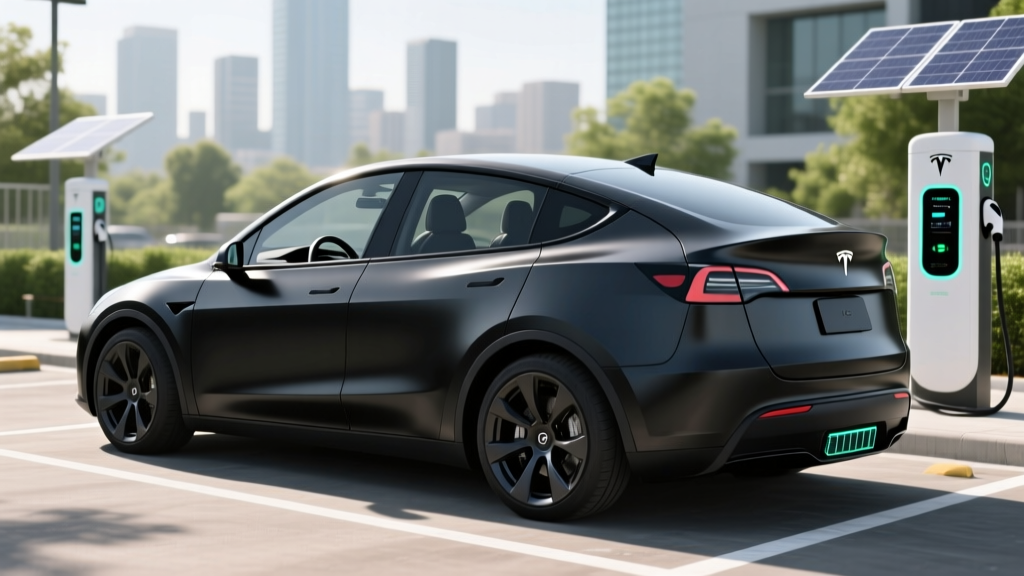
The Quick Verdict on the Model 3 Performance Cabin
The current-generation Tesla Model 3 Performance pairs a 510-horsepower dual-motor powertrain with a cabin that has matured considerably since the car's 2017 debut. Tesla's "Highland" refresh brought acoustic glass, ventilated front seats, ambient lighting, and a rear touchscreen — addressing the most common complaints about earlier Model 3 interiors. But the minimalist philosophy remains polarizing: no physical stalks, no instrument cluster, and nearly every function routed through a 15.4-inch center display.
If you're researching the Model 3 Performance interior, you're likely weighing whether the cabin justifies a $52,990 starting price — especially against rivals like the Hyundai Ioniq 6, BMW i4 M50, and Polestar 2 that offer more conventional luxury layouts. This review breaks down every aspect of the interior experience alongside the powertrain specs that make the Performance variant worth considering.
| Spec | Value |
|---|---|
| EPA Range | 346 miles |
| Battery (usable) | ~75 kWh, NMC chemistry |
| Drivetrain | Dual-motor AWD |
| Horsepower | 510 hp |
| 0–60 mph | 2.9 seconds |
| Max DC Fast Charge | 250 kW (peak) |
| 10–80% DC Charge Time | ~25 minutes |
| Level 2 Home Charging | 11.5 kW (~44 mi/hr) |
| Efficiency | 121 MPGe combined / 28 kWh/100 mi |
| Cargo Volume | 23.1 cu ft (rear trunk + frunk) |
| Rear Legroom | 35.2 inches |
| Base MSRP | $52,990 (before incentives) |
| Battery Warranty | 8 years / 120,000 miles |
Materials, Fit, and Finish: A Meaningful Step Up
The pre-refresh Model 3 drew fair criticism for panel gaps, thin synthetic leather, and a general sense that the interior didn't match the price. The current generation addresses most of this. Soft-touch materials now cover the dashboard top, door uppers, and center console. The textile-and-aluminum trim across the dash replaces the glossy wood of earlier models and resists fingerprints. Panel gaps on Fremont- and Shanghai-built cars have tightened noticeably, though we've still seen minor variance between individual vehicles.
The seats are a highlight. The Performance trim uses a sport seat design with increased bolstering, and both front seats are now ventilated and heated — a welcome addition for warm-climate buyers. The perforated synthetic leather (Tesla calls it "vegan leather") feels more premium than prior iterations, though it still doesn't quite match the Nappa or Merino leather you'd find in a BMW i4. Heated rear outboard seats are standard.
Acoustic laminated glass on all windows is a significant upgrade that reduces wind and road noise at highway speeds. On our test loop at 70 mph, the cabin was noticeably quieter than a pre-2024 Model 3 and competitive with the Ioniq 6, though the BMW i4's thicker insulation still edges it out.
Technology and the Screen-Dependent Interface
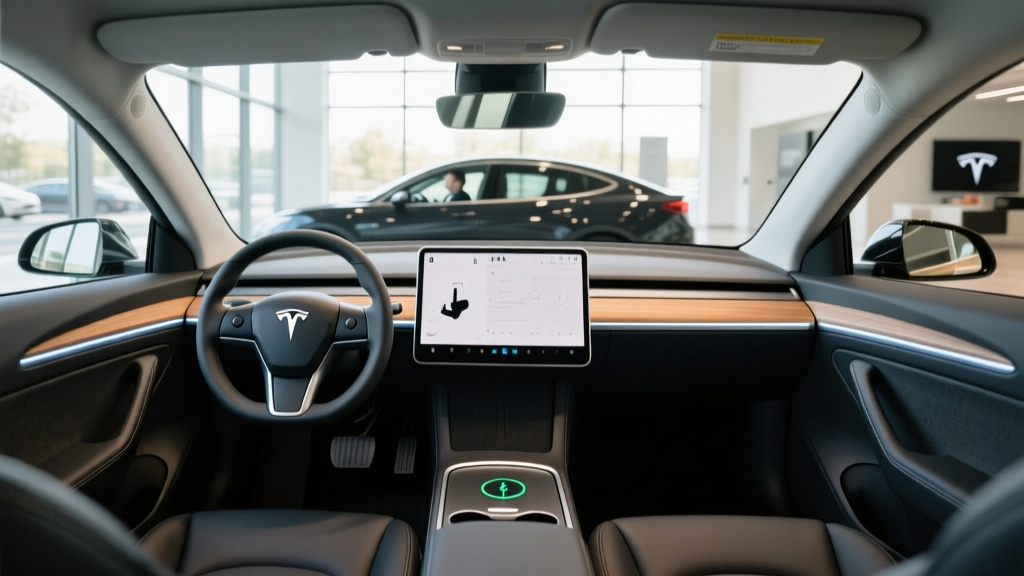
Everything runs through the 15.4-inch center touchscreen. There is no instrument cluster behind the steering wheel — your speed, navigation, and vehicle status all live on the center display, angled toward the driver. This remains the Model 3's most divisive interior choice. Some owners adapt within a week; others never get comfortable glancing right for speed information.
The infotainment system itself is excellent. Response times are instant, the navigation integrates Supercharger routing with battery preconditioning, and the app ecosystem includes Netflix, YouTube, and arcade-quality games for charging stops. A 17-speaker premium audio system with immersive sound is standard on the Performance and delivers genuinely impressive clarity.
For rear passengers, the refresh added an 8-inch touchscreen mounted on the back of the center console. It controls rear climate, seat heating, and media playback — a feature previously reserved for the Model S/X. It's a small addition, but it meaningfully improves the rear-seat experience on road trips.
Range, Charging, and Real-World Efficiency
The Model 3 Performance carries an estimated 75 kWh usable battery using NMC (nickel manganese cobalt) chemistry, chosen for its higher energy density compared to LFP. This supports the 346-mile EPA range figure — a strong number for a 510-hp performance sedan.
- Highway (70–75 mph, summer): ~290–310 miles
- Highway (70–75 mph, winter 30°F): ~240–260 miles
- City/suburban mixed (spring/fall): ~320–340 miles
| Level | Power | Speed (approx.) | Notes |
|---|---|---|---|
| Level 1 (120V) | ~1.4 kW | ~5 mi/hr | Emergency/top-up only |
| Level 2 (240V, 48A) | 11.5 kW | ~44 mi/hr | Full charge in ~7 hours |
| DC Fast (Supercharger V3) | 250 kW peak | 10–80% in ~25 min | Curve tapers sharply above 80% |
| DC Fast (Supercharger V4) | Up to 250 kW | Similar to V3 for this model | Hardware supports NACS natively |
The Model 3 uses the NACS (North American Charging Standard) connector natively — no adapter needed for Tesla Superchargers. With access to over 20,000 Supercharger stalls in North America and a growing number of third-party networks adopting NACS, the charging ecosystem remains the strongest ownership advantage Tesla offers. The 250 kW peak charge rate is competitive, though rivals on 800V architectures (like the Hyundai Ioniq 5/6) can sustain higher rates longer. Expect the charge curve to taper significantly above 60% SoC, which is why the 10–80% time is the more useful metric than peak kW.
Space, Practicality, and Daily Use
The Model 3 is a compact sedan, and interior dimensions reflect that. Front-seat space is generous — headroom and legroom accommodate tall drivers comfortably. The rear seat is where compromises show: 35.2 inches of legroom is adequate for average-height adults but tight for anyone over 6 feet on long trips. The sloping roofline cuts into rear headroom, and the fixed glass roof (no shade) can make the cabin feel warm in direct summer sun despite UV-tinted glass.
Cargo capacity totals 23.1 cubic feet between the rear trunk (including the under-floor well) and the front trunk (frunk). The trunk opening is narrower than a hatchback or liftback, which limits what you can load. The rear seats fold 60/40, adding flexibility for longer items. The frunk holds about 3.1 cu ft — enough for a charging cable bag and a small soft cooler.
For families, the Model 3 Performance works as a daily driver for one or two children in car seats, but the tight rear door opening and limited rear space make it less practical than a Model Y or crossover alternative for growing families.
Pricing, Tax Credits, and Ownership Costs
The 2025 Tesla Model 3 Performance starts at $52,990 (including destination). Adding Full Self-Driving (Supervised) costs $8,000. A fully loaded example lands around $61,490 before any incentives. The Ultra Red paint ($2,500) and 20-inch wheels are the primary option costs.
| Item | Amount |
|---|---|
| Base MSRP (Performance AWD) | $52,990 |
| FSD (Supervised) add-on | +$8,000 |
| Premium paint (Ultra Red) | +$2,500 |
| Federal §30D Tax Credit (if eligible) | Up to $7,500 |
| Estimated net price (with credit) | ~$45,490 (base) |
Federal tax credit eligibility under IRS §30D requires meeting several conditions simultaneously:
- MSRP cap: The vehicle must be under $55,000 for sedans — the base Model 3 Performance qualifies, but adding options that push MSRP above $55,000 may disqualify it.
- Buyer income limits: Modified AGI cannot exceed $150,000 (single), $225,000 (head of household), or $300,000 (joint).
- Battery sourcing: Critical minerals and battery components must meet phased-in percentage thresholds for North American or FTA-partner sourcing. These thresholds tighten annually.
- Point-of-sale transfer: As of 2024, eligible buyers can transfer the credit to the dealer at purchase, reducing the out-of-pocket price immediately.
Because battery sourcing requirements change annually and vary by production batch, always verify eligibility at fueleconomy.gov or consult a tax professional before relying on the credit in your purchase decision.
How It Compares: Model 3 Performance vs. the Competition
The Model 3 Performance doesn't exist in a vacuum. Here's how the cabin and ownership proposition stack up against key rivals:
| Spec | Tesla Model 3 Perf. | BMW i4 M50 | Hyundai Ioniq 6 Limited |
|---|---|---|---|
| Base Price | $52,990 | ~$67,900 | ~$52,600 |
| EPA Range | 346 mi | 269 mi | 316 mi |
| 0–60 mph | 2.9 sec | 3.7 sec | 5.1 sec |
| Horsepower | 510 hp | 536 hp | 320 hp |
| Max DC Charge | 250 kW | 205 kW | 240 kW (800V) |
| Interior Materials | Very good | Excellent | Good |
| Physical Controls | Minimal | Comprehensive | Minimal |
| Rear Seat Space | Tight | Tight | Good |
| Charging Network | Supercharger (NACS) | CCS (growing) | NACS (via adapter) |
The BMW i4 M50 offers a more traditional luxury interior with physical buttons, a curved instrument cluster, and superior material quality — but costs $15,000 more and sacrifices 77 miles of range. The Hyundai Ioniq 6 is the value play: comparable price, strong efficiency, 800V fast charging, and a more spacious rear seat, but less performance and a less premium cabin feel. The Model 3 Performance wins on acceleration, range-per-dollar, and Supercharger access.
Pros
- Class-leading acceleration (2.9 sec 0–60) at this price point
- 346-mile EPA range is among the best for any performance EV
- Native NACS / Supercharger network access
- Significantly improved cabin quietness and materials post-refresh
- Ventilated front seats and rear touchscreen now standard
- Over-the-air updates continue adding features years after purchase
- Excellent efficiency (28 kWh/100 mi) for a 510-hp dual-motor car
Cons
- No instrument cluster — all info on center screen
- No physical turn-signal stalk (steering-wheel buttons instead)
- Rear seat is tight for tall adults
- Fixed glass roof with no shade can cause heat buildup
- Trunk opening is narrow compared to a liftback/hatchback
- Service center wait times remain an issue in some markets
- FSD (Supervised) is expensive and still requires full driver attention
Who Should Buy the Model 3 Performance?
Choose the Model 3 Performance if:
- You want sub-3-second acceleration without spending $80K+
- You commute 40+ miles daily and want to minimize charging stops
- You value Supercharger network reliability for road trips
- You're comfortable with a screen-first interface and minimal physical controls
- You primarily drive with one or two passengers
Look elsewhere if:
- You regularly carry rear-seat adults over 6 feet tall
- You need physical buttons for climate, volume, and turn signals
- You want a traditional luxury interior with an instrument cluster (consider BMW i4)
- You need hatchback cargo flexibility (consider the Model Y Performance or Ioniq 5)
The Model 3 Performance interior in 2025 represents the best version of Tesla's minimalist philosophy yet. It won't convert buyers who prioritize traditional luxury, but for those who value technology integration, efficiency, and straight-line performance, the cabin now supports — rather than undermines — the car's considerable engineering strengths.
Frequently Asked Questions
What is the real-world range of the Model 3 Performance?
The EPA rates it at 346 miles, but real-world highway driving at 70–75 mph yields approximately 290–310 miles in warm weather and 240–260 miles in freezing temperatures. City and suburban driving with regenerative braking gets closer to the EPA sticker. Sustained performance driving will reduce range further.
How fast does the Model 3 Performance charge at home and on DC fast chargers?
At home on a Level 2 (240V, 48A) charger, it adds about 44 miles of range per hour, fully charging in roughly 7 hours. On a Tesla V3 Supercharger, it peaks at 250 kW and charges from 10–80% in approximately 25 minutes, though the charge curve tapers significantly above 60–70% state of charge.
Does the Model 3 Performance qualify for the $7,500 federal EV tax credit?
It can, but eligibility depends on multiple factors: the buyer's income must be under IRS thresholds ($150K single / $300K joint), the MSRP must stay under $55,000 (sedan cap), and the battery must meet critical-mineral and component sourcing requirements that tighten each year. Verify current eligibility at irs.gov before purchasing. The credit can be transferred at point of sale.
Is the Model 3 Performance worth it over the Long Range AWD trim?
The Performance adds roughly 150 hp, Track Mode, sport seats, 20-inch wheels, and a slightly lower ride height. The Long Range AWD ($47,990) offers more range (estimated ~363 miles) and a softer ride. If you don't need sub-3-second acceleration and track capability, the Long Range is the better value. If performance is the priority, the $5,000 premium is justified.
How does the interior hold up over time?
Post-refresh Model 3 interiors have shown better long-term durability than earlier versions. The synthetic leather resists cracking, and the acoustic glass maintains cabin quietness. The most common wear items are the steering-wheel material (which can develop a shine after 30K+ miles) and the center console surface. Tesla's 4-year/50,000-mile basic warranty and 8-year/120,000-mile battery warranty provide coverage, though interior trim claims can be contentious.
Can you get a physical instrument cluster or turn-signal stalk?
No. Tesla removed both the instrument cluster and the turn-signal stalk in the current-generation Model 3. Speed and navigation appear on the center screen, and turn signals are activated via buttons on the steering wheel. This is non-negotiable — there is no option package or aftermarket solution that restores either feature without significant modification.