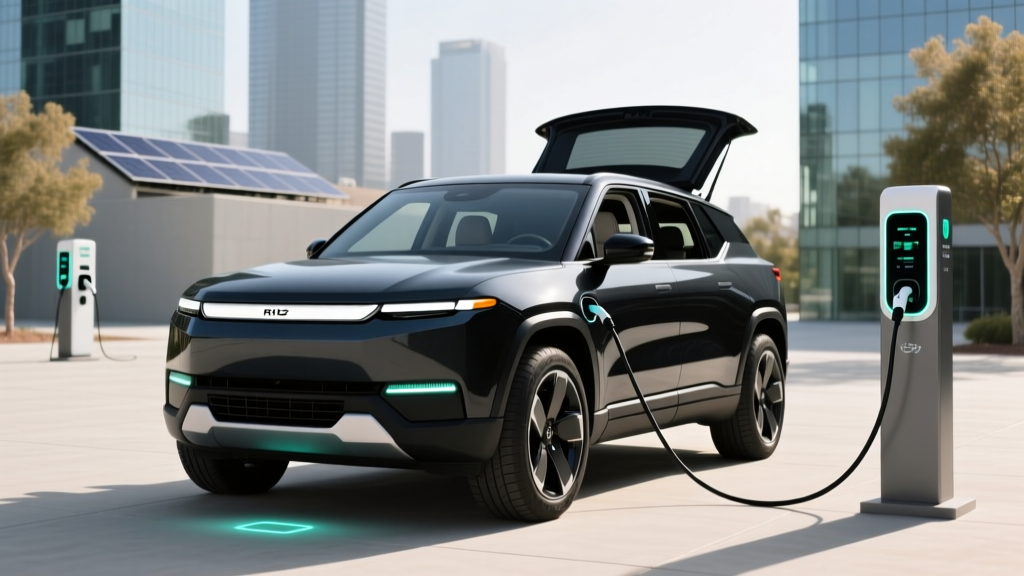
Rivian's second-generation R1S is shaping up to be one of the most capable three-row electric SUVs on the market. With the Gen 2 platform already rolling through the Normal, Illinois factory for the 2025 and 2026 model years, the 2027 Rivian R1S is expected to carry forward the major powertrain and software overhaul — with potential refinements to battery chemistry, software-defined features, and expanded trim availability. This preview synthesizes confirmed Gen 2 specifications, projected 2027 pricing, and real-world ownership data to help you decide whether to reserve now or wait.
Range Reality Check
EPA Estimated: Up to 410 miles (Dual-Motor Max Pack) / 340 miles (Dual-Motor Large Pack) / 270 miles (Standard Pack)
Real-World Expectation: Plan for ~320–350 highway miles with the Max Pack at 70–75 mph in moderate temperatures. In cold weather (below 32°F), expect a 15–25% reduction — roughly 260–290 miles for the Max Pack. City driving with regen braking returns closer to EPA or slightly above.
Gen 2 Powertrain: What Changed Under the R1S
Rivian's Gen 2 platform isn't a facelift — it's a ground-up re-engineering of the drive units, electrical architecture, and thermal management system. Where the original R1S used four independent Bosch-sourced motors (one per wheel), the Gen 2 Dual-Motor consolidates to two in-house-designed permanent-magnet motors with a single-speed reduction gear. The result: fewer moving parts, lower weight, and improved efficiency without sacrificing the torque-vectoring feel that made the original compelling.
For 2027, Rivian is expected to continue offering three battery tiers:
| Specification | Standard Pack | Large Pack | Max Pack |
|---|---|---|---|
| Battery Chemistry | LFP (Lithium Iron Phosphate) | NMC (Nickel Manganese Cobalt) | NMC (High-Silicon Anode) |
| Usable Capacity | ~92 kWh | ~109 kWh | ~141 kWh |
| EPA Range (Est.) | ~270 mi | ~340 mi | ~410 mi |
| Horsepower (Dual-Motor) | 533 hp | 533 hp | 533 hp |
| 0–60 mph | ~4.5 sec | ~4.5 sec | ~4.5 sec |
| Drivetrain | AWD (Dual-Motor) | AWD (Dual-Motor) | AWD (Dual-Motor) |
The Tri-Motor configuration (expected to return for 2027 in Adventure or a new performance-oriented trim) bumps output to approximately 850 hp with a 0–60 time near 2.9 seconds, paired exclusively with the Max Pack battery.
Charging Speed: NACS, DC Fast Charge, and Home Setup
One of the most significant Gen 2 upgrades is the native NACS (North American Charging Standard) port — the Tesla-standard connector now adopted across the industry. This means 2027 R1S owners will plug directly into Tesla Superchargers without an adapter, vastly expanding the usable fast-charging network.
| Charging Level | Power / Rate | Speed |
|---|---|---|
| Level 1 (120V household) | ~1.4 kW | ~3–4 miles per hour |
| Level 2 (240V, 48A home charger) | 11.5 kW | ~25–30 miles per hour |
| Level 2 (240V, 60A circuit) | ~14.4 kW (vehicle-limited to 11.5 kW) | ~25–30 miles per hour |
| DC Fast Charge (Max Pack) | Peak ~220 kW | 10–80% in ~30 min (est.) |
| DC Fast Charge (Large Pack) | Peak ~200 kW | 10–80% in ~28 min (est.) |
| DC Fast Charge (Standard / LFP) | Peak ~180 kW | 10–80% in ~25 min (est.) |
A critical nuance: peak kW is not sustained kW. The Max Pack hits ~220 kW only between roughly 15–40% state of charge, then tapers progressively. From 80–100%, expect speeds to drop below 50 kW. This is standard lithium-ion charge-curve behavior, not a Rivian-specific limitation. For road-trip planning, budget 30–35 minutes per DC fast-charge stop to reach 80%, then keep driving.
At home, the Rivian Wall Charger delivers up to 11.5 kW on a 60-amp circuit. A full overnight charge (10 hours) adds roughly 250–300 miles — more than enough for daily use. Installation typically costs $800–$2,000 depending on panel capacity and conduit run. If your home has a 200-amp panel with spare capacity, expect the lower end; older 100-amp panels may require a $2,000–$4,000 service upgrade.
Efficiency: MPGe and Energy Consumption
Three-row electric SUVs are heavy — the R1S Max Pack tips the scales near 7,000 lbs — and efficiency reflects that physics. Based on Gen 2 EPA filings for the 2025–2026 Dual-Motor Large Pack, expect:
- MPGe (combined): ~73–76 MPGe (Dual-Motor Large Pack)
- Energy consumption: ~44–46 kWh per 100 miles
- Max Pack efficiency: Slightly lower at ~70 MPGe / ~48 kWh/100mi due to added battery mass
For context, the Tesla Model X Long Range achieves ~101 MPGe combined, benefiting from a lighter platform and lower frontal area. The R1S trades some efficiency for ground clearance, off-road capability, and a body-on-frame architecture designed for towing. According to fueleconomy.gov, the R1S sits in the mid-pack for large electric SUVs — behind the Model X and Hyundai Ioniq 9, but ahead of the GMC Hummer EV SUV.
Pricing, Trims, and Federal Tax Credit Eligibility
Rivian has streamlined its trim structure for Gen 2. Based on current trajectory and 2026 pricing, here is the projected 2027 R1S MSRP structure:
| Trim / Configuration | Projected Base MSRP | As-Tested (Typical Options) | §30D Federal Credit |
|---|---|---|---|
| Dual-Motor Standard Pack (Adventure) | ~$75,900 | ~$78,000 | Up to $7,500 (if eligible) |
| Dual-Motor Large Pack (Adventure) | ~$81,900 | ~$85,000 | Up to $7,500 (if eligible) |
| Dual-Motor Max Pack (Adventure) | ~$89,900 | ~$93,000 | Up to $7,500 (if eligible) |
| Tri-Motor Max Pack (Performance) | ~$99,900 | ~$103,000 | Up to $7,500 (if eligible) |
Federal tax credit reality check: The IRS §30D credit offers up to $7,500, but eligibility hinges on three simultaneous requirements that change frequently. As of current rules cited by the IRS:
- MSRP cap: SUVs/vans/pickups must have an MSRP at or below $80,000. This means the Standard and Large Pack Dual-Motor trims likely qualify, but Max Pack and Tri-Motor configurations exceed the cap.
- Buyer income cap: Modified adjusted gross income must not exceed $300,000 (joint), $225,000 (head of household), or $150,000 (single).
- Battery sourcing: Critical minerals and battery components must meet escalating domestic-content thresholds. Rivian has been actively reshoring its supply chain, but exact 2027 compliance levels will depend on final assembly and mineral sourcing for that model year.
The point-of-sale transfer option allows eligible buyers to apply the credit as an immediate price reduction at delivery rather than waiting for a tax refund. Consult a tax professional for your specific situation — rules are subject to legislative change.
Interior, Cargo, and Passenger Space
The R1S remains one of the few electric SUVs with genuine three-row usability. Gen 2 interior updates include redesigned seats with improved bolstering, a new 15.6-inch center touchscreen running Rivian's latest software stack, and a revised center console with more usable storage.
- Cargo behind 3rd row: ~10.4 cu ft
- Cargo behind 2nd row (3rd row folded): ~46.7 cu ft
- Max cargo (all rows folded): ~88.2 cu ft
- Front headroom: ~41.0 in
- Second-row legroom: ~38.5 in
- Third-row legroom: ~30.4 in (best for children or short trips)
- Front trunk (frunk): ~11.0 cu ft — large enough for charging cables, a week's groceries, or a carry-on bag
The frunk is a standout practicality feature that most three-row gas SUVs simply cannot match. Combined with the flat load floor when rear rows fold, the R1S offers cargo versatility that rivals the best in its class.
Technology, Driver Assistance, and Software
Rivian's in-house developed software platform continues to be a differentiator. The Gen 2 R1S features:
- Rivian Driver+: A Level 2 driver-assistance system combining adaptive cruise control, lane-centering, and automated lane changes on mapped highways. This is not autonomous driving — the driver must remain engaged with hands on or near the wheel at all times.
- Over-the-air (OTA) updates: Rivian pushes regular software updates that add features, refine driving dynamics, and improve efficiency. Recent updates have added enhanced regenerative braking profiles, camp mode improvements, and pet monitoring.
- Infotainment: 15.6-inch center display, 12.3-inch driver cluster, wireless Apple CarPlay and Android Auto (finally added in Gen 2), premium Meridian audio system (up to 18 speakers).
- Towing tech: Integrated trailer brake controller, hitch-assist camera views, and a max towing capacity of 7,700 lbs.
Driver-Assist Level: SAE Level 2
Rivian Driver+ is an SAE Level 2 system. It can steer, accelerate, and brake under specific conditions, but the human driver is fully responsible for monitoring the road and intervening at any moment. It does not make the R1S a self-driving vehicle.
Warranty and Long-Term Ownership
Rivian provides a competitive warranty package for the Gen 2 R1S:
- Battery pack: 8 years / 175,000 miles (whichever comes first), with a capacity retention threshold of 70% — meaning Rivian will repair or replace if your battery degrades below 70% of original capacity within the warranty period.
- Drive unit(s): 8 years / 175,000 miles
- Bumper-to-bumper: 5 years / 60,000 miles
- Corrosion: 5 years / unlimited miles
The 175,000-mile battery warranty is notably generous — most competitors (including Tesla, Ford, and Hyundai) set the threshold at 100,000 miles. For high-mileage drivers or those planning long-term ownership, this is a meaningful differentiator.
Regarding battery longevity: LFP chemistry (Standard Pack) offers superior cycle life and is less prone to degradation from frequent 100% charging. NMC packs (Large and Max) benefit from staying between 20–80% for daily use, charging to 100% only for long trips. Rivian's thermal management system actively conditions the battery during DC fast charging to minimize stress.
2027 Rivian R1S vs. Key Competitors
How does the R1S stack up against other three-row electric SUVs? Here's the competitive landscape:
| Attribute | 2027 Rivian R1S (Dual-Motor Large) | Tesla Model X LR | Kia EV9 GT-Line AWD | Hyundai Ioniq 9 AWD |
|---|---|---|---|---|
| EPA Range | ~340 mi | ~348 mi | ~270 mi | ~311 mi |
| 0–60 mph | ~4.5 sec | ~3.8 sec | ~5.0 sec | ~4.9 sec |
| Max DC Charge | ~200 kW | ~250 kW | ~238 kW | ~240 kW |
| 3rd Row Usability | Good | Tight | Good | Good |
| Off-Road Capability | Excellent | Limited | Moderate | Moderate |
| Towing Capacity | 7,700 lbs | 5,000 lbs | 5,000 lbs | 5,000 lbs |
| Starting MSRP | ~$81,900 | ~$79,990 | ~$63,900 | ~$61,000 |
The R1S commands a premium but justifies it with best-in-class towing, genuine off-road geometry (up to 14.9 inches of ground clearance with air suspension), and the most generous battery warranty in the segment. The Model X charges faster and has a more established Supercharger track record. The EV9 and Ioniq 9 undercut on price significantly but sacrifice range, towing, and off-road capability.
Who Should Buy the 2027 Rivian R1S?
Choose the R1S if: You need three rows, tow a trailer or boat regularly, want off-road capability for backcountry camping or skiing, and value a long battery warranty. The Max Pack is ideal for road-trip-heavy families who want to minimize charge stops.
Look elsewhere if: Budget is the primary concern (the Kia EV9 delivers three rows for $20K less), you prioritize the fastest possible DC charging, or you rarely use the third row and a two-row SUV would suffice.
Pros
- Class-leading towing capacity (7,700 lbs)
- Excellent off-road capability with air suspension
- Native NACS charging — direct Supercharger access
- Industry-best 8-yr / 175,000-mi battery warranty
- Genuine three-row usability with large frunk
- LFP Standard Pack option for cost-conscious buyers
- Regular, meaningful OTA software updates
Cons
- High starting price — most trims exceed $80K MSRP tax-credit cap
- DC fast-charge speed trails Tesla Model X and Hyundai Ioniq 9
- Third-row legroom tight for adults on long drives
- Efficiency lags lighter competitors (Model X, Ioniq 9)
- Service center network still expanding in rural areas
- Rivian Driver+ is capable but not class-leading vs. GM Super Cruise
Frequently Asked Questions
What is the real-world range of the 2027 Rivian R1S?
The EPA estimates up to 410 miles for the Dual-Motor Max Pack. In real-world highway driving at 70–75 mph, expect roughly 320–350 miles. Cold weather (below freezing) can reduce this by 15–25%. The Large Pack delivers about 280–300 real-world highway miles, and the Standard Pack approximately 220–240.
How fast does the 2027 R1S charge at home and on the road?
At home on a Level 2 (240V, 48A) charger, the R1S adds approximately 25–30 miles per hour — a full overnight charge easily covers daily needs. On DC fast chargers, the Max Pack peaks at ~220 kW, reaching 10–80% in roughly 30 minutes. The Large Pack peaks at ~200 kW with a similar 10–80% time of ~28 minutes. Expect tapering above 80% SoC.
Does the 2027 Rivian R1S qualify for the $7,500 federal tax credit?
Possibly, but it depends on the trim and your income. The §30D credit requires the SUV's MSRP to be at or below $80,000, buyer income under the applicable cap ($150K single / $300K joint), and compliant battery sourcing. The Standard Pack and possibly the Large Pack Dual-Motor trims fall under the MSRP cap, but the Max Pack and Tri-Motor trims do not. Battery-sourcing compliance for 2027 has not been finalized. Always verify current rules at irs.gov before purchasing.
Is the 2027 R1S worth buying over the Tesla Model X or Kia EV9?
The R1S wins on towing (7,700 lbs vs. 5,000), off-road capability, battery warranty (175K miles vs. 100K), and adventure-oriented features. The Model X charges faster and has a more mature service network. The EV9 costs $20,000+ less but offers less range and no meaningful off-road or towing capability. Your priority — adventure, budget, or charging speed — determines the best choice.
What battery chemistry does the R1S use?
The Standard Pack uses LFP (lithium iron phosphate), which offers longer cycle life and tolerates daily 100% charging better. The Large and Max Packs use NMC (nickel manganese cobalt) chemistry with higher energy density. LFP is heavier but more durable long-term; NMC is lighter and delivers more range per kWh but benefits from staying between 20–80% for daily use.
Can the R1S use Tesla Superchargers?
Yes. The Gen 2 R1S comes with a native NACS charge port, meaning it plugs directly into Tesla Superchargers without an adapter. This gives R1S owners access to the largest and most reliable DC fast-charging network in North America.
How does the air suspension affect range and off-road driving?
Rivian's air suspension offers adjustable ride height from approximately 8.7 to 14.9 inches of ground clearance. At highway speeds, the system automatically lowers the vehicle to reduce drag and improve range. Off-road, raising the suspension provides excellent approach, departure, and breakover angles for trails, snow, and rocky terrain. The system also enables a "kneel" feature for easier cargo loading.
Note: The 2027 Rivian R1S is an upcoming model year. Specifications, pricing, and tax-credit eligibility in this preview are based on confirmed Gen 2 platform data from the 2025–2026 model years, manufacturer projections, and current IRS rules. Final 2027 figures may vary. Check Rivian's official site for the latest confirmed specifications as the model year approaches.