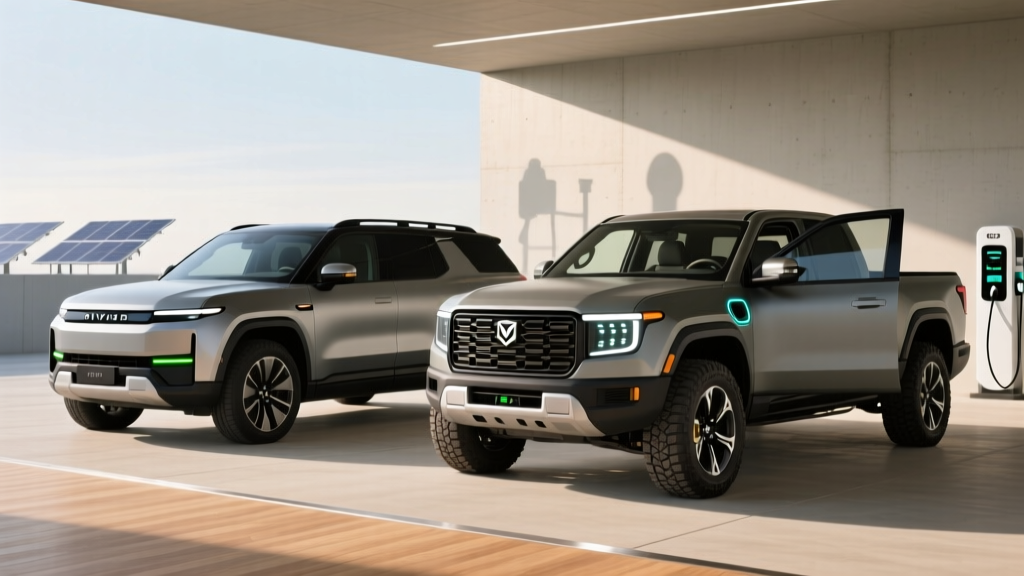
Rivian's second-generation R1S and R1T, launched for the 2025 model year on the updated Gen 2 platform, set the stage for what the 2027 Rivian lineup will bring. As of early 2026, the 2027 model year has not been officially detailed by Rivian, but the trajectory is clear: incremental refinements to the Gen 2 architecture, potential expansion of the Max battery pack, and continued software-driven improvements. This preview synthesizes confirmed Gen 2 specs, announced roadmap items, and informed projections for the 2027 model year.
Gen 2 Platform: What Carries Into 2027
The 2025 refresh was comprehensive: Rivian re-engineered roughly 70% of the vehicle, moving from a four-motor setup (on the top Quad trim) to a more efficient dual-motor and tri-motor architecture, reducing weight by over 300 pounds, and integrating a new electrical architecture with fewer ECUs and wiring harnesses. The 2027 model year is expected to build on this foundation rather than introduce another ground-up revision.
Key Gen 2 attributes likely to persist into 2027:
- Drive unit: Rivian's in-house permanent-magnet motors (replacing Bosch-supplied units)
- Battery packs: Standard, Large, and Max configurations with NMC chemistry
- Electrical architecture: 400V system (not 800V), zonal controllers reducing wiring weight
- Software stack: Over-the-air updateable, including driver-assist and thermal management
- Charging port: NACS (Tesla-style) native, following Rivian's adoption of the North American Charging Standard
Estimated Range and Efficiency
Range remains the top question for any full-size electric SUV or truck buyer. Here's what the Gen 2 platform delivers today and what we project for 2027:
| Pack | Usable Capacity | Drivetrain | EPA Est. Range (R1S) | EPA Est. Range (R1T) |
|---|---|---|---|---|
| Standard | ~92 kWh (NMC) | Dual-Motor AWD | ~270 mi | ~280 mi |
| Large | ~114 kWh (NMC) | Dual-Motor AWD | ~330 mi | ~340 mi |
| Max | ~141 kWh (NMC) | Dual-Motor AWD | ~410 mi | ~420 mi |
| Tri-Motor | ~141 kWh (NMC) | Tri-Motor AWD | ~390 mi | ~400 mi |
Source: Based on fueleconomy.gov data for 2025–2026 Gen 2 models. 2027 figures are projected and subject to change.
Efficiency for the Dual-Motor Large pack hovers around 70–73 MPGe combined (roughly 46–48 kWh/100 mi). The Tri-Motor drops to approximately 65 MPGe. These numbers reflect the physics of moving a 6,800–7,200 lb vehicle with a boxy aerodynamic profile — there's no cheating drag at highway speed.
Charging Speed: DC Fast and Home Level 2
Charging infrastructure is where Rivian owners saw a major shift in 2024–2025: access to the Tesla Supercharger network via the native NACS port. For 2027, this is standard — no adapter needed.
| Charging Level | Max Power | Speed / Time |
|---|---|---|
| Level 1 (120V) | ~1.4 kW | ~3 mi/hr |
| Level 2 (240V, 48A) | 11.5 kW | ~25 mi/hr (Standard) / ~32 mi/hr (Max) |
| DC Fast Charge | ~220 kW peak | 10–80% in ~21 min (Large); ~30 min (Max) |
The Gen 2 platform's 400V architecture caps peak DC charging around 220 kW — respectable but below the 350 kW peaks possible on 800V platforms like the Hyundai Ioniq 5 or Porsche Macan EV. The charge curve is the more important story: Rivian sustains strong power (180–200 kW) through roughly 60% state of charge before tapering. The Max pack, with its larger buffer, takes longer in absolute minutes because there are simply more kWh to push through the curve.
Preconditioning note: The Rivian navigation system will precondition the battery when a DC fast charger is set as your destination. This is essential for achieving advertised charge speeds — arriving at a Supercharger or Electrify America station with a cold battery can cut peak power in half. Always navigate to the charger rather than just pulling in.
For home charging, the onboard 11.5 kW charger means a full Standard pack (92 kWh) takes about 9 hours from empty, while the Max pack (141 kWh) needs roughly 13 hours. Most owners charging overnight on a Level 2 home station will rarely need a full 0–100% cycle; a 20–80% daily window is both faster and gentler on the NMC cells.
Performance and Drivetrain
The Gen 2 powertrain reshuffled Rivian's performance tiers. For 2027, we expect the same lineup:
| Configuration | Horsepower | Torque (lb-ft) | 0–60 mph |
|---|---|---|---|
| Dual-Motor AWD | 533 hp | 610 | ~4.5 sec |
| Performance Dual-Motor | 665 hp | 828 | ~3.4 sec |
| Tri-Motor AWD | 850 hp | 1,100+ | ~2.9 sec |
The Tri-Motor R1S is one of the quickest SUVs on the planet, full stop. But for most buyers, the Dual-Motor with the Performance upgrade (available as a software unlock on some trims) hits the sweet spot: sub-3.5-second sprints, strong highway passing power, and a meaningful range advantage over the Tri-Motor.
Towing capacity is rated at 7,700 lbs for the R1S and 11,000 lbs for the R1T. Note that towing at max capacity will slash range by 40–50% — a 410-mile Max-pack R1T towing a 10,000-lb trailer should expect roughly 200–220 miles between charges. Plan your road-trip charging accordingly.
Pricing, Trims, and Federal Tax Credit
Rivian simplified its trim structure with Gen 2. Here's the projected 2027 pricing based on current trajectory and 2025–2026 MSRP data:
| Model / Trim | Est. MSRP | §30D Credit Eligible? | Est. Net Price |
|---|---|---|---|
| R1S Dual-Motor Standard | ~$75,900 | Yes (up to $7,500) | ~$68,400 |
| R1S Dual-Motor Large | ~$82,900 | Yes (up to $7,500) | ~$75,400 |
| R1S Tri-Motor Max | ~$100,900 | No (exceeds $80K SUV cap) | ~$100,900 |
| R1T Dual-Motor Standard | ~$69,900 | Yes (up to $7,500) | ~$62,400 |
| R1T Dual-Motor Large | ~$76,900 | Yes (up to $7,500) | ~$69,400 |
| R1T Tri-Motor Max | ~$94,900 | No (exceeds $80K truck cap) | ~$94,900 |
Source: Pricing projected from Rivian MSRP data and IRS §30D rules. Actual 2027 pricing TBD.
- MSRP cap: SUVs (R1S) must be ≤ $80,000; trucks (R1T) must be ≤ $80,000. Tri-Motor/Max trims exceed this.
- Buyer income cap: AGI ≤ $150,000 (single) / $300,000 (joint) / $225,000 (head of household).
- Battery sourcing: Must meet critical mineral and battery component requirements, which tighten annually. Rivian has sourced strategically but verify VIN eligibility at fueleconomy.gov before purchase.
- Point-of-sale transfer: Eligible buyers can apply the credit at purchase, reducing the out-of-pocket price immediately.
- Final assembly: Must be in North America (Rivian assembles in Normal, Illinois — qualifies).
Interior, Cargo, and Technology
The Gen 2 interior addressed many first-generation complaints. The 2027 R1S is expected to carry forward:
- Seating: 7-passenger (R1S) with an available 6-seat captain's chair configuration; 5-passenger (R1T)
- Cargo (R1S): ~47 cu ft behind the second row, ~105 cu ft with second row folded; plus a ~11 cu ft front trunk (frunk)
- Cargo (R1T): 54-inch bed with ~11 cu ft frunk, plus the signature Gear Tunnel (available as an accessory) adding ~11 cu ft of lockable side-access storage
- Legroom: ~41 inches front, ~39 inches second row (R1S) — competitive with the BMW X5 and Mercedes GLS in this segment
The 15.6-inch center touchscreen runs Rivian's in-house infotainment (not Android Automotive), which is responsive and visually clean but lacks native Apple CarPlay/Android Auto. Rivian's position is that its own interface is more tightly integrated with vehicle systems, and for the most part, it's correct — the nav, preconditioning, and charge planning are well-unified. But for buyers who consider CarPlay non-negotiable, this is a dealbreaker worth flagging.
The driver-assist suite, branded Rivian Driver Assist and Rivian Driver Assist+, is an SAE Level 2 system. It provides adaptive cruise, lane centering, and highway assist but requires continuous driver engagement. It is not a Level 3 or Level 4 autonomous system. Expect incremental OTA improvements but no hands-free highway driving comparable to GM's Super Cruise or Ford's BlueCruise in the near term.
Warranty and Ownership Costs
Rivian's warranty coverage for Gen 2:
- Battery and drive units: 8 years / 175,000 miles (whichever comes first), with a capacity retention threshold of 70%
- Bumper-to-bumper: 5 years / 60,000 miles
- Roadside assistance: 5 years / unlimited miles
The 175,000-mile battery warranty is among the longest in the segment, exceeding the standard 8yr/100,000mi offered by most competitors. Rivian's vertical integration — building its own drive units and managing its own battery packs — gives it more control over warranty servicing, though the company's service center footprint remains smaller than legacy automakers. Many owners rely on Rivian's mobile service fleet for routine maintenance and minor repairs.
Insurance costs for the R1S/R1T tend to run 15–25% higher than comparable ICE vehicles in the same price class, reflecting the vehicle's weight, repair complexity, and parts cost. Get quotes before committing — we've seen annual premiums in the $2,800–$4,000 range depending on state and driver profile.
How It Stacks Up: Rivian vs. the Competition
Choose the 2027 Rivian R1S/R1T if:
- You need genuine off-road capability (8.9" ground clearance standard, up to 14.9" with air suspension) combined with daily-driver comfort
- You want a NACS-native vehicle with seamless Supercharger access
- You need a third row (R1S) or a truck bed (R1T) in an EV — options remain limited
- You value over-the-air updates and a vertically integrated software/hardware stack
- You tow occasionally (up to 11,000 lbs for R1T)
Consider alternatives if:
- Maximum efficiency is your priority — the Tesla Model X gets ~100 MPGe vs. Rivian's ~70
- You want 800V ultra-fast charging — Hyundai Ioniq 5 and Kia EV9 charge faster at 350 kW stations
- Apple CarPlay/Android Auto is essential — Rivian doesn't offer either
- You need hands-free highway driving now — GM Super Cruise and Ford BlueCruise are more mature
- Budget is tight — the base R1S starts near $76K even before options
Key competitors include the Tesla Model X (more efficient, faster charging, but aging interior and no third-row usability to match Rivian), Kia EV9 (lower price, 800V charging, but less off-road capability and towing), and the BMW iX (refined ride and interior, but no third row and limited cargo versatility). For trucks, the Ford F-150 Lightning is the obvious rival — cheaper, more service locations, but less range and no NACS native port on earlier models.
FAQ
What is the real-world range of the 2027 Rivian?
Based on Gen 2 testing, expect 80–85% of the EPA sticker in mixed highway driving, and 65–75% in cold weather (below freezing). A Large-pack R1S rated at 330 miles EPA will realistically deliver ~270 miles on a 70-mph highway trip in mild conditions and ~220–240 miles in winter.
How fast does the 2027 Rivian charge?
Peak DC fast charging is approximately 220 kW, achieving a 10–80% charge in about 21 minutes for the Large pack and 30 minutes for the Max pack. Home Level 2 charging at 11.5 kW adds roughly 25–32 miles per hour depending on the pack size.
Does the 2027 Rivian qualify for the federal EV tax credit?
It depends on the trim. Dual-Motor configurations with MSRP under the $80,000 cap (R1S as SUV, R1T as truck) are eligible for up to $7,500 under IRS §30D, provided the buyer meets income limits and the vehicle's battery components satisfy sourcing requirements. Tri-Motor and Max-pack trims exceeding $80,000 are not eligible. Always verify at fueleconomy.gov and consult a tax professional.
Is the Rivian R1S worth buying over the Tesla Model X?
If you prioritize interior quality, off-road capability, third-row usability, and adventure-oriented features (Gear Tunnel, camp kitchen accessory, air suspension), the R1S is the stronger choice. If efficiency, Supercharger network maturity (though Rivian now has access), and Autopilot/FSD features matter more, the Model X still has merits — though its interior and ride quality lag behind.
Does Rivian offer Apple CarPlay or Android Auto?
No. Rivian uses its proprietary infotainment system. While it's well-designed and deeply integrated with vehicle functions (route planning, preconditioning, battery management), it does not mirror your phone's interface. This is a polarizing decision — some owners appreciate the clean integration, others find it limiting.
When will the 2027 Rivian be available?
Rivian typically opens reservations for new model years in mid-to-late calendar year, with deliveries beginning in the fall. The 2027 model year is expected to go on sale in late 2026. Check rivian.com for official announcements.