The Short Answer on the 2027 Mercedes C-Class Electric
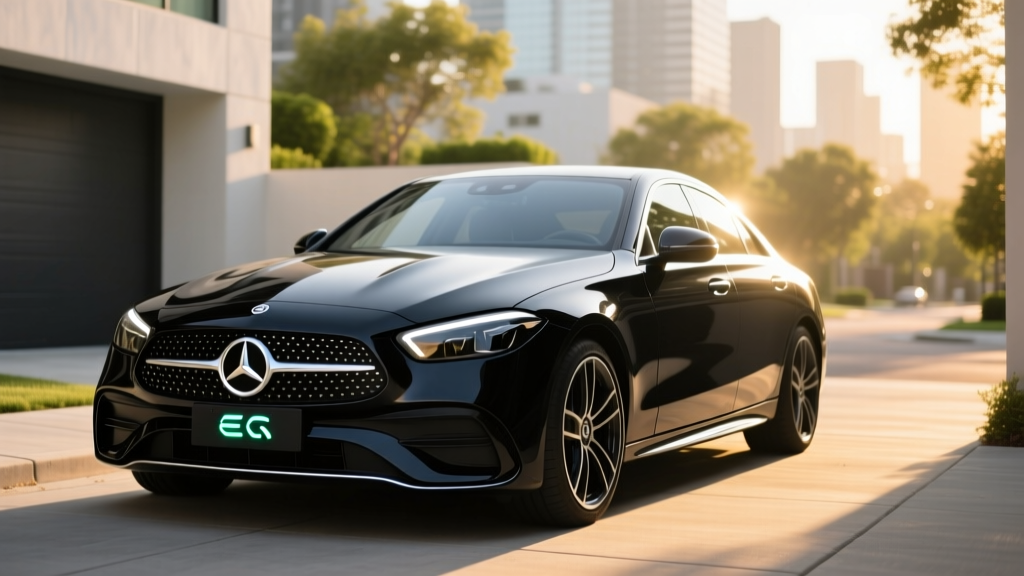
The 2027 Mercedes-Benz C-Class Electric (internally tied to the upcoming CLA-based MMA electric sedan lineup) is an announced, not-yet-on-sale compact luxury EV expected to arrive in U.S. showrooms in late 2026 as a 2027 model. Based on Mercedes' new 800-volt MMA (Mercedes-Benz Modular Architecture) platform debuted in the CLA EV, the electric C-Class is projected to deliver an EPA-estimated range north of 400 miles, peak DC fast charging at approximately 250 kW (10–80% in roughly 20 minutes), and a starting MSRP in the $50,000–$55,000 range before incentives. It will replace the role of the gas C-Class for buyers ready to go fully electric, while a next-gen gas C-Class may continue in parallel for some markets.
All specifications below are preliminary and based on Mercedes-Benz's published MMA platform data, the production CLA EV reveal, and industry analysis. Final EPA figures and U.S. pricing will be confirmed closer to launch.
What the MMA Platform Means for the Electric C-Class
Mercedes' MMA architecture is the backbone of its next-generation compact EVs. Unlike the older EVA2 platform underpinning the EQE and EQS, MMA was designed from day one for 800-volt electrical systems, silicon-carbide (SiC) inverters, and a new generation of compact, permanently excited synchronous motors. The result is a sedan that should be significantly lighter and more efficient than today's EQE — closer in spirit to the C-Class nameplate than the larger, heavier EQ sedans.
Key MMA platform attributes confirmed by Mercedes-Benz Group:
- 800V architecture enabling faster DC charging and lighter wiring harnesses
- Cell-to-pack battery design using both NMC (nickel-manganese-cobalt) and LFP (lithium iron phosphate) chemistries depending on trim
- Usable battery capacity expected around 85–89 kWh for the long-range variant
- Energy consumption targeting approximately 12 kWh/100 km (WLTP), translating to roughly 4.0–4.5 mi/kWh in real-world U.S. driving
- Two-speed rear axle (on select trims) for optimized highway efficiency
Projected Range, Efficiency, and Charging Specs
Mercedes has claimed WLTP range exceeding 750 km (~466 miles) for the CLA EV on MMA. U.S. EPA testing is more conservative, typically yielding 85–90% of WLTP figures. That puts a realistic EPA estimate for the electric C-Class in the 390–420 mile range for the long-range rear-wheel-drive variant.
Real-World Range Expectations
EPA projected: ~400 miles (long-range RWD, 85 kWh usable, NMC)
Highway (75 mph sustained): ~330–350 miles — aerodynamic drag at speed cuts efficiency by 15–20%
Cold weather (20°F, cabin heat): ~280–320 miles — LFP variants may see steeper cold loss than NMC
Mixed daily driving: ~370–390 miles — close to EPA if speeds stay under 65 mph
| Spec | RWD Long Range (est.) | AWD Performance (est.) |
|---|---|---|
| Battery (usable) | ~85 kWh, NMC | ~85 kWh, NMC |
| EPA Range | ~400 mi | ~350 mi |
| Efficiency | ~4.2 mi/kWh (238 Wh/mi) | ~3.8 mi/kWh (263 Wh/mi) |
| Peak DC Charge Rate | ~250 kW | ~250 kW |
| 10–80% DC Charge Time | ~20 min | ~20 min |
| Level 2 (AC) Rate | 11 kW (~22 mi/hr) | 11 kW (~22 mi/hr) |
| 0–60 mph | ~6.5 sec | ~4.5 sec |
| Horsepower | ~268 hp | ~402 hp |
| Drivetrain | Rear-wheel drive | Dual-motor AWD |
| Est. Base MSRP | $50,000–$55,000 | $58,000–$63,000 |
Understanding the Charging Curve
A 250 kW peak rate sounds impressive, but peak is not sustained. Expect the C-Class Electric to hold above 200 kW from roughly 10% to 40% state of charge, then taper progressively. The 10–80% time of ~20 minutes assumes a capable 350 kW DC fast charger (like Electrify America or Tesla Supercharger V4 stalls). On a 150 kW station, plan for 30–35 minutes. Battery preconditioning — automatically triggered when you navigate to a charger via MBUX — is essential for hitting these numbers in cool weather.
Electric C-Class vs. Gas C-Class: Cost & Ownership Breakdown
The current C300 sedan starts around $47,000 and delivers roughly 29 MPG combined. Here's how a five-year ownership comparison looks, assuming 12,000 miles/year, $3.50/gallon regular fuel, and $0.14/kWh home electricity (national averages):
| Category | C-Class Electric (est.) | C300 Gas Sedan |
|---|---|---|
| Purchase Price (MSRP) | $52,500 | $47,000 |
| Federal Tax Credit (§30D) | $0–$7,500* | $0 |
| Effective Purchase | $45,000–$52,500 | $47,000 |
| Fuel/Energy (5 yr / 60k mi) | $2,940 (home L2) | $7,241 |
| Maintenance (5 yr) | ~$1,800 | ~$3,500 |
| Insurance (5 yr avg) | ~$11,400 | ~$9,600 |
| Depreciation (est. 5 yr) | ~$22,000 | ~$19,500 |
| Total 5-Year Cost | $83,140–$90,640 | $86,841 |
*Federal §30D tax credit eligibility depends on MSRP caps (sedans: $55,000), buyer income limits ($150k single / $300k joint), and battery critical-mineral sourcing rules. Consult IRS.gov or a tax professional. Credit may be transferred to the dealer at point of sale as an upfront discount.
Maintenance Differences That Matter
The electric C-Class eliminates oil changes, transmission fluid, spark plugs, and exhaust system service. Brake pad life extends dramatically thanks to regenerative braking — many EV owners report original pads at 80,000+ miles. What you will still pay for: tire rotations (EVs wear tires faster due to instant torque and heavier curb weight), cabin air filters, wiper fluid, and software-related service visits. Budget roughly $350–$400/year for scheduled EV maintenance versus $700+ for the gas C300.
Federal Tax Credit & Incentive Reality Check
The §30D clean vehicle credit can reduce your effective cost by up to $7,500, but eligibility is not automatic. Here's the checklist as of current IRS rules:
- MSRP cap: Sedans must be priced at or below $55,000. If the C-Class Electric base trim starts at $52,500, it qualifies; loaded trims over $55K will not.
- Buyer income cap: Modified AGI must not exceed $150,000 (single), $225,000 (head of household), or $300,000 (joint).
- Battery sourcing: Increasing percentages of critical minerals and battery components must be sourced from the U.S. or free-trade-agreement countries. Mercedes has been diversifying supply chains, but final 2027 compliance is TBD.
- Point-of-sale transfer: You can transfer the credit to the dealer for an immediate price reduction — no need to wait until tax filing.
- Assembly: Final assembly must occur in North America. Mercedes' Tuscaloosa, Alabama plant is a likely candidate for MMA-based sedans, but confirmation is pending.
If the electric C-Class misses any of these requirements, the credit drops to $3,750 (partial compliance) or $0. State incentives (California's CVRP, Colorado's innovative motor vehicle credit, etc.) may stack on top — check your local DMV or energy office for current amounts.
Who Should Wait, and Who Should Look Elsewhere?
The 2027 C-Class Electric occupies a specific niche: luxury-compact sedan buyers who want three-pointed-star prestige, genuine long-range capability, and fast 800V charging — without stepping up to the larger, pricier EQE. But it isn't the right call for everyone.
Decision Framework
Wait for the 2027 C-Class Electric if:
- You want a compact luxury EV with 400+ miles of range and sub-20-minute fast charging
- You currently own or lease a gas C-Class and want a direct electric successor
- MBUX integration and Mercedes dealer service matter to you
- You can charge at home (Level 2) and your daily commute is under 80 miles round-trip
- The $50K–$55K base price (potentially ~$45K after incentives) fits your budget
Look elsewhere now if:
- You need a car today — the C-Class Electric won't arrive until late 2026/early 2027
- You rely exclusively on apartment or street parking with no home charging access
- You want AWD standard at the base price (AWD will likely cost $5,000+ more)
- Resale-value uncertainty on a brand-new EV nameplate makes you nervous
- You'd prefer a proven platform — consider the BMW i4, Tesla Model 3, or Hyundai Ioniq 6 now
Common Misconceptions About the Electric C-Class
| Myth | Fact |
|---|---|
| "It's just a rebadged EQE." | No. MMA is a ground-up new platform, lighter and more efficient than EVA2. The EQE uses a different, larger architecture. |
| "400 miles of range means I'll actually get 400." | EPA estimates assume mixed driving. Sustained 75+ mph highway travel, cold weather, and hilly terrain reduce range 15–30%. |
| "I'll definitely get the $7,500 tax credit." | Eligibility depends on MSRP, your income, battery sourcing, and assembly location — all of which can change yearly. |
| "250 kW charging means it charges at 250 kW the whole time." | Peak rate applies only in a narrow SoC window. Average rate across a 10–80% session is closer to 170–190 kW. |
| "LFP battery means worse in every way." | LFP offers longer cycle life, lower degradation, and no cobalt — but trades some energy density and cold-weather performance vs. NMC. |
| "Electric means no maintenance ever." | Tires, brakes (less often), coolant, cabin filters, and software updates still require service. Budget $350–$400/year. |
What First-Time EV Buyers Should Know Before Ordering
If the 2027 C-Class Electric is your first EV, plan for these ownership realities well before delivery day:
Home Charging Is Non-Negotiable for Most Owners
Over 80% of EV charging happens at home. A Level 2 (240V) home charger delivering 11 kW will add roughly 44 miles of range per hour — more than enough to replenish a full day's driving overnight. Installation costs vary widely:
- Simple install (panel nearby, no upgrade): $800–$1,500
- Moderate install (50-ft run, new 60A circuit): $1,500–$3,000
- Panel upgrade required (100A → 200A): $2,500–$5,000+
Get a quote from a licensed electrician early. If you're in a condo or apartment without dedicated parking, investigate workplace charging and public Level 2 networks (ChargePoint, EVgo) before committing.
Public Fast Charging: Plan Your Trips
Mercedes is building its own high-power charging network in North America, targeting 2,500+ stalls by 2027. Combined with Tesla Supercharger access (via NACS adapter or native port — final connector for the U.S. C-Class Electric is TBD but NACS is increasingly likely) and Electrify America's 350 kW stations, road-trip coverage is solid on major corridors. Rural routes remain a gap in some regions.
Insurance Costs Are Typically Higher
EVs cost 15–25% more to insure than comparable gas cars due to higher repair costs, specialized parts, and battery replacement risk. Expect annual premiums of $2,100–$2,500 for the electric C-Class depending on your state, driving record, and coverage level. Get quotes before ordering.
Battery Warranty, Longevity, and Degradation
Mercedes has not yet published the C-Class Electric's specific battery warranty, but based on current Mercedes-EV coverage and industry norms for MMA:
- Expected warranty: 8 years / 100,000 miles, with a capacity retention threshold of 70%
- NMC degradation: Expect ~8–12% capacity loss over 8 years with normal use (charging to 80–90% daily, avoiding frequent 100% fills and DC fast charging)
- LFP degradation: Typically slower — ~5–8% over the same period, and LFP tolerates regular 100% charging better
- Replacement cost (out of warranty): $12,000–$18,000 depending on pack size — though full-pack replacements are rare; individual module repair is increasingly common
Frequently Asked Questions
Is the 2027 Mercedes C-Class Electric officially confirmed?
Mercedes has confirmed the MMA platform and the CLA EV as its first product. A C-Class-sized electric sedan on MMA is widely reported and expected, but final U.S. naming, specs, and timing remain subject to official announcement. Treat all figures in this guide as preliminary projections.
Will it use NACS (Tesla) or CCS for charging?
Mercedes has not confirmed the U.S. connector for MMA-based vehicles. Given the industry-wide shift to NACS and Mercedes' participation in charging partnerships, NACS is the most likely standard. CCS1 is also possible. An adapter will likely bridge either scenario.
How does it compare to the BMW i4 and Tesla Model 3?
The BMW i4 eDrive40 starts around $52,200 with 307 miles of EPA range and 205 kW peak charging — the C-Class Electric targets more range and faster charging at a similar price. The Tesla Model 3 Long Range AWD (~$47,740, 363 miles EPA, 250 kW peak) undercuts on price and offers Supercharger access natively. The Mercedes differentiator will be interior luxury, MBUX, and dealer experience.
Can I tow with the electric C-Class?
Compact luxury EV sedans typically offer limited or no towing capacity. Expect a maximum of 1,500–2,000 lbs if rated at all — sufficient for a small utility trailer but not a boat or camper. Check final specs before planning around towing.
Will the gas C-Class be discontinued?
Mercedes has indicated it will continue offering combustion models alongside EVs through the end of the decade based on market demand. A next-generation gas C-Class is likely to coexist with the electric version in the U.S. through at least 2030.