Quick Answer: Is the 2027 Toyota Highlander EV Worth Waiting For?
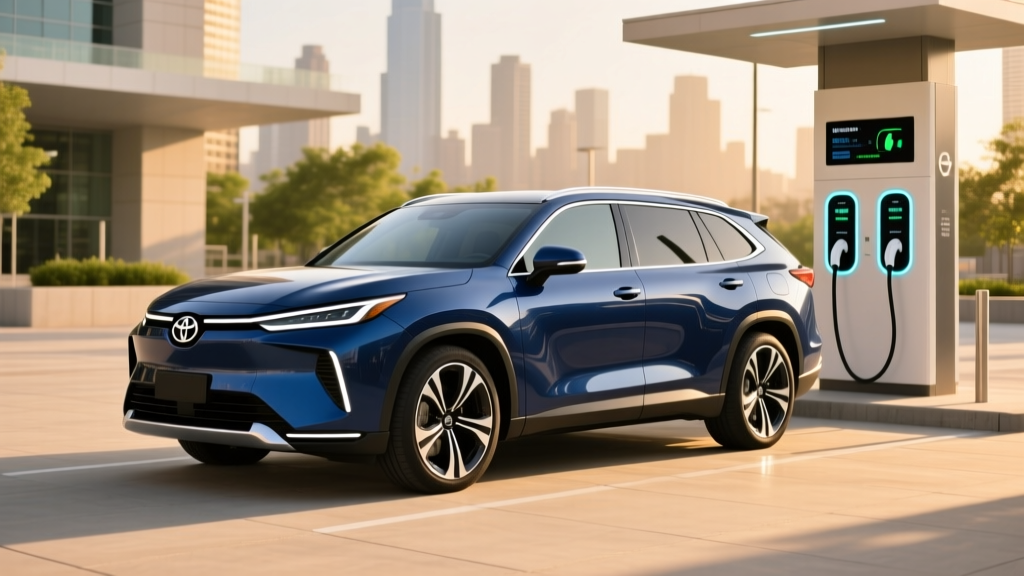
As of early 2026, the 2027 Toyota Highlander EV remains an announced/upcoming model — Toyota has confirmed a battery-electric three-row SUV is in development for the North American market, but final EPA range, pricing, and specifications have not been officially published. Based on Toyota's bZ platform trajectory and the bZ Large SUV concept, industry estimates point to 280–320 miles of EPA range, a ~85–100 kWh usable battery (NMC chemistry), DC fast charging up to ~150–175 kW, and a starting MSRP likely between $48,000–$55,000 before incentives. If you need a three-row electric SUV now, alternatives like the Kia EV9, Hyundai Ioniq 9, and Rivian R1S are already on sale. If you're a loyal Toyota buyer with a 2027 purchase timeline, the Highlander EV could be compelling — provided you can wait and verify final specs.
What We Know About the 2027 Highlander EV So Far
Toyota has historically moved cautiously on battery-electric vehicles compared to Hyundai-Kia and Tesla, but the company's 2026 product roadmap signals a meaningful shift. The Highlander EV is expected to ride on an evolution of Toyota's e-TNGA or a next-generation dedicated EV platform, sharing architecture with the bZ Large SUV concept unveiled in 2023 and refined through subsequent auto shows.
Here's what Toyota's own trajectory and supply-chain reporting suggest for preliminary specifications:
| Attribute | Estimated Figure | Confidence Level |
|---|---|---|
| EPA Range | 280–320 miles | Moderate (based on bZ platform) |
| Battery Capacity (usable) | ~85–100 kWh | Moderate |
| Battery Chemistry | NMC (nickel manganese cobalt) | High (Toyota's stated preference for large SUVs) |
| Peak DC Fast Charge Rate | ~150–175 kW | Moderate |
| 10–80% DC Charge Time | ~28–35 minutes (est.) | Low (depends on charge curve) |
| Level 2 AC Charge Rate | ~11 kW (estimated) | Moderate |
| 0–60 mph | ~5.5–7.0 seconds (AWD) | Low |
| Horsepower | ~300–400 hp (dual motor AWD) | Low |
| Seating | 7 or 8 passengers (3 rows) | High |
| Towing Capacity | ~3,500–5,000 lbs (est.) | Low |
| Estimated Base MSRP | $48,000–$55,000 | Moderate |
| Battery/Powertrain Warranty | 8 yr / 100,000 mi (expected) | High (consistent with Toyota EV warranty policy) |
Important caveat: None of these figures are confirmed by Toyota as of this writing. They are extrapolated from Toyota's existing bZ4X specs (which offers ~252 miles EPA from a 71.4 kWh pack), the larger bZ Large concept, supplier disclosures, and competitive benchmarking. Final EPA certification data will likely arrive in late 2026 or early 2027.
Real-World Range Reality Check
Even if the Highlander EV achieves a 310-mile EPA sticker, plan for ~250–270 miles in real-world highway driving at 70+ mph, and ~200–230 miles in cold weather (below 30°F) without preconditioning. Three-row SUVs carry weight penalties and larger frontal areas that hurt efficiency at speed. If your typical road trip leg exceeds 220 miles, you'll want reliable DC fast-charging infrastructure along your route.
Highlander EV vs. Gas Highlander vs. Highlander Hybrid: The Numbers
The current Toyota Highlander is available as a conventional hybrid (HEV) — not a plug-in — and it's one of the best-selling three-row family vehicles in America. Here's how the anticipated EV version compares to the existing lineup on the metrics that matter:
| Metric | Highlander EV (Est.) | Highlander Hybrid (2026) | Highlander Gas V6 (2026) |
|---|---|---|---|
| EPA Combined Efficiency | ~85–95 MPGe | 36 MPG combined | 24 MPG combined |
| Range / Tank | ~300 mi (EPA est.) | ~630 mi (17.9-gal tank) | ~430 mi (17.9-gal tank) |
| Fuel/Energy Cost per Mile | ~$0.04–$0.06 (home L2) | ~$0.10 (at $3.50/gal) | ~$0.15 (at $3.50/gal) |
| "Refuel" Time | ~30 min (10–80% DC) | ~5 min (gas station) | ~5 min (gas station) |
| Annual Maintenance (est.) | ~$300–$400 | ~$600–$800 | ~$700–$900 |
| Estimated Starting MSRP | $48,000–$55,000 | $40,000–$42,000 | $38,000–$40,000 |
| Federal Tax Credit (§30D) | Up to $7,500 (if eligible) | None | None |
| Cargo Volume (behind 3rd row) | TBD (likely ~15–18 cu ft) | 16.1 cu ft | 16.1 cu ft |
The EV's per-mile energy cost is dramatically lower if you charge at home on Level 2 (a 240V home charger). At the national average residential electricity rate of ~$0.17/kWh (per EIA data), a 95 kWh battery fill costs roughly $16 and delivers ~300 miles — about $0.05/mile. The hybrid, meanwhile, costs roughly $0.10/mile at $3.50/gallon. Over 15,000 miles per year, that's a ~$750 annual fuel savings for the EV, or ~$3,750 over five years.
However, the hybrid's range advantage is substantial: 630+ miles on a tank versus ~300 miles on a charge. For frequent road-trippers who drive through charging deserts (rural stretches of I-10, I-40, or I-70), the hybrid remains the pragmatic choice until public DC infrastructure catches up.
Charging the Highlander EV: Home, Public, and What You'll Need
Charging logistics will make or break your ownership experience with any three-row EV. Here's what to plan for based on estimated specifications:
| Level | Power (kW) | Miles Added per Hour | Full Charge Time | Use Case |
|---|---|---|---|---|
| Level 1 (120V household) | ~1.4 kW | ~4–5 mi/hr | ~70+ hours | Emergency only / overnight trickle |
| Level 2 (240V home charger) | ~11 kW | ~33–37 mi/hr | ~9–10 hours | Daily home charging (overnight) |
| DC Fast Charge | ~150–175 kW (peak) | ~150–200 mi in 15 min | 10–80% in ~28–35 min | Road trips |
Home charging is essential for a satisfying EV ownership experience. A Level 2 home charger (such as a ChargePoint Home Flex or Emporia V2) installed on a 60-amp circuit will fully replenish the Highlander EV overnight. Budget $500–$1,200 for the charger hardware and $800–$2,500 for electrician installation (higher if your panel needs a 200-amp upgrade, which can add $1,500–$3,500). Always get a licensed electrician to assess your panel capacity before purchase.
On public DC fast chargers, remember that peak kW is not sustained kW. A 175 kW peak rate typically tapers significantly above 60–70% state of charge. Expect the 10–80% session to average closer to 100–120 kW in practice, especially if the battery is cold. Toyota's historical charging curves (from the bZ4X) have been conservative — one area where Hyundai-Kia's 800V architecture (up to 350 kW peak) currently leads.
As for connector type: Toyota has committed to adopting the NACS (Tesla-style) connector for its future EVs in North America. Expect the Highlander EV to ship with NACS, granting access to Tesla Supercharger stations (via adapter or natively) in addition to Electrify America, EVgo, and other networks.
Real Costs of Ownership: 5-Year Breakdown
Purchase price is only the beginning. Here's a five-year total cost of ownership comparison assuming 15,000 miles/year, home charging at $0.17/kWh, and gas at $3.50/gallon:
| Cost Category | Highlander EV (Est. $52K) | Highlander Hybrid ($42K) |
|---|---|---|
| Purchase Price (MSRP) | $52,000 | $42,000 |
| Federal Tax Credit (§30D) | –$7,500 (if eligible) | $0 |
| Effective Purchase Price | $44,500 | $42,000 |
| Home Charger Install | $1,500 | $0 |
| Energy/Fuel (5 years) | $3,825 | $7,500 |
| Maintenance (5 years) | $1,750 | $3,500 |
| Insurance (5 years, est.) | $10,500 | $8,500 |
| Estimated Depreciation | $18,000 | $14,000 |
| Total 5-Year Cost | $80,075 | $75,500 |
| Cost per Mile (all-in) | $1.07 | $1.01 |
Key takeaways from this breakdown:
- Energy and maintenance savings favor the EV by roughly $5,400 over five years.
- Insurance costs more for EVs — typically 15–25% higher premiums due to repair costs and parts pricing. Get quotes before buying.
- Depreciation is the wildcard. Toyota's brand strength and the Highlander nameplate historically retain value well, but EV depreciation curves are still maturing. The hybrid's proven track record gives it an edge here.
- The §30D federal tax credit can narrow the gap significantly, but eligibility is not guaranteed. See the section below.
Federal Tax Credit: Will the Highlander EV Qualify?
Under current IRS §30D Clean Vehicle Credit rules, a new EV can qualify for up to $7,500 — but multiple conditions apply:
- MSRP cap: SUVs must have a base MSRP at or below $80,000. The Highlander EV should clear this easily.
- Buyer income cap: Modified AGI must not exceed $150,000 (single), $225,000 (head of household), or $300,000 (joint). Check your tax situation.
- Battery sourcing: Critical minerals and battery components must meet escalating domestic/free-trade-agreement sourcing thresholds. Toyota's supply chain for a North American–built Highlander EV will likely target compliance, but this is not guaranteed until the IRS confirms the specific model.
- Point-of-sale transfer: As of 2024, buyers can transfer the credit to the dealer for an immediate price reduction at purchase, rather than waiting to claim it on their tax return.
- Final assembly: Must occur in North America. If Toyota builds the Highlander EV at its Georgetown, KY, or Princeton, IN, plant, this requirement should be met.
Consult a tax professional and check the fueleconomy.gov tax credit database once the Highlander EV is officially listed — do not assume full eligibility based on estimates.
Common Misconceptions About the Highlander EV
| Myth | Fact |
|---|---|
| "The battery will need replacing in 5 years and cost $20,000." | Modern NMC batteries are warrantied for 8 years/100,000 miles at 70%+ capacity retention. Real-world degradation data from Tesla, Hyundai, and others shows ~10–15% loss over 150,000 miles. Replacement is rare and typically covered under warranty during the coverage period. |
| "I can charge from any regular outlet." | Level 1 (120V) adds only ~4–5 miles per hour — adequate for a PHEV with a small battery, but impractical for a ~95 kWh EV. Plan for a Level 2 (240V) home installation. |
| "EVs are always cheaper to own." | Not always. Higher purchase price, insurance premiums, and potential depreciation can offset fuel/maintenance savings — especially if you drive low annual miles or lack home charging access. |
| "The Highlander EV will tow as much as the gas version." | EV towing range drops dramatically — often 40–50% — due to the aerodynamic drag and weight of a loaded trailer. Expect ~150–180 miles of range when towing near max capacity. |
| "It's self-driving." | Toyota's Safety Sense and any advanced driver-assist features will be SAE Level 2 — meaning you must remain fully engaged, hands on or near the wheel, eyes on the road. This is not autonomous driving. |
Should You Wait or Buy Now? A Decision Framework
Wait for the 2027 Highlander EV if:
- You're a Toyota loyalist who values the brand's reliability reputation and resale value.
- You have home charging access (garage or driveway with a 240V circuit or the ability to install one).
- Your daily driving is under 80 miles round-trip, and road trips are occasional (not weekly).
- You want a mainstream-brand 3-row EV with a large dealer network for service.
- You can wait until late 2026 or 2027 to purchase.
Buy an existing EV or hybrid now if:
- You need a three-row vehicle within the next 6 months — the Kia EV9 (300 mi EPA, ~$55K) and Hyundai Ioniq 9 are available now.
- You frequently drive 300+ miles through areas with sparse DC charging (rural West, Midwest corridors). The Highlander Hybrid's 630-mile range is unbeatable here.
- You live in an apartment or lack any home charging access and public infrastructure near you is limited.
- You tow frequently — EV towing range remains a significant practical limitation.
- Your budget is firm below $45,000. The Highlander Hybrid starts ~$40K and delivers 36 MPG without any charging logistics.
What First-Time EV Buyers Should Know Before Committing
If the Highlander EV will be your first battery-electric vehicle, internalize these practical realities:
- kW vs. kWh — know the difference. kW (kilowatts) measures power — how fast energy flows, like a hose's flow rate. kWh (kilowatt-hours) measures energy — how much is stored, like the size of a gas tank. A 95 kWh battery charged at 11 kW takes ~9 hours. Don't confuse the two when comparing chargers or vehicles.
- Precondition the battery before DC fast charging. Most EVs (including Toyota's bZ models) warm the battery to optimal temperature before a fast-charge session. Navigate to a charger using the vehicle's built-in navigation to trigger preconditioning automatically — this can shave 5–10 minutes off your charge time, especially in cold weather.
- The 80% rule. DC fast charging slows dramatically above 80% state of charge (SoC) to protect the battery. Plan road-trip stops to charge from 10–80%, then drive on. Charging from 80–100% on DC can take as long as 10–80%.
- Cold weather cuts range 20–35%. Lithium-ion batteries are less efficient in freezing temperatures, and cabin heating draws significant energy. A 310-mile EPA rating might deliver only 200–240 miles at 20°F. A heat pump (expected on the Highlander EV) mitigates this but doesn't eliminate it.
- Insurance costs more. Get quotes from your provider before purchasing. EV repair costs, specialized parts, and battery replacement risk drive premiums 15–25% higher than equivalent gas vehicles.
A Note on Toyota's Driver-Assist Tech
Expect the Highlander EV to ship with Toyota Safety Sense 3.0 or newer, including adaptive cruise control, lane-centering, automatic emergency braking, and possibly a hands-on highway assist feature. All of these are SAE Level 2 driver-assistance — not self-driving. You must remain attentive and ready to take over at any moment. Only Level 4 services like Waymo operate without a human driver, and those are geofenced robotaxis, not consumer vehicles.
Frequently Asked Questions
Has Toyota officially confirmed the 2027 Highlander EV?
Toyota has confirmed that a battery-electric three-row SUV is in development for North America, widely expected to carry the Highlander nameplate or a bZ-derived name. However, final specifications, pricing, and an exact on-sale date have not been officially published as of early 2026. All figures in this article are estimates based on Toyota's platform trajectory and competitive analysis.
Will the Highlander EV have a frunk (front trunk)?
This is unconfirmed. Some EVs on dedicated platforms (like the Kia EV9 and Rivian R1S) include a frunk, while others (like the bZ4X) do not. Given the Highlander EV's family-SUV positioning, a small frunk for charging cables or groceries is plausible but not guaranteed.
How does the Highlander EV compare to the Kia EV9?
The Kia EV9 is currently the segment benchmark for mainstream 3-row EVs: up to 304 miles EPA range, 800V architecture enabling up to 236 kW peak DC charging (10–80% in ~20 minutes), and starting around $54,900. If Toyota's Highlander EV matches or undercuts the EV9 on price while delivering competitive range and faster-than-bZ4X charging, it will be a strong contender. But Kia has a significant head start in real-world validation and owner feedback.
Can I use Tesla Superchargers with the Highlander EV?
Toyota has committed to NACS connectors for future North American EVs. If the Highlander EV ships with a native NACS port, you'll have direct access to Tesla's Supercharger network — currently the most reliable and extensive DC fast-charging network in the U.S. If it ships with CCS, Toyota will likely include a NACS adapter. Confirm the connector type closer to launch.
What if I can't install a home charger?
EV ownership without home charging is significantly more inconvenient and expensive. Public DC fast charging costs $0.30–$0.50/kWh (roughly $0.09–$0.15/mile), eliminating much of the EV's fuel-cost advantage. You'll also spend 30–45 minutes per session, 2–3 times per week. If you can't install Level 2 at home, strongly consider the Highlander Hybrid instead — it requires no charging infrastructure and still delivers 36 MPG combined.
Will the Highlander EV qualify for the $7,500 federal tax credit?
It's plausible but not confirmed. Eligibility depends on final assembly location (must be North American), battery component and critical-mineral sourcing thresholds (which tighten annually), MSRP under $80,000, and buyer income limits. Check IRS §30D guidance and fueleconomy.gov once the vehicle is officially listed. Always consult a tax professional for your specific situation.