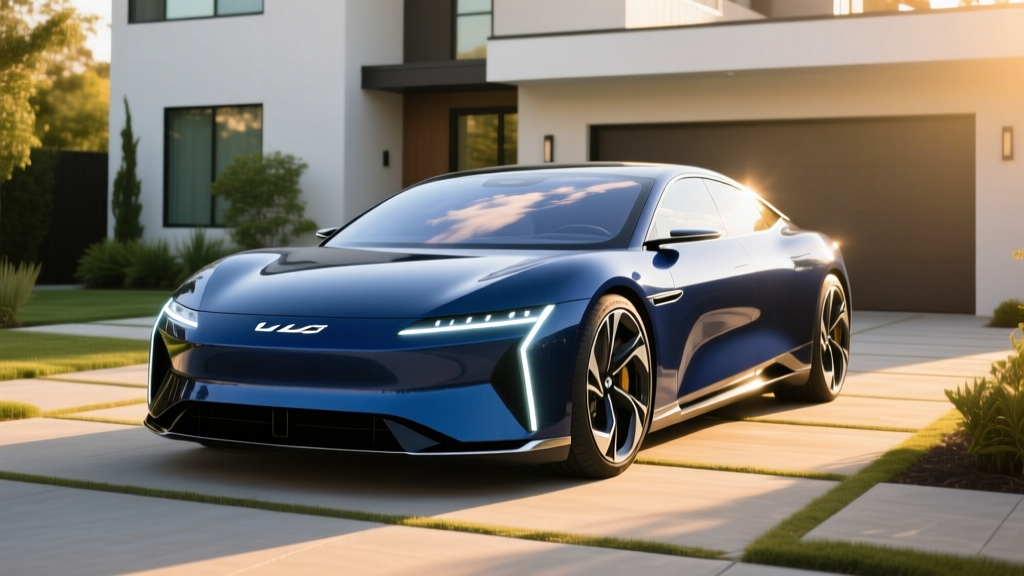
The original Chevrolet Bolt EV and EUV were discontinued after the 2023 model year, but General Motors confirmed a next-generation Bolt built on the new Ultium platform. The 2027 Chevy Bolt is expected to arrive in late 2026 as an early model-year release, bringing a completely redesigned cabin, faster DC charging, and an updated battery pack. This preview covers everything confirmed or strongly indicated about the 2027 Chevy Bolt interior, powertrain, charging, pricing, and tax-credit outlook. Because the vehicle has not yet gone on sale, specifications below are based on GM announcements and preliminary filings and are subject to change before production begins.
Quick Verdict: What We Know So Far
The next-gen Bolt is GM's play to recapture the affordable EV segment it vacated. Expect a starting MSRP near $28,000–$30,000 before destination, a usable battery in the 65–70 kWh range using Ultium NMC chemistry, and EPA range likely between 255 and 275 miles. The biggest upgrade over the old Bolt is DC fast charging: GM has signaled peak rates above 115 kW, a dramatic improvement over the outgoing model's 55 kW ceiling. The interior is being fully reworked with an 11-inch-diagonal infotainment screen, a digital instrument cluster, and higher-quality soft-touch materials aimed at shedding the previous generation's budget-plastics reputation.
| Spec | Expected / Announced |
|---|---|
| EPA Range (est.) | 255–275 mi |
| Battery Usable Capacity | ~65–70 kWh (NMC, Ultium) |
| Peak DC Fast Charge | ~115–130 kW |
| 10–80% DC Charge Time | ~28–32 min (est.) |
| Level 2 Home Charge Rate | ~11.5 kW (~37 mi/hr) |
| Motor Output | ~200 hp / 236 lb-ft (FWD) |
| 0–60 mph (est.) | ~6.5 sec |
| EPA Efficiency (est.) | ~120 MPGe / 28 kWh/100 mi |
| Cargo Volume (behind rear seats) | ~57 cu ft (est.) |
| Base MSRP (est.) | $28,000–$30,000 |
| Battery Warranty | 8 yr / 100,000 mi (≥70% capacity) |
2027 Chevy Bolt Interior: Redesigned Cabin Details
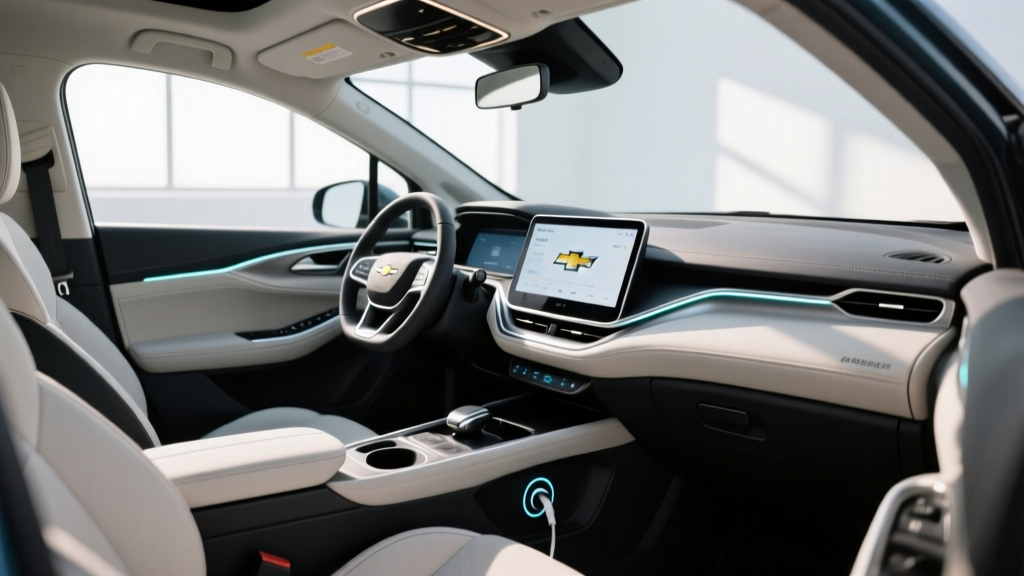
The 2027 Chevy Bolt interior represents a generational leap over the 2017–2023 cabin. GM has previewed a driver-oriented cockpit anchored by a large central touchscreen—expected to be an 11-inch diagonal unit running the latest version of Google Built-In (Android Automotive OS). This means native Google Maps navigation, Google Assistant voice commands, and access to the Play Store for apps like Spotify and Audible, all without requiring a phone connection.
A fully digital instrument cluster (likely 8 inches) replaces the old semi-digital gauge, offering configurable drive information including energy flow, range estimation, and regen-braking status. Physical climate controls are expected to remain, a welcome decision given the trend toward touchscreen-only HVAC interfaces that frustrate drivers.
Material quality is a focal point of the redesign. The outgoing Bolt relied heavily on hard plastics; the 2027 model is expected to feature soft-touch dash and door panel surfaces, available heated cloth and synthetic leather seating, and a flat-bottom steering wheel on sport-oriented trims. Ambient interior lighting and a wireless phone charging pad are anticipated on mid-to-high trims.
Passenger and Cargo Dimensions
The Bolt has always been a subcompact crossover, and the 2027 model will ride on a slightly stretched Ultium-derived platform. Expect rear legroom to remain around 36 inches—adequate for adults on shorter trips but tight for taller passengers on long hauls. Cargo volume behind the rear seats should land near 57 cubic feet with the 60/40 split rear seats folded, competitive with the Hyundai Kona Electric and slightly less than the Nissan Leaf's hatch area. A small front trunk (frunk) is unlikely given the FWD layout and packaging constraints, though GM has not confirmed this.
Range, Battery, and Real-World Efficiency
The outgoing Bolt EV carried a 65 kWh (usable) NMC battery and achieved an EPA rating of 259 miles. The 2027 Bolt is expected to use an updated Ultium NMC pack—likely in the 65–70 kWh usable range—with improved cell energy density and thermal management. GM has targeted an EPA range of approximately 255–275 miles depending on trim and wheel size. Larger 18-inch wheels and all-season tires on higher trims will likely reduce range by 5–10 miles compared to the base 17-inch aero wheel configuration.
EPA estimate: 255–275 mi (preliminary, by trim)
In real-world driving, expect approximately 230–250 miles on a mixed highway commute at 70–75 mph. In cold weather (below 32°F), range can drop 20–30%, putting realistic winter range between 175–210 miles unless you precondition the battery while plugged in. City driving with frequent regenerative braking will push range closer to or slightly above the EPA sticker. Heat pump availability (expected on the 2027 Bolt) will help mitigate cold-weather losses compared to the outgoing model's resistive heater.
Efficiency is projected at roughly 120 MPGe combined (approximately 28 kWh per 100 miles), placing the Bolt among the most efficient EVs in its price class. This efficiency advantage comes from the Bolt's relatively light curb weight (expected under 3,700 lbs) and FWD-only drivetrain, which avoids the parasitic losses of a dual-motor AWD setup.
Charging Speed: The Bolt's Biggest Upgrade
The single most criticized aspect of the outgoing Bolt was its sluggish DC fast charging—peaking at just 55 kW, which meant 10–80% charges took over an hour. GM has addressed this head-on. The 2027 Bolt is expected to support peak DC fast charging at approximately 115–130 kW, enabled by the Ultium platform's more advanced thermal management and cell chemistry.
| Charging Level | Power / Rate | Time / Miles Added |
|---|---|---|
| Level 1 (120V household) | ~1.4 kW | ~4 mi/hr |
| Level 2 (240V home, 48A) | ~11.5 kW | ~37 mi/hr; full charge in ~6.5 hr |
| DC Fast Charge (peak) | ~115–130 kW | 10–80% in ~28–32 min |
A critical nuance: peak kW is not sustained kW. The Bolt will likely hold its peak charge rate between roughly 10% and 40% state of charge, then taper progressively. Expect the 40–80% portion of the charge to proceed at an average of 60–80 kW. This is typical charge-curve behavior and means a 10–80% session will average around 85–95 kW overall—respectable for the segment but not class-leading. By comparison, the Hyundai Ioniq 5 can sustain above 180 kW for much of the curve thanks to its 800V architecture.
For home charging, the Bolt is expected to come standard with a dual-level charge cord (120V/240V capable) and support Level 2 charging at up to 11.5 kW on a 48-amp circuit. A full home charge from empty will take approximately 6–7 hours—perfect for overnight replenishment. Note: Home charger installation requires a licensed electrician; panel upgrades (to 200A service) may be needed in older homes and can add $1,500–$3,000 to installation costs.
Performance and Drivetrain
The 2027 Bolt is expected to remain front-wheel drive, powered by a single permanent-magnet electric motor producing approximately 200 horsepower and 236 lb-ft of torque. This is a meaningful bump over the outgoing Bolt's 200 hp / 266 lb-ft setup, though the torque figure may be slightly revised with the Ultium motor. The 0–60 mph time should land around 6.5 seconds—quick enough for confident highway merging and on-ramp acceleration, if not sports-car territory.
Regenerative braking will be adjustable via steering-wheel paddles (a carryover feature from the outgoing Bolt that owners loved), enabling true one-pedal driving in its strongest setting. The Bolt will also feature a selectable "Regen on Demand" mode that activates maximum deceleration when the paddle is held.
No AWD variant has been announced. For buyers in snow-belt states, the combination of FWD, a low center of gravity (battery pack mounted under the floor), and modern traction control should provide adequate winter capability with proper winter tires.
Pricing, Trims, and Federal Tax Credit Eligibility
GM has positioned the next-gen Bolt as an affordable EV, and pricing is expected to start between $28,000 and $30,000 for the base 1LT trim before destination charges (approximately $1,300). A mid-tier 2LT with premium features (heated seats, Bose audio, enhanced ADAS) should land around $32,000–$34,000, while a fully loaded Premier or RS trim could approach $36,000–$38,000.
| Trim | Est. Base MSRP | After Est. $7,500 Credit* |
|---|---|---|
| 1LT (base) | $28,000–$30,000 | $20,500–$22,500 |
| 2LT | $32,000–$34,000 | $24,500–$26,500 |
| Premier / RS | $36,000–$38,000 | $28,500–$30,500 |
*Federal §30D credit eligibility depends on buyer income, battery sourcing, and MSRP caps. See checklist below. Credit may be transferred to the dealer at point of sale under current IRS rules.
Federal Tax Credit Checklist (§30D)
- MSRP cap: The Bolt must have an MSRP at or below $55,000 (sedans/wagons/hatchbacks) — all Bolt trims should clear this easily.
- Buyer income cap: Modified adjusted gross income must not exceed $150,000 (single), $225,000 (head of household), or $300,000 (joint filers).
- Battery sourcing: A percentage of critical minerals and battery components must be sourced from the U.S. or free-trade-agreement partners. GM has been aggressively re-shoring Ultium battery supply chains, but exact 2027 compliance percentages will depend on production timing. Check the latest eligibility list at IRS.gov before purchasing.
- Point-of-sale transfer: Under current rules, you can transfer the credit to the dealer at purchase, reducing your out-of-pocket cost immediately rather than waiting for a tax refund.
Tax credit rules are subject to legislative change. Consult a tax professional and verify current-year eligibility on IRS.gov before making a purchase decision.
Tech, Safety, and Driver Assistance
The 2027 Bolt is expected to come equipped with Chevy Safety Assist 2.0, a Level 2 (SAE) driver-assistance suite that includes:
- Adaptive cruise control with stop-and-go
- Lane-keeping assist with lane-centering
- Automatic emergency braking with pedestrian detection
- Blind-spot monitoring with rear cross-traffic alert
- Following-distance indicator and traffic-sign recognition
Chevy Safety Assist is a driver-assistance system, not self-driving. The driver must remain fully attentive, keep hands on the wheel, and be prepared to take over at any moment. This is fundamentally different from Level 4 robotaxi services like Waymo, which operate without a human driver in geofenced areas.
Super Cruise—GM's hands-off, eyes-on highway driving system—may be available on higher trims or as an option. If offered, it would make the Bolt one of the most affordable vehicles with a true hands-free highway system, though it would add $2,000–$2,500 to the price. GM has not confirmed Super Cruise availability for the Bolt.
The infotainment system will support wireless Apple CarPlay and Android Auto, Wi-Fi hotspot capability, and over-the-air (OTA) software updates. A 6-speaker audio system is expected standard, with an available Bose premium system on 2LT and above.
Who the 2027 Bolt Is For — and Who Should Look Elsewhere
Choose the 2027 Chevy Bolt if:
- You want an affordable EV under $30K (before credits) for commuting and daily errands
- You have reliable home Level 2 charging and rarely road-trip more than 200 miles one-way
- You value low running costs and strong efficiency over performance
- You want a compact hatchback that's easy to park in urban environments
Look elsewhere if:
- You need AWD for severe winter conditions or towing capability
- You regularly take road trips exceeding 250 miles between DC chargers
- You need class-leading DC fast charging for frequent highway travel (consider the Ioniq 5 or Tesla Model 3)
- You need spacious rear seating for adults on long drives
How It Stacks Up Against Competitors
The Bolt's closest rivals in the affordable EV segment include the Hyundai Kona Electric, Nissan Leaf, and potentially a base Tesla Model 3 (if pricing stays near $38,000). The Kona Electric offers similar range and slightly more cargo space but charges at a comparable ~100 kW. The Leaf uses the aging CHAdeMO connector (being phased out in favor of NACS/CCS), which limits its long-term charging network viability. The Model 3 is significantly faster and has access to the Supercharger network but costs $8,000–$10,000 more before credits.
The Bolt's value proposition hinges on undercutting these rivals by $5,000–$8,000 while delivering competitive range and much-improved charging. If GM hits its pricing targets, the Bolt will be the least expensive new EV with over 250 miles of range on the U.S. market.
Warranty and Ownership Costs
GM is expected to carry over its standard EV warranty structure:
- Battery & propulsion components: 8 years / 100,000 miles (with a capacity-retention threshold of at least 70%)
- Bumper-to-bumper: 3 years / 36,000 miles
- Powertrain (motor, reduction gear): 5 years / 60,000 miles
EV maintenance costs are substantially lower than gas vehicles—no oil changes, no spark plugs, no transmission fluid. Expect to budget for tire rotation/replacement (EVs wear tires faster due to instant torque and heavier weight), cabin air filter replacement, and brake fluid checks. Regenerative braking significantly extends brake pad life; many EV owners report original brake pads lasting 80,000+ miles.
Pros and Cons
- Expected starting price under $30K — most affordable 250+ mi EV
- Dramatically improved DC charging vs. outgoing Bolt
- Redesigned interior with Google Built-In and modern materials
- Excellent efficiency (~120 MPGe) keeps charging costs low
- Compact size ideal for urban parking and commuting
- Likely eligible for full $7,500 federal tax credit
- FWD only — no AWD option for snow-belt buyers
- Rear seat space remains tight for tall adults
- DC charging still slower than 800V competitors (Ioniq 5, EV6)
- No frunk expected
- Not yet on sale — specs are preliminary and may shift
- Super Cruise availability and pricing unconfirmed
Frequently Asked Questions
What is the real-world range of the 2027 Chevy Bolt?
Based on the preliminary EPA estimate of 255–275 miles, expect approximately 230–250 miles in mixed highway driving at moderate speeds. In cold weather (below freezing), range may drop to 175–210 miles without preconditioning. City driving with regenerative braking will return range closer to or slightly above the EPA sticker.
How fast does the 2027 Bolt charge?
On a DC fast charger, the Bolt is expected to peak at 115–130 kW, achieving a 10–80% charge in approximately 28–32 minutes. At home on a Level 2 (240V, 48A) charger, it will add roughly 37 miles of range per hour, fully charging overnight in about 6.5 hours.
How much does the 2027 Bolt cost after tax credits?
If the base 1LT starts near $28,000–$30,000 and qualifies for the full $7,500 federal §30D credit (subject to income, MSRP, and battery-sourcing requirements), the effective price could be as low as $20,500–$22,500. Verify current eligibility at IRS.gov before purchasing.
Does the 2027 Chevy Bolt qualify for the federal EV tax credit?
It is expected to qualify, but eligibility depends on three factors: (1) your income must be below the §30D caps ($150K single / $300K joint), (2) the MSRP must be at or below $55,000 (all Bolt trims should meet this), and (3) the battery must meet critical-mineral and component-sourcing thresholds that tighten each year. GM has been building out domestic Ultium supply chains, but confirm the Bolt's status on the IRS eligible-vehicles list at the time of purchase.
Is the 2027 Bolt worth buying vs. competitors?
If GM delivers on its pricing and range targets, the Bolt will be the best-value EV under $30,000 on the market. It trades outright performance and charging speed for affordability and efficiency. If your budget allows $38,000+, the Tesla Model 3 and Hyundai Ioniq 5 offer faster charging, more space, and (in Tesla's case) Supercharger access. For pure commuter value, the Bolt is hard to beat.
When will the 2027 Chevy Bolt go on sale?
GM has indicated a late-2026 arrival for the next-generation Bolt as a 2027 model-year vehicle. Exact timing will depend on production ramp at the Orion Assembly plant (or a newly designated facility). Reservations or configurator access may open several months before deliveries begin.
Sources: Chevrolet.com official announcements; IRS.gov §30D clean vehicle credit guidance; fueleconomy.gov for outgoing Bolt efficiency baselines and segment comparisons. All 2027 Bolt specifications are preliminary and subject to change before production.