Quick Verdict: The 2027 Chevy Bolt EV Reinvents the Budget EV
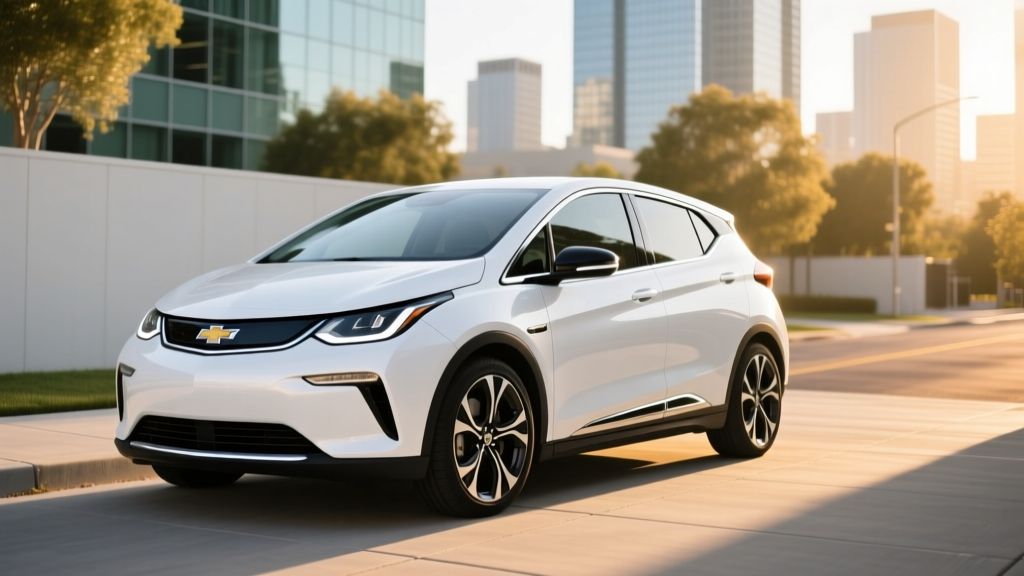
The original Chevy Bolt was discontinued after 2023, but General Motors brought it back on the Ultium platform for the 2026 model year — and the 2027 Chevy Bolt EV carries that momentum forward with meaningful refinements. Available in the ever-popular Summit White exterior finish, the 2027 Bolt EV is positioned as the most affordable long-range battery-electric vehicle in the U.S. market, starting at an estimated $27,995 before destination. With an EPA-estimated 255 miles of range, a switch to lithium iron phosphate (LFP) battery chemistry, and a dramatically improved DC fast-charging rate compared to its predecessor, the new Bolt EV addresses nearly every criticism leveled at the original.
But is it the right EV for you? This review breaks down the real-world range you can expect, how fast it actually charges, what you'll pay after federal tax credits, and how it stacks up against competitors like the Nissan Leaf, Hyundai Kona Electric, and Tesla Model 3. If you've been searching for a 2027 Chevy Bolt EV in Summit White and want data beyond the brochure, you're in the right place.
Range, Battery, and Real-World Efficiency
The 2027 Chevy Bolt EV uses a 65 kWh (usable) battery pack built on GM's Ultium architecture with lithium iron phosphate (LFP) cell chemistry. LFP trades a small amount of energy density for substantially longer cycle life, improved thermal stability, and the ability to charge to 100% regularly without accelerating degradation — a significant advantage for daily-driving commuters who want to maximize usable range every morning.
EPA Estimated: 255 miles
Real-World Highway (70 mph, moderate temps): ~220–235 miles
Real-World City/Commuter Mix: ~245–260 miles (regen-friendly driving)
Cold Weather (below 32°F): ~180–205 miles (expect 20–28% range loss)
Note: EVs lose range at sustained highway speeds and in cold temperatures due to increased aerodynamic drag and battery heating demands. The Bolt EV's LFP pack handles cold somewhat better than NMC chemistries, but preconditioning via the MyChevy app is essential for winter range preservation.
Efficiency is rated at approximately 120 MPGe combined (roughly 28 kWh per 100 miles) according to fueleconomy.gov. That's competitive within the subcompact EV segment, though slightly behind the Tesla Model 3's efficiency advantage. In practice, owners who primarily drive in city and suburban conditions — where regenerative braking recaptures energy — will frequently exceed the EPA estimate, while road-trippers should plan around 220 miles of usable range at highway speeds.
| Spec | Value |
|---|---|
| Battery Capacity (Usable) | 65 kWh |
| Chemistry | LFP (Lithium Iron Phosphate) |
| EPA Range | 255 miles |
| MPGe (Combined) | 120 MPGe |
| Energy Consumption | ~28 kWh/100 mi |
| Drivetrain | FWD (Front-Wheel Drive) |
Charging Speed: DC Fast, Level 2, and Level 1
The single biggest criticism of the original Bolt EV was its sluggish DC fast-charging rate — capped at around 55 kW, which meant 30+ minute waits for a 10–80% charge. The 2027 Bolt EV on the Ultium platform fixes this with a peak DC fast-charge rate of 130 kW, bringing a 10–80% charge in approximately 28 minutes under optimal conditions (warm battery, preconditioned).
At home on a Level 2 charger (240V), the Bolt EV accepts up to 11.5 kW, adding roughly 39 miles of range per hour of charging. A full 0–100% charge takes about 6.5 hours, meaning you'll wake up to a full battery every morning with a standard home Level 2 setup. On a standard 120V Level 1 outlet, expect about 3–4 miles of range per hour — fine for overnight top-ups if your daily commute is under 30 miles.
| Charging Level | Power (kW) | Speed | 10–80% Time |
|---|---|---|---|
| Level 1 (120V) | ~1.4 kW | ~3–4 mi/hr | N/A (overnight top-up) |
| Level 2 (240V, 48A) | 11.5 kW | ~39 mi/hr | ~5 hours |
| DC Fast Charge | 130 kW peak | ~180 mi/hr (peak) | ~28 minutes |
Charging curve reality check: Like all EVs, the Bolt EV does not sustain its peak 130 kW rate for the entire session. Expect peak rates between 10–50% State of Charge (SoC), tapering to ~80 kW from 50–70%, and further slowing above 80%. For road trips, the practical strategy is to charge from 10–80% and go — charging above 80% adds significant time for diminishing range gains. The Bolt EV uses the NACS (North American Charging Standard) connector, giving it native access to the Tesla Supercharger network — a major practical advantage for road-trippers over CCS-equipped vehicles.
Performance and Driving Dynamics
The 2027 Bolt EV is not a performance vehicle, and it doesn't pretend to be. Its single front-mounted electric motor produces an estimated 200 horsepower and 236 lb-ft of torque, delivering a 0–60 mph time of approximately 7.0 seconds. That's adequate for confident highway merging and responsive city driving, where instant electric torque makes the Bolt feel quicker than the numbers suggest.
The front-wheel-drive layout keeps weight over the driven wheels for decent traction, though FWD EVs can experience torque steer under hard acceleration from a stop. Ride quality is compliant for the subcompact segment, and the low center of gravity (thanks to the floor-mounted battery pack) keeps body roll well-controlled in corners. One-pedal driving mode with strong regenerative braking is available and works well in stop-and-go traffic, reducing brake wear substantially.
Interior, Cargo Space, and Technology
Inside, the 2027 Bolt EV features an 11-inch diagonal touchscreen running GM's latest infotainment software with wireless Apple CarPlay and Android Auto, built-in Google Maps navigation, and over-the-air update capability. A digital driver information cluster replaces traditional gauges, and the available head-up display projects speed and navigation prompts onto the windshield.
Cargo volume stands at 22.4 cubic feet behind the rear seats, expanding to approximately 54.0 cubic feet with the 60/40 rear seatback folded. Rear-seat legroom is rated at 35.1 inches — adequate for adults on shorter trips but snug for taller passengers on long drives. The absence of a front trunk (frunk) is a missed opportunity; GM opted to use that space for HVAC components.
Standard driver-assistance features under the Chevy Safety Assist suite include automatic emergency braking, forward collision alert, lane keep assist with lane departure warning, following distance indicator, and IntelliBeam automatic high beams. Available adaptive cruise control and a 360-degree camera round out the package. Important: These are SAE Level 2 driver-assistance systems — they do not make the Bolt EV self-driving. The driver must remain attentive with hands on the wheel at all times. GM's hands-free Super Cruise system is not available on the Bolt EV platform.
Pricing, Trims, and Federal Tax Credit Eligibility
The 2027 Chevy Bolt EV is offered in two trims, both available in Summit White:
| Trim | MSRP | Est. After §30D Credit | Key Additions |
|---|---|---|---|
| LT | $27,995 | ~$20,495* | Base: 11" screen, Safety Assist, LFP battery |
| 2LT | $31,495 | ~$23,995* | Heated seats/steering, adaptive cruise, 360° camera, Bose audio |
*Destination charge (~$1,195) not included. Tax credit estimates assume full eligibility — see rules below.
Federal Tax Credit (§30D) Eligibility: The 2027 Bolt EV is expected to qualify for up to $7,500 in federal tax credits under IRS §30D, but eligibility depends on several factors that vary by buyer. Per IRS guidelines, you must meet all of the following:
- Income caps: Modified adjusted gross income (MAGI) must not exceed $150,000 (single), $225,000 (head of household), or $300,000 (married filing jointly).
- MSRP cap: The vehicle's MSRP must not exceed $55,000 for sedans/hatchbacks — both Bolt EV trims clear this easily.
- Battery sourcing: A percentage of critical minerals and battery components must be sourced from the U.S. or free-trade-agreement countries. GM has indicated the Bolt EV's LFP cells are manufactured domestically, but the exact credit amount ($3,750 or $7,500) depends on the current-year sourcing thresholds. Verify at fueleconomy.gov before purchasing.
- Point-of-sale transfer: As of 2024, buyers can transfer the credit to the dealer at the point of sale, effectively reducing the purchase price upfront rather than waiting for a tax refund.
The Bolt EV's sub-$28,000 starting price combined with a potential $7,500 credit makes it one of the most affordable new EVs available — potentially dipping below $21,000 effective cost for qualifying buyers.
Battery Warranty and Long-Term Ownership
GM backs the 2027 Bolt EV's battery pack with an 8-year / 100,000-mile warranty, guaranteeing that the battery will retain at least 70% of its original capacity during that period. The LFP chemistry is a long-term durability advantage: LFP cells typically endure 3,000+ full charge cycles before significant degradation, compared to roughly 1,000–2,000 cycles for NMC chemistries. For a 255-mile-range vehicle, that translates to well over 750,000 miles of theoretical cycle life before hitting the 70% threshold — far beyond the warranty period.
The vehicle limited warranty covers 3 years / 36,000 miles bumper-to-bumper, and the powertrain warranty extends to 5 years / 60,000 miles. Chevrolet's roadside assistance program runs for 5 years / 100,000 miles.
Pros and Cons
- Lowest starting price among 250+ mile EVs
- LFP battery: long cycle life, 100% daily charging OK
- NACS connector = native Supercharger access
- 130 kW DC fast charging (massive upgrade over original Bolt)
- Qualifies for up to $7,500 federal tax credit
- Strong standard safety suite (Chevy Safety Assist)
- Summit White is a no-cost color option
- FWD only — no AWD option for snow-belt buyers
- No frunk (front trunk) for additional storage
- Rear seat legroom is tight for tall adults
- 255-mile range limits road-trip comfort vs. 300+ mi rivals
- Super Cruise (hands-free driving) not available
- 130 kW peak charge rate trails 200+ kW competitors
Who Should Buy the 2027 Chevy Bolt EV?
- You're a daily commuter driving under 80 miles round-trip and want the most affordable new EV with comfortable range margin.
- You have home Level 2 charging and rarely need public fast charging.
- You want a proven, practical EV with low total cost of ownership and strong federal tax credit eligibility.
- You value LFP battery longevity and plan to keep the car 8+ years.
- You regularly road-trip 400+ miles and need 300+ mile range with ultra-fast 200+ kW charging (consider Hyundai Ioniq 5 or Tesla Model 3).
- You need AWD for harsh winters (consider the Subaru Solterra or Toyota bZ4X).
- You frequently carry rear-seat passengers who need generous legroom.
Frequently Asked Questions
What is the real-world range of the 2027 Chevy Bolt EV?
The EPA estimates 255 miles, but real-world results vary. Expect roughly 220–235 miles at sustained highway speeds (70 mph), 245–260 miles in city and suburban driving where regenerative braking helps, and 180–205 miles in freezing temperatures. Preconditioning the battery via the MyChevy app before departure helps mitigate cold-weather losses.
How fast does the 2027 Bolt EV charge at home and on the road?
At home on a 240V Level 2 charger, the Bolt EV charges at up to 11.5 kW, adding about 39 miles of range per hour — a full charge takes roughly 6.5 hours. On a DC fast charger, it peaks at 130 kW and charges from 10–80% in approximately 28 minutes. The NACS connector provides native access to Tesla Superchargers without an adapter.
How much does the 2027 Chevy Bolt EV cost after tax credits?
The LT trim starts at $27,995 MSRP. If you qualify for the full $7,500 federal §30D credit (income, MSRP, and battery-sourcing requirements met), your effective cost drops to approximately $20,495 before destination and dealer fees. The 2LT trim at $31,495 drops to roughly $23,995. Consult a tax professional and verify eligibility at irs.gov before purchasing.
Does the 2027 Bolt EV qualify for the federal EV tax credit?
GM has indicated the Bolt EV is designed to qualify, but the exact amount ($3,750 or $7,500) depends on battery-sourcing and critical-mineral thresholds set by the IRS for the current tax year. The Bolt EV easily meets the $55,000 MSRP cap. Buyer income caps apply: $150K single / $300K married filing jointly. Check the latest eligibility list at fueleconomy.gov.
Is the 2027 Bolt EV worth buying over the Tesla Model 3 or Hyundai Kona Electric?
If budget is your primary concern, the Bolt EV is the clear winner — it undercuts the Model 3 by roughly $10,000+ and the Kona Electric by $5,000+, while offering competitive range and superior battery longevity (LFP). However, the Model 3 offers more range (~340 mi), faster charging (~250 kW), AWD availability, and access to the full Supercharger network. The Kona Electric offers slightly more cargo space. For pure value in a commuter EV, the Bolt EV is hard to beat.
What are the biggest drawbacks of the 2027 Chevy Bolt EV?
The main trade-offs are front-wheel-drive only (no AWD option), relatively tight rear-seat legroom (35.1 inches), no front trunk, and a 130 kW peak charge rate that trails the fastest-charging competitors. Road-trippers who frequently drive 300+ miles in a day will find the 255-mile range and ~28-minute charge stops less convenient than longer-range alternatives.