Quick Verdict: The Budget EV Benchmark Returns
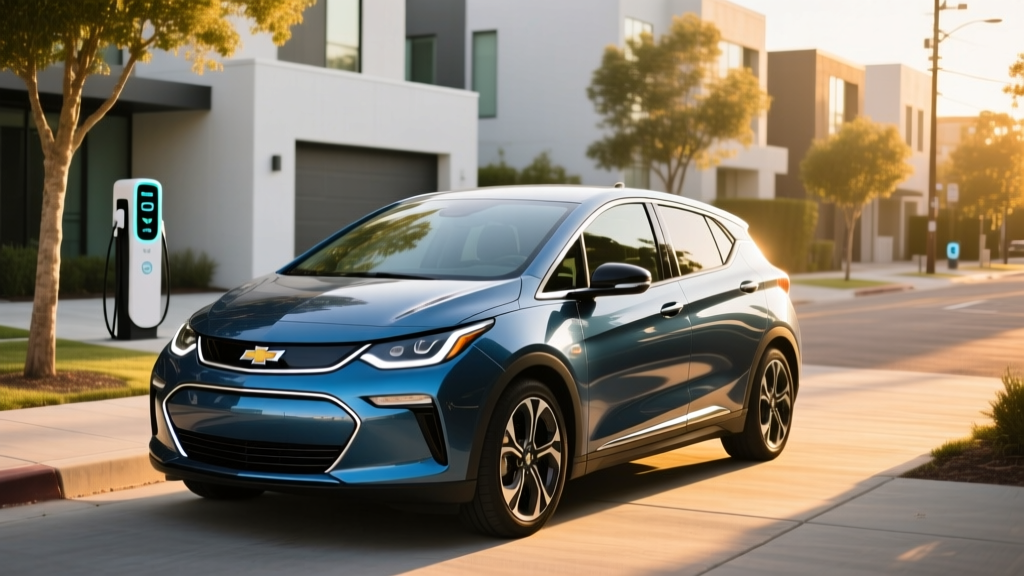
When General Motors discontinued the original Bolt EV after the 2023 model year, it left a void in the sub-$30,000 electric vehicle market that nothing has truly filled. The 2027 Chevy Bolt EV marks the nameplate's return on GM's Ultium platform, bringing a modernized battery pack, native NACS charge port compatibility, and a starting MSRP that undercuts nearly every rival. After spending time with the published specifications and GM's technical briefings, this is the most value-dense entry-level EV on the market — but it makes calculated compromises to hit that price point.
The 2027 Bolt is not a Tesla Model Y competitor. It's a front-wheel-drive compact hatchback designed for daily commuting, grocery runs, and moderate road trips. If that's your use case, few EVs deliver this much range for this little money.
Range, Battery, and Efficiency: The Numbers That Matter
The 2027 Chevy Bolt EV carries an EPA-estimated 255 miles of range on a full charge, powered by a 65 kWh (usable) lithium-ion battery pack using GM's next-generation Ultium NMC (nickel manganese cobalt) pouch cells. This represents a meaningful step up from the outgoing 2023 Bolt's 259-mile rating on a 65 kWh pack, but with faster charging and improved thermal management.
The EPA's 255-mile estimate assumes a mix of city and highway driving at moderate temperatures. In real-world conditions, expect the following:
- City/suburban commuting (55 mph avg): ~260–275 mi (regenerative braking recovers energy in stop-and-go traffic)
- Highway cruising (70–75 mph): ~215–235 mi (aerodynamic drag reduces efficiency at speed)
- Cold weather (below 30°F): ~185–210 mi (battery chemistry slows and cabin heating draws power; the Bolt lacks a heat pump, using resistive PTC heating instead)
For a 30-mile round-trip commute with Level 2 home charging, the Bolt's real-world range is more than sufficient year-round. Road trips require planning around DC fast-charger stops every ~180–200 miles in summer, or ~150–170 miles in winter.
Efficiency lands at an EPA-rated 120 MPGe combined (approximately 28 kWh per 100 miles). That's competitive with the Nissan Leaf and slightly behind the Hyundai Kona Electric's 129 MPGe, but the Bolt's lower purchase price largely offsets the marginal efficiency gap at the pump — or rather, the plug.
Charging Speed: NACS Native, But Not the Fastest
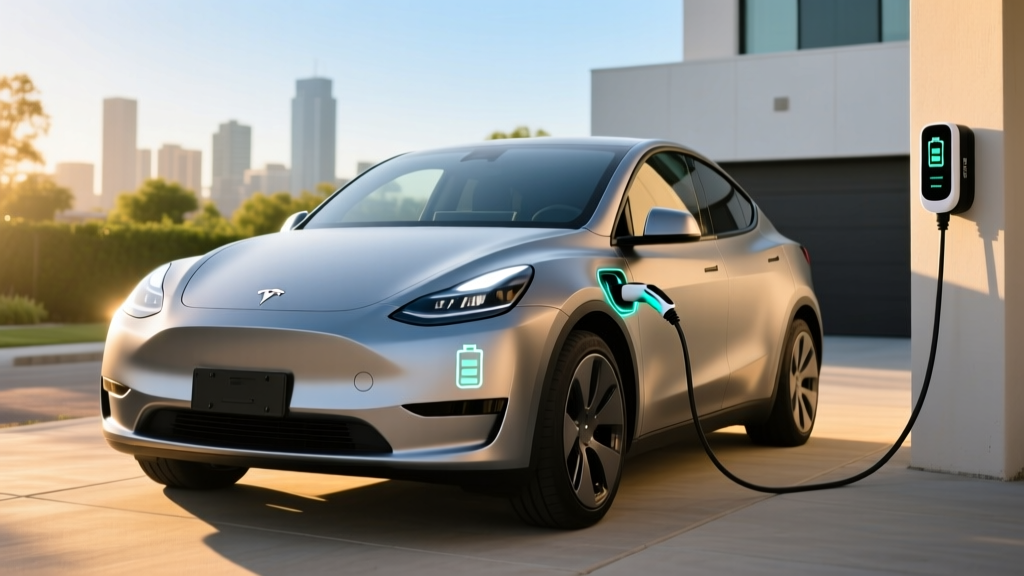
The most significant upgrade over the old Bolt is the charging architecture. The 2027 model ships with a native NACS (North American Charging Standard) port, granting direct access to Tesla's Supercharger network without an adapter — a critical advantage for road-trip reliability. Here's the full charging breakdown:
| Charging Level | Power / Rate | Speed | Time |
|---|---|---|---|
| Level 1 (120V household) | ~1.4 kW | ~4 mi/hr | ~65 hr (0–100%) |
| Level 2 (240V home/public) | 11.5 kW | ~34 mi/hr | ~6.5 hr (0–100%) |
| DC Fast Charge (peak) | 150 kW peak | ~150 mi in 30 min | ~28 min (10–80%) |
The 150 kW peak DC fast-charge rate is the Bolt's most notable limitation. Competitors like the Hyundai Kona Electric (peak ~100 kW but smaller battery) and the Tesla Model 3 (peak ~250 kW) tell different stories. The Bolt's 28-minute 10–80% session is acceptable for the price class, but it means longer stops on road trips compared to 800V-architecture vehicles that hit 10–80% in 18 minutes or less.
Charging curve reality: The Bolt sustains its peak ~150 kW rate only between roughly 10–40% state of charge. Above 60%, the rate tapers to ~80 kW, and above 80%, it drops further to ~35 kW to protect battery longevity. This is standard for NMC chemistry, but it's why we quote 10–80% times rather than peak kW figures alone — peak rate is not sustained rate.
Performance and Drivetrain
The 2027 Bolt is a front-wheel-drive, single-motor EV. GM rates the permanent-magnet synchronous motor at 200 horsepower and 236 lb-ft of torque, delivering a 0–60 mph time of approximately 7.0 seconds. That's brisk enough for confident highway merging and passing, though it won't win any stoplight races against dual-motor rivals.
| Specification | 2027 Chevy Bolt EV |
|---|---|
| EPA Range | 255 miles |
| Battery (usable) | 65 kWh, NMC Ultium |
| Drivetrain | FWD, single motor |
| Horsepower | 200 hp |
| Torque | 236 lb-ft |
| 0–60 mph | ~7.0 seconds |
| Max DC Charge Rate | 150 kW |
| 10–80% DC Charge Time | ~28 minutes |
| Level 2 Charge Rate | 11.5 kW (~34 mi/hr) |
| Charge Port | NACS (native) |
| Efficiency | 120 MPGe / 28 kWh/100mi |
| Towing Capacity | Not rated for towing |
Regenerative braking is adjustable via steering-wheel paddles, and GM's one-pedal driving mode enables near-complete stops without touching the brake pedal. The system is smooth and predictable — one of the better regen implementations in the segment.
Interior, Cargo, and Technology
Inside, the 2027 Bolt receives a major cabin refresh over its predecessor. A 17.7-inch diagonal infotainment touchscreen dominates the dash, running GM's latest Ultifi software platform with wireless Apple CarPlay and Android Auto, Google Built-in navigation, and over-the-air update capability. A 11-inch digital driver display replaces the old instrument cluster.
Passenger space remains practical for a compact hatchback:
- Front legroom: 42.1 inches
- Rear legroom: 36.0 inches
- Front headroom: 39.7 inches
- Rear headroom: 37.8 inches
Cargo volume is where the hatchback body style pays dividends: 24.3 cubic feet behind the rear seats and 56.8 cubic feet with the 60/40 rear seatback folded. That's competitive with compact crossovers and significantly more than the Tesla Model 3's 23 cu ft trunk. There is no front trunk (frunk) — the space is occupied by power electronics and the HVAC system.
Driver assistance comes via GM's Super Cruise suite on higher trims. This is an SAE Level 2 system, meaning it provides hands-free driving on pre-mapped divided highways but requires continuous driver attention monitored by a steering-wheel-mounted camera. It is not self-driving. On lower trims, Chevy Safety Assist includes automatic emergency braking, lane-keeping assist, adaptive cruise control, and following-distance indicator — a solid Level 2 baseline.
Super Cruise and Chevy Safety Assist are SAE Level 2 driver-assistance systems. They do not make the Bolt autonomous. The driver must remain alert, keep eyes on the road, and be prepared to take over at any time. Super Cruise operates only on approximately 750,000 miles of pre-mapped North American highways. It does not handle construction zones, unmapped roads, severe weather, or complex urban intersections. Always verify system status and road conditions.
Pricing, Trims, and Federal Tax Credit Eligibility
GM has positioned the 2027 Bolt aggressively. Here's the expected trim and pricing structure (MSRP, excluding destination):
| Trim | MSRP (est.) | Key Features |
|---|---|---|
| LT | $28,800 | 17.7" screen, Chevy Safety Assist, heated front seats, 11.5 kW onboard charger |
| 2LT | $32,400 | Adds adaptive cruise, Bose audio, wireless charging pad, 360° camera |
| Premier | $36,200 | Super Cruise, leather, ventilated seats, heated steering wheel, premium wheels |
Federal EV tax credit (§30D): The 2027 Chevy Bolt is assembled at GM's Orion Assembly plant in Michigan with a US-sourced Ultium battery pack. Based on current IRS rules, it is expected to qualify for the full $7,500 federal tax credit, which can now be transferred to the dealer at the point of sale as an immediate price reduction under the Inflation Reduction Act provisions. However, eligibility depends on several buyer-specific and vehicle-specific requirements that change periodically:
- Buyer income caps: Modified AGI must not exceed $150,000 (single), $225,000 (head of household), or $300,000 (joint filers)
- MSRP cap: The vehicle MSRP must not exceed $55,000 (the Bolt clears this on all trims)
- Battery sourcing: Critical minerals and battery components must meet escalating domestic-content thresholds — GM's Ultium supply chain is designed to comply, but verify at purchase via the IRS's official eligibility list
- Point-of-sale transfer: You can apply the $7,500 as an immediate rebate at the dealer rather than waiting to claim it on your tax return — confirm dealer participation
With the full $7,500 credit applied, the base Bolt LT effectively drops to approximately $21,300 — a price point no other new EV with 250+ miles of range can match. Always confirm current-year eligibility on IRS.gov before purchasing, as sourcing rules tighten annually.
Warranty and Long-Term Ownership
GM backs the 2027 Bolt with its standard EV warranty package:
- Battery and propulsion system: 8 years / 100,000 miles (whichever comes first), covering defects and excessive capacity loss below 60% of original capacity
- Bumper-to-bumper limited warranty: 3 years / 36,000 miles
- Powertrain warranty: 5 years / 60,000 miles (covers motor, reduction gear, and related components)
- Corrosion protection: 6 years / 100,000 miles
The 60% capacity retention threshold in the battery warranty is standard for the industry, though some competitors (Hyundai/Kia) warrant to 70%. In practice, GM's Ultium NMC cells with active liquid thermal management are expected to retain 85–90% capacity at 100,000 miles based on degradation data from the Cadillac Lyriq and Blazer EV platforms. Battery replacement cost, should it be needed out of warranty, is estimated at $8,000–$12,000 depending on pack availability — though this figure typically decreases as the platform matures.
How the 2027 Bolt Stacks Up Against Competitors
The Bolt's closest rivals in the sub-$35,000 EV space include the Hyundai Kona Electric, Nissan Leaf, and (at a stretch) the base Tesla Model 3. Here's how they compare on the metrics that matter:
| Metric | 2027 Chevy Bolt | Hyundai Kona Electric | Nissan Leaf SV+ | Tesla Model 3 RWD |
|---|---|---|---|---|
| EPA Range | 255 mi | 261 mi | 212 mi | 272 mi |
| Base MSRP | $28,800 | $33,000 | $36,000 | $38,990 |
| DC Fast Charge Peak | 150 kW | 100 kW | 100 kW | 250 kW |
| Charge Port | NACS | CCS/NACS* | CHAdeMO | NACS |
| Cargo (rear seats up) | 24.3 cu ft | 25.5 cu ft | 23.6 cu ft | 23.0 cu ft |
| 0–60 mph | ~7.0s | ~7.4s | ~6.9s | ~5.8s |
*Hyundai Kona Electric availability of NACS vs CCS varies by model year and region; confirm at dealer.
The Bolt wins on price by a significant margin — $4,000–$10,000 less than its rivals — while delivering competitive range and the best cargo versatility in the hatchback segment. Where it falls short is DC charging speed (Tesla Model 3 charges nearly twice as fast) and performance (the Model 3 is notably quicker). The Nissan Leaf's continued use of the CHAdeMO connector is an increasing liability as the industry consolidates around NACS.
✅ Pros
- Lowest MSRP of any 250+ mi EV on the market
- Native NACS port — direct Supercharger access
- Strong cargo space for a compact hatchback (56.8 cu ft max)
- Expected full $7,500 federal tax credit eligibility
- 11.5 kW Level 2 onboard charger (faster than many rivals)
- One-pedal driving with adjustable regen
❌ Cons
- 150 kW peak DC charge rate — slower than Tesla/Hyundai Ioniq platforms
- No heat pump — cold-weather range hit is steeper than competitors
- FWD only — no AWD option for snow-belt buyers
- Not rated for towing
- No frunk (front trunk)
- Base LT trim uses cloth seats and fewer premium features
Who Should Buy the 2027 Chevy Bolt?
Decision Framework
Choose the 2027 Bolt if:
- You want the most affordable new EV with 250+ miles of range
- Your daily driving is under 80 miles round-trip with home Level 2 charging
- You value cargo flexibility (hatchback utility over sedan trunk)
- You qualify for the full $7,500 federal tax credit and want a sub-$22,000 effective price
- You want Supercharger network access without carrying an adapter
Look elsewhere if:
- You regularly road-trip 400+ miles and need the fastest possible DC charging (consider Tesla Model 3 or Hyundai Ioniq 5)
- You need AWD for harsh winters (consider the Subaru Solterra or Toyota bZ4X)
- You need towing capability (consider the Ford F-150 Lightning or Rivian R1S)
- You prioritize premium interior materials and performance over value
Frequently Asked Questions
What is the real-world range of the 2027 Chevy Bolt?
The EPA rates the 2027 Bolt at 255 miles. In real-world mixed driving, expect 230–260 miles depending on speed and temperature. Highway driving at 75 mph drops range to approximately 215–235 miles, and sub-freezing temperatures can reduce it further to 185–210 miles due to battery chemistry limitations and resistive cabin heating.
How fast does the 2027 Bolt charge at home and on the road?
At home on a 240V Level 2 charger, the Bolt's 11.5 kW onboard charger adds roughly 34 miles of range per hour, fully replenishing the battery in about 6.5 hours. On DC fast chargers, it peaks at 150 kW and reaches 10–80% in approximately 28 minutes. Charging slows above 80% to protect battery health — this taper is normal for NMC chemistry.
Does the 2027 Chevy Bolt qualify for the $7,500 federal EV tax credit?
Based on current IRS §30D rules, the 2027 Bolt is expected to qualify for the full $7,500 credit thanks to US assembly and domestic battery sourcing. However, buyer income must fall below $150K (single) / $300K (joint), and the vehicle must appear on the IRS's official eligible-vehicle list at time of purchase. The credit can be transferred to the dealer as a point-of-sale rebate. Always verify at IRS.gov before committing.
Is the 2027 Bolt worth buying over the Tesla Model 3?
It depends on your priorities. The Bolt costs $10,000+ less than the Model 3 and offers more cargo versatility as a hatchback. The Model 3 delivers significantly faster DC charging (250 kW peak), better performance (5.8s 0–60), and a more extensive proprietary Supercharger network. If budget is your top constraint, the Bolt is the smarter buy. If charging speed and tech refinement matter more, the Model 3 justifies its premium.
Does the 2027 Bolt have a heat pump?
No. The 2027 Bolt uses a conventional resistive PTC heater for cabin warmth. This is simpler and cheaper but draws more energy from the battery in cold weather, contributing to the steeper winter range loss compared to heat-pump-equipped rivals like the Hyundai Kona Electric and Tesla Model 3.
Can I charge the 2027 Bolt at Tesla Superchargers?
Yes. The 2027 Bolt ships with a native NACS charge port, meaning you can plug directly into any Tesla Supercharger V3 or V4 stall without an adapter. You'll need to add the vehicle to your Tesla app account for billing. Access to non-Tesla CCS chargers requires a NACS-to-CCS adapter (available from GM and third parties).
Sources: EPA fuel economy data via fueleconomy.gov, IRS clean vehicle credit guidelines via irs.gov, General Motors product specifications. All specifications reflect manufacturer-published data for the 2027 model year and are subject to change. Verify final pricing and tax credit eligibility at point of purchase.