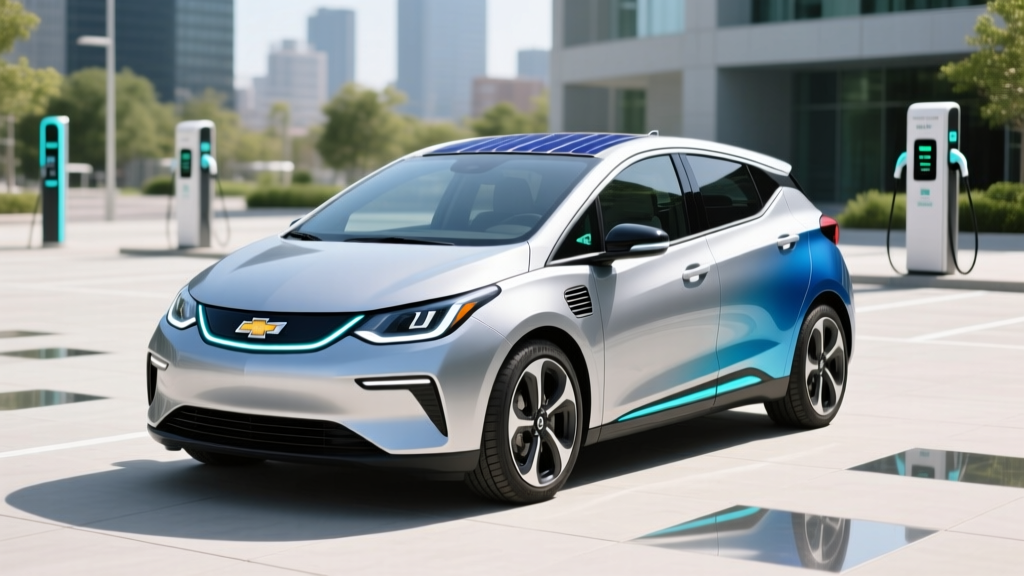
General Motors confirmed the next-generation Chevrolet Bolt EV will return on the Ultium platform, and the 2027 Chevy Bolt EV design represents a ground-up rethink of one of the most popular affordable electric cars in America. The outgoing Bolt EV and EUV were discontinued after the 2023 model year, but GM CEO Mary Barra announced the next-gen Bolt during the company's Q3 2023 earnings call, confirming it will ride on the Ultium battery architecture with significant upgrades to charging speed, range, and interior technology.
As of early 2026, the 2027 Bolt EV has not yet gone on sale, and final EPA certification numbers remain unpublished. However, GM has shared enough about the Ultium platform's capabilities — combined with the Bolt's segment positioning — to build a detailed preliminary profile. Here is everything we know, what we can reasonably project based on Ultium siblings, and where the new Bolt fits in an increasingly crowded affordable EV market.
2027 Chevy Bolt EV Design: Exterior and Platform Changes
The next-generation Bolt EV will be the first Bolt built on GM's Ultium platform, replacing the aging BEV2 architecture that underpinned the 2017–2023 models. This shift is the single most consequential change in the Bolt's history, because Ultium enables:
- Larger, more energy-dense battery packs using modular pouch cells with nickel-cobalt-manganese-aluminum (NCMA) chemistry
- Native DC fast charging at significantly higher rates than the outgoing Bolt's 55 kW ceiling
- Updated electrical architecture supporting OTA updates, advanced ADAS, and the latest infotainment
- Structural battery integration for improved rigidity and interior packaging
The 2027 Chevy Bolt EV design is expected to retain the tall-hatchback silhouette that made the original so practical, though with a slightly longer wheelbase enabled by the Ultium skateboard. Spy shots and GM design language from the Equinox EV and Blazer EV suggest a more aerodynamic front fascia with a sealed grille panel, slimmer LED lighting signatures, and flush door handles to reduce drag coefficient. The EUV (Electric Utility Vehicle) variant may return with a slightly stretched rear cabin for improved legroom.
Expect overall length to grow modestly — perhaps 2–3 inches over the outgoing 163.2-inch Bolt EV — while maintaining the compact footprint that makes it ideal for urban parking. Curb weight should remain in the 3,500–3,700 lb range, keeping it among the lightest EVs in its class.
Preliminary Specs: Range, Battery, and Efficiency
| Specification | Estimated / Projected | Notes |
|---|---|---|
| Battery Chemistry | NCMA (Ultium) | Nickel-cobalt-manganese-aluminum pouch cells |
| Battery Capacity (usable) | ~65–70 kWh | Based on Ultium modular scaling |
| EPA Range (est.) | 260–290 miles | Final EPA certification pending |
| Efficiency (est.) | 115–120 MPGe / 28–30 kWh/100 mi | Projected from Equinox EV efficiency data |
| Motor | Single front-mounted permanent magnet | FWD expected; AWD unlikely at base price |
| Horsepower | ~200 hp | Up from 200 hp in outgoing model |
| 0–60 mph (est.) | ~6.5 seconds | Improved torque delivery via Ultium inverter |
| Drivetrain | FWD | Single-motor front-wheel drive |
The outgoing Bolt EV's 65 kWh LG Chem battery and 259-mile EPA rating were class-leading for the price when it launched, but competitors have moved the goalposts. The Hyundai Kona Electric now offers 261 miles, and the upcoming Ultium-based Bolt should target the 260–290 mile range to remain competitive while accounting for the slightly larger vehicle footprint.
While the outgoing Bolt's 259-mile EPA figure proved reasonably accurate in mixed driving, expect the 2027 model to follow similar patterns. For a projected 270-mile EPA estimate:
- City/commute driving (mild weather): 270–290 miles — regenerative braking recovers significant energy in stop-and-go traffic
- Highway driving (70+ mph, mild weather): ~230–245 miles — aerodynamic drag reduces efficiency by 10–15%
- Cold weather (below 32°F): ~190–220 miles — battery chemistry and cabin heating reduce range by 20–30%
- Worst-case (highway + cold + headwind): ~175–195 miles
A heat pump — standard on most Ultium vehicles — should mitigate some cold-weather loss compared to the outgoing Bolt's resistive heater. This is one of the most impactful upgrades for owners in northern climates.
Charging: The Bolt's Biggest Upgrade
The single most criticized aspect of the outgoing Bolt EV was its sluggish DC fast charging. Limited to a peak of 55 kW (and later 50 kW on the 2022–2023 models with a slightly improved curve), a 10–80% session took roughly 45–50 minutes. For the 2027 Bolt EV, Ultium's electrical architecture fundamentally changes this equation.
| Charging Level | Power / Rate | Speed / Time | Connector |
|---|---|---|---|
| Level 1 (120V household) | ~1.4 kW | ~4–5 miles per hour | NACS (native) |
| Level 2 (240V home/public) | ~11.5 kW | ~35–38 miles per hour | NACS (native) |
| DC Fast Charge (peak) | ~115–150 kW (est.) | 10–80% in ~25–30 minutes (est.) | NACS (native) |
GM has confirmed that all new Ultium vehicles will be equipped with the NACS (North American Charging Standard) connector natively, meaning the 2027 Bolt EV will plug directly into Tesla Supercharger stalls without an adapter. This is a massive practical improvement — the Supercharger network remains the most reliable and widely distributed DC fast-charging infrastructure in the US.
The projected 115–150 kW peak DC charge rate is based on the Equinox EV's confirmed charging capabilities on similar Ultium battery configurations. While this won't match the 200+ kW rates of larger Ultium packs (like the Silverado EV or Cadillac Lyriq), it represents a 2.5–3x improvement over the outgoing Bolt and is competitive with the Hyundai Kona Electric and Nissan Leaf's successor.
Charging curve reality check: As with all EVs, peak kW is not sustained kW. Expect the Bolt to hold near-peak rates from roughly 10–50% State of Charge, then taper progressively. The 10–80% time of 25–30 minutes is a realistic expectation based on Ultium's thermal management, but 80–100% will add significant additional time — as it does with every EV on the market.
Interior, Technology, and Driver Assistance
The 2027 Bolt's cabin will adopt GM's latest digital architecture, likely featuring:
- 11.3-inch diagonal infotainment touchscreen with Google Built-In (Google Maps, Assistant, Play Store)
- 11-inch digital driver display with customizable gauge layouts and range/navigation overlay
- Wireless Apple CarPlay and Android Auto
- Wi-Fi hotspot capability (4G LTE/5G)
- Over-the-air (OTA) update support for powertrain calibration, infotainment, and ADAS features
On the driver-assistance front, expect the full Chevy Safety Assist suite as standard equipment, including:
- Automatic Emergency Braking with pedestrian detection
- Forward Collision Alert
- Lane Keep Assist with Lane Departure Warning
- Following Distance Indicator
- Intelligent Headlamp (automatic high beams)
- Rear Cross Traffic Alert and Rear Park Assist
GM's Super Cruise — the company's Level 2 hands-free driving system for mapped divided highways — may be available on higher trims or as an option. Per NHTSA guidance and SAE classification, Super Cruise is a Level 2 system: the driver must remain attentive and is responsible for the vehicle at all times, even when hands are off the wheel on compatible roads. This is not autonomous driving.
Cargo and Passenger Space
The outgoing Bolt EV offered 16.6 cu ft of cargo space behind the rear seats and 57.0 cu ft with the rear seats folded — competitive with many compact crossovers despite its hatchback form factor. The Ultium platform's structural battery pack and flat floor should preserve or slightly improve these figures. Expect:
- Cargo (behind rear seats): ~17–18 cu ft (est.)
- Cargo (seats folded): ~58–60 cu ft (est.)
- Rear legroom: ~37–38 inches (est., improved from 35.9 in the outgoing Bolt EV)
- Front headroom: ~40 inches
The Bolt EUV variant, if it returns, would likely push rear legroom above 39 inches and cargo capacity slightly higher, bridging the gap to compact crossover EVs.
Pricing, Trims, and Federal Tax Credit Outlook
The outgoing Bolt EV's killer advantage was its price: GM slashed the 2023 Bolt EV 1LT to $26,500 MSRP before destination, making it the cheapest new EV in America at the time. For the 2027 model, GM will need to balance Ultium platform costs with the affordability mandate that defines the Bolt nameplate.
| Trim (Projected) | Est. MSRP | Est. After §30D Credit | Notes |
|---|---|---|---|
| 1LT (base) | $28,000–$30,000 | $20,500–$22,500 | Core affordable trim |
| 2LT | $32,000–$34,000 | $24,500–$26,500 | Added tech, premium audio |
| Premier | $35,000–$38,000 | $27,500–$30,500 |
The IRS §30D Clean Vehicle Credit provides up to $7,500 for qualifying new EVs, but eligibility depends on several requirements that buyers must verify:
- MSRP cap: Vans, SUVs, and pickups capped at $80,000; sedans and hatchbacks (including the Bolt) capped at $55,000
- Buyer income cap: Modified AGI must not exceed $150,000 (single), $225,000 (head of household), or $300,000 (joint)
- Battery sourcing: Increasing percentages of critical minerals and battery components must be sourced from the US or FTA partners — these thresholds tighten annually
- Point-of-sale transfer: Eligible buyers can transfer the credit to the dealer at purchase, reducing the out-of-pocket price immediately
- Final assembly: Vehicle must undergo final assembly in North America
Because the Bolt is assembled at GM's Orion Assembly plant in Michigan (expected to continue for the next-gen model), and GM's Ultium batteries are manufactured in the US (at plants in Ohio and Tennessee), the Bolt has a strong structural advantage for credit qualification. However, always verify current-year eligibility with a tax professional and the IRS Clean Vehicle Credit portal before purchasing, as sourcing thresholds change annually.
How It Compares: Bolt EV vs. Key Competitors
The affordable EV segment is more competitive in 2026 than when the original Bolt launched. Here is where the projected 2027 Bolt stands against likely rivals:
| Spec | 2027 Chevy Bolt EV (est.) | Hyundai Kona Electric | Nissan Leaf (next-gen) | Tesla Model 2 (if launched) |
|---|---|---|---|---|
| Est. Base MSRP | $28,000–$30,000 | $33,000–$35,000 | $30,000–$32,000 | $25,000–$28,000 (announced) |
| EPA Range (est.) | 260–290 mi | 261 mi | 250–270 mi | 250–270 mi (rumored) |
| DC Fast Charge (peak) | 115–150 kW | ~100 kW | ~100 kW | ~150 kW (rumored) |
| Connector | NACS (native) | NACS (2025+) | NACS (2025+) | NACS (native) |
| 10–80% Time | ~25–30 min | ~40 min | ~35–40 min | ~25 min (rumored) |
| Horsepower | ~200 hp | 201 hp | ~214 hp | TBD |
The Bolt's projected pricing advantage remains its strongest weapon. If GM can deliver a sub-$30,000 base MSRP with 270+ miles of range and 150 kW charging on the Supercharger network, it will be exceptionally difficult for competitors to match on value.
Warranty and Ownership Costs
GM's Ultium battery warranty is expected to carry over from current Ultium vehicles:
- Battery & powertrain: 8 years / 100,000 miles (whichever comes first)
- Capacity retention threshold: GM typically warrants against loss below 60–70% of original capacity during the warranty period (exact threshold TBC for 2027 Bolt)
- Bumper-to-bumper: 3 years / 36,000 miles
- Corrosion: 6 years / 100,000 miles
For ownership costs, the Bolt should remain one of the cheapest EVs to insure and maintain. EVs eliminate oil changes, transmission fluid, and spark plugs. Brake wear is significantly reduced thanks to regenerative braking — many Bolt owners report original brake pads lasting 80,000+ miles. Home charging at the national average of ~$0.16/kWh translates to roughly $4.20–$4.80 per 100 miles, compared to ~$12–$14 per 100 miles for a 30 MPG gas car at $3.50/gallon.
Who Should Wait for the 2027 Chevy Bolt EV?
- Projected sub-$30K base price — likely the most affordable Ultium EV
- Native NACS connector = full Supercharger access without adapters
- 2.5–3x faster DC charging vs. outgoing Bolt
- Heat pump for improved cold-weather range
- Strong federal tax credit eligibility (US-assembled, US battery)
- Practical hatchback cargo space with compact footprint
- Google Built-In infotainment with OTA updates
- Not yet available — production timing unconfirmed (likely late 2026 or 2027)
- FWD only — no AWD option for snow-belt buyers
- Charging speed still below 800V competitors (Hyundai Ioniq 5, Kia EV6)
- No frunk expected (FWD Ultium packaging)
- Possible Super Cruise paywall on base trims
- Final EPA range and pricing not yet certified
The 2027 Bolt EV is best suited for:
- Daily commuters who need 250+ miles of real-world range for round trips under 100 miles with a comfortable buffer
- Urban and suburban drivers who value a compact footprint with hatchback versatility
- Budget-conscious EV buyers who want a new EV under $30K (before credits) without sacrificing modern charging and tech
- Second-car households replacing a gas commuter with a low-cost-to-operate EV
Look elsewhere if: you need AWD, frequent 400+ mile road trips (the ~150 kW charge rate adds time vs. 800V platforms), or require a crossover ride height.
Frequently Asked Questions
What is the real-world range of the 2027 Chevy Bolt EV?
Final EPA certification is pending. Based on Ultium platform efficiency and the projected 65–70 kWh battery, we estimate 260–290 miles EPA. Real-world highway driving at 70+ mph should yield ~230–245 miles, and cold-weather (below 32°F) driving may drop to 190–220 miles. The addition of a heat pump should improve cold-weather performance over the outgoing Bolt.
How fast does the 2027 Bolt EV charge?
GM has not published final charging specs, but based on Ultium platform capabilities, expect a peak DC fast-charge rate of 115–150 kW, achieving 10–80% in roughly 25–30 minutes. Level 2 home charging at 240V should deliver ~11.5 kW (about 35–38 miles of range per hour). The native NACS connector means direct compatibility with Tesla Superchargers.
How much will the 2027 Bolt EV cost after tax credits?
Projected base MSRP is $28,000–$30,000. If the vehicle qualifies for the full $7,500 §30D federal tax credit (and you meet income and sourcing requirements), the effective price could drop to $20,500–$22,500. Point-of-sale transfer allows you to apply the credit at the dealership rather than waiting for tax filing. Always verify eligibility on the IRS Clean Vehicle Credit page and consult a tax professional.
Is the 2027 Bolt EV worth waiting for vs. buying a current EV?
If you need an EV now, the current Hyundai Kona Electric, Chevy Equinox EV, and Tesla Model 3 are all strong choices. But if your budget is tight (sub-$30K target), you can wait into 2027, and you want native Supercharger access with a compact hatchback form factor, the next-gen Bolt is arguably the most anticipated affordable EV on the horizon. The risk is timing — GM has not confirmed a precise on-sale date.
Does the 2027 Bolt EV qualify for the $7,500 federal tax credit?
Based on current §30D rules, the Bolt is structurally well-positioned: it will be assembled in North America (Michigan), uses US-manufactured Ultium batteries, and its projected MSRP falls well under the $55,000 hatchback cap. However, the critical-minerals and battery-component sourcing thresholds increase each year. Buyers must also meet income caps ($150K single / $300K joint). Check the IRS portal and consult a tax professional in the year you purchase.
Will the 2027 Bolt have Super Cruise?
GM's Super Cruise hands-free Level 2 driving system is expected to be available, likely on higher trims (Premier) or as a paid option. Remember: Super Cruise is SAE Level 2, meaning the driver must remain attentive and is legally responsible for the vehicle. It is not self-driving.
What connector does the 2027 Bolt EV use?
The 2027 Bolt EV will use the NACS (North American Charging Standard) connector natively, the same connector used by Tesla. This means direct compatibility with the Tesla Supercharger network, as well as any other NACS-equipped public charger, without requiring an adapter.
Editor's Note: The 2027 Chevy Bolt EV is an announced vehicle that has not yet entered production or received final EPA certification. All specifications, pricing, and feature details in this article are preliminary estimates based on GM's Ultium platform capabilities, statements from GM executives, and analysis of current Ultium-based vehicles. Final specs, pricing, and availability will be confirmed by Chevrolet closer to the vehicle's on-sale date. This article will be updated as official information becomes available. For the latest EPA range and efficiency data, refer to fueleconomy.gov once the vehicle is certified.