The Bottom Line on the 2027 Chevrolet Camaro EV
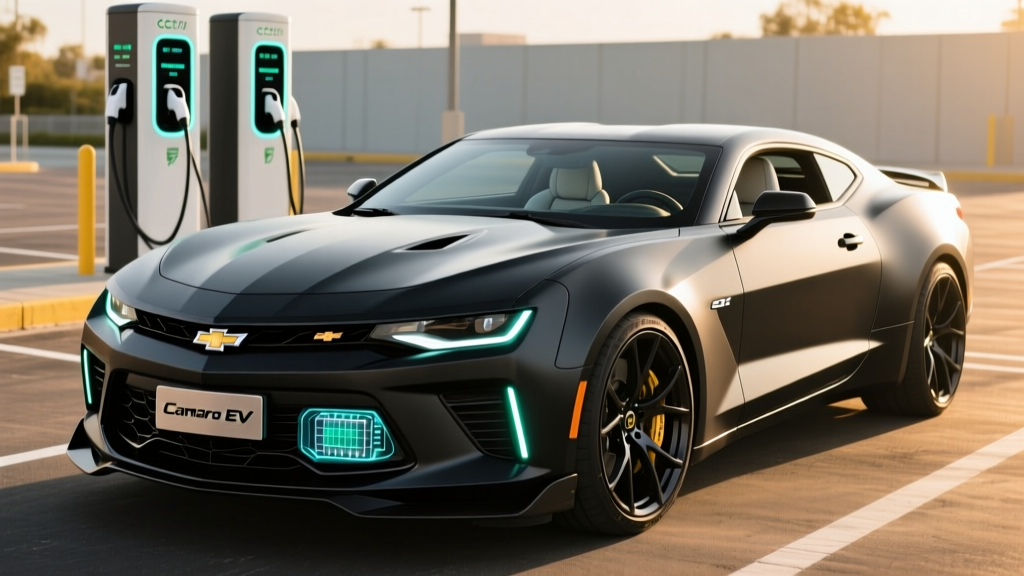
The 2027 Chevrolet Camaro EV is announced but not yet on sale as of early 2026. Chevrolet confirmed the next-generation Camaro will return on GM's Ultium battery-electric platform after the sixth-generation ICE model ended production in January 2024. Final EPA range, pricing, and trim specs have not been published. Based on the Ultium architecture shared with the Blazer EV and Silverado EV, we project a base MSRP in the $55,000–$65,000 range, an EPA-estimated range of 280–350 miles depending on battery pack, and DC fast charging at up to ~200 kW. This article breaks down every confirmed detail, every reasonable projection, and the ownership math you need before putting down a reservation deposit.
Why Chevrolet Is Bringing the Camaro Back as an EV
The sixth-generation Camaro ended a nine-year production run in early 2024 without a direct successor announced at that time. However, GM executives subsequently confirmed the Camaro nameplate would return, built on the company's Ultium battery-electric platform. The decision reflects two realities: increasingly strict federal emissions standards that make high-displacement V8s difficult to certify beyond 2027, and the performance ceiling that electric powertrains offer. An EV architecture can deliver supercar-rivaling acceleration at a fraction of the cost of a supercharged V8, while meeting fleet-average CO₂ requirements.
For buyers, this means the 2027 Camaro EV will occupy a unique niche: a two-door (or possibly four-door "coupe-like") electric performance car with heritage branding, positioned against the Tesla Model S Plaid, Porsche Taycan, and potentially the Dodge Charger Daytona EV.
Projected Specs: Range, Battery, and Charging
Because Chevrolet has not released final specifications, the figures below are projections based on current Ultium-platform vehicles and should be treated as preliminary until GM publishes official data.
| Attribute | Projected / Estimated | Basis for Estimate |
|---|---|---|
| Platform | GM Ultium (BEV3) | Confirmed by GM |
| Battery Chemistry | NMC (nickel manganese cobalt) | Current Ultium packs use NMC pouch cells |
| Battery Capacity (usable) | ~85–102 kWh | Blazer EV offers 85 kWh; Silverado EV up to ~200 kWh gross |
| EPA Range (est.) | 280–350 miles | Blazer EV 2LT: 279 mi; larger pack variants expected |
| Peak DC Fast Charge Rate | ~190–200 kW | Blazer EV peaks at 190 kW on Ultium |
| 10–80% DC Charge Time (est.) | ~28–34 minutes | Based on 190 kW peak with typical Ultium taper curve |
| Level 2 AC Charge Rate | 11.5 kW (estimated) | Standard on current Ultium vehicles |
| Level 2 Miles per Hour | ~30–37 mi/hr | At 11.5 kW with ~3 mi/kWh efficiency |
| Horsepower | 340–750+ HP (trim dependent) | Blazer EV SS: 557 HP; high-performance variant expected |
| 0–60 mph | ~3.0–5.5 seconds (trim dependent) | Comparable Ultium performance variants |
| Drivetrain | RWD base / AWD performance | Ultium supports both; Camaro heritage favors RWD |
| Battery Warranty (projected) | 8 years / 100,000 miles | Federal minimum; GM matches on current EVs |
Real-World Range Expectations
EPA sticker (projected): 280–350 miles depending on pack and trim.
Real-world highway (70–80 mph): Expect roughly 230–290 miles — high-speed driving reduces efficiency by 15–20% versus the combined EPA cycle.
Cold weather (below 32°F): Add another 15–30% reduction depending on whether the Camaro EV includes a heat pump. GM's current Ultium vehicles use a heat-pump-based thermal management system, which partially mitigates cold-weather losses, but battery chemistry still suffers in freezing temperatures.
Charging curve reality: The peak ~200 kW rate applies only between roughly 10–40% State of Charge. Above 60%, expect the rate to taper to ~80–100 kW, and above 80% it drops further to ~40–50 kW. A true 10–80% session will average closer to 130–150 kW sustained, not the peak figure.
How the Camaro EV Compares to the Gas Camaro (and Rivals)
The most common question from muscle-car enthusiasts: does going electric sacrifice what made the Camaro special? Here is a data-driven comparison using the last-generation gas Camaro and projected EV figures.
| Metric | 2024 Camaro SS (6.2L V8) | 2027 Camaro EV (Projected AWD Perf.) |
|---|---|---|
| Horsepower | 455 HP | ~550–750 HP |
| 0–60 mph | 4.0 seconds | ~3.0–3.5 seconds |
| Top Speed | 165 mph | ~150–170 mph (est.) |
| EPA Range / Fuel Economy | 16 city / 24 hwy MPG (~340 mi range on 19-gal tank) | ~280–350 mi (projected EPA) |
| "Refuel" / Recharge Time | ~5 minutes at a gas station | ~28–34 min (10–80% DC fast charge) |
| Annual Fuel / Energy Cost* | ~$2,800 (12,000 mi at $3.50/gal, 19 MPG combined) | ~$600–$900 (home charging at $0.14/kWh) |
| Estimated Base MSRP | $44,195 (2024 final MSRP) | $55,000–$65,000 (projected) |
| Federal Tax Credit (§30D) | None | Up to $7,500 if eligible (see below) |
| Annual Maintenance | ~$600–$900 (oil, brakes, filters) | ~$200–$400 (cabin filter, tire rotation, fluid top-offs) |
*Fuel/energy cost estimates based on 12,000 miles/year. Actual costs vary by local electricity and gasoline prices. Source: fueleconomy.gov for EV efficiency comparisons.
The EV variant projects a clear advantage in straight-line acceleration and operating costs, but the gas Camaro still wins on refueling speed, track-day endurance (EVs thermally derate under sustained high-load driving), and upfront price. If your use case involves weekend track events or long road trips through areas with sparse DC fast-charging infrastructure, these are legitimate trade-offs.
Ownership Costs: The 5-Year Breakdown
Here is what owning a 2027 Camaro EV is projected to cost versus the last-generation gas equivalent over five years and 60,000 miles.
| Cost Category | 2027 Camaro EV (Est.) | 2024 Camaro SS (Gas) |
|---|---|---|
| Purchase Price (base MSRP) | $60,000 | $44,195 |
| Federal Tax Credit (§30D) | –$7,500 (if eligible) | $0 |
| Effective Purchase Price | $52,500 | $44,195 |
| Home Charger Installation (Level 2) | $800–$2,000 | $0 |
| Fuel / Energy (5 years) | $3,500–$4,500 | $14,000 |
| Maintenance (5 years) | $1,200–$2,000 | $3,500–$4,500 |
| Insurance (5-year est. total) | $9,000–$12,000 | $7,000–$9,500 |
| Estimated Depreciation (5 years) | ~$22,000–$28,000 | ~$16,000–$20,000 |
| Approx. 5-Year Total | $86,400–$99,000 | $68,695–$82,195 |
Key takeaways:
- Energy savings are real and substantial. Home charging at an average of $0.14/kWh yields roughly $0.04–$0.06 per mile versus $0.18–$0.22 per mile for gasoline at $3.50/gallon.
- Maintenance savings add up. No oil changes, no spark plugs, significantly less brake wear due to regenerative braking. Expect to pay mainly for cabin air filters, tire rotations, wiper fluid, and eventual tire replacement (EVs tend to wear tires 15–25% faster due to instant torque and higher curb weight).
- Insurance will likely cost more. EVs carry higher insurance premiums due to specialized repair requirements, higher parts costs, and battery-replacement risk. Budget 15–30% more than the gas equivalent.
- Depreciation is the wildcard. EV depreciation curves have been steeper than gas cars in 2024–2025 due to rapid price cuts and technology obsolescence. A heritage nameplate like Camaro may hold value better than a generic EV, but this is speculative for an unreleased model.
Tax Credit Eligibility: What to Expect for 2027
The federal EV tax credit under IRS §30D offers up to $7,500 for qualifying new EVs, but eligibility depends on multiple requirements that may shift between now and the Camaro EV's launch. Based on current rules:
- MSRP cap: Sedans and coupes must have an MSRP at or below $55,000. If the Camaro EV is classified as a sedan/coupe (not an SUV/truck), trims above $55,000 would be ineligible. GM may structure pricing or classification to maximize eligibility.
- Buyer income limits: Modified adjusted gross income must not exceed $150,000 (single), $225,000 (head of household), or $300,000 (joint filers).
- Battery sourcing requirements: Increasing percentages of critical minerals and battery components must be sourced from the U.S. or free-trade-agreement countries. These thresholds tighten annually. By 2027, the requirements will be significantly stricter than in 2025.
- Point-of-sale transfer: Eligible buyers can transfer the credit to the dealer at purchase, reducing the out-of-pocket price immediately rather than waiting for a tax refund.
- North American assembly: The vehicle must undergo final assembly in North America. GM's U.S. plants make this likely for the Camaro EV.
Important: These rules are subject to legislative and regulatory changes. Always verify current eligibility on irs.gov and consult a tax professional before making purchase decisions based on the credit.
First-Time EV Buyer Considerations
If the 2027 Camaro EV would be your first electric vehicle, these practical factors matter as much as the spec sheet:
Home Charging Access
Home Level 2 charging (240V, ~11.5 kW) is the backbone of convenient EV ownership. At this rate, the Camaro EV would add roughly 30–37 miles of range per hour, meaning a full overnight charge from 20% to 80% takes about 5–6 hours. If you live in an apartment without charging access or park on the street, you will rely on public DC fast chargers and Level 2 destination chargers — which is viable but requires more planning and typically costs 2–4× more per kWh than home electricity.
Charging Infrastructure in Your Area
Check your daily routes and frequent road-trip corridors on the Alternative Fuels Data Center map. The Camaro EV will use the NACS (Tesla-style) connector, as GM transitioned its entire EV lineup to NACS starting in 2025. This gives access to Tesla Superchargers (now open to non-Tesla EVs at many locations), plus Electrify America, EVgo, and other networks via adapter or native NACS cable.
Climate and Driving Patterns
If you live in a region with sustained sub-freezing winters, budget for 15–30% range loss in cold months. Preconditioning the battery (warming it while still plugged in) mitigates this and also improves DC fast-charge speeds in cold weather. For predominantly highway driving at 75–80 mph, plan for roughly 80% of the EPA range figure.
Common Misconceptions About Electric Muscle Cars
| Myth | Fact |
|---|---|
| "EVs have no soul — no sound, no feel" | GM has confirmed the Camaro EV will include selectable drive modes with synthesized audio feedback. Whether this replicates V8 character is subjective, but the instant torque delivery (0 lb-ft at 0 RPM to peak instantly) creates a fundamentally different but equally intense acceleration experience. |
| "The battery will need replacing in 5 years" | Current Ultium packs are warrantied for 8 years / 100,000 miles against degradation below 70% capacity. Real-world data from Bolt EV owners shows most batteries retain 90%+ capacity after 100,000 miles. Full battery replacement on Ultium vehicles is projected at $12,000–$18,000 out of warranty, but this is rarely needed within the vehicle's typical lifespan. |
| "Charging takes too long for road trips" | A 10–80% DC fast charge in ~30 minutes aligns with typical rest-stop timing (bathroom, food, stretch). On a 600-mile trip, expect 2 charging stops adding ~45–60 minutes total versus zero stops in a gas car with a large tank. |
| "EVs are worse for the environment because of battery mining" | Lifecycle analyses from Argonne National Laboratory show that even on the current U.S. grid mix, EVs produce fewer lifetime CO₂ emissions than comparable gas vehicles. As the grid decarbonizes, this advantage grows. Battery recycling infrastructure is scaling, with companies like Redwood Materials recovering 95%+ of critical minerals. |
| "I'll save money immediately" | Higher upfront cost and insurance premiums mean the break-even point versus a gas Camaro is typically 4–6 years, depending on mileage, local electricity rates, and whether you qualify for the full $7,500 tax credit. High-mileage drivers break even faster. |
Decision Framework: Should You Wait for the 2027 Camaro EV?
Choose to Wait for the Camaro EV If:
- You have reliable home Level 2 charging access (or can install it)
- Your daily commute is under 100 miles round-trip (covers ~95% of U.S. drivers)
- You value straight-line acceleration and want 500+ HP without paying six figures
- You're willing to accept projected specs and wait for final confirmation before committing
- You plan to keep the car 5+ years, allowing operating-cost savings to offset the higher purchase price
- The Camaro nameplate has emotional value, and you want to stay in the brand family
Consider Alternatives Instead If:
- You regularly drive 400+ miles between charging-friendly stops (rural road trips)
- You need a back seat that regularly fits adults (the gas Camaro's rear was already tight; the EV may not improve this significantly)
- You want guaranteed specs and availability now — consider the Tesla Model 3 Performance, Ford Mustang Mach-E GT, or Hyundai Ioniq 5 N as currently purchasable electric performance options
- You're on a strict sub-$45,000 budget — the Camaro EV will likely not reach this price point
- You prioritize track-day endurance over drag-strip acceleration — EVs currently thermal-limit under sustained high-load lapping
Frequently Asked Questions
Is the 2027 Chevrolet Camaro EV confirmed for production?
GM has confirmed the Camaro nameplate will return on the Ultium EV platform. However, an exact model year, final specifications, and on-sale date have not been officially published. Industry reporting points to a 2027 model year debut, likely revealed in late 2026 or early 2027. Treat all specs in this article as projections until GM releases official data.
Will the Camaro EV be a two-door coupe or a four-door?
GM has not confirmed the body style. The traditional Camaro is a two-door coupe, but the EV market has seen performance sedans and "four-door coupes" gain traction (e.g., Porsche Taycan, Tesla Model S). Some industry analysts expect Chevrolet may offer a four-door variant to broaden the buyer base while retaining coupe-like proportions. This will be clarified at the official reveal.
Will the Camaro EV qualify for the $7,500 federal tax credit?
Possibly, but it depends on final MSRP and how the vehicle is classified. Under current §30D rules, sedans and coupes have a $55,000 MSRP cap. If the base Camaro EV trim is priced at or below $55,000 and meets battery-sourcing requirements, it could qualify. Higher trims (SS or equivalent) would likely exceed the cap and be ineligible. Verify current rules on irs.gov closer to launch.
What connector will the Camaro EV use for charging?
The Camaro EV will use the NACS (North American Charging Standard) connector, as GM completed its transition to NACS across all new EVs starting in 2025. This provides native access to Tesla Superchargers and a growing number of NACS-equipped public chargers. For legacy CCS stations, an adapter will likely be included or available.
How will the Camaro EV compare to the Dodge Charger Daytona EV?
The Dodge Charger Daytona EV (announced for 2025–2026) is the most direct rival. Both are electric reinterpretations of American muscle icons on dedicated EV platforms. Final comparison will depend on published specs, but expect similar power outputs (500+ HP on performance trims), comparable range (280–350 miles), and pricing in the $55,000–$75,000 range for well-equipped models. The Charger Daytona has been revealed with more concrete details as of early 2026, giving it a head start in buyer awareness.
Can I reserve a 2027 Camaro EV now?
As of early 2026, Chevrolet has not opened public reservations for the Camaro EV. Monitor Chevrolet's official EV pages and sign up for email alerts to be notified when reservation windows open. Avoid third-party sites claiming to accept deposits — only reserve through Chevrolet's official channels.