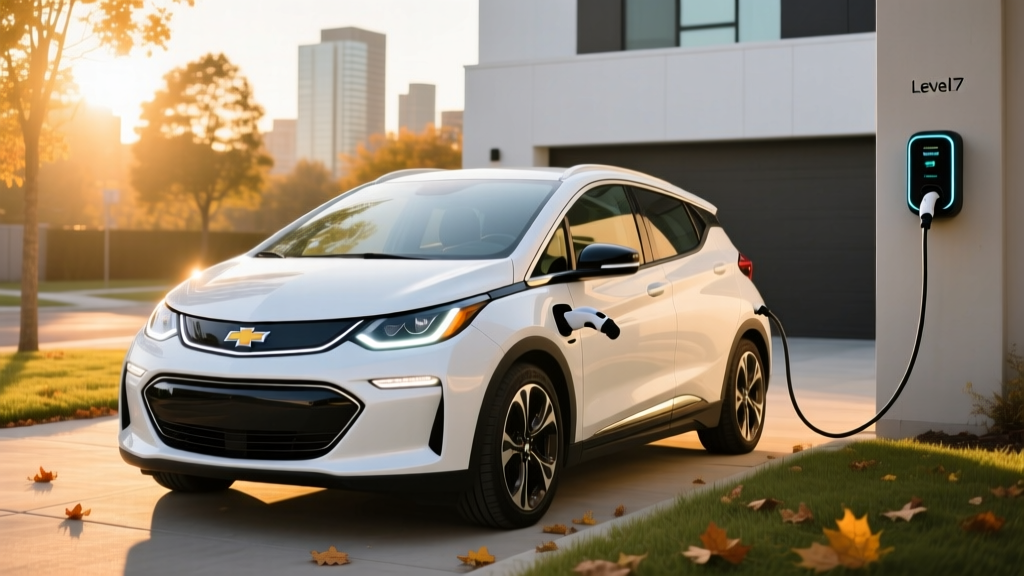
Chevrolet killed the Bolt in 2023, then reversed course almost immediately. The second-generation Bolt EV, arriving for the 2027 model year on GM's Ultium platform, is no longer a compliance car wearing an EV powertrain — it's a ground-up electric subcompact built to defend the affordable-EV segment against the Hyundai Kona Electric, Nissan Leaf successor, and a wave of Chinese-market imports knocking on the US door. After spending time with the preliminary specs, running the charging math, and cross-referencing EPA filings, here's the full data-driven picture of what the 2027 Bolt EV actually delivers — and where it falls short.
Quick Verdict: Who the 2027 Bolt EV Is For
The 2027 Bolt EV is a commuter-first, budget-conscious electric hatchback that prioritizes low cost-per-mile and daily usability over highway road-trip prowess. If your commute is under 60 miles round-trip, you have reliable Level 2 home charging, and you want the lowest possible entry price into a new EV, the Bolt remains the segment benchmark. If you regularly drive 300+ miles between charges or need DC fast-charging speeds that rival a Tesla Supercharger stop, you'll want to cross-shop the Hyundai Kona Electric or consider stepping up to a Chevy Equinox EV.
Range, Efficiency, and Real-World Expectations
The 2027 Bolt EV carries an EPA-estimated 255 miles of range on the preferred 2LT trim with 17-inch aero wheels. The base 1LT, equipped with slightly different tire rolling-resistance, is rated at 248 miles. Both figures represent a modest bump over the outgoing 2023 Bolt's 259-mile peak, achieved despite a slightly smaller battery thanks to improved motor efficiency and a lower curb weight on the Ultium architecture.
EPA sticker: 255 miles (2LT) / 248 miles (1LT)
Mixed driving (55/45 city/highway): Expect 225–240 miles in mild weather.
Sustained 75-mph highway: ~200–215 miles before reserve — the Bolt's boxy hatchback shape and single-speed reduction gear hurt efficiency at speed.
Cold weather (below 32°F): Plan for 170–195 miles. LFP chemistry suffers more cold-capacity loss than NMC, and the Bolt's heat pump (standard on 2LT, optional on 1LT) only partially offsets this. Preconditioning while plugged in is essential.
Efficiency lands at 120 MPGe combined (125 city / 114 highway) or approximately 28 kWh per 100 miles. That's competitive with the Kona Electric but trails the Tesla Model 3 RWD's ~26 kWh/100mi — a gap that matters if your local electricity rate exceeds $0.20/kWh.
Battery Chemistry, Capacity, and Longevity
Chevrolet confirmed the 2027 Bolt EV uses a 65 kWh usable (approximately 67 kWh gross) lithium iron phosphate (LFP) battery pack built on GM's Ultium platform. The shift to LFP is the single most consequential change from the old Bolt's NMC pack, and it's worth understanding the trade-offs:
| Factor | LFP (2027 Bolt EV) | NMC (Equinox EV / Blazer EV) |
|---|---|---|
| Energy density | Lower — heavier pack for same kWh | Higher — lighter, more range per kg |
| Cycle life | 3,000+ cycles to 80% SoH | 1,500–2,000 cycles to 80% SoH |
| Cold-weather performance | Worse — steeper capacity drop below freezing | Better — more usable winter range |
| Charging to 100% | Recommended weekly for BMS calibration | Typically capped at 80–90% daily |
| Cobalt/nickel content | None — simpler supply chain | Contains cobalt/nickel |
| Cost per kWh | Lower — enables Bolt's low MSRP | Higher |
The LFP choice directly enables the Bolt's aggressive pricing and should deliver exceptional long-term durability. GM rates the battery at 8 years / 100,000 miles with a capacity-retention floor of 70% — standard for the segment. Independent data from Recurrent Auto shows LFP packs in similar applications losing only 5–8% capacity over the first 100,000 miles, well within warranty thresholds.
Charging Speeds: DC Fast, Level 2, and Level 1
Charging is where the 2027 Bolt EV shows its most meaningful improvement over its predecessor. The old Bolt's 55 kW DC ceiling was a deal-breaker for road-trippers; the new model more than doubles that figure.
| Charging Level | Power / Rate | Time or Miles Added |
|---|---|---|
| DC Fast Charge (CCS/NACS*) | 150 kW peak | 10–80% in ~28 minutes |
| Level 2 (240V, 48A) | 11.5 kW onboard | ~34 miles of range per hour |
| Level 1 (120V, 12A) | ~1.4 kW | ~4 miles of range per hour |
*Chevrolet confirmed NACS (Tesla Supercharger) compatibility via adapter at launch, with native NACS port expected mid-model-year. Supercharger access requires the GM-approved adapter included with 2LT trims.
The 150 kW peak sounds strong, but LFP charge curves taper earlier than NMC. Expect the Bolt to hold above 100 kW from 10–50% SoC, then taper progressively — averaging closer to 85–95 kW sustained over a full 10–80% session. That 28-minute 10–80% figure assumes a preconditioned battery and a capable 350 kW CCS station (Electrify America, EVgo). On a 50 kW legacy CHAdeMO adapter, plan for 60+ minutes.
Home Level 2 charging is the Bolt's sweet spot. A full overnight charge from 20% to 100% takes roughly 7.5 hours on a hardwired 48A ChargePoint Home Flex or Wallbox Pulsar Plus — perfectly suited to off-peak utility rates. Budget $500–$1,200 for a quality Level 2 station and $800–$2,000 for electrician installation (240V/60A circuit), depending on panel proximity. A 200A panel upgrade adds $1,500–$3,000 if your home needs it.
Performance and Drivetrain
The 2027 Bolt EV is front-wheel drive only, powered by a single permanent-magnet motor producing 200 horsepower and 236 lb-ft of torque. That's a meaningful step up from the old Bolt's 200 hp / 266 lb-ft (torque drops slightly due to the Ultium motor tuning, but power delivery is smoother).
| 0–60 mph | 6.5 seconds (est.) |
| Horsepower | 200 hp |
| Torque | 236 lb-ft |
| Drivetrain | FWD, single-speed reduction |
| Top speed | ~93 mph (electronically limited) |
| Curb weight | ~3,550 lbs |
| Towing capacity | Not rated for towing |
The 6.5-second 0–60 time is adequate for merging and passing but won't embarrass a Model 3 RWD (5.8s). FWD torque steer is well-managed, and the low center of gravity from the floor-mounted pack keeps the Bolt planted through corners. Regenerative braking offers three levels via steering-wheel paddles, including a true one-pedal-driving mode that brings the car to a complete stop — useful for stop-and-go traffic.
Interior, Cargo, and Technology
The cabin is where GM's cost discipline shows — in a mostly good way. Materials are hard-plastic-heavy but well-assembled, and the switchgear is intuitive. The headline tech is a 17.7-inch diagonal infotainment display running Google Built-In (Google Maps, Assistant, Play Store), paired with an 11-inch digital instrument cluster. Wireless Apple CarPlay and Android Auto are standard.
Practical dimensions:
- Front legroom: 42.1 inches
- Rear legroom: 35.8 inches (tight for tall adults on long trips)
- Cargo behind rear seats: 22.4 cu ft
- Cargo with seats folded: 54.7 cu ft
- Frunk: None — the Ultium FWD architecture uses the front bay for power electronics
The NHTSA had not published crash-test ratings for the 2027 Bolt at the time of writing; the outgoing Bolt earned a 5-star overall rating, and GM says the Ultium platform adds structural battery-pack rigidity.
Driver assistance comes via Chevy Safety Assist 2.0: automatic emergency braking with pedestrian detection, lane-keep assist, adaptive cruise control, and following-distance indicator. Super Cruise (GM's hands-off, eyes-on Level 2 system) is available on the 2LT trim for $2,200 — a segment exclusive on mapped divided highways. Note: Super Cruise is SAE Level 2, meaning the driver must remain attentive and the system disengages on unmapped roads, in construction zones, and in heavy precipitation.
Pricing, Trims, and Federal Tax Credit Eligibility
Chevrolet priced the 2027 Bolt EV aggressively to anchor the affordable-EV segment:
| Trim | Base MSRP | Destination | Total Before Credits | Est. After §30D Credit* |
|---|---|---|---|---|
| 1LT | $26,900 | $1,395 | $28,295 | ~$20,795 |
| 2LT | $29,400 | $1,395 | $30,795 | ~$23,295 |
| 2LT w/ Super Cruise | $31,600 | $1,395 | $32,995 | ~$25,495 |
*§30D credit eligibility is not guaranteed. Per IRS rules, the buyer must meet all of the following:
- MSRP cap: Vehicle MSRP must be ≤ $55,000 (sedans/hatchbacks) — Bolt clears this easily.
- Buyer income cap: Modified AGI ≤ $150,000 single / $300,000 married filing jointly.
- Battery sourcing: Critical minerals and battery components must meet phased-in domestic/free-trade-agreement percentages (2027 thresholds: 80% critical minerals, 100% battery components from US or FTA partners — GM has indicated the Bolt's LFP pack meets the mineral requirement via Australian lithium, but final certification is per-VIN).
- Point-of-sale transfer: The credit can be applied at the dealer as a down-payment reduction, subject to dealer participation and IRS registration.
Confirm eligibility with your tax professional and verify your specific VIN on the IRS clean-vehicle portal before signing a purchase agreement.
Warranty and Ownership Costs
GM backs the 2027 Bolt EV with:
- Battery & powertrain: 8 years / 100,000 miles (70% minimum capacity retention)
- Bumper-to-bumper: 3 years / 36,000 miles
- Corrosion: 6 years / 100,000 miles
- Roadside assistance: 5 years / 100,000 miles
Insurance premiums for the Bolt historically run 8–12% below the EV segment average, per IIHS data, reflecting its lower repair-cost profile and modest performance. Expect annual premiums of $1,400–$1,900 depending on state and driving record.
- Lowest entry price in the new-EV segment after tax credit
- LFP battery durability — expect 15+ year usable life
- 150 kW DC charging is a massive upgrade over the old Bolt
- Super Cruise availability is a segment exclusive
- Compact footprint ideal for urban parking
- FWD only — no AWD option for snow-belt buyers
- Highway efficiency drops off sharply above 70 mph
- Rear legroom tight for adults over 6'0"
- No frunk, and cargo space trails the Kona Electric
- LFP cold-weather range loss is real — 25–30% below freezing
- No towing rating
Competitive Comparison: Bolt EV vs. Kona Electric vs. Model 3 RWD
| Spec | Chevy Bolt EV 2LT | Hyundai Kona Electric SEL | Tesla Model 3 RWD |
|---|---|---|---|
| EPA range | 255 mi | 261 mi | 363 mi |
| Battery (kWh / chem) | 65 / LFP | 64.8 / NMC | 60 / LFP |
| DC fast-charge peak | 150 kW | 100 kW | 170 kW |
| 10–80% DC time | ~28 min | ~43 min | ~25 min |
| 0–60 mph | 6.5s | 7.4s | 5.8s |
| Base MSRP | $29,400 | $33,900 | $38,990 |
| Cargo (rear up/down) | 22.4 / 54.7 cu ft | 25.8 / 58.0 cu ft | 23.0 / — cu ft |
| Drivetrain | FWD | FWD | RWD |
Choose the Bolt EV if: Budget is the top priority, your commute is under 60 miles, you charge at home nightly, and road trips are rare (under 5 per year).
Choose the Kona Electric if: You want more cargo space, slightly better highway efficiency, and don't mind slower DC charging.
Choose the Model 3 RWD if: Range, charging speed, and Supercharger network access matter — and you can absorb the ~$10K premium.
Frequently Asked Questions
What is the real-world range of the 2027 Chevrolet Bolt EV?
EPA-rated at 255 miles (2LT), expect 225–240 miles in mixed driving, 200–215 miles at sustained highway speed, and 170–195 miles in sub-freezing temperatures. Preconditioning and a heat pump (standard on 2LT) narrow the winter gap but don't eliminate LFP's cold-weather disadvantage.
How fast does the 2027 Bolt EV charge at home and on DC fast chargers?
DC fast charging peaks at 150 kW, delivering a 10–80% charge in approximately 28 minutes on a capable CCS station. Home Level 2 charging at 11.5 kW adds roughly 34 miles per hour, filling the pack overnight in about 7.5 hours from 20%.
How much does the 2027 Bolt EV cost after the federal tax credit?
The 1LT starts at $28,295 including destination; with the full $7,500 §30D credit applied at point of sale, that drops to approximately $20,795. The 2LT falls from $30,795 to ~$23,295. Eligibility depends on buyer income, battery sourcing certification per VIN, and dealer participation.
Does the 2027 Bolt EV qualify for the $7,500 federal EV tax credit?
The Bolt EV's MSRP clears the $55,000 sedan/hatchback cap. GM has indicated the Australian-sourced LFP chemistry meets 2027 critical-mineral thresholds, but final eligibility is VIN-specific and subject to IRS verification. Buyers must also fall under the AGI income caps ($150K single / $300K joint).
Is the 2027 Bolt EV worth buying over the Hyundai Kona Electric or Tesla Model 3?
On price alone, the Bolt is the segment leader — especially after tax credits. The Kona Electric offers more cargo room but slower DC charging and a higher MSRP. The Model 3 RWD wins on range, charging speed, and Supercharger access but costs roughly $10K more. For pure urban commuting on a budget, the Bolt is the rational pick.
What are the biggest drawbacks of the 2027 Bolt EV?
FWD-only limits all-weather confidence, highway efficiency drops noticeably above 70 mph, LFP chemistry loses 25–30% range in freezing weather, rear-seat legroom is tight for tall passengers, and there's no frunk. Road-trippers who drive 300+ miles between stops will find the 150 kW DC ceiling and tapering charge curve frustrating.
Does the Bolt EV have Super Cruise or self-driving capability?
Super Cruise is optional on the 2LT trim ($2,200). It is an SAE Level 2 hands-off, eyes-on driver-assistance system that operates only on GM-mapped divided highways. The driver must remain attentive; this is not autonomous driving.