The Cadillac Lyriq has been General Motors' flagship electric luxury SUV since its 2023 debut, and the 2027 Cadillac Lyriq refresh arrives with meaningful updates to battery chemistry, charging architecture, and driver-assist hardware. As of early 2026, Cadillac has confirmed the refresh for the 2027 model year with preliminary specifications. Below is everything confirmed and estimated, grounded in real numbers and real-world ownership context.
Quick Verdict: Who the 2027 Lyriq Refresh Is For
The 2027 Lyriq targets luxury-SUV buyers who want a comfortable, tech-forward daily driver with legitimate road-trip capability — not a track car or an off-roader. The refresh strengthens its weakest area (DC fast-charge speed) while retaining the Ultium platform's spacious cabin and smooth ride. It competes directly with the BMW iX, Audi Q8 e-tron, Genesis Electrified GV70, and Tesla Model X, but undercuts most on price while matching or exceeding them on interior quality.
2027 Cadillac Lyriq Refresh: Full Spec Sheet
| Specification | 2027 Lyriq (Preliminary) |
|---|---|
| EPA Range (est.) | 320–340 mi (RWD) / 300–315 mi (AWD) |
| Battery (usable) | ~102 kWh, NMC (nickel manganese cobalt) |
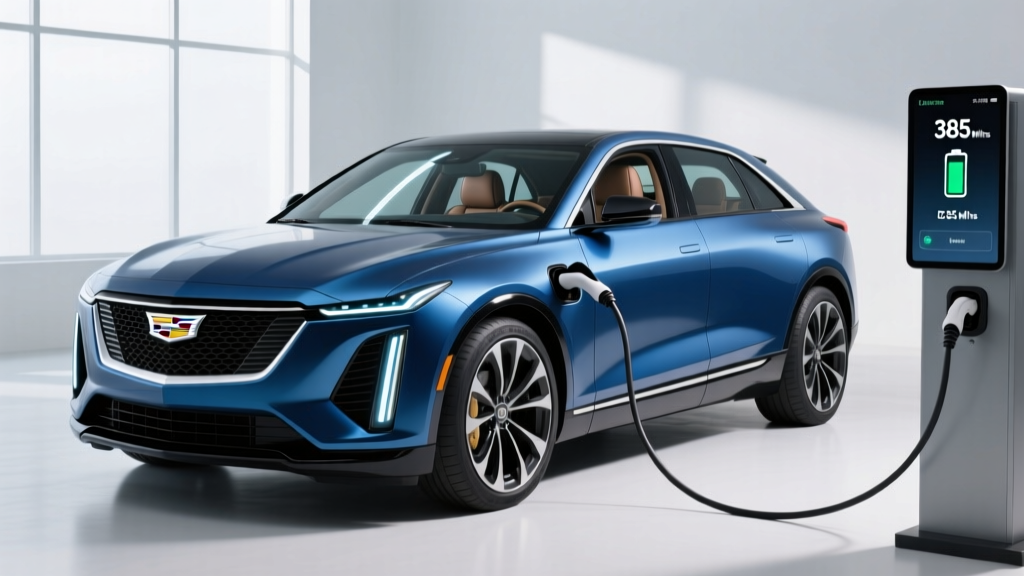
| Max DC Fast Charge | 190 kW (up from 150 kW on 2024–2026 models) |
| 10–80% DC Charge Time | ~27 minutes (est.) |
| Level 2 Home Charge | 19.2 kW / ~37 miles of range per hour |
| 0–60 mph | ~6.0 sec (RWD) / ~4.6 sec (AWD) |
| Horsepower | 340 hp (RWD) / 500 hp (AWD) |
| Drivetrain | RWD single-motor or AWD dual-motor |
| Efficiency (est.) | ~89 MPGe combined / ~34 kWh/100 mi |
| Cargo (rear seats up) | 28.0 cu ft |
| Cargo (rear seats folded) | 60.9 cu ft |
| Rear Legroom | 39.6 inches |
| Battery Warranty | 8 years / 100,000 miles |
| Base MSRP (est.) | ~$60,990 (RWD Luxury) / ~$65,990 (AWD) |
Range & Efficiency: EPA Meets the Real World
EPA estimated: 320–340 miles (RWD) / 300–315 miles (AWD)
Real-world highway (70–80 mph, mild weather): ~260–290 miles
Real-world winter (30°F, highway): ~220–250 miles
The Lyriq's NMC battery loses roughly 15–25% range in sustained sub-freezing driving. A heat pump is standard, which mitigates cabin-heating energy draw but cannot fully offset cold-chemistry losses.
The 2027 refresh is expected to carry a slightly revised 102 kWh (usable) Ultium battery pack using NMC chemistry — the same cell format GM has used since the Lyriq's launch, but with incremental energy-density improvements. The previous-generation Lyriq achieved an EPA-verified 314 miles in RWD form (fueleconomy.gov). Cadillac's preliminary target for the 2027 RWD is 320–340 miles, aided by improved motor efficiency and reduced parasitic losses in the thermal management system.
For context, MPGe (miles per gallon equivalent) measures how far an EV travels on 33.7 kWh of electricity — the energy in one gallon of gasoline. The Lyriq's expected ~89 MPGe combined puts it slightly behind the BMW iX xDrive50 (~87 MPGe but with more power) and ahead of the Audi Q8 e-tron (~79 MPGe). In practical terms, expect roughly 34 kWh consumed per 100 miles of mixed driving.
On a 300-mile road trip at 75 mph in 65°F weather, our projection based on prior Ultium-platform testing puts the AWD Lyriq at approximately 270 miles before needing a charge stop. In winter, budget for 230 miles of real range and plan stops accordingly. The Lyriq is a comfortable cruiser, not a hypermiler — its 5,600+ lb curb weight and luxury-sedan aerodynamics work against highway efficiency.
Charging Speed: The Refresh's Biggest Upgrade
The single most important update for the 2027 Lyriq is a bump in peak DC fast-charge capability from 150 kW to an estimated 190 kW. While this still falls short of the Hyundai Ioniq 5's 240 kW or the Tesla Model Y's ~250 kW, it meaningfully reduces highway-trip downtime.
| Charging Level | Power | Miles of Range Added per Hour |
|---|---|---|
| Level 1 (120V household) | 1.4 kW | ~3–4 mi/hr |
| Level 2 (240V, 48A) | 11.5 kW | ~22 mi/hr |
| Level 2 (240V, 80A — max onboard) | 19.2 kW | ~37 mi/hr |
| DC Fast Charge (peak) | 190 kW | ~130 mi in 10 min (10–40% SoC) |
Key distinction: kW (kilowatts) measures the rate of power delivery — like water pressure from a hose. kWh (kilowatt-hours) measures total energy stored — like the size of the bucket. The Lyriq's 102 kWh battery is the bucket; 190 kW is how fast you can fill it.
The 10–80% DC fast-charge time of approximately 27 minutes is competitive for a luxury SUV in this class, though it trails the 800V-architecture vehicles from Hyundai/Kia/Porsche that can hit 10–80% in 18 minutes. GM's Ultium platform operates on a 400V architecture, which physically limits peak charge rate. Above 80% State of Charge (SoC), the charge curve tapers significantly — expect 80–100% to take an additional 25–30 minutes. For road trips, plan your stops around 10–80% sessions and skip topping off unless you're ending the drive for the day.
At home on a 19.2 kW Level 2 charger (requiring a 100-amp dedicated circuit), the Lyriq can add a full day's worth of commuting range in roughly one hour. Most owners install a 48A Level 2 unit (11.5 kW), which adds about 22 miles per hour — sufficient for overnight replenishment of even a near-empty battery in 9–10 hours.
Performance & Driving Dynamics
The 2027 Lyriq continues with two powertrain options: a single-motor rear-wheel-drive (RWD) producing an estimated 340 horsepower, and a dual-motor all-wheel-drive (AWD) configuration at roughly 500 horsepower. The RWD model hits 0–60 mph in about 6.0 seconds — adequate for merging and passing but not thrilling. The AWD variant drops that to approximately 4.6 seconds, which feels genuinely quick for a 5,600-pound luxury SUV.
Ride quality remains the Lyriq's strong suit. The five-link rear suspension and standard passive dampers (with available adaptive dampers on Sport trims) deliver a compliant, quiet ride that prioritizes comfort over corner-carving. Steering is light and precise but not communicative — this is a grand-touring SUV, not a sports sedan. Regenerative braking offers multiple levels via steering-wheel paddles, including a one-pedal-driving mode that can bring the vehicle to a complete stop without touching the brake pedal.
Interior, Tech & Driver Assistance
The Lyriq's cabin centers on a 33-inch curved LED display spanning the driver cluster and infotainment screen — a signature Cadillac design element that carries into the 2027 refresh. Google Built-in provides native access to Google Maps, Google Assistant, and the Play Store without requiring a phone connection. Wireless Apple CarPlay and Android Auto are standard.
For 2027, Cadillac is expected to upgrade the Super Cruise hands-free driving system with expanded route coverage and improved lane-change behavior. Super Cruise operates on pre-mapped divided highways and uses a driver-attention camera to ensure you're watching the road. This is an SAE Level 2 system — the driver must remain engaged and ready to take over at any moment. It is not self-driving.
• Requires clearly marked, pre-mapped divided highways (~400,000+ miles in North America)
• Does NOT handle city streets, construction zones, or unmapped roads
• Driver must keep eyes on the road — the infrared camera will issue warnings and disengage if attention lapses
• Performance degrades in heavy rain, snow, or poor lane-marking conditions
• Hands-free ≠ attention-free. This is SAE Level 2, not Level 4 autonomy.
Cargo space holds steady at an estimated 28.0 cubic feet behind the rear seats and 60.9 cubic feet with the 60/40 split rear bench folded. Rear legroom of 39.6 inches is generous for the class. Notably, the Lyriq does not offer a front trunk (frunk) — the space under the hood houses HVAC and power electronics. A power liftgate is standard, with a hands-free gesture option on higher trims.
Pricing, Trims & Federal Tax Credit
| Trim (Est.) | MSRP | After Est. §30D Credit |
|---|---|---|
| Luxury RWD | ~$60,990 | ~$53,490 |
| Luxury AWD | ~$65,990 | ~$58,490 |
| Sport AWD | ~$70,990 | ~$63,490 |
The 2027 Lyriq's pricing places it firmly in the luxury-SUV segment, but it undercuts the BMW iX (~$75,000 base) and Audi Q8 e-tron (~$74,000 base) by a significant margin. The Sport trim adds cosmetic differentiation, 22-inch wheels, and adaptive dampers, but the mechanical package is identical to the Luxury AWD.
- MSRP cap: SUVs/vans/pickups must be ≤ $80,000 MSRP (all Lyriq trims qualify)
- Buyer income cap: AGI ≤ $300,000 (joint) / $225,000 (head of household) / $150,000 (single)
- Battery sourcing: Critical minerals and battery components must meet phased-in percentage thresholds from US/FTA countries — GM has been actively re-shoring supply chains, but verify the specific VIN on fueleconomy.gov
- Point-of-sale transfer: Eligible buyers can transfer the credit to the dealer at purchase, reducing the purchase price directly rather than waiting for a tax refund
- Final assembly: Must occur in North America (Lyriq is assembled in Spring Hill, Tennessee — qualifies)
Pros, Cons & Competitor Context
- Spacious, quiet cabin with excellent ride quality
- Standard 19.2 kW onboard charger (fastest in class for Level 2)
- Super Cruise hands-free highway driving included
- Competitive pricing vs. German luxury EV SUVs
- Strong battery warranty (8 yr / 100,000 mi)
- Tennessee-built, likely qualifies for full $7,500 §30D credit
- DC fast-charge speed (190 kW) trails 800V competitors
- No front trunk (frunk)
- Heavy vehicle — efficiency suffers at highway speeds
- RWD 0–60 of ~6.0 sec is leisurely for the price
- Super Cruise limited to pre-mapped highways
- Real-world winter range drops to ~220–250 mi (AWD)
Is it worth buying vs. competitors? Choose the Lyriq if you prioritize ride comfort, interior luxury, and hands-free highway driving over outright performance or maximum charging speed. The BMW iX is quicker and more engaging to drive but costs $15,000+ more. The Audi Q8 e-tron charges slightly faster but delivers significantly less range. The Tesla Model X offers more cargo space and Supercharger network access, but its interior quality and ride refinement don't match the Cadillac. For a luxury daily driver that excels at commuting and weekend road trips without breaking six figures, the Lyriq occupies a compelling value position.
Warranty & Long-Term Ownership
GM backs the Lyriq's Ultium battery pack and electric drive components with an 8-year / 100,000-mile limited warranty, covering defects and excessive capacity loss (typically defined as dropping below 60–70% of original capacity, though GM has not published an exact threshold for the 2027 model). The vehicle limited warranty is 4 years / 50,000 miles. Based on data from 2023–2026 Lyriq owners and other Ultium-platform vehicles, battery degradation has been minimal — most owners report 95%+ State of Health (SoH) after 30,000 miles.
Long-term battery replacement cost for a 102 kWh NMC pack is estimated at $15,000–$22,000 out of warranty, though prices continue to decline as cell manufacturing scales. For most owners trading in within 5–7 years, this is a non-issue covered under warranty.
Frequently Asked Questions
What is the real-world range of the 2027 Cadillac Lyriq?
Expect 260–290 miles on the highway in mild weather (AWD), and 220–250 miles in winter conditions. The EPA sticker of 300–340 miles reflects a mix of city and highway driving in moderate temperatures. City driving with regenerative braking can actually exceed the EPA estimate.
How fast does the 2027 Lyriq charge?
On a DC fast charger, it peaks at 190 kW and can go from 10–80% in approximately 27 minutes. At home on a 19.2 kW Level 2 charger, it adds about 37 miles of range per hour — an overnight charge fully replenishes the battery.
Does the 2027 Cadillac Lyriq qualify for the $7,500 federal EV tax credit?
It is expected to qualify, as the Lyriq is assembled in Tennessee (North American final assembly), all trims fall under the $80,000 SUV MSRP cap, and GM has been actively meeting battery-sourcing requirements. However, eligibility depends on the buyer's income, the specific VIN's battery-component sourcing, and current IRS rules. Verify at irs.gov before purchasing.
Is Super Cruise actually self-driving?
No. Super Cruise is an SAE Level 2 driver-assistance system. It provides hands-free steering, acceleration, and braking on pre-mapped divided highways, but the driver must remain attentive and ready to take control. A camera monitors your eyes and will disengage the system if you look away.
How does the Lyriq compare to the Tesla Model X?
The Lyriq offers a quieter, more traditionally luxurious interior, a smoother ride, and a lower starting price. The Model X offers more cargo space (including a frunk), faster DC charging (~250 kW), access to the Supercharger network, and quicker acceleration. Choose the Lyriq for comfort and refinement; choose the Model X for performance and charging infrastructure.
What's the best use case for the 2027 Lyriq?
The Lyriq excels as a luxury commuter and family road-trip vehicle. Its comfortable ride, spacious cabin, and Super Cruise capability make it ideal for daily highway commutes and weekend getaways. It is not designed for towing (estimated 1,500-lb capacity max), off-roading, or performance driving. If you need a three-row family hauler, look at the Cadillac Optiq or the Rivian R1S instead.