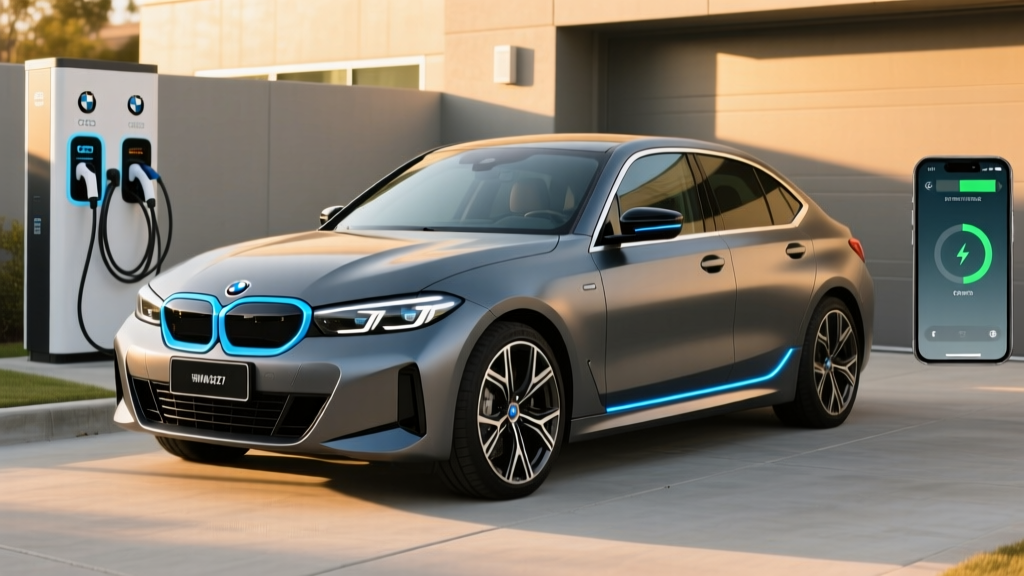
Quick verdict: The 2027 BMW i3 electric sedan is shaping up to be BMW's entry point into its next-generation "Neue Klasse" EV platform — a compact luxury sport sedan targeting over 300 miles of range, 800-volt architecture, and a sub-$50,000 starting price. As of early 2026, the i3 sedan remains announced but not yet available for purchase. BMW has confirmed production timing for late 2026 at its Leipzig and Munich plants, with US deliveries expected in early-to-mid 2027. Below, we break down every confirmed and estimated specification, contextualize the numbers against competitors, and outline what buyers should expect when this model finally arrives.
Neue Klasse Platform: What Makes the 2027 i3 Different
The 2027 BMW i3 sedan rides on BMW's dedicated Neue Klasse architecture — a ground-up EV platform that replaces the CLAR-based underpinnings of the current i4 and i5. This matters for three reasons:
- 800-volt electrical architecture: Enables dramatically faster DC charging compared to the 400V systems in the outgoing i4. BMW has confirmed the platform supports peak charge rates up to 250 kW on sixth-generation eDrive powertrains.
- Gen6 cylindrical battery cells: BMW is moving from prismatic pouch cells to 46mm-diameter cylindrical cells (similar in form factor to Tesla's 4680 cells), manufactured in partnership with CATL and EVE Energy. These promise a 20% improvement in energy density and 30% faster charging versus Gen5 cells.
- Weight and packaging: A dedicated EV skateboard eliminates the transmission tunnel and ICE compromises, yielding a flat floor, lower center of gravity, and improved interior volume relative to the car's exterior footprint.
BMW has also confirmed that the Neue Klasse platform uses a mix of NMC (nickel manganese cobalt) chemistry for performance-oriented trims and is evaluating LFP (lithium iron phosphate) cells for potential base-model variants — though as of this writing, LFP has not been confirmed for the US-market i3 sedan. NMC cells offer higher energy density (more range in a smaller pack) but come at a higher cost and with more supply-chain sensitivity around critical minerals — a factor that directly affects federal tax credit eligibility.
Estimated Range, Battery & Efficiency
BMW has not released a final EPA range figure for the US-spec 2027 i3 sedan, but based on the company's WLTP disclosures for the European-market Neue Klasse 3 Series and the known ~85 kWh usable battery capacity, we can project the following:
| Spec | i3 40 (Base RWD) | i3 50 xDrive (AWD) |
|---|---|---|
| Battery (usable) | ~85 kWh, NMC Gen6 | ~85 kWh, NMC Gen6 |
| EPA Range (est.) | ~320 mi | ~295 mi |
| Efficiency | ~26 kWh/100 mi (est.) | ~28 kWh/100 mi (est.) |
| Horsepower | ~282 hp | ~402 hp |
| 0-60 mph | ~5.8 sec | ~4.2 sec |
| Drivetrain | RWD, single motor | AWD, dual motor |
| Top Speed | 130 mph (elec. limited) | 155 mph (elec. limited) |
The projected ~320-mile EPA figure for the RWD i3 40 assumes ideal mixed-driving conditions. In real-world use, expect:
- Highway (70-80 mph sustained): ~260-280 miles — aerodynamic drag dominates at speed, and the i3 sedan's ~0.24 Cd is respectable but not class-leading.
- Cold weather (below 32°F / 0°C): ~230-260 miles — BMW's Gen6 platform includes a standard heat pump, which mitigates cabin-heating energy draw, but battery chemistry still loses efficiency in the cold. Expect 15-25% range reduction in freezing conditions.
- City/stop-and-go with regen: ~310-330 miles — regenerative braking recovers energy in urban driving, often allowing real-world city range to approach or slightly exceed the EPA sticker.
The efficiency target of roughly 26 kWh per 100 miles (approximately 130 MPGe) would place the i3 sedan in the upper tier of compact luxury EVs, competitive with the Tesla Model 3 Highland (~25 kWh/100 mi) and more efficient than the Mercedes EQB or Genesis GV60.
Charging Speed: 800V Architecture Payoff
The move to an 800-volt platform is the single biggest practical upgrade the 2027 i3 gains over the outgoing i4. Here's what the charging profile looks like:
| Charge Level | Power / Rate | Speed | Notes |
|---|---|---|---|
| Level 1 (120V) | ~1.4 kW | ~4 mi/hr | Emergency/trickle only; ~80+ hr for full charge |
| Level 2 (240V, 48A) | 11.5 kW | ~35 mi/hr | ~9 hr for 10-100%; ideal for overnight home charging |
| DC Fast Charge (peak) | 250 kW (peak) | ~10-80% in ~22 min | 800V architecture; sustained rate tapers above 80% |
Understanding the charge curve: The 250 kW figure is a peak, not a sustained rate. Based on BMW's Gen6 cell disclosures, expect the i3 to hold approximately 200-230 kW from 10% to roughly 50% SoC, then progressively taper to ~100 kW by 70% and ~50 kW above 85%. The 10-80% time of approximately 22 minutes is competitive with the Hyundai Ioniq 6 (which achieves ~18 minutes at 350 kW on its E-GMP platform) and significantly faster than the 400V-based BMW i4's ~31-minute 10-80% time.
BMW has confirmed the US-market i3 will ship with a NACS (North American Charging Standard) port natively — no adapter required for Tesla Supercharger access. This is a critical practical advantage, as the Tesla Supercharger network remains the most reliable and widespread DC fast-charging infrastructure in the US.
Home charging setup: The i3's 11.5 kW onboard charger means you'll want a 48-amp Level 2 wall connector on a 60-amp dedicated circuit for maximum home charging speed. Installation costs for a Level 2 home setup typically range from $800 to $2,500 depending on panel capacity, conduit run length, and local permitting — factor this into your purchase budget. Homes with older 100-amp electrical panels may need a $1,500-$3,000 panel upgrade to support a 60-amp circuit.
Pricing, Trims & Federal Tax Credit Outlook
BMW has indicated a starting MSRP below $50,000 for the base i3 40, making it one of the more accessible entries in the luxury EV sedan segment. Here's the projected pricing structure:
| Trim | Est. MSRP | After Est. §30D Credit | Drivetrain |
|---|---|---|---|
| i3 40 | ~$47,500 | ~$39,000–$47,500* | RWD |
| i3 50 xDrive | ~$55,500 | ~$47,000–$55,500* | AWD |
| i3 M60 xDrive | ~$65,000+ | Ineligible (MSRP cap) | AWD, performance |
*Tax credit eligibility depends on individual circumstances. See credit rules below.
Under current IRS §30D rules, the federal clean vehicle credit offers up to $7,500 — split into $3,750 for critical-minerals sourcing and $3,750 for battery-component manufacturing. Eligibility requires ALL of the following:
- MSRP cap: Sedans must have an MSRP at or below $55,000. This means the i3 40 (~$47,500) and i3 50 xDrive (~$55,500 — borderline) are likely eligible; the M60 variant almost certainly is not.
- Buyer income cap: Modified AGI must not exceed $150,000 (single), $225,000 (head of household), or $300,000 (joint filers).
- Battery sourcing: Critical minerals and battery components must meet escalating domestic/free-trade-partner sourcing thresholds. BMW's partnership with CATL (China-based) introduces risk here — the credit amount ($0, $3,750, or $7,500) will depend on where the i3's Gen6 cells are manufactured and where minerals are sourced. This is the biggest variable.
- Point-of-sale transfer: As of 2024+, the credit can be transferred to the dealer at purchase, reducing your out-of-pocket cost immediately rather than waiting for tax filing.
Bottom line: Do not assume the full $7,500 credit. Consult a tax professional and check the latest fueleconomy.gov credit listings closer to the i3's on-sale date for confirmed eligibility.
Interior, Tech & Driver Assistance
The 2027 i3 sedan debuts BMW's new interior design language centered on the "Panoramic Vision" display system — a full-width heads-up projection across the lower windshield that replaces the traditional instrument cluster. This is paired with a central 14.9-inch touchscreen running BMW iDrive X (the latest generation of BMW's infotainment OS), which integrates native EV route planning with automatic battery preconditioning for DC fast-charging stops.
Interior dimensions (estimated based on Neue Klasse platform disclosures):
- Rear legroom: ~37.0 inches (a meaningful improvement over the i4's ~35.2 inches, thanks to the flat-floor skateboard)
- Cargo volume: ~15.5 cu ft trunk (plus a small front trunk/frunk of ~2.0 cu ft — the dedicated EV platform enables this, unlike the i4 which has no frunk)
- Seating: 5-passenger capacity, standard sport seats with available Vernasca leather
Driver assistance — SAE Level 2 only:
The 2027 i3 will ship with BMW's Highway Assistant (part of the Driving Assistant Professional package). This provides adaptive cruise control with stop-and-go, lane-centering steering assist, and automatic lane changes on divided highways. The driver must remain engaged, hands on or near the wheel, with eyes on the road at all times. This is not autonomous driving. BMW has not announced Level 3 or Level 4 capability for the i3 sedan. Do not confuse this with Waymo-style driverless operation.
Additional tech highlights include:
- Wireless Apple CarPlay / Android Auto with native EV energy-flow overlay
- Over-the-air (OTA) software updates for powertrain calibration, infotainment, and ADAS improvements
- Digital Key Plus (UWB-based phone-as-key, compatible with iPhone and select Android devices)
- Available Harman Kardon 18-speaker surround sound system
- Standard BMW Connected Drive with remote preconditioning and charge-status monitoring
How the 2027 i3 Compares to Key Competitors
The compact luxury EV sedan segment is crowded. Here's how the projected i3 stacks up against models buyers will cross-shop:
| Spec | BMW i3 40 (est.) | Tesla Model 3 LR | Hyundai Ioniq 6 SEL | Mercedes CLA EV (est.) |
|---|---|---|---|---|
| EPA Range | ~320 mi | 363 mi | 361 mi | ~350 mi |
| Battery | ~85 kWh NMC | 79 kWh NMC | 77.4 kWh NMC | ~85 kWh NMC |
| Peak DC Charge | 250 kW | 250 kW | 235 kW | 250 kW |
| 10-80% DCFC | ~22 min | ~25 min | ~18 min | ~20 min |
| Base MSRP | ~$47,500 | $47,740 | $42,600 | ~$48,000 |
| 0-60 mph | ~5.8 sec | 4.2 sec | 5.1 sec | ~5.5 sec |
| Native NACS | Yes | Yes | No (CCS1) | Yes |
Key takeaways from the comparison:
- The i3 is unlikely to lead on range — Tesla's Model 3 Long Range and the Ioniq 6 both stretch further on smaller batteries, thanks to superior efficiency. BMW is prioritizing driving dynamics and build quality over maximum MPGe.
- Charging speed is competitive but not class-leading. The Ioniq 6's E-GMP platform still holds the 10-80% crown at ~18 minutes.
- The i3's advantage lies in brand cachet, interior material quality, dealer service network, and BMW's driving-dynamics reputation — areas where Tesla has historically been weaker.
- The Mercedes CLA EV (based on the MMA platform) is the i3's closest rival in positioning, price, and timeline. Both target the same buyer.
Warranty & Long-Term Ownership
BMW has confirmed the following warranty coverage for the Neue Klasse platform:
- Battery: 8 years / 100,000 miles, with a capacity-retention threshold of 70% (if the battery degrades below 70% of original capacity within the warranty period, BMW will repair or replace it).
- Powertrain (eDrive): 8 years / 100,000 miles
- Bumper-to-bumper: 4 years / 50,000 miles
- Corrosion protection: 12 years / unlimited miles
- Complimentary maintenance: 3 years / 36,000 miles (BMW's standard program)
The 70% retention threshold is industry-standard (Tesla, Hyundai, and Ford all use similar benchmarks). Real-world degradation data for Gen6 cells is not yet available, but BMW's Gen5 cells (used in the i4 and iX) have shown approximately 8-12% degradation over 100,000 miles in fleet data — well within the warranty buffer.
Who Should Buy the 2027 BMW i3 Sedan — And Who Shouldn't
- You want a luxury-branded compact EV sedan with premium interior materials and BMW's driving dynamics
- Home Level 2 charging is available to you, and you want overnight convenience
- You value native NACS / Supercharger access without an adapter
- You want a sub-$50K starting price with a chance at partial or full §30D credit
- You prioritize build quality, dealer service, and OTA updates over maximum range-per-dollar
❌ Look elsewhere if:
- Maximum range is your top priority — the Tesla Model 3 Long Range (363 mi EPA) and Ioniq 6 (361 mi) outperform the i3's ~320-mile estimate
- You need fast DC charging above all else — the Ioniq 6's ~18-minute 10-80% time is quicker
- You need cargo versatility — the i3 is a sedan with a trunk, not a hatchback or crossover. Consider the BMW iX1 or Tesla Model Y if you need a liftgate
- You're on a tight timeline — the i3 won't reach US dealerships until early-to-mid 2027
Frequently Asked Questions
What is the real-world range of the 2027 BMW i3 electric sedan?
Based on the estimated ~320-mile EPA rating for the RWD i3 40, expect approximately 260-280 miles at sustained highway speeds (70-80 mph), 310-330 miles in city driving with regenerative braking, and 230-260 miles in freezing temperatures. The dual-motor AWD i3 50 xDrive will lose roughly 20-25 miles across all scenarios due to the additional motor's weight and friction. These are projections — final EPA numbers will be published closer to launch.
How fast does the 2027 i3 charge at home and on the road?
On a Level 2 home charger (240V, 48A), the i3 charges at up to 11.5 kW, adding roughly 35 miles of range per hour — a full overnight session (9 hours) takes the battery from 10% to 100%. On a DC fast charger, it peaks at 250 kW and can charge from 10% to 80% in approximately 22 minutes. The 800V architecture enables this, but remember that the peak rate is not sustained — the charge curve tapers significantly above 80% SoC.
Does the 2027 BMW i3 qualify for the $7,500 federal EV tax credit?
Possibly, but it is not guaranteed. Under current IRS §30D rules, the base i3 40 (~$47,500 MSRP) falls under the $55,000 sedan cap. However, eligibility also depends on your income (AGI limits apply), and critically, on battery-sourcing requirements. BMW's Gen6 cells are manufactured in partnership with CATL (China), which may limit the critical-minerals portion of the credit. The i3 may qualify for $3,750 or the full $7,500 — or potentially $0 if sourcing rules are not met. Check fueleconomy.gov when the i3 is officially listed.
Is the 2027 BMW i3 worth waiting for versus buying a Tesla Model 3 or Ioniq 6 now?
If you need an EV today, the Model 3 Long Range and Ioniq 6 are excellent, proven vehicles with known EPA figures, established charging networks, and immediate availability. The i3 is worth waiting for if you specifically want BMW's brand positioning, interior quality, and driving dynamics in a compact EV sedan — and if the early-2027 delivery timeline works for your situation. The i3 is unlikely to beat the Model 3 or Ioniq 6 on pure range or charging speed, but it may offer a more refined ownership experience.
What are the biggest pros and cons of the 2027 BMW i3?
Pros: 800V fast-charging architecture, native NACS port, premium interior with Panoramic Vision display, competitive sub-$50K starting price, BMW driving dynamics, flat-floor EV platform with improved rear legroom, standard heat pump, 8-year/100K-mile battery warranty.
Cons: Not yet available (early-to-mid 2027 US delivery), estimated range trails Model 3 and Ioniq 6, 10-80% DCFC time slower than Ioniq 6, tax credit eligibility uncertain due to CATL battery sourcing, sedan-only body style limits cargo versatility, no confirmed LFP battery option for cost-sensitive buyers.
Will the 2027 i3 have a frunk (front trunk)?
Yes. Unlike the outgoing i4 (which was built on a shared ICE/EV platform and had no frunk), the Neue Klasse skateboard architecture frees up space under the hood. Expect a small frunk of approximately 2.0 cubic feet — enough for a charging cable bag and small items, but not a primary cargo area.