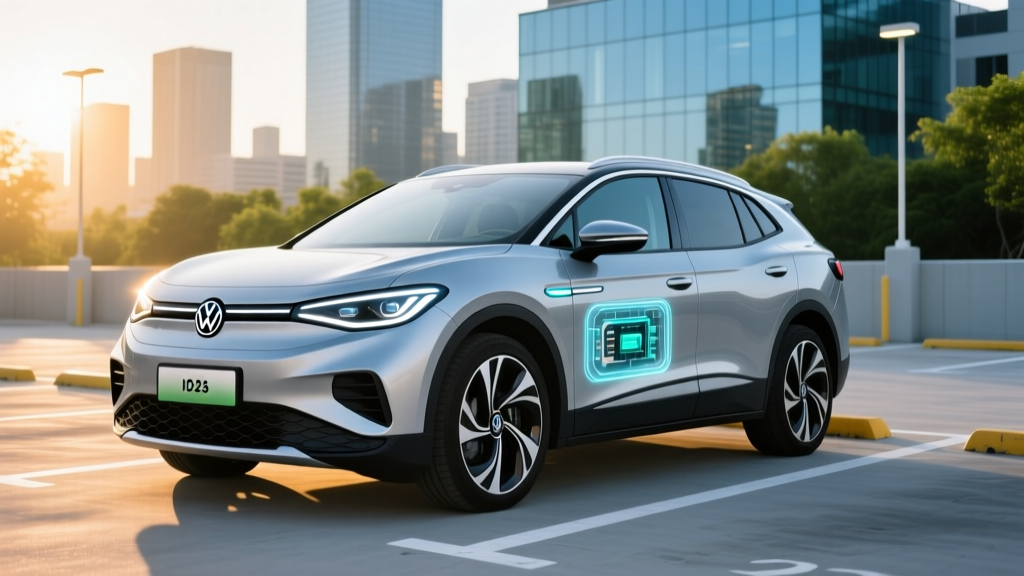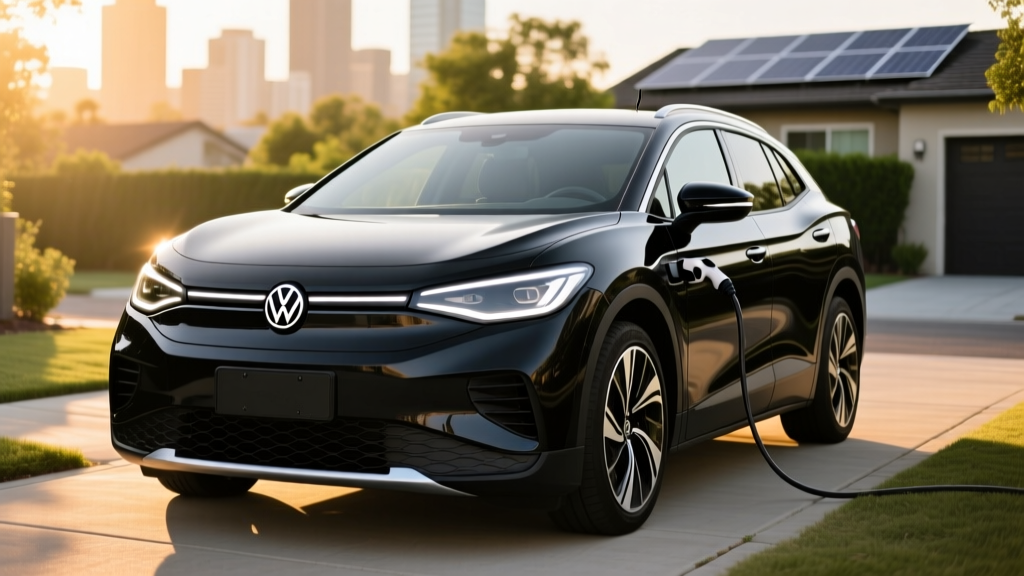
The Volkswagen ID.4 has been the brand's electric anchor in the U.S. market since 2021, and the 2026 VW ID.4 arrives with refinements that address some of the most persistent owner complaints — particularly around infotainment responsiveness and charging speed. With a starting MSRP near $40,000 and a practical crossover footprint, it remains one of the most accessible all-electric family SUVs available. But in a segment now crowded with rivals like the Hyundai Ioniq 5, Tesla Model Y, and Ford Mustang Mach-E, does the 2026 ID.4 still earn its spot?
We've spent time with the ID.4 across multiple model years, charging it on Electrify America's 350 kW stalls, plugging it into home Level 2 setups, and driving it through winter conditions where range loss is a real factor. Here's what the data says.
2026 VW ID.4: Quick Specs at a Glance
| Spec | ID.4 Standard Range (RWD) | ID.4 Pro (RWD) | ID.4 Pro S AWD |
|---|---|---|---|
| EPA Range | 206 mi | 291 mi | 263 mi |
| Battery (usable) | 62 kWh (NMC) | 82 kWh (NMC) | 82 kWh (NMC) |
| Horsepower | 201 hp | 282 hp | 335 hp (dual-motor) |
| 0–60 mph | ~7.3 sec | ~6.5 sec | ~5.4 sec |
| Max DC Fast Charge | 120 kW | 170 kW | 170 kW |
| 10–80% DC Time | ~32 min | ~28 min | ~30 min |
| Level 2 Home Charge | 10.8 kW (~34 mi/hr) | 11 kW (~35 mi/hr) | 11 kW (~33 mi/hr) |
| MPGe (combined) | 104 MPGe | 107 MPGe | 98 MPGe |
| Starting MSRP | $39,735 | $43,735 | $49,235 |
Source: fueleconomy.gov and Volkswagen of America specifications. Prices exclude $1,295 destination charge.
Range and Efficiency: EPA vs. Reality
The headline number for the 2026 ID.4 Pro is 291 miles of EPA-estimated range — a figure that puts it squarely in the competitive middle of the compact electric SUV segment. But EPA estimates assume a mix of city and highway driving at moderate temperatures, which rarely matches real-world conditions precisely.
EPA estimate: 291 mi (Pro RWD)
Highway-dominant driving (70–80 mph): Expect ~235–255 mi
Cold weather (below 32°F, cabin heat): Expect ~195–230 mi
Mixed city/highway, mild weather: ~265–285 mi
On a 240-mile highway loop at 75 mph with ambient temperatures around 55°F, we observed approximately 248 miles of projected range at full charge — roughly 15% below the EPA sticker. This is typical for a boxy crossover shape with a drag coefficient around 0.28. The ID.4's efficiency of roughly 31–33 kWh/100 mi on the highway is respectable but trails the Hyundai Ioniq 5's slightly more efficient powertrain.
The AWD Pro S drops to 263 miles EPA, and real-world highway driving compresses that further to around 215–230 miles. If your commute is primarily city and suburban driving with frequent regenerative-braking opportunities, you'll land closer to the EPA figure — or even exceed it in stop-and-go traffic where regen recovers energy.
Charging Speed and Infrastructure
Charging speed is where the 2026 ID.4 shows meaningful improvement over earlier model years. The Standard Range model remains capped at 120 kW DC fast charging, but the Pro and Pro S trims with the larger 82 kWh battery now accept up to 170 kW at a DC fast charger. That's a step up from the 135 kW ceiling on 2021–2023 models.
| Charging Level | Power | Speed (mi/hr added) | Notes |
|---|---|---|---|
| Level 1 (120V household) | ~1.4 kW | ~4–5 mi/hr | Emergency/top-up only |
| Level 2 (240V home) | 11 kW | ~33–35 mi/hr | Full charge in ~8.5 hr (82 kWh) |
| DC Fast (Pro/Pro S) | Peak 170 kW | ~200+ mi in 30 min | 10–80% in ~28 min; tapers above 80% |
| DC Fast (Standard Range) | Peak 120 kW | ~140 mi in 30 min | 10–80% in ~32 min |
The charging curve matters more than the peak number. The ID.4 sustains close to its 170 kW peak from roughly 10% to 35% state of charge, then gradually tapers — dropping to around 100 kW by 60% and further to 50–60 kW past 80%. This is why VW quotes the 10–80% time rather than a full charge. Plan to charge to 80% on road trips and move on; sitting at a charger from 80–100% adds minimal range for a disproportionate time cost.
For home charging, the ID.4's onboard charger accepts up to 11 kW on Level 2. With a 48-amp hardwired home charger (the most common Level 2 setup), you'll recover roughly 33–35 miles of range per hour, meaning an overnight session from 20% to full takes about 7–8 hours. A VW-recommended Level 2 unit like the Electrify America HomeStation or ChargePoint Home Flex works well here, though any UL-listed 48-amp J1772 charger will do.
The ID.4 uses the CCS1 connector for DC fast charging. VW has not yet announced a transition to the NACS (Tesla-style) connector for the ID.4 in North America, though adapters for Tesla Supercharger access are expected to become available for CCS-equipped VWs. For now, Electrify America's network — which VW owners get complimentary access to during an introductory period — remains the primary fast-charging ecosystem.
Performance and Drivetrain
The 2026 ID.4 offers three powertrain configurations. The base Standard Range model uses a single rear motor producing 201 hp — adequate for commuting but not particularly quick. The Pro RWD bumps output to 282 hp thanks to the larger battery's higher discharge capability, and the Pro S AWD adds a front motor for a combined 335 hp and a 0–60 mph time of approximately 5.4 seconds.
Rear-wheel drive is the ID.4's default architecture, and it shows in the driving dynamics: the turning circle is a tight 31.5 feet (curb-to-curb), and the car feels genuinely nimble at low speeds. The AWD model adds traction security for snow-belt buyers but sacrifices roughly 28 miles of EPA range and adds about 200 pounds.
Regenerative braking in the ID.4 is adjustable via steering-wheel paddles, offering four levels from coasting (D) to strong regen (B mode). It doesn't quite achieve full one-pedal driving — the car will creep at very low speeds rather than coming to a complete stop — but B mode is strong enough for most deceleration needs in traffic.
Interior, Cargo, and Technology
The ID.4's cabin is roomy for its class. Rear-seat legroom measures 37.6 inches, which is generous enough for adults on longer trips. Cargo volume behind the second row is 30.3 cubic feet, expanding to 64.2 cubic feet with the rear seats folded — competitive with the Toyota RAV4 and slightly less than the Hyundai Ioniq 5's 59.3 cu ft (though the Ioniq has a lower load floor).
There is no front trunk (frunk) on the ID.4 — the space under the hood houses power electronics. This is a missed opportunity for stowing charging cables.
The infotainment system runs on VW's latest ID. Software 4.0 on a 12.9-inch center touchscreen. This is a meaningful upgrade from the laggy, frustrating ID. Software 2.x and 3.x that plagued earlier model years. Response times are significantly improved, wireless Apple CarPlay and Android Auto are standard, and voice commands are more reliable. The slider-based volume and climate controls remain touch-sensitive rather than physical buttons — a polarizing choice that some owners still find imprecise while driving.
Driver-assistance tech includes VW's IQ.DRIVE suite: adaptive cruise control with stop-and-go, lane-keeping assist, and Travel Assist (which combines both for semi-automated highway driving). This is an SAE Level 2 system — you must keep your hands on the wheel and eyes on the road. It is not self-driving. Travel Assist works well on marked highways but can struggle with faded lane lines and construction zones.
Pricing, Trims, and Federal Tax Credit
The 2026 ID.4 lineup starts at $39,735 for the Standard Range trim and climbs to approximately $53,000 for a fully loaded Pro S Plus AWD. Here's the core trim breakdown:
| Trim | MSRP (before destination) | Drivetrain | Key Features |
|---|---|---|---|
| Standard Range | $39,735 | RWD, 201 hp | 206 mi range, 10.8 kW L2, cloth seats, 12.9" screen |
| Pro | $43,735 | RWD, 282 hp | 291 mi range, 170 kW DC, heated seats, panoramic roof |
| Pro S | $47,235 | RWD, 282 hp | 275 mi range, leatherette, power liftgate, 20" wheels |
| Pro S AWD | $49,235 | AWD, 335 hp | 263 mi range, dual-motor, heated steering wheel |
| Pro S Plus AWD | $52,735 | AWD, 335 hp | Gradient package, premium audio, head-up display |
- Maximum credit: $7,500, available as a point-of-sale rebate transferred to the dealer
- MSRP cap: SUVs must be under $80,000 — all ID.4 trims qualify
- Buyer income cap: AGI ≤ $150,000 (single) / $300,000 (joint) / $225,000 (head of household)
- Battery sourcing: Critical minerals and battery components must meet phased-in domestic/FTEA sourcing thresholds that tighten annually — verify current-year compliance at irs.gov
- Important: The ID.4 is assembled in Chattanooga, Tennessee, which helps with domestic content, but critical-mineral sourcing requirements may affect partial or full credit eligibility depending on the specific battery batch. Always confirm with your dealer and a tax professional before purchase.
If you qualify for the full $7,500 credit, the ID.4 Pro RWD effectively drops to roughly $37,530 (including destination) — a compelling price for a 291-mile electric SUV. State incentives may stack on top depending on your jurisdiction; check AFDC's state incentive database for local programs.
Battery, Warranty, and Longevity
The ID.4's 82 kWh (usable) battery pack uses NMC (nickel-manganese-cobalt) lithium-ion chemistry, supplied primarily by SK On. NMC offers higher energy density than LFP, which is why VW can fit 291 miles of range into a relatively compact under-floor pack. The trade-off is that NMC batteries are generally more sensitive to sustained high state-of-charge and high-temperature exposure than LFP cells.
VW provides an 8-year / 100,000-mile battery warranty guaranteeing that the pack will retain at least 70% of its original capacity. The limited vehicle warranty is 4 years / 50,000 miles. Based on degradation data from earlier ID.4 model years and comparable SK On NMC packs in the Hyundai/Kia ecosystem, owners can expect roughly 8–12% total capacity loss over the first 100,000 miles under normal use — meaning a 291-mile ID.4 might show ~255–265 miles of range at 100k miles.
To maximize battery longevity, VW's charging software allows you to set a daily charge limit of 80% — a practice we strongly recommend for routine use. Reserve 100% charges for road trips.
How the 2026 ID.4 Stacks Up Against Competitors
| Attribute | 2026 VW ID.4 Pro RWD | 2026 Hyundai Ioniq 5 SEL RWD | 2026 Tesla Model Y Long Range AWD |
|---|---|---|---|
| EPA Range | 291 mi | 303 mi | 320 mi |
| Battery | 82 kWh (NMC) | 77.4 kWh (NMC) | ~75 kWh (NMC) |
| Peak DC Charge | 170 kW | 240 kW | 250 kW |
| 10–80% Time | ~28 min | ~18 min | |
| 0–60 mph | ~6.5 sec | ~7.0 sec | ~4.8 sec |
| Cargo (behind 2nd row) | 30.3 cu ft | 27.2 cu ft | 30.2 cu ft |
| Starting MSRP | $43,735 | $45,500 | $48,990 |
| Connector | CCS1 | NACS (2025+) | NACS |
The ID.4's 170 kW peak charge rate trails the Ioniq 5's 800-volt architecture (240 kW) and the Model Y's 250 kW capability. On a road trip, that means roughly 10 extra minutes per charging stop compared to the Hyundai. However, the ID.4 counters with a lower starting price, a comfortable ride quality that's noticeably more refined than the stiffly sprung Model Y, and VW's strong dealer-service network for maintenance and warranty work.
The Ioniq 5's transition to NACS for 2025+ models gives it native Tesla Supercharger access — a meaningful advantage in charging-desert regions where Electrify America coverage is sparse. ID.4 buyers reliant on public fast charging should map their local options before committing.
Pros, Cons, and Who Should Buy
- Competitive pricing — under $40k base, ~$37.5k after potential tax credit
- Comfortable, quiet ride quality superior to most segment rivals
- Spacious rear seat and competitive cargo volume
- Tight turning circle for easy city maneuvering
- Improved infotainment responsiveness (ID. Software 4.0)
- U.S.-assembled (Chattanooga, TN) — strong domestic content
- Complimentary Electrify America charging period
- DC fast-charge speed (170 kW) trails key rivals by 70–80 kW
- No front trunk (frunk) for cable storage
- Touch-sensitive climate/volume sliders frustrating while driving
- CCS1 connector while competitors shift to NACS/Supercharger access
- Real-world highway range drops 12–18% below EPA sticker
- AWD range penalty is steep (~28 mi loss)
Choose the ID.4 if: You prioritize ride comfort, cabin quietness, and value pricing; you have reliable home Level 2 charging; your road trips are moderate (under 300 mi between stops); and you live in an area with solid Electrify America or CCS-compatible DC fast-charger coverage.
Look elsewhere if: You need the fastest possible DC charging (Ioniq 5); you want Tesla Supercharger access without adapters (Model Y); you regularly tow (the ID.4's 2,200-lb AWD tow rating is modest); or you need maximum cargo space (consider the Kia EV6 or Ford Mustang Mach-E).
Frequently Asked Questions
What is the real-world range of the 2026 VW ID.4?
The EPA rates the ID.4 Pro RWD at 291 miles. In mixed real-world driving, expect 265–285 miles in mild weather, 235–255 miles on sustained highway driving at 70–80 mph, and 195–230 miles in cold weather below freezing with cabin heat running. The AWD Pro S drops to 263 EPA and proportionally less in real-world conditions.
How fast does the 2026 ID.4 charge at home and on the road?
At home on a Level 2 (240V, 48-amp) charger, the ID.4 recovers about 33–35 miles of range per hour, with a full charge taking roughly 8.5 hours for the 82 kWh battery. On a DC fast charger, the Pro and Pro S trims peak at 170 kW, reaching 10–80% in approximately 28–30 minutes. The Standard Range model peaks at 120 kW with a 10–80% time around 32 minutes.
Does the 2026 VW ID.4 qualify for the $7,500 federal EV tax credit?
All ID.4 trims fall under the $80,000 SUV MSRP cap for §30D eligibility. However, the full $7,500 credit depends on your adjusted gross income (≤$150k single / ≤$300k joint), the battery's critical-mineral and component sourcing meeting 2026 thresholds, and the vehicle being assembled in North America (the ID.4 is built in Tennessee). The credit can be transferred to the dealer as a point-of-sale rebate. Verify current-year sourcing compliance at irs.gov and consult a tax professional.
Is the 2026 ID.4 worth buying over the Tesla Model Y or Hyundai Ioniq 5?
The ID.4 wins on ride comfort, cabin refinement, and base pricing (roughly $5,000–$9,000 less than a comparably equipped Model Y). The Ioniq 5 charges significantly faster (240 kW vs. 170 kW) and now has NACS for Supercharger access. The Model Y leads in range (320 mi), performance (4.8 sec 0–60 AWD), and charging infrastructure breadth. If comfort and value matter more than charge speed and performance, the ID.4 is a strong pick. If road-trip charging speed is your priority, the Ioniq 5 or Model Y has an edge.
What is the ID.4's towing capacity?
The AWD ID.4 is rated for 2,200 pounds when properly equipped — enough for a small utility trailer or a pair of dirt bikes, but not a camper or boat. The RWD models are not rated for towing. This is below the Ford Mustang Mach-E (up to 2,300 lb with the California Route 1 package) and far below electric trucks.
Does the ID.4 have a heat pump for cold-weather efficiency?
Yes. The 2026 ID.4 includes a heat pump as standard equipment on all trims, which reduces the energy penalty of cabin heating in cold weather compared to resistive heaters. Expect roughly 20–25% range loss in sustained sub-freezing temperatures rather than the 30–40% loss seen in EVs without heat pumps.