Quick Verdict: The ID.4 Lease Makes Sense for Suburban Commuters
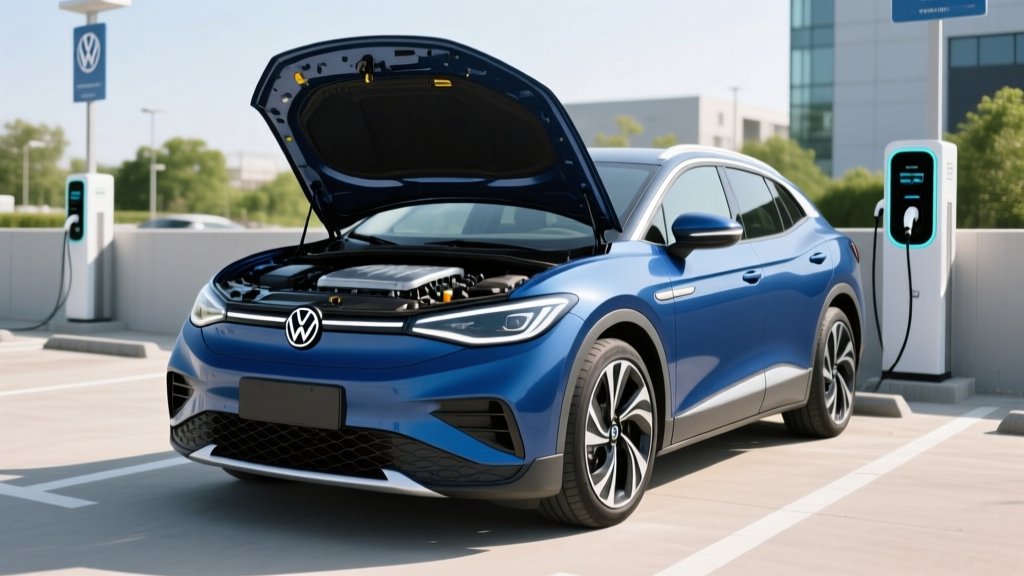
The 2026 Volkswagen ID.4 remains one of the most accessible electric SUVs on the market, and leasing one can be a smart way to sidestep depreciation risk while locking in a low monthly payment. With an EPA-estimated range up to 275 miles, competitive DC fast-charging speeds, and a starting MSRP around $39,735, the ID.4 targets buyers who want a practical, no-drama EV for daily driving and moderate road trips. But before you sign a lease, you need to understand what this SUV actually delivers beyond the brochure — especially when highway speeds and cold weather shrink that range figure.
EPA Estimated: 275 miles (Pro S AWD, 82 kWh battery)
Real-World Highway (70 mph, 72°F): Expect 230–245 miles
Cold Weather (30°F, mixed driving): Expect 190–220 miles
City/Commuter (stop-and-go, regen-heavy): 260–280 miles — often beats EPA
The ID.4's range holds up well in city driving where regenerative braking recaptures energy, but highway efficiency suffers like most EVs due to aerodynamic drag. In sub-freezing temperatures, the battery's internal resistance increases and cabin heating draws significant power, cutting range by 15–25%. If your commute is under 40 miles round-trip and you charge at home, you'll rarely think about range. For longer trips, plan charging stops around the 200-mile mark in winter to maintain a comfortable buffer.
2026 VW ID.4 Specs at a Glance
| Specification | Pro (RWD) | Pro S AWD |
|---|---|---|
| EPA Range | 275 mi | 263 mi |
| Battery (usable) | 82 kWh (NMC) | 82 kWh (NMC) |
| Horsepower | 282 hp | 335 hp |
| 0–60 mph | 7.7 sec | 5.4 sec |
| Drivetrain | Rear-Wheel Drive | Dual-Motor AWD |
| Max DC Fast Charge | 170 kW | 170 kW |
| 10–80% DC Time | ~28 min | ~28 min |
| Level 2 Charge Rate | 11 kW (~37 mi/hr) | 11 kW (~37 mi/hr) |
| MPGe (combined) | 104 MPGe | 98 MPGe |
| kWh/100 mi | 32 kWh | 34 kWh |
| Cargo (rear seats up) | 30.3 cu ft | 30.3 cu ft |
| Cargo (rear seats folded) | 64.2 cu ft | 64.2 cu ft |
| Rear Legroom | 37.6 in | 37.6 in |
| Base MSRP | $39,735 | $47,735 |
Source: EPA / fueleconomy.gov, Volkswagen of America
Charging: What You'll Actually Experience
The ID.4 peaks at 170 kW on a DC fast charger — respectable, though not class-leading. Here's what that means in practice:
| Charging Level | Power | Speed (miles added per hour) | Typical Use Case |
|---|---|---|---|
| Level 1 (120V outlet) | 1.4 kW | ~4–5 mi/hr | Emergency / overnight trickle |
| Level 2 (240V, home) | 11 kW | ~37 mi/hr | Daily home charging (full in ~8 hrs) |
| DC Fast (public) | Up to 170 kW | ~200+ mi in 30 min | Road trips |
The charging curve matters. The ID.4 sustains near-peak power up to roughly 55% state of charge, then tapers progressively. A 10–80% session takes about 28 minutes at a 175+ kW station, but pushing from 80–100% can add another 25–30 minutes. For road trips, plan to hop between chargers at 80% rather than waiting for a full charge — you'll arrive faster.
At home on a Level 2 charger, the ID.4 adds roughly 37 miles of range per hour. A depleted battery reaches full in about 8 hours, meaning you plug in at night and wake up to a full charge every morning. If your electrical panel supports a 48-amp circuit (60-amp breaker), you'll get the full 11 kW. On a 32-amp circuit, expect closer to 7.7 kW and a 10–11 hour fill.
Pricing, Lease Economics & Federal Tax Credit
The 2026 ID.4 starts at $39,735 for the Pro (RWD) and climbs to $47,735 for the Pro S AWD. Fully loaded Pro S Plus AWD models push past $53,000. But most buyers considering an ID.4 lease care about monthly payments, not sticker price.
| Trim | Base MSRP | Est. Monthly Lease (36 mo, $3,500 down) | §30D Tax Credit Eligibility |
|---|---|---|---|
| Pro (RWD) | $39,735 | ~$299–$349 | Yes — up to $7,500 (see rules below) |
| Pro S (RWD) | $43,735 | ~$349–$399 | Yes — up to $7,500 |
| Pro S AWD | $47,735 | ~$399–$449 | Yes — up to $7,500 |
| Pro S Plus AWD | $53,235 | ~$449–$509 | Yes — up to $7,500 |
Lease vs. Buy Tax Credit Note: Under current IRS rules, the §30D federal tax credit applies to purchases, not leases directly. However, many lessors (including VW Credit) pass the credit's value into the lease as a capitalized-cost reduction, effectively lowering your monthly payment. Some leases also qualify under the commercial clean vehicle credit (§45W), which the lessor claims and factors into pricing. Always confirm with the dealer how the credit is applied before signing.
- MSRP Cap: SUVs/vans/pickups must be under $80,000 (all ID.4 trims qualify)
- Income Cap: AGI ≤ $150,000 (single), $225,000 (head of household), $300,000 (joint)
- Battery Sourcing: Critical minerals and battery components must meet phased-in domestic/free-trade-agreement thresholds — verify current-year compliance on IRS.gov
- Point-of-Sale Transfer: Eligible buyers can transfer the credit to the dealer for an immediate price reduction
- Assembly: Final assembly must occur in North America (ID.4 is built in Chattanooga, TN — qualifies)
Performance & Driving Impressions
The ID.4 isn't a performance EV, but it doesn't feel slow. The RWD Pro's 282 hp and 7.7-second 0–60 time are adequate for merging and passing, while the AWD Pro S's 335 hp and 5.4-second sprint genuinely surprise passengers expecting a sedate crossover.
Ride quality is a strong point. VW tuned the suspension for comfort over sportiness, absorbing highway imperfections and potholes with composure. The turning circle is surprisingly tight (31.5 feet for RWD), making parking lots and U-turns easy. Steering is light and numb — a common EV trait — but precise enough for daily driving.
The ID.4's regenerative braking is modest compared to one-pedal-driving EVs like the Chevrolet Equinox EV or Tesla Model Y. You can toggle regen strength via steering-wheel paddles or a "B" mode, but the ID.4 won't come to a complete stop on regen alone. Drivers who prefer strong one-pedal behavior may find this frustrating; those transitioning from gas cars often prefer the gentler deceleration.
Tech, Interior & Driver Assistance
The ID.4's cabin is minimalist and spacious. The 12.9-inch touchscreen (standard on Pro S and above) runs VW's ID.Software with wireless Apple CarPlay and Android Auto. The smaller 10.25-inch digital cluster behind the wheel handles speed and range info. Physical controls are scarce — climate, volume, and even heated-seat toggles are touch-sensitive sliders, which draws consistent criticism for being fiddly while driving.
Driver Assistance (SAE Level 2): The ID.4 comes with VW's IQ.DRIVE suite, including adaptive cruise control with stop-and-go, lane-centering assist, automatic emergency braking, and blind-spot monitoring. This is not self-driving — it's a Level 2 system requiring active driver supervision at all times. The lane-centering is competent on well-marked highways but can hunt on faded lines. VW does not currently offer a hands-free system comparable to GM's Super Cruise or Ford's BlueCruise.
Practical touches include a flat load floor, 64.2 cu ft of cargo space with seats folded (enough for a week's camping gear or a Costco haul), and a small front trunk (frunk) for charging cables. Rear-seat legroom of 37.6 inches comfortably fits adults on long trips.
Pros, Cons & Who Should Lease the ID.4
- Comfortable ride and quiet cabin at highway speeds
- Spacious interior with 64.2 cu ft cargo capacity
- Competitive real-world range for the segment (230–275 mi)
- Built in Tennessee — qualifies for §30D credit
- Standard 3 years of complimentary Electrify America charging (limited kWh)
- Tight turning circle for urban maneuverability
- Touch-sensitive controls frustrating to use while driving
- No true one-pedal driving mode
- DC fast charging (170 kW) trails Hyundai/Kia rivals (240+ kW)
- Infotainment software occasionally sluggish
- Driver-assist less refined than GM Super Cruise or Ford BlueCruise
- No front trunk (frunk) on early-production models; 2025+ adds small frunk
Best for: Suburban families and commuters who drive 30–80 miles daily, charge at home, and take 2–4 road trips per year. The AWD version handles light snow confidently. If you regularly tow (max 2,700 lbs) or need 300+ miles of highway range, look at the Ford Mustang Mach-E Extended Range or Hyundai Ioniq 5 instead.
How the ID.4 Stacks Up Against Key Competitors
| Attribute | 2026 VW ID.4 Pro S AWD | 2026 Hyundai Ioniq 5 SEL AWD | 2026 Tesla Model Y Long Range AWD |
|---|---|---|---|
| EPA Range | 263 mi | 290 mi | 320 mi |
| Battery | 82 kWh (NMC) | 77.4 kWh (NMC) | 75 kWh (NMC/LFP variant) |
| Peak DC Charge | 170 kW | 240 kW | 250 kW |
| 10–80% Time | ~28 min | ~18 min | ~20 min |
| 0–60 mph | 5.4 sec | 5.1 sec | 4.8 sec |
| Cargo (rear up) | 30.3 cu ft | 27.2 cu ft | 30.2 cu ft |
| Base MSRP (AWD) | $47,735 | $49,500 | $48,990 |
| §30D Credit | Yes | Partial (check sourcing) | Yes |
The Ioniq 5 charges significantly faster and offers more range, but the ID.4 wins on rear-seat space and ride comfort. The Model Y delivers the best range and Supercharger access but has a firmer ride and a learning curve for the minimalist interior. If charging speed is your top priority for frequent road trips, the Ioniq 5 or Model Y are better picks. If daily comfort and value drive your ID.4 lease decision, the VW holds its ground.
Warranty & Long-Term Battery Outlook
Volkswagen covers the ID.4's battery and powertrain for 8 years or 100,000 miles (whichever comes first), with a guaranteed minimum 70% state of health over that period. The limited vehicle warranty runs 4 years / 50,000 miles. These terms match industry norms and provide solid peace of mind through a typical 3-year lease and beyond.
The ID.4 uses NMC (nickel-manganese-cobalt) battery chemistry, which offers high energy density but is more sensitive to sustained high states of charge than LFP. For maximum longevity, VW recommends setting the daily charge limit to 80% and only charging to 100% before long trips. Expect 1–2% annual degradation under normal use — after 5 years, most ID.4 owners report 90–94% battery health based on community data.
Frequently Asked Questions
What is the real-world range of the 2026 VW ID.4?
The EPA rates the ID.4 Pro (RWD) at 275 miles and the Pro S AWD at 263 miles. In real-world highway driving at 70 mph, expect 230–245 miles. In cold weather below freezing, plan for 190–220 miles. City commuters using regenerative braking often match or exceed the EPA estimate.
How fast does the ID.4 charge at home and on the road?
At home on a Level 2 (240V) charger, the ID.4 charges at up to 11 kW, adding about 37 miles of range per hour — a full charge takes roughly 8 hours. On a DC fast charger, it peaks at 170 kW, reaching 10–80% in about 28 minutes. Charging slows significantly above 80% to protect the battery.
Does the 2026 ID.4 qualify for the $7,500 federal tax credit?
Yes — the ID.4 is assembled in Chattanooga, Tennessee, and all trims fall under the $80,000 SUV MSRP cap. However, buyer eligibility depends on adjusted gross income limits ($150K single / $300K joint) and battery-sourcing requirements that phase in annually. Verify your eligibility on IRS.gov or consult a tax professional. For leases, the lessor may claim a commercial credit and pass savings through lower payments.
Is leasing the ID.4 better than buying?
Leasing makes sense if you want lower monthly payments, plan to upgrade in 3 years, and want to avoid long-term depreciation risk. Buying makes sense if you drive under 12,000 miles/year, want to claim the §30D credit directly at point of sale, and plan to keep the vehicle 5+ years. Lease deals often include the credit's value as a cap-cost reduction, so compare both scenarios with your dealer.
How does the ID.4 compare to the Tesla Model Y and Hyundai Ioniq 5?
The ID.4 offers the most comfortable ride and best rear-seat space of the three, but trails in DC charging speed (170 kW vs. 240–250 kW) and EPA range (263 mi AWD vs. 290–320 mi). The Model Y wins on range and Supercharger network access; the Ioniq 5 wins on charging speed. The ID.4 wins on ride comfort, cabin quietness, and often on lease pricing after incentives.
What are the biggest complaints from ID.4 owners?
The most common criticisms are the touch-sensitive climate and volume controls (hard to use while driving), infotainment software that can lag, and the lack of strong one-pedal regenerative braking. VW has improved software responsiveness in 2025–2026 models, but the touch controls remain a pain point. None of these affect the driving experience mechanically — they're ergonomic frustrations.
Always confirm current pricing, tax-credit eligibility, and lease terms with your local Volkswagen dealer and a qualified tax professional. Incentive rules change, and this guide reflects 2026 model-year information available at publication.