Quick Verdict: The VW ID Crozz Is Coming, But Is It Worth Waiting For?
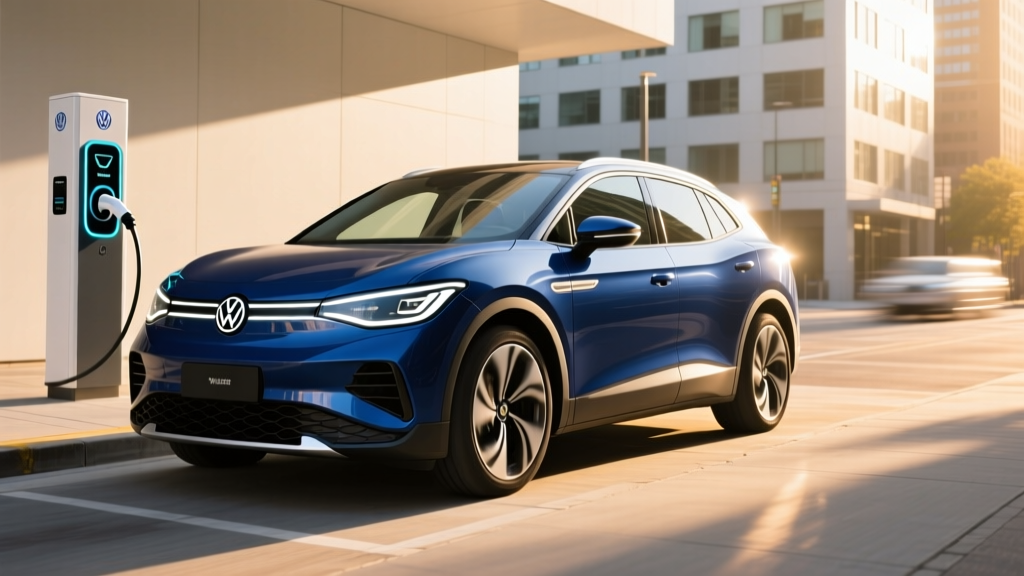
The 2026 VW ID Crozz is Volkswagen's sportback-styled crossover sibling to the ID.4, built on the same MEB platform but with a lower roofline, more aggressive styling, and a slightly different market pitch. If you've been searching for a VW ID Crozz review, here's the critical context first: as of early 2026, Volkswagen has not officially confirmed U.S. availability for the ID Crozz. The model has been shown as a concept and is anticipated for global markets, but American buyers may need to wait—or look to the ID.4 as the practical alternative.
This review covers everything we know from Volkswagen's preliminary specifications, European market data where the ID Crozz has been referenced, and what U.S. buyers should expect regarding range, charging, pricing, and federal tax credit eligibility. If the ID Crozz arrives stateside, here's the data-driven breakdown.
VW ID Crozz Specs at a Glance
| Specification | Estimated / Preliminary |
|---|---|
| EPA Range (est.) | 275–295 miles |
| Battery Capacity | 77 kWh usable (NMC chemistry) |
| Max DC Fast Charge | 175 kW peak |
| 10–80% DC Charge Time | ~30 minutes |
| Level 2 Home Charging | 11 kW (approx. 35 miles/hr) |
| 0–60 mph | ~7.5 sec (RWD) / ~6.2 sec (AWD GTX est.) |
| Horsepower | 201 hp (RWD) / 295 hp (AWD est.) |
| Drivetrain | Rear-wheel drive standard; AWD optional |
| MPGe (est. combined) | 104–110 MPGe |
| Efficiency | ~30–31 kWh/100 mi |
| Cargo Volume | ~27 cu ft (rear seats up) / ~60 cu ft (folded) |
| Base MSRP (est.) | $42,000–$48,000 |
| Battery/Powertrain Warranty | 8 years / 100,000 miles |
Note: Specs above are based on the ID.4 platform and Volkswagen's preliminary disclosures for the ID Crozz concept. Final U.S. specifications may differ. Volkswagen has not confirmed a U.S. launch date.
Range and Efficiency: What to Expect in the Real World
Real-World Expectation: Expect 230–260 miles on mixed highway driving at 70+ mph. In cold weather (below 30°F), plan for a 20–30% reduction, bringing usable range down to approximately 190–220 miles. The sportback roofline offers a slight aerodynamic advantage over the boxier ID.4, but real-world efficiency will depend heavily on tire choice, climate control use, and terrain.
The ID Crozz shares the MEB platform with the Volkswagen ID.4, which carries an EPA rating of 275 miles for its RWD Pro S trim with the 77 kWh battery. The Crozz's lower, more aerodynamic profile could yield a modest range bump—potentially 10–20 additional miles—but Volkswagen has not published official EPA figures for a U.S.-spec Crozz.
For context, the ID.4 achieves approximately 104 MPGe combined (30 kWh/100 mi). The Crozz, with its slightly improved drag coefficient, could edge toward 110 MPGe in ideal conditions. However, highway efficiency drops sharply above 75 mph in all MEB-platform vehicles, and cold-weather range loss remains a factor for NMC chemistry packs without a standard heat pump in all trims.
Owner takeaway: If your daily commute is under 60 miles round-trip, the ID Crozz will handle it effortlessly with home charging. For road trips exceeding 200 miles, you'll need at least one DC fast-charging stop—plan accordingly.
Charging Speed: DC Fast Charging and Home Level 2
| Charging Level | Power / Rate | Miles Added per Hour | Time (10–80%) |
|---|---|---|---|
| Level 1 (120V household) | 1.4 kW | ~4–5 mi/hr | N/A (overnight partial) |
| Level 2 (240V home) | 11 kW | ~35 mi/hr | ~7–8 hours (full charge) |
| DC Fast Charge | 175 kW peak | ~180+ mi in 10 min (peak) | ~30 min (10–80%) |
The ID Crozz is expected to support up to 175 kW peak DC fast charging, a slight improvement over the ID.4's 170 kW capability. However, peak rate is not sustained rate. Based on ID.4 charging curve data, expect the Crozz to hold above 150 kW only between approximately 10–35% state of charge, tapering to ~100 kW by 60% and dropping further to ~50 kW above 80%.
This means the advertised "30-minute 10–80% charge" assumes ideal conditions: a 350 kW-capable charger (Electrify America, for example), battery preconditioning enabled via navigation routing, and moderate ambient temperatures (60–80°F). In cold weather or on a 150 kW charger, expect 10–80% times closer to 38–45 minutes.
For home charging, the 11 kW onboard charger means a full 0–100% charge takes approximately 7–8 hours on a properly installed Level 2 station (48-amp circuit recommended). This is adequate for overnight replenishment but requires a 240V/50-amp circuit—budget $800–$2,000 for professional installation depending on your electrical panel's capacity and proximity to the garage.
Performance and Drivetrain
The ID Crozz is expected to offer two powertrain configurations mirroring the ID.4:
- Rear-Wheel Drive (RWD): Single motor, 201 horsepower, 229 lb-ft torque. 0–60 mph in approximately 7.5 seconds. Adequate for daily commuting and highway merging, but not sporty.
- All-Wheel Drive (AWD / GTX est.): Dual motor, ~295 horsepower, ~339 lb-ft torque. 0–60 mph in approximately 6.2 seconds. Noticeably quicker, with better traction in rain and snow.
The MEB platform's rear-biased weight distribution gives the ID Crozz competent handling for a crossover, though it's not a sports car. Regenerative braking offers multiple levels (B-mode for stronger regen, though not true one-pedal driving in all model years). The ride quality is compliant, with Volkswagen tuning the suspension for comfort over sportiness.
Towing: If equipped with a factory tow hitch, the AWD variant is expected to tow up to 2,700 lbs—sufficient for a small utility trailer or a pair of dirt bikes, but not a large camper.
Pricing, Trims, and Federal Tax Credit Eligibility
| Trim (Estimated) | Base MSRP | Est. After §30D Credit* |
|---|---|---|
| Crozz Pro (RWD) | $42,000 | $34,500 |
| Crozz Pro S (RWD) | $46,000 | $38,500 |
| Crozz AWD Pro S | $50,000 | $42,500 |
| Crozz GTX (AWD) | $54,000 | $46,500 |
*Federal tax credit estimates assume full $7,500 eligibility under IRS §30D. Actual eligibility depends on buyer income, vehicle MSRP caps, battery component sourcing, and critical mineral requirements. Point-of-sale transfer is available at participating dealers.
Federal Tax Credit Eligibility Checklist (2026 Rules):
- MSRP Cap: SUVs/crossovers must be priced at or below $80,000. All ID Crozz trims should qualify.
- Buyer Income Cap: Adjusted gross income must not exceed $150,000 (single), $225,000 (head of household), or $300,000 (joint filers).
- Battery Sourcing: At least 60% of battery components must be manufactured or assembled in North America (2026 threshold). Critical minerals must meet a 70% threshold from U.S. or FTA-partner countries. Volkswagen's Chattanooga, TN assembly and battery sourcing strategy will determine final eligibility.
- Point-of-Sale Transfer: Buyers can transfer the credit to the dealer at purchase, reducing the out-of-pocket price immediately—no need to wait for tax filing.
Volkswagen assembles the ID.4 in Chattanooga, Tennessee, which supports domestic content requirements. If the ID Crozz is U.S.-bound, it would likely share this production line, improving its odds of full §30D eligibility. However, battery cell sourcing (currently from SK Innovation and other suppliers) must meet the evolving critical-mineral thresholds. Always verify eligibility at fueleconomy.gov before purchasing.
Interior, Cargo, and Technology
The ID Crozz's sportback silhouette trades a small amount of rear headroom and cargo height for style. Estimated interior dimensions:
- Cargo Volume: ~27 cu ft behind the second row; ~60 cu ft with rear seats folded (compared to the ID.4's 30.3 / 64.2 cu ft)
- Rear Legroom: ~37.6 inches (shared with ID.4 platform)
- Front Headroom: ~40.5 inches (slightly reduced vs. ID.4 due to roofline)
The infotainment system is expected to feature VW's latest ID. Software 4.0 with a 12.9-inch touchscreen, wireless Apple CarPlay and Android Auto, and over-the-air update capability. The digital cockpit uses a compact 5.3-inch instrument cluster behind the steering wheel, with most controls routed through the central touchscreen or capacitive touch sliders.
Driver Assistance (SAE Level 2): The ID Crozz will include Volkswagen's IQ.DRIVE suite—adaptive cruise control with stop-and-go, lane centering, automatic emergency braking, and blind-spot monitoring. This is an SAE Level 2 system, meaning the driver must remain fully engaged with hands on the wheel and eyes on the road. It is not autonomous driving.
Pros, Cons, and Who Should Buy the VW ID Crozz
Pros
- Sportback styling stands out in a sea of boxy crossovers
- Competitive ~280-mile EPA range with efficient MEB platform
- 175 kW DC fast charging enables practical road trips
- Likely full $7,500 federal tax credit eligibility (U.S.-built)
- Comfortable ride quality with compliant suspension tuning
- 8-year/100,000-mile battery warranty
Cons
- U.S. availability not confirmed as of early 2026
- Reduced cargo volume vs. ID.4 due to sportback roofline
- Infotainment software has been a weak point for VW's ID. family
- RWD model's 7.5-sec 0–60 time is unremarkable
- Capacitive touch controls can be distracting while driving
- Real-world range drops significantly in cold weather without heat pump
- You want a stylish electric crossover that isn't an SUV clone
- Your daily driving is under 80 miles and you can charge at home
- You qualify for the federal tax credit and want to maximize savings
- You value ride comfort over sporty handling
- You need maximum cargo space (consider the ID.4 or Hyundai Ioniq 5)
- You want the fastest DC charging in the segment (Hyundai Ioniq 5 peaks at 350 kW on 800V architecture)
- You need a confirmed U.S. model available now (the ID.4 is on sale today)
- You frequently drive in extreme cold and need a guaranteed heat pump
How the VW ID Crozz Compares to Key Competitors
| Spec | VW ID Crozz (Est.) | VW ID.4 Pro S | Hyundai Ioniq 5 SEL | Ford Mustang Mach-E Select |
|---|---|---|---|---|
| EPA Range | ~285 mi | 275 mi | 303 mi | 250 mi |
| Battery | 77 kWh NMC | 77 kWh NMC | 77.4 kWh NMC | 70 kWh NMC |
| DC Fast Charge | 175 kW | 170 kW | 350 kW (peak) | 150 kW |
| 10–80% Time | ~30 min | ~30 min | ~18 min | ~38 min |
| 0–60 mph | ~7.5 sec | 7.7 sec | 7.0 sec | 6.3 sec |
| Cargo (rear up) | ~27 cu ft | 30.3 cu ft | 27.2 cu ft | 29.7 cu ft |
| Base MSRP | ~$42,000 | $43,590 | $42,600 | $42,995 |
| Federal Credit | Est. $7,500 | $7,500 | $7,500 | $3,750 (partial) |
The ID Crozz slots into a competitive segment where the Hyundai Ioniq 5 dominates on charging speed (800V architecture enabling 350 kW peak), the ID.4 offers more cargo volume and confirmed availability, and the Mach-E delivers stronger performance. The Crozz's advantage is its styling and Volkswagen's U.S. manufacturing footprint supporting tax credit eligibility.
Frequently Asked Questions
Is the VW ID Crozz available to buy in the United States?
As of early 2026, Volkswagen has not confirmed U.S. sales of the ID Crozz. It has been shown as a concept and referenced in global market plans. American buyers should monitor VW's official announcements or consider the ID.4, which is currently on sale.
What is the real-world range of the VW ID Crozz?
Based on the 77 kWh battery and MEB platform efficiency, expect approximately 230–260 miles in mixed highway driving and 190–220 miles in cold weather (below 30°F). The EPA sticker may read ~285 miles, but real-world conditions—especially speed, temperature, and terrain—reduce that figure.
How fast does the VW ID Crozz charge?
On a 350 kW-capable DC fast charger with battery preconditioning, the ID Crozz can peak at 175 kW and charge from 10–80% in approximately 30 minutes under ideal conditions. At home on Level 2 (240V, 48A), a full charge takes 7–8 hours at 11 kW.
Does the VW ID Crozz qualify for the $7,500 federal tax credit?
If U.S.-spec models are assembled in Chattanooga and meet 2026 battery sourcing thresholds, the ID Crozz should qualify for the full $7,500 under IRS §30D. However, buyer income caps ($150K single / $300K joint) and the $80K MSRP cap for SUVs apply. Verify at fueleconomy.gov before purchasing.
Is the VW ID Crozz worth buying over the ID.4?
If styling is a priority and you can accept slightly less cargo volume, the Crozz offers a compelling alternative. If you need maximum practicality, confirmed U.S. availability, and easier service access, the ID.4 is the safer bet today.
What battery chemistry does the VW ID Crozz use?
The ID Crozz is expected to use NMC (nickel manganese cobalt) chemistry, consistent with the MEB platform. NMC offers high energy density but is more sensitive to extreme cold than LFP (lithium iron phosphate). Volkswagen provides an 8-year/100,000-mile battery warranty covering capacity retention above 70%.