Quick Answer: Should You Buy the 2026 Toyota bZ Woodland?
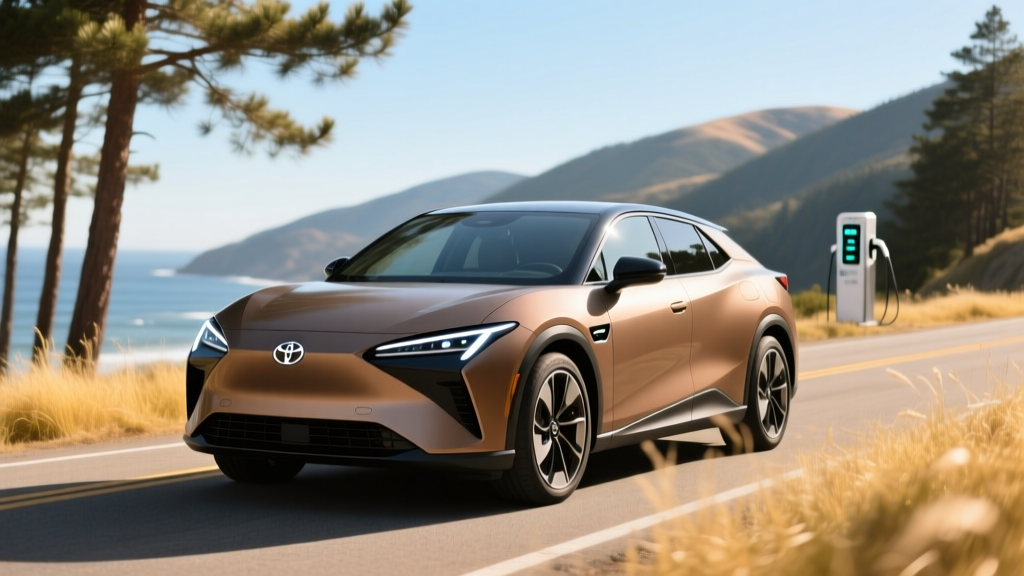
Toyota introduces the 2026 bZ Woodland EV with AWD as a rugged, dual-motor electric crossover aimed at outdoor-oriented buyers who want Toyota reliability without stepping into a full-size truck. Based on Toyota's preliminary specifications, the bZ Woodland targets an EPA-estimated 280 miles of range, a 74.4 kWh usable NMC battery, DC fast charging up to 150 kW (10–80% in approximately 30 minutes), and a starting MSRP around $43,000 before incentives. It qualifies for partial or full §30D federal tax credit depending on battery-sourcing compliance — check the latest IRS eligible vehicle list before purchasing. If you need a capable AWD EV for mixed terrain and daily driving under 200 miles, it's a strong contender. If you regularly road-trip 400+ miles or live in a charging desert, consider a RAV4 Hybrid or a longer-range platform instead.
What the 2026 bZ Woodland Actually Brings to the Table
The bZ Woodland slots above the bZ4X in Toyota's electric lineup, trading some efficiency for ground clearance, all-weather capability, and a more adventurous design. Toyota positions it against the Subaru Solterra (which shares the e-TNGA platform), the Hyundai Ioniq 5 AWD, and the Volkswagen ID.4 AWD. Unlike those competitors, Toyota is emphasizing trail-oriented tuning — slightly firmer suspension calibration, standard all-terrain tires on the Trail trim, and an X-MODE-style traction management system borrowed from Subaru's partnership engineering.
Here are the preliminary specifications based on Toyota's announcement data:
| Spec | Value |
|---|---|
| Battery (usable) | 74.4 kWh, NMC chemistry |
| EPA Range (est.) | ~280 miles (AWD) |
| Real-World Highway Range | ~230–250 miles (70–80 mph, moderate temps) |
| Cold-Weather Range (20°F) | ~195–215 miles |
| Drivetrain | Dual-motor AWD, ~375 hp combined |
| 0–60 mph | ~5.0 seconds (est.) |
| DC Fast Charge (peak) | 150 kW (CCS1/NACS adapter) |
| 10–80% DC Charge Time | ~30 minutes |
| Level 2 Charge Rate | 7.7 kW (onboard charger) |
| Ground Clearance | 8.3 inches |
| Towing Capacity | 2,700 lbs (est.) |
| Starting MSRP | ~$43,000 |
| Battery/Powertrain Warranty | 8 years / 100,000 miles |
bZ Woodland vs. Gas and Hybrid Alternatives
The most common cross-shop for bZ Woodland buyers isn't another EV — it's the RAV4 Hybrid AWD and the RAV4 Prime PHEV. Toyota's own lineup is its biggest competitor. Here's how the numbers stack up for a buyer driving 15,000 miles per year:
| Vehicle | Efficiency | Annual Energy Cost | 5-Year Energy Cost |
|---|---|---|---|
| bZ Woodland AWD (home L2 charging, $0.14/kWh) | 3.2 mi/kWh (~105 MPGe) | $656 | $3,281 |
| bZ Woodland AWD (public DCFC, $0.38/kWh avg) | 3.2 mi/kWh | $1,781 | $8,906 |
| RAV4 Hybrid AWD | 39 MPG combined | $1,269 ($3.30/gal) | $6,346 |
| RAV4 Prime PHEV (70% electric / 30% gas) | 42 mi EV + 38 MPG | $812 | $4,061 |
| RAV4 Gas AWD | 29 MPG combined | $1,707 | $8,534 |
The takeaway: Home-charged EV ownership saves roughly $600–$1,050 per year versus a RAV4 Hybrid. But if you rely entirely on public DC fast charging at $0.35–$0.40/kWh, the bZ Woodland actually costs more to fuel than the hybrid. This is the single most important ownership variable — your charging access determines whether an EV saves or costs you money.
Total Cost of Ownership: 5-Year Breakdown
Purchase price is only part of the equation. Here's a realistic 5-year / 75,000-mile ownership projection for the bZ Woodland AWD versus the RAV4 Hybrid XLE AWD, assuming home Level 2 charging:
| Cost Category | bZ Woodland AWD | RAV4 Hybrid XLE AWD |
|---|---|---|
| Base MSRP | $43,000 | $34,500 |
| Federal Tax Credit (§30D, if eligible) | −$3,750 to −$7,500 | $0 |
| Home Level 2 Charger + Installation | $1,200–$2,000 | $0 |
| Energy/Fuel (5 years) | $3,281 | $6,346 |
| Maintenance (5 years) | $1,800 | $3,200 |
| Insurance (5-year avg premium) | $9,500 | $7,800 |
| Estimated Depreciation (5 yr) | $18,500 | $13,200 |
| Net 5-Year Cost (with max credit) | ~$31,781 | ~$32,046 |
With the full $7,500 §30D credit and home charging, the bZ Woodland reaches near cost-parity with the RAV4 Hybrid over five years — but only if you qualify for the maximum credit and charge primarily at home. Insurance premiums for EVs run 15–25% higher on average due to battery replacement costs in collision claims, and EV depreciation remains steeper than Toyota's hybrid benchmarks. These are real costs that offset fuel savings.
Tax Credit Eligibility: What You Actually Qualify For
The §30D Clean Vehicle Credit offers up to $7,500, but it's split into two halves — $3,750 for critical-minerals sourcing and $3,750 for battery-component manufacturing. Toyota's battery supply chain for the bZ Woodland is still being finalized for the 2026 model year. Here's what determines your eligibility:
- Income caps: Modified AGI must not exceed $150,000 (single), $225,000 (head of household), or $300,000 (joint filers)
- MSRP cap: SUVs and pickups must be under $80,000 MSRP — the bZ Woodland clears this easily at ~$43,000
- Battery sourcing: Critical minerals and component rules tighten annually; verify current-year compliance on the IRS eligible vehicle list
- Point-of-sale transfer: You can transfer the credit to the dealer at purchase for an immediate price reduction, rather than waiting for a tax refund
- One credit per VIN, one credit per taxpayer per year
Consult a tax professional before relying on the full $7,500. Toyota's prior bZ4X qualified for only $3,750 in certain model years due to Japanese-sourced battery components. The bZ Woodland's credit amount may shift depending on where its battery cells are manufactured.
Charging the bZ Woodland: Home and Road Realities
The bZ Woodland's 150 kW peak DC fast-charge rate is its most debated specification. In a market where the Hyundai Ioniq 5 hits 240 kW and the Tesla Model Y charges at up to 250 kW on V3 Superchargers, Toyota's charging speed is a generation behind. Here's what that means in practice:
| Level | Power | Miles Added Per Hour | Use Case |
|---|---|---|---|
| Level 1 (120V outlet) | 1.4 kW | ~4 mi/hr | Emergency / trickle only |
| Level 2 (240V, 32A) | 7.7 kW | ~24 mi/hr | Overnight home charging (full charge ~10 hrs) |
| DC Fast (peak) | 150 kW | — | 10–80% in ~30 min; tapers sharply above 80% |
Charging-curve reality: The 150 kW peak only sustains between roughly 15–45% state of charge. Above 60%, the rate drops to approximately 80–90 kW, and above 80% it falls below 40 kW. A 10–80% session takes about 30 minutes at a properly rated station, but an 80–100% top-off adds another 35–40 minutes. On road trips, plan to charge from 15% to 75% and move on — don't wait for a full charge.
Home charging cost: A Level 2 home charger (ChargePoint Home Flex, Emporia Vue, or similar) runs $500–$700 for the unit. Professional installation on an existing 240V/50A circuit typically costs $600–$1,200. If your electrical panel needs a 200A upgrade, add $1,500–$3,000. Total home setup: $1,200–$2,000 for most homes, up to $4,500 if a panel upgrade is needed.
Common Misconceptions About the bZ Woodland
| Myth | Fact |
|---|---|
| "280 miles of range means I can drive 280 miles before stopping." | At highway speeds (75 mph) in 40°F weather, expect ~200 miles before needing to charge. You'll want a 20% buffer, so plan stops at ~175 miles. |
| "I'll save $7,500 on every bZ Woodland." | The credit depends on battery sourcing, your income, and current-year IRS rules. You may qualify for $3,750, $7,500, or $0. Always verify before purchase. |
| "EVs don't need maintenance." | No oil changes, but you'll still replace tires (EVs wear tires 20–30% faster due to weight and instant torque), cabin air filters, brake fluid, wipers, and coolant. Budget ~$350–$400/year. |
| "The battery will need replacing in 5 years." | NMC batteries in modern thermal-managed EVs typically lose 8–12% capacity over 8 years/100,000 miles. Toyota warrants the battery at 70% capacity retention for 8 years/100,000 miles. Full replacement (if ever needed) costs $12,000–$18,000 but is rare within the first decade. |
| "AWD EVs handle like AWD gas cars in snow." | Dual-motor AWD provides excellent traction, but the bZ Woodland's ~4,500-lb weight means longer braking distances on ice. Winter tires matter more than AWD for stopping. |
Decision Framework: Is the bZ Woodland Right for You?
Choose the bZ Woodland AWD if:
- You have access to home Level 2 charging (garage, driveway, or workplace)
- Your daily driving is under 150 miles round-trip
- You want AWD capability for dirt roads, snow, and light trails — not hardcore rock crawling
- You value Toyota's dealer network and 8-year/100k battery warranty
- You qualify for at least $3,750 in federal tax credits
- You're okay with 30-minute DC fast-charge stops on road trips
Choose the RAV4 Hybrid AWD instead if:
- You live in an apartment or lack reliable home/workplace charging access
- You regularly drive 300+ miles in a single day without wanting to plan charging stops
- You live in a region with sparse public charging infrastructure (rural Great Plains, parts of the Mountain West)
- You want the lowest upfront cost with zero range-planning anxiety
- You tow more than 2,700 lbs frequently
Consider the RAV4 Prime PHEV if:
- You want 42 miles of electric-only commuting but also need 500+ mile road-trip range
- You have home charging but frequently drive into areas with poor EV infrastructure
- You want the best of both worlds — and don't mind a ~$44,000 starting price
First-Time EV Buyer Essentials
If the bZ Woodland is your first EV, here's what nobody tells you at the dealership:
- Preconditioning matters. Use the Toyota app to start battery preconditioning 15–20 minutes before arriving at a DC fast charger. A cold battery charges at 40–60 kW instead of 150 kW, doubling your stop time.
- The 80% rule. Charge to 80% daily for battery longevity. Set the charge limit in the infotainment system. Only charge to 100% when you need the full range for a trip.
- Winter range loss is real and significant. At 20°F with cabin heat, the bZ Woodland will deliver roughly 70–75% of its EPA range. A heat pump (standard on the bZ Woodland) helps, but physics wins. Plan accordingly.
- Public charging reliability varies. Electrify America and EVgo networks average 85–90% uptime. Keep a backup charging app (PlugShare, ChargePoint) and always check station status before driving to a charger.
- Tire costs are higher. The bZ Woodland's weight (~4,500 lbs) and instant torque wear tires faster than a gas RAV4. Budget $800–$1,200 for a set of four all-terrain tires every 35,000–45,000 miles.
- Insurance is more expensive. Get a quote before purchasing. EV insurance premiums run 15–25% higher on average. Some insurers offer EV-specific discounts — shop around.
Frequently Asked Questions
When will the 2026 bZ Woodland be available to order?
Toyota has announced the bZ Woodland for the 2026 model year with deliveries expected to begin in late 2025 or early 2026. Exact timing varies by market. Check with your local Toyota dealer for reservation availability, and note that initial supply may be limited, particularly for the Trail trim.
Does the bZ Woodland use the same battery as the bZ4X?
The bZ Woodland uses an evolution of the e-TNGA platform shared with the bZ4X, but with a larger 74.4 kWh usable battery (versus the bZ4X's 71.4 kWh in AWD form). The chemistry remains NMC (nickel manganese cobalt). The additional capacity compensates for the Woodland's heavier weight, larger tires, and less aerodynamic profile.
Can I charge the bZ Woodland at Tesla Superchargers?
Toyota has been transitioning to NACS (North American Charging Standard) compatibility. The 2026 bZ Woodland is expected to ship with either a native NACS port or a CCS-to-NACS adapter included, enabling access to Tesla's Supercharger network. Confirm the connector type with your dealer before purchase — this affects which public chargers you can use natively.
How does the bZ Woodland compare to the Subaru Solterra?
The Solterra shares the e-TNGA platform but targets a slightly different buyer with standard X-MODE all-terrain software and a more car-like interior. Both vehicles have similar range (~270–280 miles EPA) and charging speeds (~150 kW peak). The bZ Woodland differentiates with Toyota's larger dealer network, potentially better long-term resale value, and a more rugged exterior design. Test-drive both before deciding.
What happens if the battery degrades significantly?
Toyota warranties the high-voltage battery at 70% capacity retention for 8 years or 100,000 miles (whichever comes first). Real-world data from similar NMC packs suggests most owners will see 8–12% degradation over that period — well within warranty thresholds. If the battery does fall below 70% capacity within the warranty window, Toyota will repair or replace it at no cost. Out-of-warranty replacement, while rare in the first 10–12 years, currently costs $12,000–$18,000 including labor.
Is the bZ Woodland good for towing?
Toyota estimates towing capacity at approximately 2,700 pounds — adequate for a small utility trailer, a pair of dirt bikes, or a light pop-up camper, but not for a boat or full-size travel trailer. Towing significantly reduces range: expect a 35–50% range reduction depending on trailer weight and aerodynamics. A 280-mile EPA range drops to roughly 150–180 miles when towing near maximum capacity. For heavier towing, a RAV4 Hybrid (1,500 lbs) isn't better, but a Tacoma or 4Runner remains the right tool.
Specifications are based on Toyota's preliminary announcement data and may change before final production. Always verify EPA ratings, MSRP, and tax-credit eligibility at the time of purchase via fueleconomy.gov and the IRS clean vehicle credit page.