Quick Verdict: The 2026 Model Y Remains the EV Benchmark
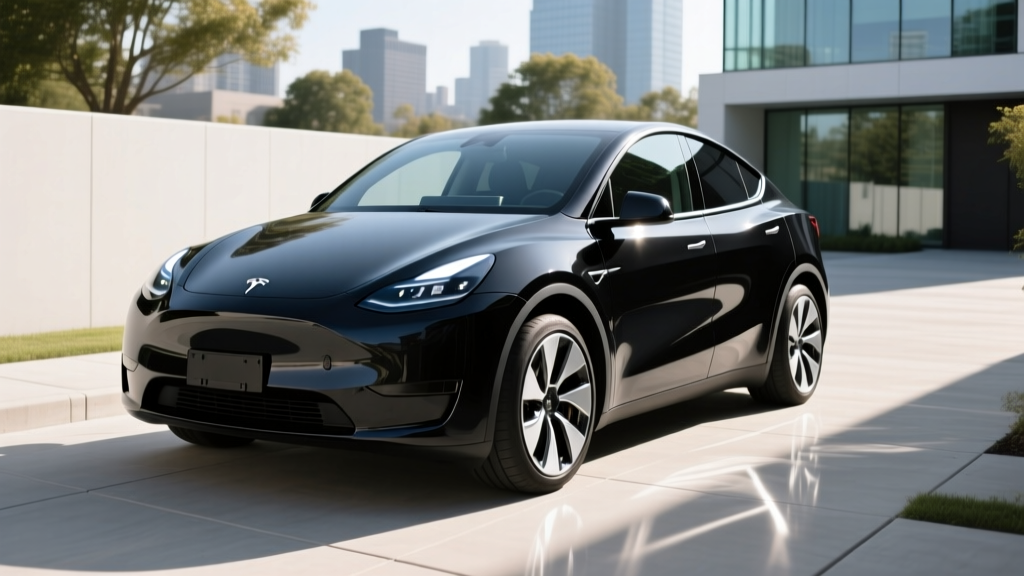
The 2026 Tesla Model Y continues to dominate the electric compact SUV segment not through radical reinvention, but through relentless refinement. With the Juniper refresh now fully integrated into production, the Model Y delivers up to 320 miles of EPA-estimated range, peaks at 250 kW on DC fast chargers, and starts at $44,990 before incentives. For buyers researching the 2026 Tesla Model Y weight and how it impacts efficiency, range, and tire wear, this review breaks down every critical number — and separates marketing from real-world ownership reality.
EPA-estimated range for the Long Range AWD is 320 miles. In mixed highway driving at 70-75 mph, expect approximately 270–290 miles. In freezing temperatures (below 32°F), range can drop to 220–250 miles due to battery heating demands and cabin climate load. City driving with regenerative braking can match or slightly exceed the EPA sticker.
2026 Tesla Model Y Weight, Dimensions & Key Specs
Curb weight is one of the most overlooked EV specs, yet it directly affects efficiency (kWh/100mi), tire wear rates, braking distances, and even home charging electrical load. The 2026 Model Y's Juniper architecture shed roughly 50–80 lbs compared to the pre-2025 platform through high-strength steel and aluminum optimization, while improving structural rigidity.
| Specification | Long Range AWD | Performance AWD | Rear-Wheel Drive |
|---|---|---|---|
| Curb Weight | 4,383 lbs | 4,467 lbs | 4,220 lbs (est.) |
| EPA Range | 320 mi | 295 mi | 290 mi (est.) |
| Battery (Usable) | ~78 kWh (NMC) | ~78 kWh (NMC) | ~60 kWh (LFP) |
| Horsepower | 384 hp | 456 hp | 295 hp |
| 0-60 mph | 4.8 sec | 3.5 sec | 6.2 sec (est.) |
| Drivetrain | Dual-Motor AWD | Dual-Motor AWD | Single-Motor RWD |
| Efficiency (MPGe) | 117 MPGe combined | 111 MPGe combined | 120 MPGe combined (est.) |
| kWh per 100 mi | 29 kWh | 30 kWh | 28 kWh (est.) |
| Base MSRP | $44,990 | $51,490 | $39,990 (est.) |
The Performance trim's additional 84 lbs come from larger 21-inch wheels, upgraded brakes, and a lowered sport suspension. That weight penalty is partially responsible for its 25-mile range reduction compared to the Long Range. For buyers who prioritize maximum range over acceleration, the Long Range AWD offers the best weight-to-range ratio in the lineup.
Charging Speed: DC Fast, Level 2 & Home Setup
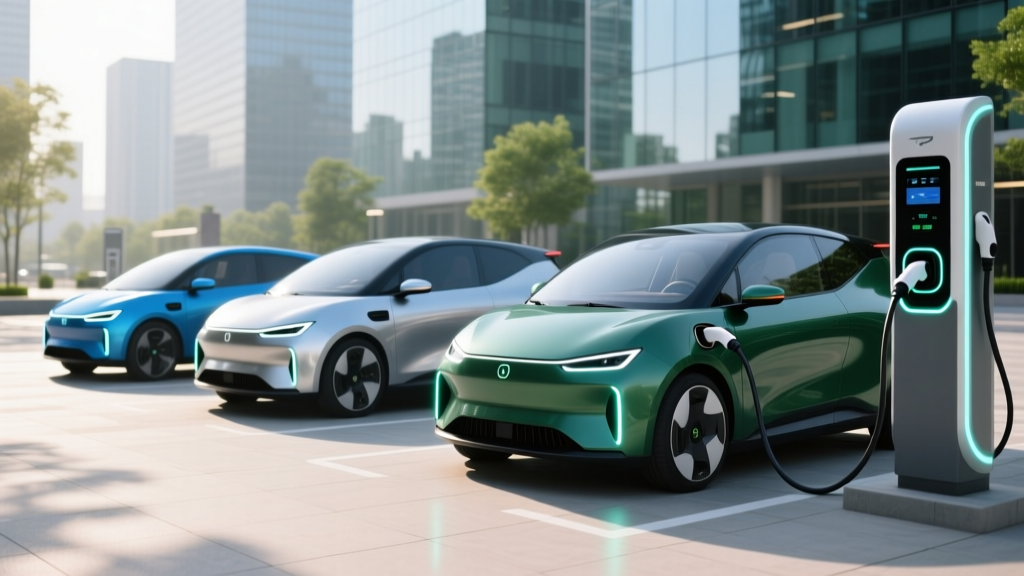
The 2026 Model Y retains the NACS (North American Charging Standard) connector natively, giving it seamless access to Tesla's Supercharger network — now over 20,000 stalls in North America — plus a growing number of third-party networks like Electrify America and EVgo that have deployed NACS-equipped stalls.
| Charging Method | Max Rate | Delivery | Best Use Case |
|---|---|---|---|
| DC Fast Charge (V3/V4 Supercharger) | 250 kW peak | 10–80% in ~22 min | Road trips, quick top-ups |
| DC Fast Charge (Sustained Curve) | ~150 kW avg (10-80%) | ~200 mi added in 15 min | Real-world highway charging |
| Level 2 (Tesla Wall Connector) | 11.5 kW / 48A | ~44 mi/hr of range | Overnight home charging |
| Level 2 (Generic J1772 w/ adapter) | 7.2–11.5 kW | ~28–44 mi/hr | Destination/public Level 2 |
| Level 1 (120V household outlet) | ~1.4 kW | ~4–5 mi/hr | Emergency / trickle only |
Charging curve reality: The Model Y peaks at 250 kW only when the battery is preconditioned (via onboard navigation to a Supercharger) and at a low state of charge (below 20%). Above 50% SoC, the rate tapers to roughly 120 kW, and above 80%, it drops further to protect cell longevity. This is why Tesla quotes 10–80% times rather than 0–100% — charging the final 20% can take as long as the first 70%.
For home installation, a Tesla Wall Connector on a 60-amp circuit (requiring a NEMA 14-50 or hardwired connection) delivers the full 11.5 kW. Most owners charging overnight from 20% to 80% will add roughly 260 miles in about 6 hours — more than sufficient for daily use. Installation costs for a 240V/60A circuit typically range from $800 to $2,500 depending on panel proximity and local permitting, according to industry electricians. If your home has a 100-amp main panel, a $1,500–$3,000 panel upgrade to 200 amps may be necessary.
Battery Chemistry: LFP vs NMC in the 2026 Lineup
Tesla continues to use two distinct battery chemistries across the Model Y range, and understanding the difference is critical for long-term ownership satisfaction.
| Factor | NMC (Long Range / Performance) | LFP (RWD Standard Range) |
|---|---|---|
| Energy Density | Higher — enables 320 mi range | Lower — limits to ~290 mi |
| Cycle Life | ~1,500–2,000 full cycles | ~3,000+ full cycles |
| Daily Charging to 100% | Not recommended (80% daily limit) | Tesla recommends 100% weekly |
| Cold-Weather Performance | Better low-temp range retention | Greater cold-weather range loss |
| Weight | Lighter per kWh | Heavier per kWh |
| Cost to Manufacturer | Higher (nickel/cobalt) | Lower (iron/phosphate) |
For buyers who plan to keep the vehicle 8+ years and charge at home nightly, the LFP-equipped RWD model offers superior long-term degradation characteristics. Tesla's own guidance for LFP batteries is to charge to 100% at least once per week to maintain cell-balancing accuracy. For NMC owners, daily charging to 80% with occasional 100% charges before long trips is the recommended protocol.
Interior, Cargo & Technology
The Juniper refresh brought meaningful interior upgrades to the 2026 Model Y: ventilated front seats, ambient lighting, a rear-seat touchscreen for climate and entertainment, and improved sound insulation that reduces highway noise by a noticeable margin over pre-2025 models.
Cargo capacity: 30.2 cu ft behind the rear seats, expanding to 72.1 cu ft with the 60/40 rear seats folded. The front trunk (frunk) adds 4.1 cu ft — enough for a charging cable kit and a small duffel. Total maximum cargo volume of 76.2 cu ft trails the Hyundai Ioniq 5 (77.0 cu ft) slightly but beats the Ford Mustang Mach-E (65.4 cu ft).
Passenger space: Front legroom measures 41.8 inches; rear legroom is 40.5 inches — generous for a compact SUV and sufficient for two adults on long trips. The rear center seat is best suited for children due to the floor transmission tunnel hump (housing wiring and cooling lines, not a driveshaft).
Tech highlights:
- 15.4-inch center touchscreen running Tesla OS with over-the-air updates
- Enhanced Autopilot (optional, $6,000) includes Navigate on Autopilot, Auto Lane Change, and Smart Summon
- Full Self-Driving Supervised (optional, $8,000) adds traffic-light recognition, city-street autosteer — still SAE Level 2, requiring constant driver supervision
- Sentry Mode dashcam recording, Dog Mode climate, and Tesla Profiles for multi-driver households
- Native integration with the Tesla Supercharger network — no adapter or app juggling required
Both Enhanced Autopilot and Full Self-Driving (Supervised) are SAE Level 2 driver-assistance systems. The driver must keep hands on the wheel, eyes on the road, and remain prepared to take over at any moment. Tesla's steering-wheel torque monitoring and cabin camera enforce this. Only Level 4 robotaxi services like Waymo operate without a human driver — and those are geofenced to specific cities.
Notable drawbacks: The 2026 Model Y still lacks Apple CarPlay and Android Auto — all media and navigation run through Tesla's proprietary system. While most owners adapt quickly, Spotify integration can be sluggish, and the built-in navigation occasionally routes suboptimally compared to Google Maps. The absence of physical buttons for climate and mirror adjustment continues to frustrate some new EV adopters.
Pricing, Tax Credits & Total Cost of Ownership
| Trim | Base MSRP | Dest. | Est. After §30D Credit | As-Tested (Common Options) |
|---|---|---|---|---|
| Rear-Wheel Drive | $39,990 | $1,390 | $33,880* | ~$42,500 |
| Long Range AWD | $44,990 | $1,390 | $38,880* | ~$48,900 |
| Performance AWD | $51,490 | $1,390 | $45,380* | ~$55,200 |
*After-tax-credit prices assume full $7,500 federal §30D credit eligibility. As-tested prices include common upgrades like $2,000 paint (Midnight Cherry Red or Quicksilver), $1,200 20-inch wheels, and Enhanced Autopilot.
Federal tax credit eligibility (IRS §30D, 2026 rules): The Model Y qualifies for up to $7,500 in federal tax credits, but eligibility depends on three factors that buyers must verify individually:
- MSRP cap: SUVs must be priced at or below $80,000 — all Model Y trims clear this threshold.
- Buyer income cap: Adjusted gross income must not exceed $150,000 (single), $225,000 (head of household), or $300,000 (married filing jointly).
- Battery sourcing: At least 60% of critical minerals and 75% of battery components must be sourced from the US or free-trade-agreement partners. Tesla's shift to US-based LFP production (CATL-licensed cells at the Nevada gigafactory) and continued Panasonic NMC production in Nevada has kept the Model Y compliant through 2026. Always verify at IRS.gov before purchase, as sourcing rules tighten annually.
- Point-of-sale transfer: Since 2024, buyers can transfer the credit to the dealer at purchase, reducing the upfront price by $7,500 rather than waiting for a tax refund. This is available on the Model Y.
For a comprehensive look at state-level incentives (which stack on top of the federal credit in states like Colorado, California, and Massachusetts), check the Alternative Fuels Data Center state lookup tool.
Warranty, Maintenance & Long-Term Ownership
Tesla's warranty coverage for the 2026 Model Y:
- Basic vehicle: 4 years / 50,000 miles (bumper-to-bumper)
- Battery & drive unit: 8 years / 120,000 miles (Long Range/Performance) — guarantees minimum 70% capacity retention over the warranty period
- Battery & drive unit (RWD LFP): 8 years / 100,000 miles — same 70% retention threshold
The 120,000-mile battery warranty on the Long Range and Performance trims is among the best in the segment, though Hyundai's 10-year/100,000-mile battery warranty on the Ioniq 5 offers longer calendar coverage. Real-world data from Tesla's fleet indicates average battery degradation of approximately 10–12% at 150,000 miles for NMC packs, and 8–10% for LFP packs — meaning most owners will retain well above the 70% warranty threshold.
Maintenance costs are minimal: no oil changes, no spark plugs, no transmission fluid. Budget for cabin air filter replacement every 2 years (~$60), brake fluid checks every 2 years (~$80), and tire rotation every 6,250 miles. Expect to replace tires at 30,000–40,000 miles — the Model Y's 4,383-lb curb weight and instant torque accelerate tire wear compared to lighter sedans. A set of four Michelin Pilot Sport EV tires runs approximately $1,100–$1,400 installed.
How It Compares: Model Y vs. the Competition
At its price point, the 2026 Model Y faces credible rivals. Here's how the critical numbers stack up:
| Spec | Tesla Model Y LR AWD | Hyundai Ioniq 5 Limited AWD | Ford Mustang Mach-E Premium AWD |
|---|---|---|---|
| EPA Range | 320 mi | 290 mi | 300 mi |
| Battery | ~78 kWh NMC | 84 kWh NMC | 91 kWh NMC |
| Peak DC Charge | 250 kW | 350 kW (800V) | 150 kW |
| 10-80% Time | ~22 min | ~18 min | ~38 min |
| 0-60 mph | 4.8 sec | 5.1 sec | 5.1 sec |
| Cargo (rear seats up) | 30.2 cu ft | 27.2 cu ft | 29.7 cu ft |
| Base MSRP (AWD) | $44,990 | $52,600 | $48,995 |
| Supercharger/Network | Native NACS | NACS (adapter included) | NACS (adapter included) |
The Ioniq 5's 800V architecture gives it a decisive charging-speed advantage (350 kW peak vs. 250 kW), but the Model Y counters with superior range, more cargo space, and a lower starting price. The Mach-E's larger battery doesn't translate to more range due to its heavier weight and less efficient drivetrain. For the buyer who values Supercharger network reliability and over-the-air feature updates, the Model Y remains the default choice.
- Best-in-class Supercharger network access with native NACS
- 320-mile EPA range leads the compact electric SUV segment
- Excellent efficiency at 29 kWh/100mi (Long Range)
- Over-the-air updates continuously add features
- Strong resale value relative to EV competitors
- Spacious cargo area (76.2 cu ft max) and comfortable rear seats
- No Apple CarPlay or Android Auto
- DC fast-charge speed (250 kW) trails Ioniq 5 / EV6 (350 kW)
- FSD Supervised ($8,000) remains Level 2 — not autonomous
- Touchscreen-only controls frustrate some drivers
- Ride quality firm on 20/21-inch wheels
- Insurance premiums 15–25% higher than comparable gas SUVs
Who Should Buy the 2026 Tesla Model Y?
- You road-trip more than 4 times per year and need Supercharger reliability
- You want 300+ miles of real-world range without paying luxury-SUV prices
- You have a family of 4 and need 30+ cu ft of cargo space
- You can install a Level 2 home charger and want fast overnight replenishment
- You primarily commute under 60 miles daily and want the lowest entry price
- You plan to own the vehicle 8+ years and value LFP battery longevity
- You live in a mild climate where AWD is unnecessary
- Fastest possible DC charging (350 kW / 18-min 10-80%) is your top priority
- You prefer physical buttons and Apple CarPlay integration
- You want Hyundai's 10-year powertrain warranty
Frequently Asked Questions
What is the real-world range of the 2026 Tesla Model Y?
The EPA rates the Long Range AWD at 320 miles. In real-world highway driving at 70-75 mph, expect 270–290 miles. In sub-freezing temperatures, range can drop to 220–250 miles. City driving with frequent regenerative braking can match or exceed the EPA estimate. Preconditioning the battery before departure (automatic when using scheduled departure or navigation) helps mitigate cold-weather losses.
How fast does the 2026 Model Y charge at home and on the road?
On a V3 or V4 Tesla Supercharger, the Model Y peaks at 250 kW and charges from 10% to 80% in approximately 22 minutes. At home on a Tesla Wall Connector (11.5 kW / 48A Level 2), it adds roughly 44 miles of range per hour — a full overnight session replenishes 250+ miles. On a standard 120V household outlet (Level 1), expect only 4–5 miles per hour, suitable only for emergency trickle charging.
Does the 2026 Tesla Model Y qualify for the $7,500 federal tax credit?
Yes, all 2026 Model Y trims currently qualify for the full $7,500 federal §30D tax credit, provided the buyer meets income requirements (under $150K single / $300K married filing jointly) and the vehicle's battery sourcing remains compliant. The credit can be applied as a point-of-sale rebate, reducing the purchase price directly. Always verify current eligibility at IRS.gov before purchasing, as critical-mineral sourcing thresholds tighten each year.
How much does the 2026 Model Y cost after incentives?
The Long Range AWD starts at $44,990 plus $1,390 destination. With the full $7,500 federal credit applied at point of sale, the effective price drops to approximately $38,880. Adding common options (premium paint, larger wheels, Enhanced Autopilot) pushes a typical as-tested price to $47,000–$49,000 before credit. State incentives (available in CO, CA, MA, and others) can reduce the price further by $1,000–$5,000 depending on residency.
Is the 2026 Model Y worth buying over the Ioniq 5 or Mach-E?
The Model Y wins on range (320 mi vs. 290–300 mi), Supercharger network access, cargo volume, and starting price. The Hyundai Ioniq 5 wins on DC charging speed (350 kW vs. 250 kW) and offers Apple CarPlay. The Ford Mach-E is competitive but trails on charging speed and efficiency. If you road-trip frequently and value charging infrastructure, the Model Y is the strongest pick. If you prioritize the fastest possible charging stops and prefer traditional infotainment, the Ioniq 5 is a compelling alternative.
What is the curb weight of the 2026 Tesla Model Y and why does it matter?
The 2026 Model Y Long Range AWD weighs 4,383 lbs, the Performance trim weighs 4,467 lbs, and the RWD model is estimated at 4,220 lbs. Weight directly impacts efficiency (heavier = more kWh per mile), tire wear (expect replacement at 30,000–40,000 miles), and braking distances. The Model Y's weight is competitive for the segment — the Mach-E AWD weighs 4,700+ lbs, contributing to its lower efficiency despite a larger battery.
How long will the 2026 Model Y battery last?
Tesla warranties the Long Range/Performance battery for 8 years/120,000 miles and the RWD LFP battery for 8 years/100,000 miles, guaranteeing at least 70% capacity retention. Fleet data suggests NMC batteries degrade approximately 10–12% at 150,000 miles, while LFP batteries degrade 8–10% over the same distance. With proper charging habits (80% daily limit for NMC, weekly 100% for LFP), most owners can expect the battery to outlast the vehicle's useful life. A full battery replacement, if needed outside warranty, currently costs between $12,000 and $16,000 at Tesla service centers.