Quick Verdict: Is the 2025 Hyundai Kona Electric Lease Worth It?
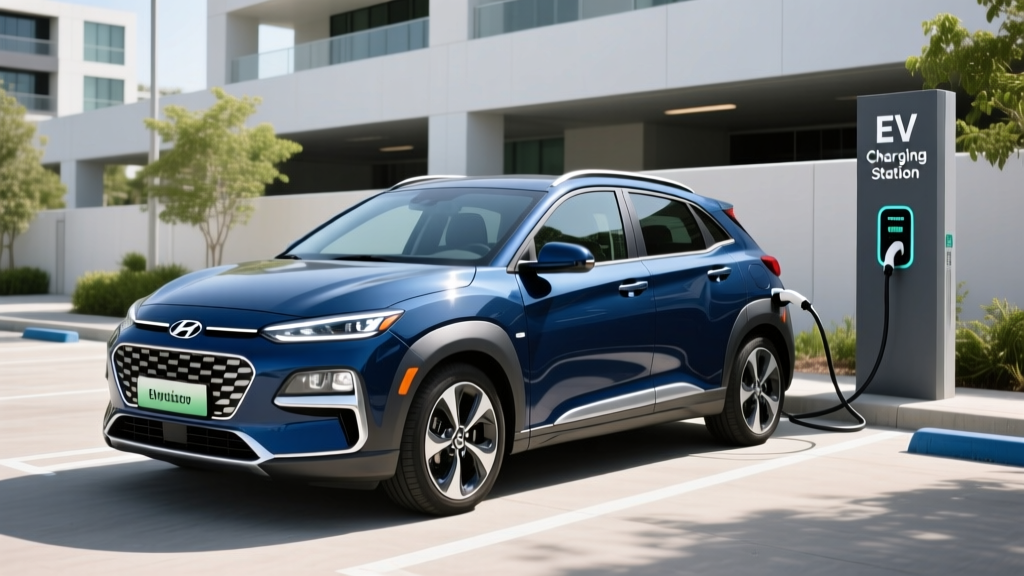
The 2025 Hyundai Kona Electric is one of the most accessible subcompact EVs on the market, with an EPA-estimated 261 miles of range on the SEL and Limited trims and a starting MSRP around $32,975. For buyers searching for 2025 Hyundai Kona Electric lease deals, the math often hinges on one critical factor: whether the federal tax credit can be applied at the point of sale to reduce monthly payments. When structured correctly, a Kona Electric lease can land in the $250–$375/month range depending on trim, down payment, and regional incentives — making it one of the more affordable ways to get into a long-range EV.
But lease deals are only part of the equation. Real ownership cost includes electricity, insurance, maintenance, and depreciation — and EVs don't always win every category. Below, we break down the full financial picture with hard numbers.
| Spec | SE / SEL | Limited |
|---|---|---|
| EPA Range | 261 mi | 261 mi (SEL+) / 240 mi (Limited w/ larger wheels) |
| Battery (usable) | ~64.8 kWh (NMC) | ~64.8 kWh (NMC) |
| Efficiency | 129 MPGe combined | ~120–129 MPGe |
| Peak DC Fast Charge | ~100 kW (10–80% in ~43 min) | ~100 kW (10–80% in ~43 min) |
| Level 2 AC Charge Rate | ~10.9 kW | ~10.9 kW |
| Horsepower | 201 hp / 195 lb-ft torque | 201 hp / 195 lb-ft torque |
| 0–60 mph | ~7.4 sec | ~7.4 sec |
| Base MSRP | ~$32,975 (SE) | ~$39,475 (Limited) |
| Battery/Powertrain Warranty | 10 yr / 100,000 mi | 10 yr / 100,000 mi |
Real-World Range Reality: The EPA rates the Kona Electric at 261 miles, but expect 220–240 miles in real-world highway driving at 70+ mph. In cold weather (below 30°F), range can drop 20–30%, putting usable range closer to 180–200 miles. The Kona Electric uses a heat pump on higher trims, which helps mitigate cold-weather HVAC losses compared to resistive heating.
2025 Hyundai Kona Electric Lease Deals: What to Expect
Hyundai Capital and third-party lessors periodically offer lease specials on the Kona Electric, particularly on the SEL trim. Typical lease structures for the 2025 model year look like this:
- SEL trim, 36-month lease, 10K miles/year: $289–$349/month with $2,500–$3,999 due at signing (before incentives)
- SE trim, 36-month lease: $249–$299/month with similar down payment
- Limited trim, 36-month lease: $369–$429/month with $3,000–$4,500 due at signing
The lease-credit advantage: Under current IRS rules, the §30D federal tax credit (up to $7,500) can be transferred to the dealer/lessor at the point of sale. On a lease, the leasing company claims the credit and typically passes the benefit to you as a capitalized cost reduction — effectively lowering your monthly payment by $200–$250/month over a 36-month term. This is the single biggest lever in making Kona Electric lease deals competitive with gas-car leases.
However, this only works if the vehicle qualifies. Not every Kona Electric will meet every requirement, and the rules are specific.
Federal Tax Credit: Do You Qualify for §30D?
The federal EV tax credit under IRS §30D offers up to $7,500, but it's split into two $3,750 halves tied to battery sourcing requirements. Here's the full eligibility checklist for the 2025 tax year:
- MSRP Cap: The Kona Electric is classified as an SUV by the IRS, so the MSRP cap is $80,000. All trims qualify (max ~$42K loaded).
- Buyer Income Limits (modified AGI): $300,000 joint filers / $225,000 head of household / $150,000 single filers. If your income exceeds the threshold in the year of delivery OR the prior year, you're disqualified.
- Battery Component Manufacturing (up to $3,750): A required percentage of battery components must be manufactured or assembled in North America. This threshold increases yearly.
- Critical Minerals Sourcing (up to $3,750): A required percentage of critical minerals must be sourced from the U.S. or a free-trade agreement partner. This threshold also increases yearly.
- Point-of-Sale Transfer: You can elect to transfer the credit to the dealer at purchase or to the lessor on a lease, reducing your upfront cost or monthly payment immediately rather than waiting for a tax refund.
- Vehicle Must Be New: Used EVs fall under a separate §25E credit (up to $4,000) with different rules.
Key caveat for the Kona Electric: Hyundai's battery sourcing has been in flux as the company ramps up its Georgia battery plant. The Kona Electric sold in the U.S. may qualify for the full $7,500, a partial $3,750, or potentially neither half depending on the specific build date and battery pack origin. Always verify the exact credit amount on the IRS's fueleconomy.gov tax credit lookup before signing. Dealers should provide the IRS-required seller report confirming credit eligibility.
5-Year Total Cost of Ownership: Kona Electric vs. Gas Crossover
To understand whether a Kona Electric lease or purchase makes financial sense, we need to model the full 5-year cost. Below is a comparison against a similarly priced gas subcompact crossover (represented by the Hyundai Kona 1.6T gas model at ~$29,000 MSRP, 30 MPG combined).
| Cost Category | Kona Electric (SEL) | Kona Gas (1.6T) | Notes |
|---|---|---|---|
| Purchase Price (after credit) | ~$25,475 ($32,975 - $7,500) | ~$29,000 | Assumes full §30D credit |
| Fuel / Electricity (75K mi) | ~$2,813 | ~$8,750 | EV: $0.15/kWh, 3.3 mi/kWh; Gas: $3.50/gal, 30 MPG |
| Maintenance | ~$1,500 | ~$3,750 | No oil changes, fewer brake replacements on EV |
| Insurance (5 yr avg) | ~$9,375 | ~$7,500 | EV premiums ~15–25% higher on average |
| Depreciation (est.) | ~$12,500 | ~$11,600 | EVs depreciating faster currently; gas holds ~60% at 5yr |
| Total 5-Year Cost | ~$51,663 | ~$60,600 | EV saves ~$8,900 |
The Kona Electric comes out ahead by roughly $8,900 over five years in this model — but that margin depends heavily on three variables: whether you get the full tax credit, your local electricity rate, and how EV depreciation evolves. If the credit drops to $3,750 or $0 due to sourcing issues, the gap narrows to $5,150 or even $1,400.
Charging vs. Gas: The Per-Mile Math
Here's where the Kona Electric's economics shine most clearly. The EPA rates it at approximately 30 kWh per 100 miles (129 MPGe combined). Your actual cost depends on where and how you charge.
| Scenario | Cost/kWh or Gal | Cost Per Mile | Annual (15K mi) |
|---|---|---|---|
| Home Level 2 (national avg electricity) | $0.15/kWh | $0.045 | $675 |
| Home Level 2 (California avg) | $0.27/kWh | $0.081 | $1,215 |
| Home Level 2 (off-peak utility rate) | $0.08/kWh | $0.024 | $360 |
| Public DC Fast Charging (avg) | $0.40/kWh | $0.120 | $1,800 |
| Gas Kona 1.6T (30 MPG) | $3.50/gal | $0.117 | $1,750 |
The takeaway: Home charging at national-average rates costs about 60% less per mile than gasoline. If you have access to off-peak utility rates (many utilities offer EV-specific time-of-use plans), savings approach 80%. But if you rely exclusively on public DC fast chargers at $0.35–$0.50/kWh, your fuel cost can actually exceed that of a gas car. Home charging access is the single biggest determinant of EV fuel savings.
The Kona Electric's ~10.9 kW Level 2 onboard charger means a full 0–100% charge at home takes about 6.5 hours — easily done overnight. Its DC fast charging peaks around 100 kW, meaning a 10–80% session takes approximately 43 minutes. That's slower than rivals like the Hyundai Ioniq 5 (which peaks at 240 kW on 800V architecture), so road-trippers should plan accordingly.
Maintenance Savings: What You Actually Skip
EVs eliminate several recurring maintenance items, but they aren't maintenance-free. Here's a realistic breakdown:
| Service | Kona Electric | Gas Kona |
|---|---|---|
| Oil Changes | $0 (none needed) | ~$600–$900 (10–15 changes) |
| Brake Pads | ~$0–$200 (regen extends life to 80K+ mi) | ~$400–$700 (1–2 replacements) |
| Transmission Fluid | $0 (single-speed reduction gear) | ~$150–$250 |
| Coolant Flush | ~$100 (at ~60K mi) | ~$150–$200 |
| Tire Rotation / Replacement | ~$1,200 (EV tires wear faster due to weight/torque) | ~$900 |
| Cabin Air Filter | ~$150 | ~$150 |
| Wipers, Misc. | ~$200 | ~$200 |
| Total (5 yr) | ~$1,500–$1,850 | ~$3,150–$4,000 |
Net maintenance savings run approximately $1,500–$2,500 over five years. The biggest surprise for new EV owners is tire wear — the Kona Electric weighs roughly 3,700 lbs (about 400 lbs more than its gas counterpart) and delivers instant torque, both of which accelerate tire wear. Budget for a set of EV-rated tires around the 40,000-mile mark.
Insurance: The Cost EV Owners Often Underestimate
EV insurance premiums run 15–25% higher than equivalent gas vehicles, according to industry data. For the Kona Electric, expect annual premiums in the $1,700–$2,100 range nationally (compared to $1,400–$1,700 for the gas Kona), though this varies dramatically by state, driving record, and insurer.
Why EVs cost more to insure:
- Higher repair costs: Battery packs are expensive to replace if damaged. Even minor collision damage near the battery enclosure can trigger a total-loss declaration.
- Specialized labor: Fewer body shops are certified to work on high-voltage systems, driving up labor rates.
- Higher vehicle MSRP: The Kona Electric starts ~$4,000 above the base gas Kona, meaning higher replacement cost.
- Parts availability: EV-specific parts (battery modules, power electronics) can have longer lead times.
Shop multiple insurers — some companies (like Tesla's in-house insurance, plus EV-friendly carriers like Lemonade and Progressive) offer competitive EV rates. Bundling home and auto often narrows the premium gap.
Depreciation and Resale Value: The Honest Picture
EV depreciation has been a moving target. In 2023–2024, used EV values dropped sharply due to Tesla's aggressive price cuts, an influx of new models, and shifting consumer sentiment. The Kona Electric was not immune.
Based on current market trends and historical data from sources like Kelley Blue Book:
- 5-year retained value (Kona Electric): ~45–55% of MSRP
- 5-year retained value (gas Kona): ~55–65% of MSRP
- Key depreciation drivers for EVs: Battery health concerns in used market, rapid model-year improvements making older EVs feel obsolete, and uncertainty around future tax credit policy
On a $33,000 Kona Electric, expect a 5-year depreciation hit of roughly $12,000–$15,000. However, if you claimed the $7,500 tax credit at purchase, your effective basis is $25,500, and depreciation as a percentage of what you actually paid looks much better — closer to 40–50% retained.
State & Local Incentives: Beyond the federal credit, many states offer additional rebates or tax credits. Examples include California's CVRP (up to $7,000 for income-qualified buyers), Colorado's $5,000 state credit, and various utility rebates for home charger installation ($250–$1,000+). These vary by jurisdiction, income, and utility provider — check your state energy office and local utility for current programs. Lease structures may or may not pass state credits through; verify with the dealer.
Decision Framework: Should You Lease or Buy?
Lease the Kona Electric if:
- You want the lowest monthly payment and the lessor passes the $7,500 credit as a cap cost reduction
- You drive under 12,000 miles/year (lease mileage limits typically 10K–15K)
- You want to avoid long-term depreciation risk on a rapidly evolving EV market
- You plan to upgrade to a newer model with better charging speed or range in 3 years
Buy the Kona Electric if:
- You drive 15,000+ miles/year (lease overage penalties at $0.15–$0.25/mile add up fast)
- You can claim the §30D credit on your own tax return and want full ownership equity
- You plan to keep the vehicle 7–10 years, riding out the depreciation curve
- You want to modify the vehicle or don't want to worry about lease-end wear charges
Frequently Asked Questions
How much does it really cost to own a 2025 Kona Electric over 5 years?
Approximately $50,000–$55,000 all-in (purchase after credit, electricity, insurance, maintenance, depreciation) for 75,000 miles of driving. That's roughly $8,000–$10,000 less than the gas Kona equivalent, assuming you qualify for the full $7,500 federal credit and charge primarily at home.
Do I qualify for the $7,500 federal EV tax credit on the Kona Electric?
You qualify if your modified AGI is under $150K (single) / $300K (joint), the vehicle MSRP is under $80K (it is), and the battery meets North American sourcing thresholds. The credit amount ($0, $3,750, or $7,500) depends on the specific build's battery component and critical mineral compliance. Check the VIN on fueleconomy.gov before purchasing.
How much do I save on fuel and maintenance with the Kona Electric?
Fuel savings run $4,000–$6,000 over 5 years at national-average electricity and gas prices (assuming mostly home charging). Maintenance savings add another $1,500–$2,500. Combined, you save roughly $5,500–$8,500 in operating costs, partially offset by $1,500–$2,500 in higher insurance premiums.
Are EVs more expensive to insure than gas cars?
Yes, typically 15–25% more. For the Kona Electric, expect roughly $300–$400 more per year than the gas version. Higher repair costs, battery replacement risk, and elevated MSRP all factor in. Shop multiple insurers — the gap varies significantly by carrier.
How well does the Kona Electric hold its value?
Current projections suggest the Kona Electric retains roughly 45–55% of MSRP after 5 years — below the gas Kona's 55–65%. However, the tax credit reduces your effective purchase price, so your actual dollar depreciation is more competitive. Long-term battery health and evolving EV tech remain wildcards.
Can I charge the Kona Electric at Tesla Superchargers?
Hyundai has been transitioning to the NACS (Tesla) charging standard. The 2025 Kona Electric may come with a CCS1 port and a NACS adapter, or native NACS depending on build date. Verify the connector at your dealer. Tesla Supercharger access via adapter is available at many stations, but not all — check the Tesla app for compatibility.
What's the real-world range on a road trip?
Expect 220–240 miles at highway speeds in moderate weather. In winter, plan for 180–200 miles between charges. The ~100 kW peak DC charge rate means 10–80% takes about 43 minutes — adequate for road trips but noticeably slower than 800V rivals like the Ioniq 5.