The Juniper Refresh: Why Tesla Veterans Should Pay Attention
If you've owned a Model 3 or Model Y through multiple OTA updates, Supercharger network expansions, and at least one price reshuffle, you already know the Tesla ownership rhythm. The 2026 Model Y — sold under the internal "Juniper" codename that debuted in early 2025 — represents the most substantial mid-cycle refresh the crossover has received since its 2020 launch. For Tesla veterans weighing an upgrade from a 2021–2023 Model Y or a high-mileage Model 3, the question isn't whether this car is good. It's whether the delta over your current vehicle justifies the transaction cost.
This review breaks down the 2026 Model Y Long Range AWD and Performance trims with the exact numbers that matter: real-world range reconciliation, sustained DC charging curves, §30D tax credit eligibility under current IRS rules, and the ownership economics that separate a smart upgrade from an expensive lateral move.
Range, Battery, and Real-World Efficiency
The 2026 Model Y Long Range AWD carries an EPA-estimated 320 miles of range, up from 308 miles in the pre-Juniper Long Range. Tesla achieves this through a combination of improved aerodynamics (the refreshed front fascia drops the drag coefficient), a revised heat pump system, and minor cell-level energy density improvements in the 2170-format cells.
- EPA sticker: 320 miles
- Highway (70–80 mph, moderate climate): ~265–285 miles
- City / suburban mixed driving: ~300–315 miles
- Cold weather (below 32°F, highway): ~220–250 miles
Real-world highway range falls roughly 10–17% below EPA due to the test cycle's low-speed bias. Cold weather compounds this with cabin heating load and reduced battery efficiency, even with the Juniper's improved heat pump. Plan road trips around ~250 miles of usable range to maintain a comfort buffer.
The battery pack in the Long Range AWD is a ~78 kWh usable NMC (nickel manganese cobalt) configuration. Tesla continues to use NMC chemistry in Long Range and Performance trims for its higher energy density, while the base RWD Model Y uses an LFP (lithium iron phosphate) pack. If you're a Tesla veteran coming from an LFP-equipped Standard Range, expect different charging habits: NMC benefits from daily charge limits of 80–90%, while LFP can be charged to 100% regularly without degradation concerns.
Efficiency lands at 122 MPGe combined (per fueleconomy.gov), translating to roughly 28 kWh per 100 miles in mixed driving. That's among the most efficient vehicles in its class, though the Hyundai Ioniq 5 and Kia EV6 achieve similar numbers with slightly smaller battery packs.
| Spec | Long Range AWD | Performance |
|---|---|---|
| EPA Range | 320 mi | 295 mi |
| Battery (usable) | ~78 kWh (NMC) | ~78 kWh (NMC) |
| Drivetrain | Dual-Motor AWD | Dual-Motor AWD |
| Horsepower | 384 hp | 456 hp |
| 0–60 mph | 4.8 sec | 3.5 sec |
| Max DC Fast Charge | 250 kW | 250 kW |
| 10–80% DC Time | ~22 min | ~22 min |
| Level 2 Rate | 11.5 kW (~44 mi/hr) | 11.5 kW (~44 mi/hr) |
| MPGe (combined) | 122 MPGe | 111 MPGe |
| Cargo (rear seats up) | 30.2 cu ft | 30.2 cu ft |
| Cargo (rear seats folded) | 72.1 cu ft | 72.1 cu ft |
| Rear Legroom | 41.6 in | 41.6 in |
| Base MSRP | $48,990 | $53,990 |
Charging Speed: DC Fast, Level 2, and the Supercharger Advantage
Tesla veterans already know the Supercharger network is the brand's strongest moat. The 2026 Model Y peaks at 250 kW on V3 Superchargers and compatible third-party DC fast chargers (via the NACS connector, now the North American standard). Here's what that looks like in practice:
| Charging Level | Power (kW) | Speed (mi/hr added) | Typical Use Case |
|---|---|---|---|
| Level 1 (120V household) | ~1.4 kW | ~4–5 mi/hr | Emergency / overnight trickle |
| Level 2 (240V home, 48A) | 11.5 kW | ~44 mi/hr | Daily home charging (full charge ~7–8 hrs) |
| DC Fast (V3 Supercharger) | Peak 250 kW | ~160 mi in 15 min | Road trips; 10–80% in ~22 min |
| DC Fast (above 80% SoC) | Tapers to ~40–60 kW | Varies | Expect 80–100% to take an additional 15–20 min |
The charging curve matters more than the peak number. The Model Y sustains above 200 kW roughly from 10% to 45% SoC, then progressively tapers. By 80%, you're at approximately 60 kW. This is standard behavior for NMC packs with active thermal management, but it means the advertised "160 miles in 15 minutes" applies to the middle of the curve, not the tail end. Tesla veterans who plan Supercharger stops around 10–80% sessions will get the most time-efficient charging.
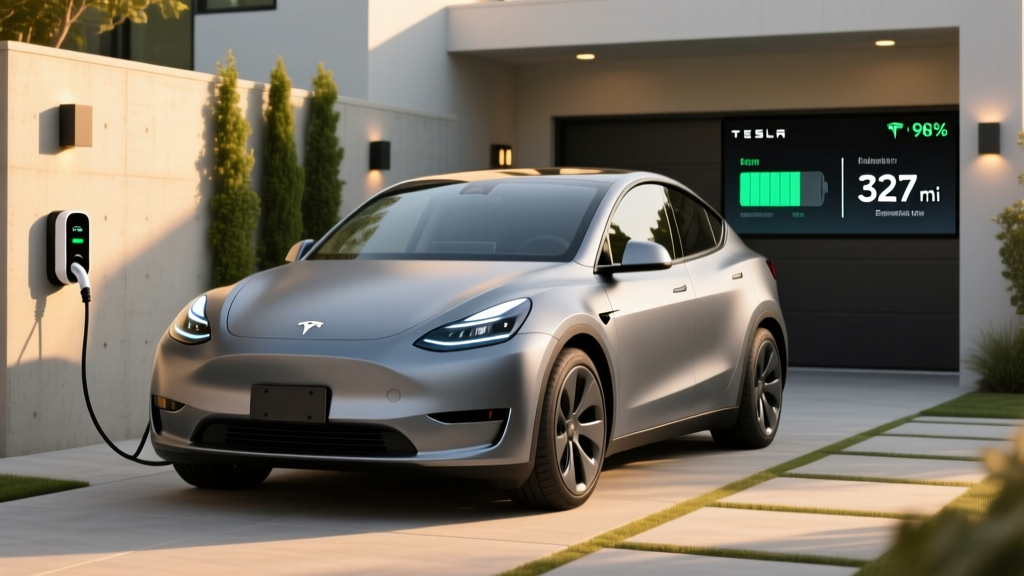
Home charging on a Level 2 Wall Connector (48 amps, 240V) adds roughly 44 miles of range per hour. A full overnight session from 20% easily replenishes a daily commute. If your home electrical panel supports a 60-amp dedicated circuit, installation typically runs $800–$2,000 depending on panel proximity and local permitting, on top of the $475 Wall Connector hardware cost.
Performance and Driving Dynamics
The Juniper refresh brought subtle but meaningful suspension revisions — softer initial damping with firmer rebound control — that address the most common complaint Tesla veterans had with 2020–2024 Model Ys: the choppy ride on imperfect pavement. The 2026 Long Range AWD delivers 384 horsepower and a 4.8-second 0–60 mph time, which is genuinely quick for a family crossover.
The Performance trim pushes to 456 hp and 3.5 seconds, but the trade-off is 25 fewer miles of EPA range (295 mi) and a stiffer ride. For most Tesla veterans upgrading from a Long Range, the LR AWD offers the better balance of acceleration, range, and daily comfort.
Regenerative braking remains strong and predictable. Tesla removed the user-adjustable regen setting years ago, so one-pedal driving is the default experience. If you're coming from a competitor with adjustable regen (Hyundai, Kia, BMW), expect a brief adaptation period.
Interior, Tech, and the Juniper Cabin Overhaul
The Juniper interior is where Tesla veterans will notice the most immediate change. The minimalist ethos remains, but material quality has improved meaningfully: softer-touch surfaces on the dashboard and door panels, ventilated front seats (a frequent request from Model Y owners in warm climates), and ambient lighting that replaces the stark black-headliner aesthetic of earlier models.
The 15.4-inch center touchscreen continues to handle nearly all vehicle functions, including climate controls. A secondary 8-inch rear touchscreen now comes standard, giving back-seat passengers control over their own climate zone and entertainment — a practical addition for family use.
Standout tech features:
- Tesla Vision-based Autopilot (standard) with adaptive cruise, lane centering, and automatic emergency braking
- Full Self-Driving (Supervised) available as a $8,000 add-on or $99/month subscription — still SAE Level 2, requiring active driver supervision at all times
- Sentry Mode, Dashcam, and over-the-air updates continue to add functionality post-purchase
- Ventilated front seats, power-folding second row, and improved NVH (noise, vibration, harshness) insulation
Notable drawbacks:
- No physical buttons for climate or volume — everything routes through the touchscreen or steering-wheel scroll wheels
- No Apple CarPlay or Android Auto; Tesla's native infotainment is capable but closed
- Turn-signal stalks have been removed; signals are now activated via steering-wheel buttons, which divides opinion among Tesla veterans
- Rear visibility is compromised by the sloping roofline; the camera-based mirror option helps but isn't standard
Pricing, Tax Credits, and Ownership Economics
The 2026 Model Y Long Range AWD starts at $48,990 (including destination), while the Performance begins at $53,990. These prices place the Model Y squarely within the federal §30D Clean Vehicle Credit framework, but eligibility is not automatic.
| Requirement | Rule (2026) | Model Y Status |
|---|---|---|
| Vehicle MSRP cap (SUVs/crossovers) | ≤ $80,000 | ✅ Qualifies ($48,990–$53,990) |
| Buyer AGI cap (joint filers) | ≤ $300,000 | Varies by buyer |
| Buyer AGI cap (single filers) | ≤ $150,000 | Varies by buyer |
| Battery critical minerals sourcing | Phase-in percentage thresholds per IRS | ⚠️ Check current-year IRS guidance; Tesla has been working to qualify but sourcing rules tighten annually |
| Point-of-sale transfer | Allowed — dealer/seller applies credit at purchase | ✅ Available if eligible |
| Maximum credit | Up to $7,500 | Depends on critical minerals + battery component compliance |
Source: IRS §30D guidance. Tax credit rules change frequently. Consult a tax professional and verify current eligibility at purchase time. Tesla veterans who previously claimed the §30D credit on a different vehicle may still be eligible — the credit is per-vehicle, not per-buyer, but the buyer must meet income requirements each time.
For a Tesla veteran trading in a 2022 Model Y Long Range (current private-party value approximately $28,000–$32,000 depending on mileage and condition), the net upgrade cost after trade-in and a potential $7,500 credit lands in the $9,500–$13,500 range. Whether that's justified depends on how much you value the Juniper improvements: better ride quality, ventilated seats, rear screen, improved NVH, and 12 additional miles of EPA range.
Warranty, Safety, and Long-Term Ownership
Tesla's warranty structure remains unchanged for 2026:
- Basic vehicle: 4 years / 50,000 miles
- Battery and drive unit: 8 years / 120,000 miles (Long Range and Performance AWD)
- Battery capacity retention threshold: 70% of original capacity during the warranty period
For Tesla veterans approaching the end of your current vehicle's battery warranty, this is worth considering. NMC packs in Model Y vehicles have shown degradation curves that typically plateau around 8–12% loss after 80,000–100,000 miles based on fleet data. That's well within the 70% warranty floor, but it means a 320-mile EPA range vehicle might deliver ~280–290 miles EPA-equivalent after five years of use.
Safety ratings remain strong. The Model Y earned a 5-star overall rating from NHTSA and continues as an IIHS Top Safety Pick when equipped with the standard LED headlights.
2026 Model Y vs. Key Competitors
Tesla veterans cross-shopping the refresh should understand where the Model Y stands against its strongest rivals:
- vs. Hyundai Ioniq 5 (Long Range AWD): The Ioniq 5 offers 800V architecture for faster peak charging (~350 kW on compatible chargers), a more conventional interior with physical buttons, and Apple CarPlay. The Model Y counters with Supercharger network access, superior cargo space (72.1 vs. 59.3 cu ft), and more mature OTA software.
- vs. Kia EV6 (GT-Line AWD): Similar 800V charging advantage. The EV6 drives more engagingly but sacrifices rear-seat and cargo room. The Model Y remains the more practical family vehicle.
- vs. Ford Mustang Mach-E (Premium AWD): The Mach-E offers a more traditional dealership experience and CarPlay, but trails on efficiency and Supercharger-equivalent charging infrastructure reliability.
- Best-in-class Supercharger network access — still the most reliable DC fast-charging experience in the US
- Class-leading cargo volume (72.1 cu ft) with a usable frunk
- Juniper ride quality is a genuine improvement over 2020–2024 Model Y
- Strong efficiency (122 MPGe / 28 kWh per 100 mi) keeps charging costs low
- Continuous OTA updates add functionality without dealer visits
- 250 kW peak DC charging is now outpaced by 800V competitors at 350 kW chargers
- No Apple CarPlay or Android Auto — a dealbreaker for some upgraders
- Steering-wheel turn-signal buttons require adaptation and frustrate some drivers
- FSD (Supervised) remains Level 2 — not autonomous driving despite the branding
- Tax credit eligibility depends on evolving battery-sourcing rules; not guaranteed at full $7,500
Who Should Upgrade — and Who Should Wait
The 2026 Model Y Juniper refresh is the right move for Tesla veterans who:
- Own a 2020–2022 Model Y approaching 80,000+ miles and nearing the tail end of battery warranty coverage
- Want meaningfully improved ride comfort and cabin insulation without leaving the Tesla ecosystem
- Depend on the Supercharger network for regular road trips and value charging reliability over peak charging speed
- Need the cargo and passenger space that competitors like the Ioniq 5 and EV6 can't match
Consider waiting or cross-shopping if:
- Your current Model Y is a 2023–2024 model with low mileage — the Juniper improvements are real but may not justify the transaction cost yet
- You prioritize faster DC charging above all else — 800V competitors charge meaningfully faster on compatible infrastructure
- CarPlay integration is non-negotiable for your household
Frequently Asked Questions
What is the real-world range of the 2026 Tesla Model Y?
The EPA estimates 320 miles for the Long Range AWD. In real-world highway driving at 70–80 mph, expect 265–285 miles. In cold weather (below 32°F) on the highway, plan for 220–250 miles. City and suburban driving with regenerative braking gets closer to the EPA sticker, around 300–315 miles.
How fast does the 2026 Model Y charge?
On a V3 Supercharger or equivalent 250 kW DC fast charger, the Model Y charges from 10–80% in approximately 22 minutes, adding up to ~160 miles in the first 15 minutes of the session. At home on a Level 2 Wall Connector (11.5 kW), it adds ~44 miles per hour, fully replenishing overnight. Charging tapers significantly above 80% SoC.
How much does the 2026 Model Y cost after tax credits?
The Long Range AWD starts at $48,990 and the Performance at $53,990. If you qualify for the full $7,500 federal §30D credit (subject to income caps, MSRP limits, and battery-sourcing requirements), the effective price drops to ~$41,490 for the Long Range. Eligibility is not guaranteed — verify current-year rules on IRS.gov and consult a tax professional before purchasing.
Does the 2026 Model Y qualify for the federal EV tax credit?
The Model Y's MSRP falls well within the $80,000 SUV cap. However, the full $7,500 credit depends on two factors: battery component manufacturing (North America) and critical mineral sourcing (from US or FTA-partner countries). These thresholds tighten each year under the Inflation Reduction Act. Tesla has worked to qualify, but buyers should check the latest eligibility list on fueleconomy.gov and confirm with their tax advisor at the time of purchase. Point-of-sale transfer is available if you qualify.
Is the 2026 Model Y worth buying vs. competitors?
For Tesla veterans already in the ecosystem, the Juniper Model Y offers the lowest-friction upgrade path with meaningful improvements in ride quality, cabin comfort, and range. Against the Hyundai Ioniq 5 and Kia EV6, the Model Y wins on cargo space, charging network reliability, and software maturity. Competitors win on peak DC charging speed (800V architecture) and CarPlay availability. If Supercharger access and cargo versatility are priorities, the Model Y remains the strongest choice in its segment.
What are the biggest pros and cons for Tesla veterans upgrading?
Pros: substantially improved ride quality, ventilated seats, rear passenger screen, 12 additional miles of EPA range, continued Supercharger access, and class-leading cargo space. Cons: 250 kW peak charging is now outpaced by 800V rivals, no CarPlay, steering-wheel turn-signal buttons require adaptation, and FSD remains Level 2 driver-assist — not self-driving. The tax credit is not guaranteed at the full amount due to evolving sourcing rules.