Quick Verdict: The Benchmark Compact Electric SUV
The 2026 Tesla Model Y remains the best-selling electric vehicle in the United States for good reason: it delivers competitive range, access to the largest fast-charging network, and over-the-air updates that keep the platform current. For buyers evaluating how to integrate their EV with renewable technology resources — rooftop solar, home battery storage, and time-of-use utility rates — the Model Y's ecosystem and efficiency make it a practical anchor for a low-carbon household energy strategy. But it isn't flawless: ride quality, panel gaps, and the lack of physical controls continue to draw criticism from rival shoppers.
Range, Battery, and Efficiency
Real-World Expectation: Plan for 260–290 miles on mixed highway driving at 70 mph; subtract 15–25% in sub-freezing winter conditions. The heat pump helps, but cold-soaked batteries still lose range and charge slower until preconditioned.
| Spec | Rear-Wheel Drive | Long Range AWD |
|---|---|---|
| EPA Range | 280 mi | 320 mi |
| Battery (usable) | 60 kWh (LFP) | 75 kWh (NMC) |
| MPGe (combined) | 130 MPGe | 122 MPGe |
| Efficiency | 26 kWh/100 mi | 28 kWh/100 mi |
| 0–60 mph | 6.6 sec | 4.8 sec |
| Horsepower | 295 hp | 384 hp |
| Drivetrain | RWD (single motor) | AWD (dual motor) |
| Base MSRP | $44,990 | $48,990 |
The RWD trim uses a lithium iron phosphate (LFP) battery, which Tesla recommends charging to 100% at least weekly to maintain state-of-health calibration. The Long Range AWD uses nickel-manganese-cobalt (NMC) chemistry with higher energy density; daily charging to 80% is advised for longevity. According to fueleconomy.gov, the Model Y Long Range achieves 122 MPGe combined, translating to roughly $0.045 per mile at the national average residential electricity rate of $0.16/kWh.
Charging: DC Fast, Level 2, and Renewable Integration
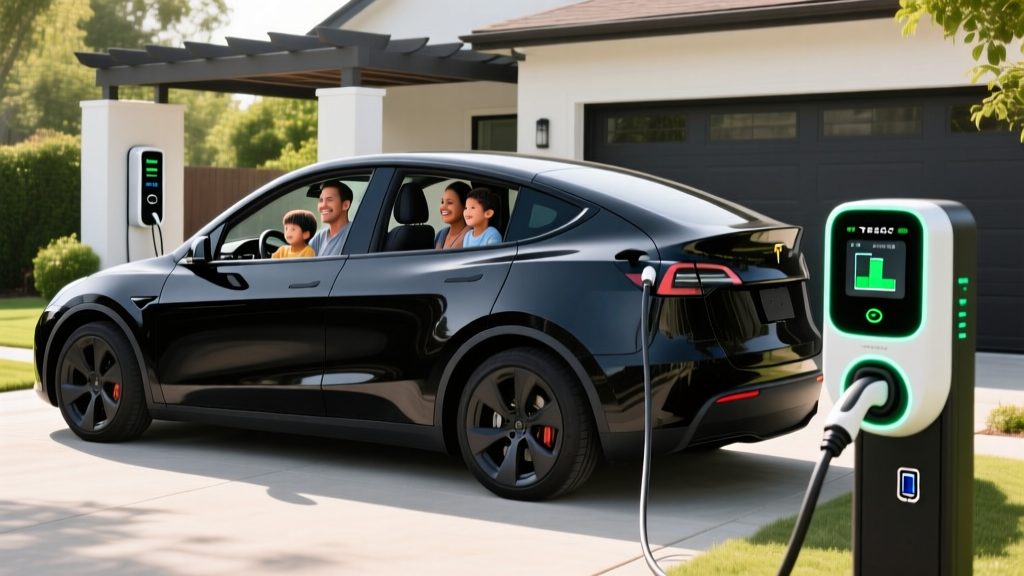
Charging speed is where the Model Y's maturity shows. The 2026 model supports V3 and V4 Supercharger hardware, and the NACS connector is now the de facto standard across the industry after Ford, GM, Rivian, and others adopted it.
| Level | Power / Rate | Time or Miles Added |
|---|---|---|
| DC Fast (Supercharger V3/V4) | Peak 250 kW | 10–80% in ~22 minutes (Long Range) |
| DC Fast (typical sustained) | ~170 kW avg 10–80% | Curve tapers sharply above 80% |
| Level 2 (home Wall Connector) | 11.5 kW / 48A | ~44 mi/hr (Long Range) |
| Level 1 (120V outlet) | 1.4 kW / 12A | ~5 mi/hr |
A critical nuance: peak 250 kW is achieved only between roughly 10–30% state of charge on a preconditioned battery. Above 60%, the curve drops significantly. Plan road-trip stops around 10–80% increments for the fastest average throughput.
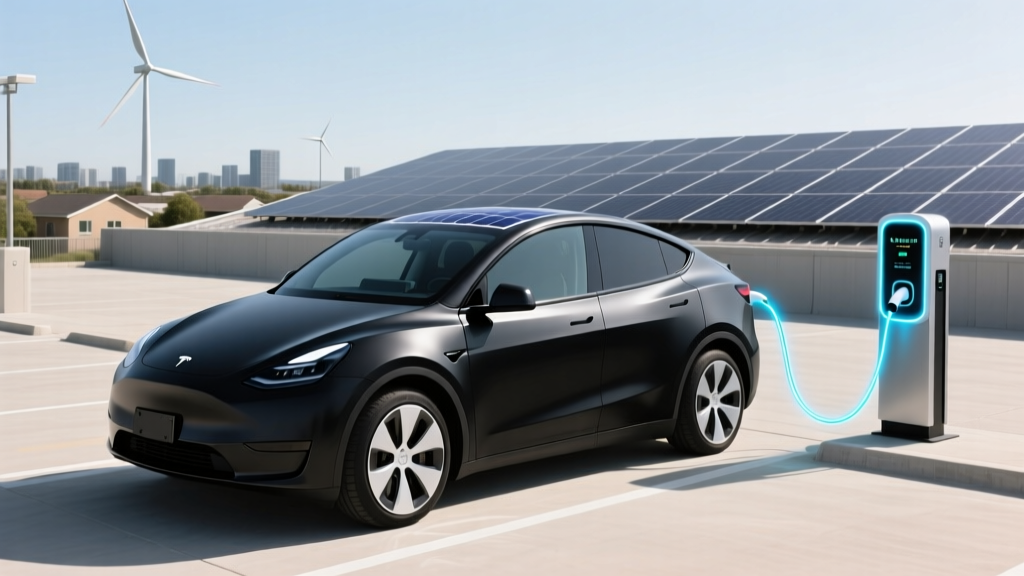
Pairing with Renewable Technology Resources: The Model Y integrates natively with Tesla's Solar Panels and Powerwall ecosystem. Through the Tesla app, owners can schedule charging during peak solar-production hours or when utility time-of-use rates are lowest. If your home has a 10 kW solar array producing ~40 kWh/day in summer, you can fully replenish a depleted RWD Model Y battery from sunlight alone. Non-Tesla solar owners can replicate this using ChargePoint or Wallbox chargers with smart-scheduling features tied to solar inverters via Home Assistant or IFTTT routines.
Performance, Ride, and Daily Usability
The Long Range AWD hits 0–60 mph in 4.8 seconds — quick for a family SUV — while the RWD's 6.6-second sprint is adequate for merging and passing. Dual-motor AWD provides confident traction in rain and light snow, though dedicated winter tires remain the single biggest upgrade for cold-climate owners.
Ride quality improved for 2025 with revised damper tuning, and the 2026 model carries that forward. It's still firmer than a Hyundai Ioniq 5 or Ford Mustang Mach-E over sharp impacts, but highway composure is excellent. Cabin noise is well-managed; wind noise around the mirrors is the primary source at speed.
Cargo and Passenger Space:
- Cargo behind 2nd row: 30.2 cu ft
- Cargo with 2nd row folded: 72.1 cu ft
- Front trunk (frunk): 4.1 cu ft
- Rear legroom: 41.6 inches
- Front headroom: 41.0 inches
The flat floor and hatchback design make the Model Y practical for strollers, camping gear, and Costco runs. The optional third row (available on prior model years) was discontinued, keeping the cabin focused on five-passenger comfort.
Pricing, Tax Credits, and Total Cost
| Trim | Base MSRP | As-Tested (typical) | §30D Credit Potential |
|---|---|---|---|
| Rear-Wheel Drive | $44,990 | $46,490 (w/ paint, wheels) | Up to $7,500* |
| Long Range AWD | $48,990 | $52,490 (w/ FSD, interior) | Up to $7,500* |
*Federal Tax Credit Caveats (IRS §30D): The full $7,500 credit requires meeting critical-mineral sourcing AND battery-component manufacturing thresholds, which shift annually. For 2026, the battery must contain a specified percentage of critical minerals extracted or processed in the U.S. or a free-trade-agreement partner, and components must be manufactured or assembled in North America. Buyer income caps apply: $300,000 joint / $225,000 head of household / $150,000 single (modified AGI). The MSRP cap for SUVs is $80,000. The credit can be transferred to the dealer at point of sale as a down-payment reduction. Verify current-year eligibility at irs.gov before purchasing, as battery-sourcing compliance can change mid-year.
5-Year Ownership Snapshot (Long Range AWD, 15,000 mi/yr):
- Electricity cost: ~$5,040 (at $0.16/kWh national avg)
- Equivalent gasoline SUV fuel: ~$11,250 (at $3.50/gal, 25 MPG)
- Maintenance savings: ~$2,500 (no oil changes, reduced brake wear from regen)
- Insurance premium delta: +$400–800/yr vs. comparable ICE SUV (varies by carrier)
Tech, Driver Assistance, and Drawbacks
The 15.4-inch center touchscreen runs Tesla's proprietary OS with native navigation, streaming, and over-the-air updates that add features post-purchase. Wireless phone mirroring is absent — Tesla uses its own app ecosystem rather than Apple CarPlay or Android Auto, which remains a dealbreaker for some buyers.
- No Apple CarPlay / Android Auto — a growing outlier in the segment
- Minimalist interior: no physical buttons for climate, mirrors, or glovebox (all screen-controlled)
- Panel-gap inconsistency still reported by owners on delivery
- No spare tire — tire repair kit only; run-flat tires not available
- FSD (Supervised) performance varies significantly by geography and weather
How It Compares: Model Y vs. the Competition
Against the Hyundai Ioniq 5 (305 mi EPA, 800V architecture, 10–80% in ~18 min), the Model Y trades peak charging speed for Supercharger network reliability and cargo volume. The Ford Mustang Mach-E (312 mi Extended Range) offers a more traditional cockpit layout and Apple CarPlay but has a smaller charging network. The Kia EV6 matches the Ioniq 5's 800V speed and adds a sportier drive, though its rear visibility and cargo space trail the Model Y.
- Access to 20,000+ Tesla Superchargers (most reliable DC network)
- Class-leading cargo volume and hatchback utility
- Strong efficiency (26–28 kWh/100 mi)
- Continuous OTA updates add features over time
- LFP battery option allows routine 100% charging
- Native solar/home-battery integration for renewable tech users
- No CarPlay/Android Auto
- Touchscreen-only controls frustrate some drivers
- Ride firmness over broken pavement
- FSD (Supervised) is expensive and not truly autonomous
- DC fast-charge speed trails 800V competitors
- Insurance costs above segment average
Who the 2026 Model Y Suits Best
- You want the most reliable public-charging network with minimal adapter hassle
- You have (or plan to install) home solar and want seamless EV-energy integration
- Cargo versatility and hatchback utility are priorities over sedan styling
- You value OTA feature additions and long-term software support
- You require Apple CarPlay or physical dashboard controls
- You prioritize the fastest possible DC charging (consider Ioniq 5 / EV6 800V platforms)
- You want a more plush, quiet ride (consider Genesis GV60 or BMW iX)
Frequently Asked Questions
What is the real-world range of the 2026 Tesla Model Y?
The EPA rates the Long Range AWD at 320 miles and the RWD at 280 miles. In real-world highway driving at 70 mph with moderate climate use, expect 260–290 miles from the Long Range and 230–255 from the RWD. In sustained sub-30°F winter conditions, subtract 15–25% from those figures unless the battery is preconditioned.
How fast does the Model Y charge at home and on the road?
On a Tesla Wall Connector (11.5 kW / 48A Level 2), the Long Range adds roughly 44 miles of range per hour, fully replenishing overnight. On a V3 Supercharger, it peaks at 250 kW and charges 10–80% in approximately 22 minutes, though the average sustained rate is closer to 170 kW due to taper above 60%.
How much does the 2026 Model Y cost after federal tax credits?
The RWD starts at $44,990 and the Long Range AWD at $48,990. If you meet all IRS §30D requirements — income caps, battery-sourcing thresholds, and MSRP limits — you may qualify for up to $7,500, which can be applied at the point of sale. This brings the effective RWD price to approximately $37,490 and the Long Range to $41,490. Confirm eligibility on irs.gov before purchase.
Does the 2026 Model Y qualify for the federal EV tax credit?
It is eligible for up to $7,500 under §30D, but only if the specific VIN's battery meets the 2026 critical-mineral and component-sourcing requirements AND the buyer's modified AGI falls within the income caps ($300k joint / $150k single). Tesla publishes credit eligibility on each vehicle's order page, and dealers can confirm at delivery.
Is the Model Y worth buying vs. the Ioniq 5 or Mach-E?
If Supercharger network access, cargo space, and solar/battery ecosystem integration matter most, the Model Y is the strongest pick. If you prioritize 800V ultra-fast charging and CarPlay, the Ioniq 5 wins. If you want a more traditional cockpit and Ford dealer support, the Mach-E is competitive. Test-drive all three before deciding.
How does the Model Y integrate with renewable technology resources?
Through the Tesla app, owners with Tesla Solar and Powerwall can schedule charging during peak solar production or off-peak utility windows. Third-party solar owners can use smart chargers (ChargePoint, Wallbox, Emporia) with scheduling APIs to achieve similar results. The Model Y's 26–28 kWh/100 mi efficiency means a typical 10 kW residential solar array can cover most daily driving needs in sunny climates.
What is the battery warranty?
Tesla covers the Model Y battery and drive unit for 8 years or 120,000 miles (Long Range AWD) and 8 years or 100,000 miles (RWD), whichever comes first, with a minimum 70% capacity retention threshold during the warranty period.